Aoi Matsuri: Kyoto’s Elegant Festival of Ancient Traditions
May 9, 2026
BY Brad Stephens
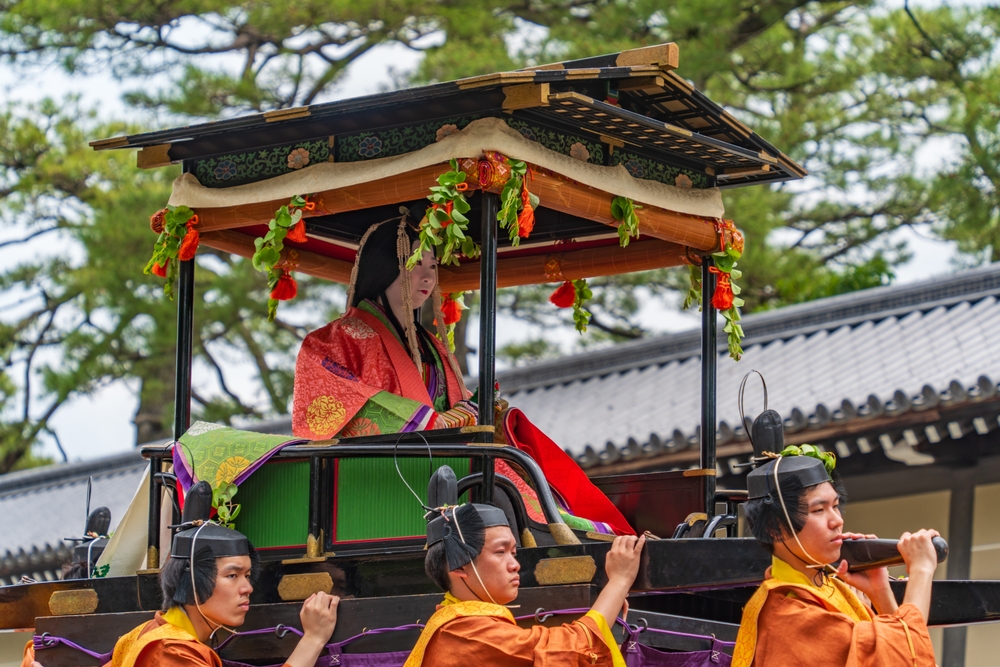
Every spring, the city of Kyoto transforms into a living portrait of its imperial past. Among its many seasonal celebrations, few capture the refined beauty of classical Japan as vividly as Aoi Matsuri (葵祭, Hollyhock Festival). With its stately processions, historical costumes, and deep-rooted rituals, this festival offers a rare glimpse into the aesthetics and beliefs of the Heian period.
If you are planning a visit to Japan in May, Aoi Matsuri is one of the most graceful and culturally rich experiences you can witness.
What is Aoi Matsuri?
Aoi Matsuri is one of Kyoto’s three major festivals, alongside Gion Matsuri (祇園祭, Gion Festival) and Jidai Matsuri (時代祭, Festival of the Ages). It takes place every year on May 15 and is centered around two important shrines: Shimogamo Shrine and Kamigamo Shrine.
The name comes from the aoi (葵, hollyhock leaves) that decorate everything from costumes to ox-drawn carts. These leaves are believed to protect against natural disasters and symbolize the festival’s ancient spiritual purpose.
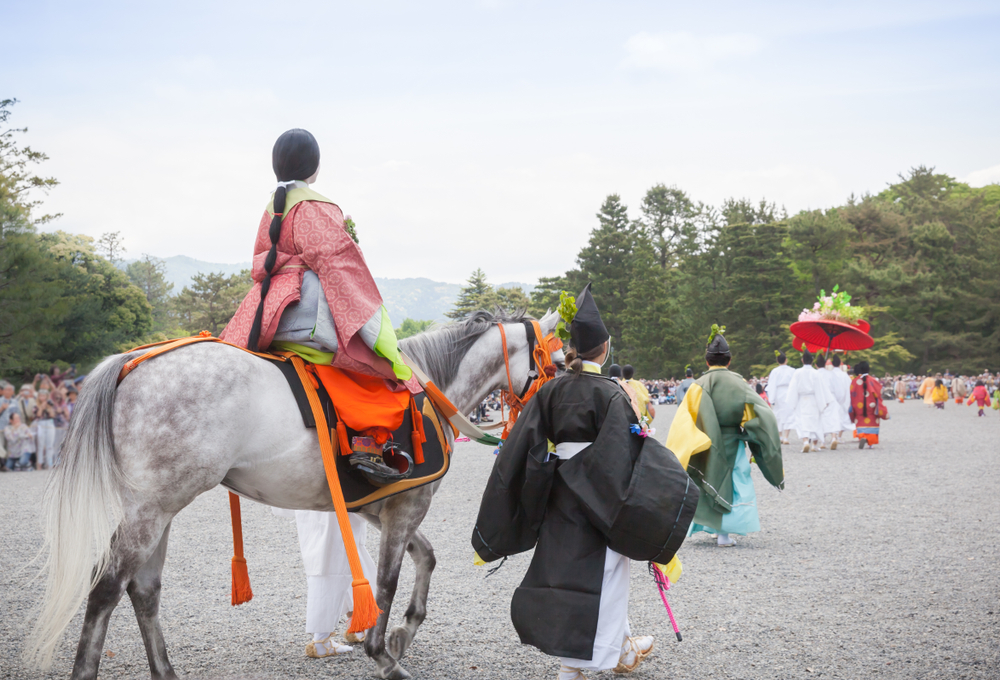
Procession of Aoi Matsuri passing through Kyoto Gyoen National Garden – Photo Credit: EvergreenPlanet
Historical Origins
Aoi Matsuri is believed to date back over 1,400 years to the reign of Emperor Kinmei. According to traditional accounts recorded in historical chronicles, a series of natural disasters such as floods and poor harvests struck the region. To appease the deities believed to control these events, imperial envoys were dispatched to offer prayers at the Kamo shrines, laying the foundation for what would later become the Aoi Matsuri.
Over time, this ritual evolved into a grand procession that reflected the sophistication of the imperial court during the Heian period. Today, the festival remains remarkably faithful to its origins, preserving traditions that have been passed down for centuries.
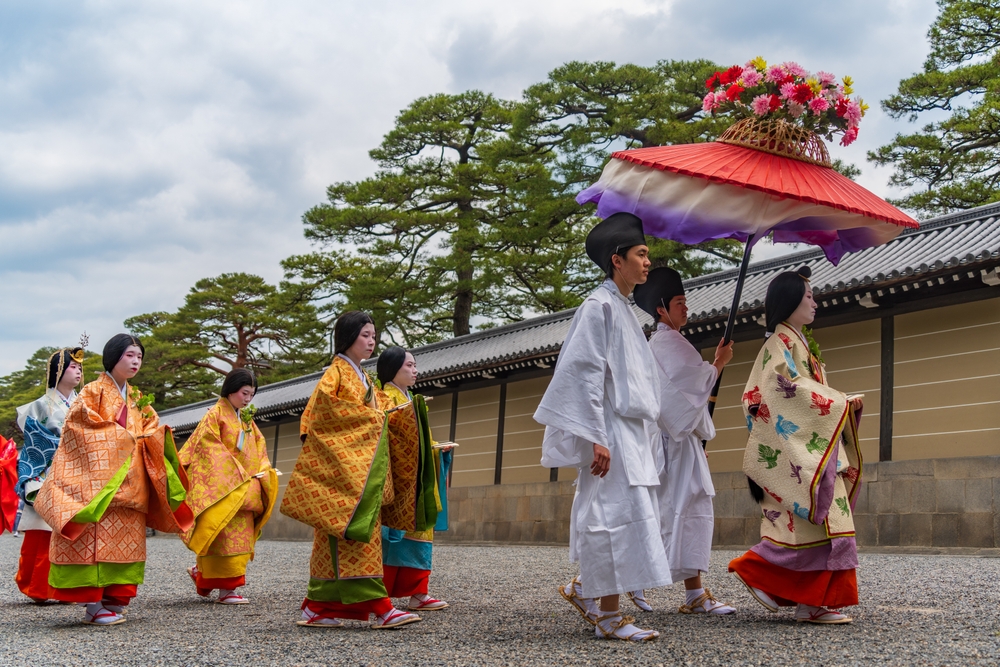
Cultural celebration unfolding at Aoi Matsuri – Photo Credit: Mo Wu
The Main Event: The Procession
The highlight of Aoi Matsuri is the Roto no Gi (路頭の儀), a ceremonial parade that moves through Kyoto’s streets in a carefully choreographed display of historical pageantry.
What You Will See
- Over 500 participants dressed in authentic Heian-period attire
- Ox-drawn carts and elegantly adorned horses
- Court nobles, attendants, and guards in layered silk robes
- The Saiō-dai (斎王代), a central figure who represents the historical role of an imperial princess who once served the Kamo Shrines
The procession begins at the Kyoto Imperial Palace, passes through scenic routes including Tadasu no Mori, and concludes at Kamigamo Shrine. The entire event unfolds at a slow, deliberate pace, allowing spectators to fully appreciate the details of each costume and role.
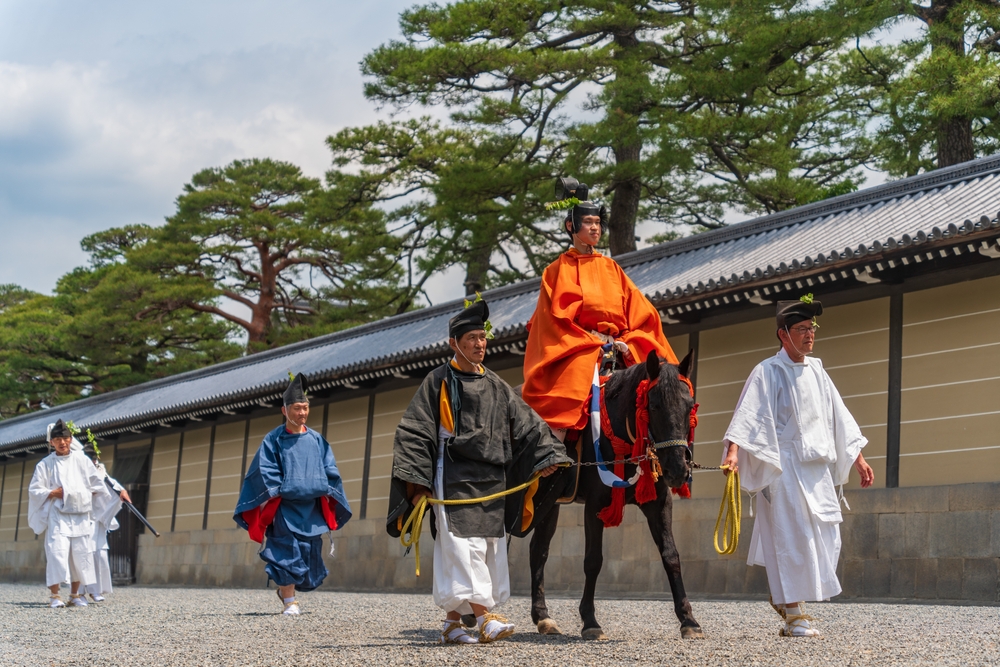
Participants in historical attire at Aoi Matsuri – Photo Credit: Mo Wu
The Role of the Saiō-dai
One of the most anticipated aspects of the festival is the appearance of the Saiō-dai. Historically, the Saiō was an unmarried imperial princess who served as a priestess for the Kamo shrines.
Today, the Saiō-dai is selected from among unmarried women with ties to Kyoto and undergoes extensive preparation to embody the elegance and poise of a Heian noblewoman. She wears a junihitoe (十二単), an elaborate, multilayered court garment that can weigh up to around 20 kilograms.
Her presence adds a sense of grace and continuity, connecting modern Kyoto with its aristocratic past.
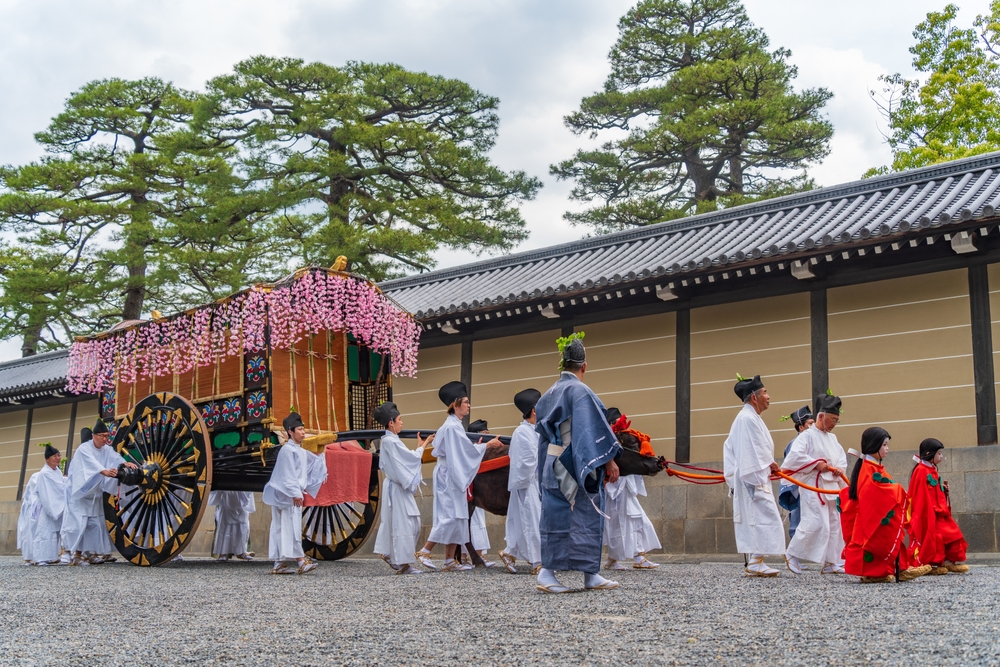
A ritual procession honoring centuries-old traditions at Aoi Matsuri – Photo Credit: Mo Wu
Seasonal Significance
Aoi Matsuri takes place during one of Kyoto’s most pleasant seasons. Mid-May offers mild temperatures, fresh greenery, and blooming flowers, making it an ideal time to explore the city.
The use of hollyhock leaves is also tied to seasonal beliefs. These plants were thought to ward off storms and earthquakes, which were common concerns in ancient Japan. The festival, therefore, reflects both a spiritual and environmental awareness rooted in agricultural life.
Where to Watch
There are several excellent viewing spots along the procession route:
- Kyoto Imperial Palace: Ideal for seeing the procession’s grand beginning
- Shimogamo Shrine: A scenic and historically significant setting
- Kamigamo Shrine: The final destination with ceremonial rituals
Arriving early is recommended, as the festival draws both locals and international visitors. Paid seating is also available for those who prefer a more comfortable viewing experience.
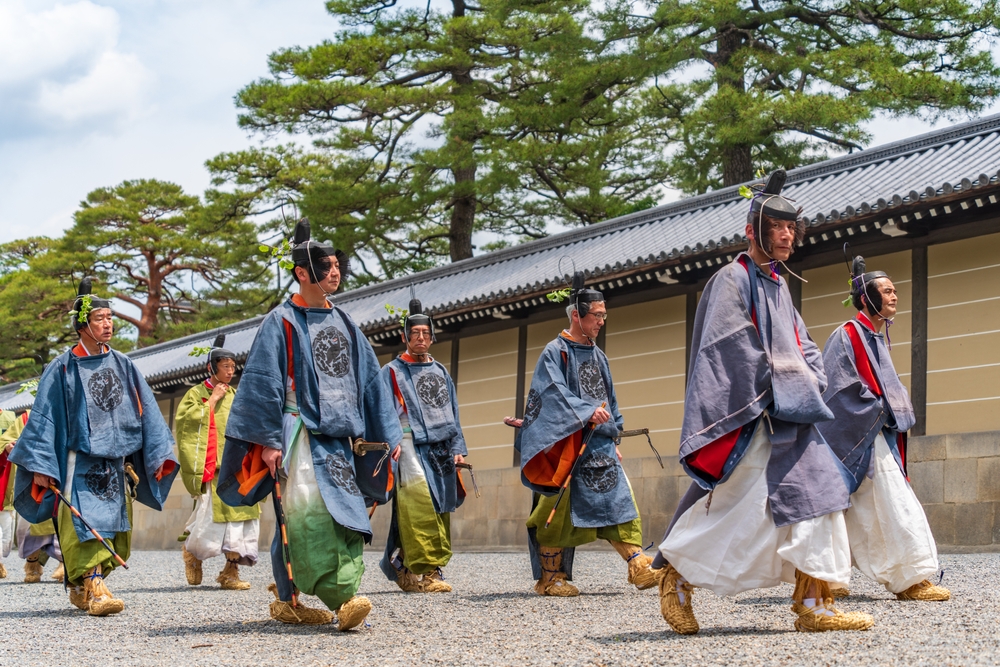
Participants wearing traditional attire walking in Aoi Matsuri procession – Photo Credit: Mo Wu
Tips for Visitors
- Dress comfortably but respectfully, as you will likely be standing or sitting outdoors
- Bring water and sun protection, since the procession lasts several hours
- Avoid blocking pathways or stepping into restricted areas for photos
- Consider combining your visit with other Kyoto attractions for a full cultural day
Why Aoi Matsuri Stands Out
Unlike more energetic festivals filled with music and dancing, Aoi Matsuri offers a quiet, almost meditative experience. Its charm lies in its restraint and attention to detail. Every movement, costume, and ritual is carefully preserved to reflect a specific moment in Japanese history.
It is less about spectacle and more about atmosphere. Watching the procession feels like stepping into a painting, where time slows down and tradition takes center stage.
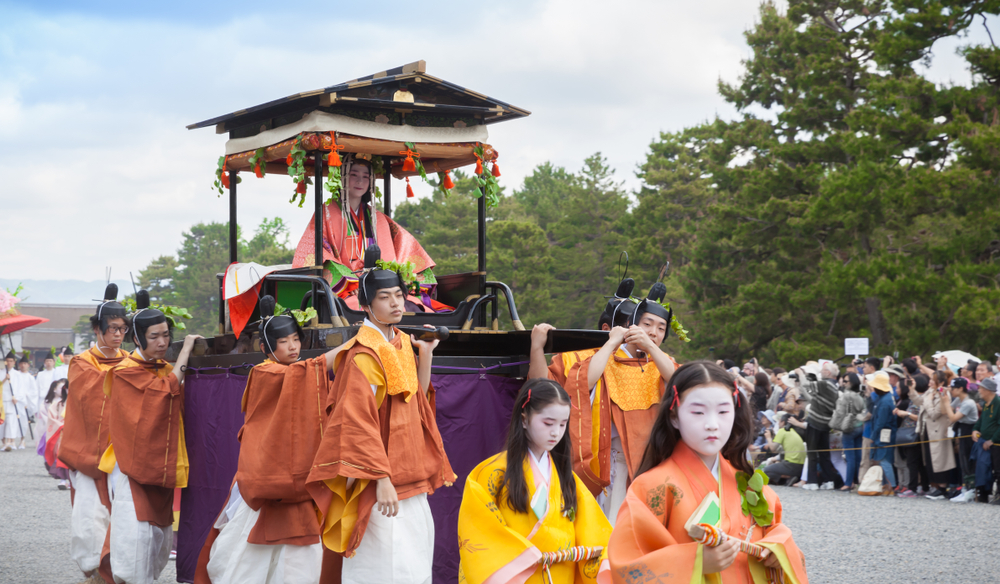
Scenic view of Aoi Matsuri procession in Kyoto – Photo Credit: EvergreenPlanet
Aoi Matsuri is not just a festival. It is a living tradition that bridges the past and present of Kyoto. Whether you are a history enthusiast, a cultural traveler, or simply curious about Japan’s heritage, this event offers a unique and memorable experience.
If your travels bring you to Kyoto in May, make time for Aoi Matsuri. It is a rare opportunity to witness elegance, history, and spirituality woven together in one of Japan’s most beautiful cities.
Featured Photo Credit: Mo Wu
If you are in Kyoto for the festival, make sure to also claim your spot on one of our Kyoto Food Tours while you’re in the city!
PIN THIS FOR LATER
Book your pocket wifi now to stay connected through your entire Japan Journey!

Be sure to get the JR Pass to make navigating Japan during your trip that much easier!
YOU MIGHT ALSO LIKE