Connecting Cultures Through Flowers: Atelier Floralies
May 7, 2026
BY Kristian Robinson
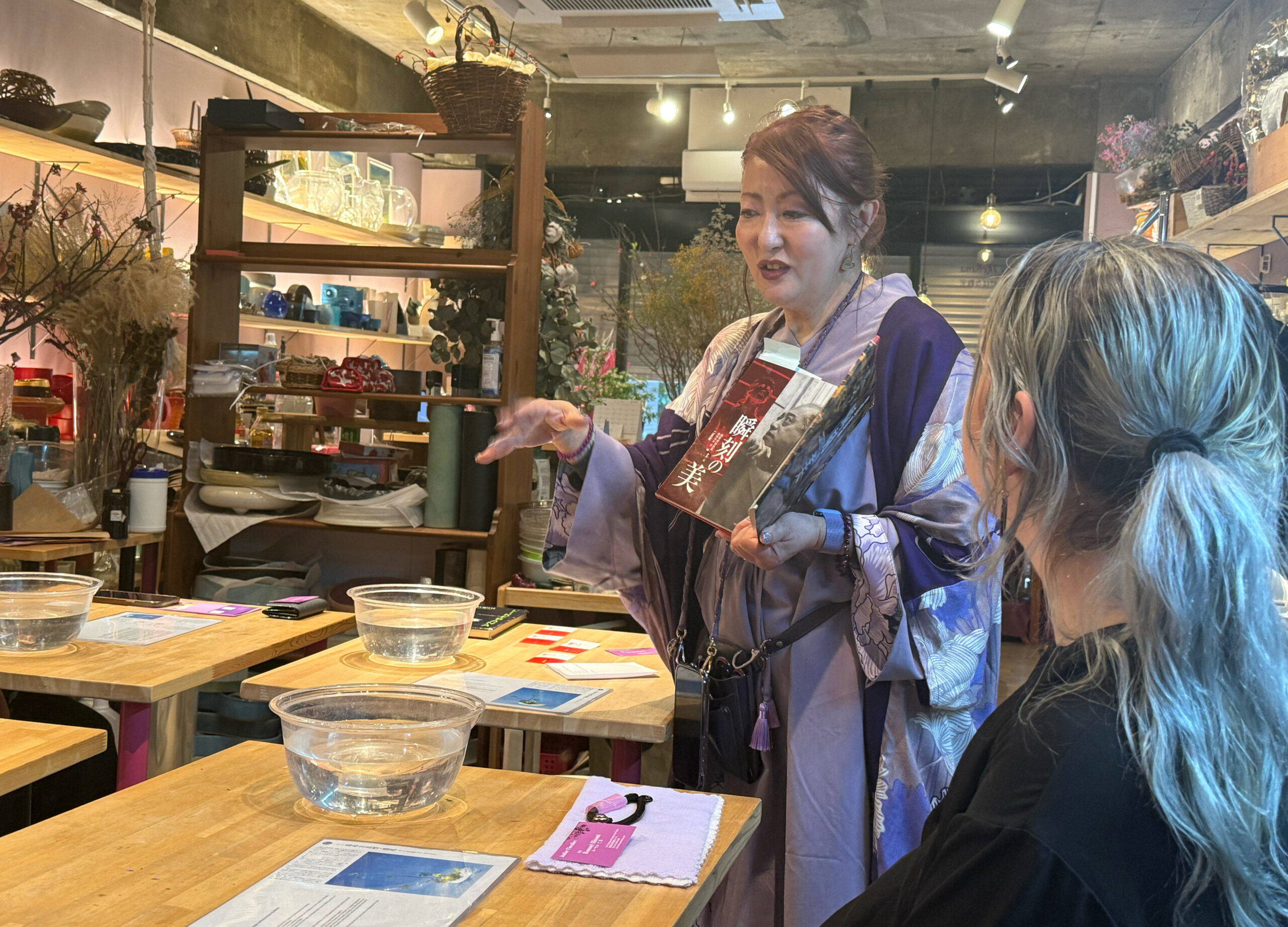
Sharing local secrets is what we love most at Arigato Travel, and Hitomi san’s Atelier Floralies is a true standout in Tokyo’s quiet Edogawabashi neighborhood. After our own trial lesson, we were captivated by how she navigates the world of floral design with such ease and warmth. Whether you are curious about a short workshop or dreaming of a professional path through a cultural visa, Hitomi san’s multilingual expertise makes this traditional art feel entirely accessible. Her creative eye and international background bring a unique energy to every arrangement she shapes within her bright, flower-filled studio.
We’re so excited for you to get to know Hitomi san and see how she’s opening up the world of Japanese floral design to the international community, making this delicate art both approachable and deeply personal for every visitor.
Hi, Hitomi san, would you introduce yourself, share about your background, and the story of how you first discovered your passion for flower arrangement, and what inspired you to open Atelier Floralies?
The reason I began teaching ikebana is very personal and rooted in everyday life.
My children attended the Lycée Français International de Tokyo from the age of three until eighteen.
At that time, French mothers of my daughter’s classmates often visited our home. When they saw the ikebana arrangements I had created, they said,
“Could you teach us? We would love to learn.”
That moment became the starting point of my teaching journey.
Little by little, I began teaching friends, and through this experience, I came to realize how flowers can connect people beyond differences in nationality and culture. Ikebana is not an art reserved for specialists or experts. To me, it is an open form of expression, one that allows anyone to feel the seasons, reflect inwardly, and bring balance to the mind.
Atelier Floralies was created to embody this philosophy. It is a place where people of all backgrounds and experience levels can quietly connect with themselves through flowers and enjoy a calm, meaningful moment.
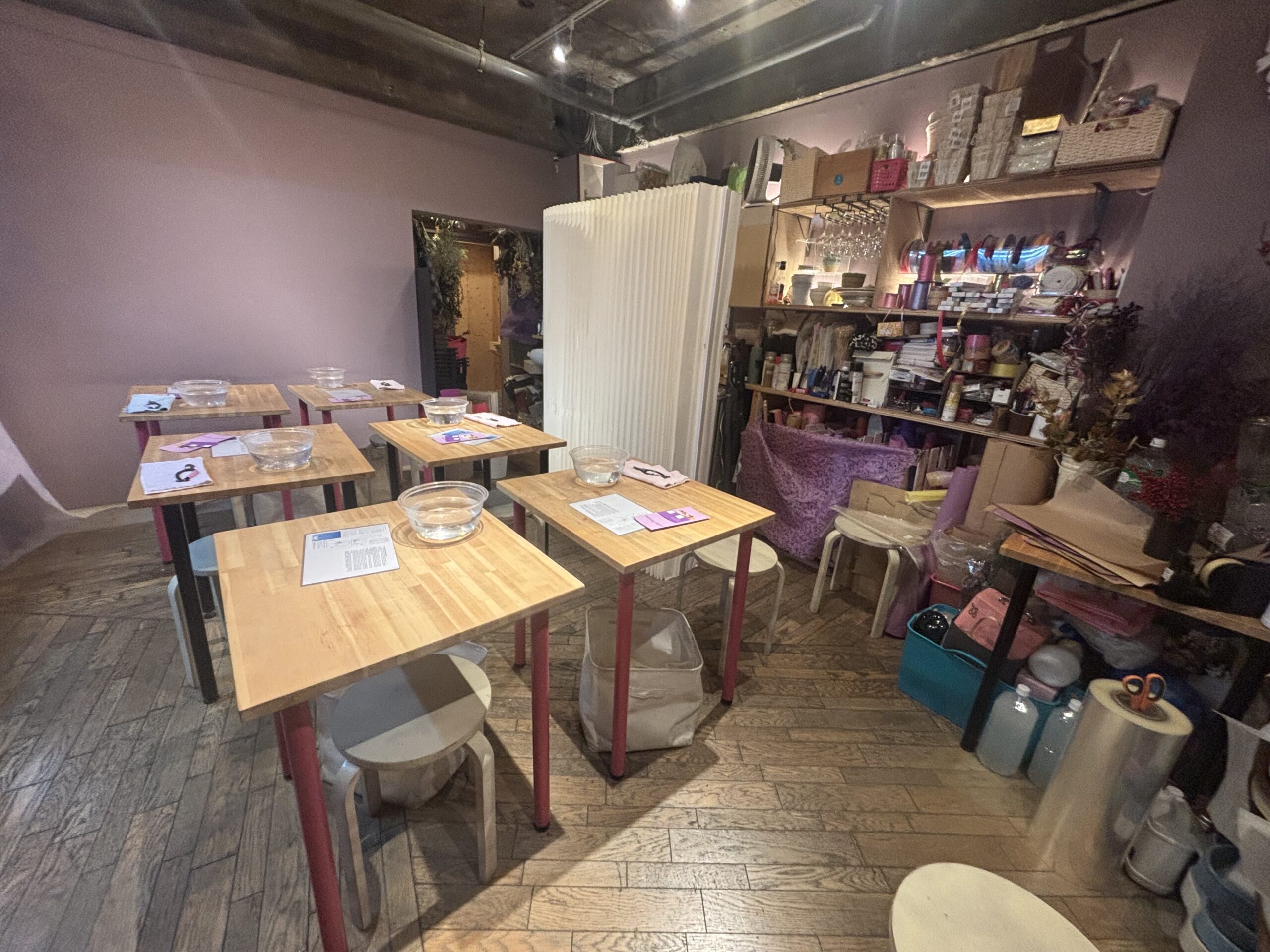
Workshop area of Atelier Floralies – Photo Credit: Arigato Travel
You are fluent in English and French. How did you learn these languages, and how does your international background influence the way you teach your guests?
I studied English during a short-term stay in London as a student, and the foundation I gained there continues to support my teaching today.
As for French, I married a French national and lived in Paris for approximately eight years. Living my daily life in France and experiencing a culture different from Japan greatly broadened my perspective.
Even now, I return to France every year, where I also hold ikebana workshops. By traveling between Japan and France, I have continued to share Japanese floral culture through flowers in an ongoing and meaningful way.
After having children, I returned to Tokyo, where my children once again attended the Lycée Français International de Tokyo from the ages of three to eighteen.
Living in an environment where multiple languages and cultures naturally coexisted, both at home and at school, became an invaluable learning experience for me as well.
In my current lessons, I place greater importance on respecting each student’s cultural background, sensitivity, and personal rhythm than on linguistic precision alone. Although ikebana is a traditional Japanese art, it is also a form of expression that transcends national and linguistic boundaries.
Through lessons conducted in English and French, I hope to offer a welcoming and reassuring introduction to the world of ikebana for many people.
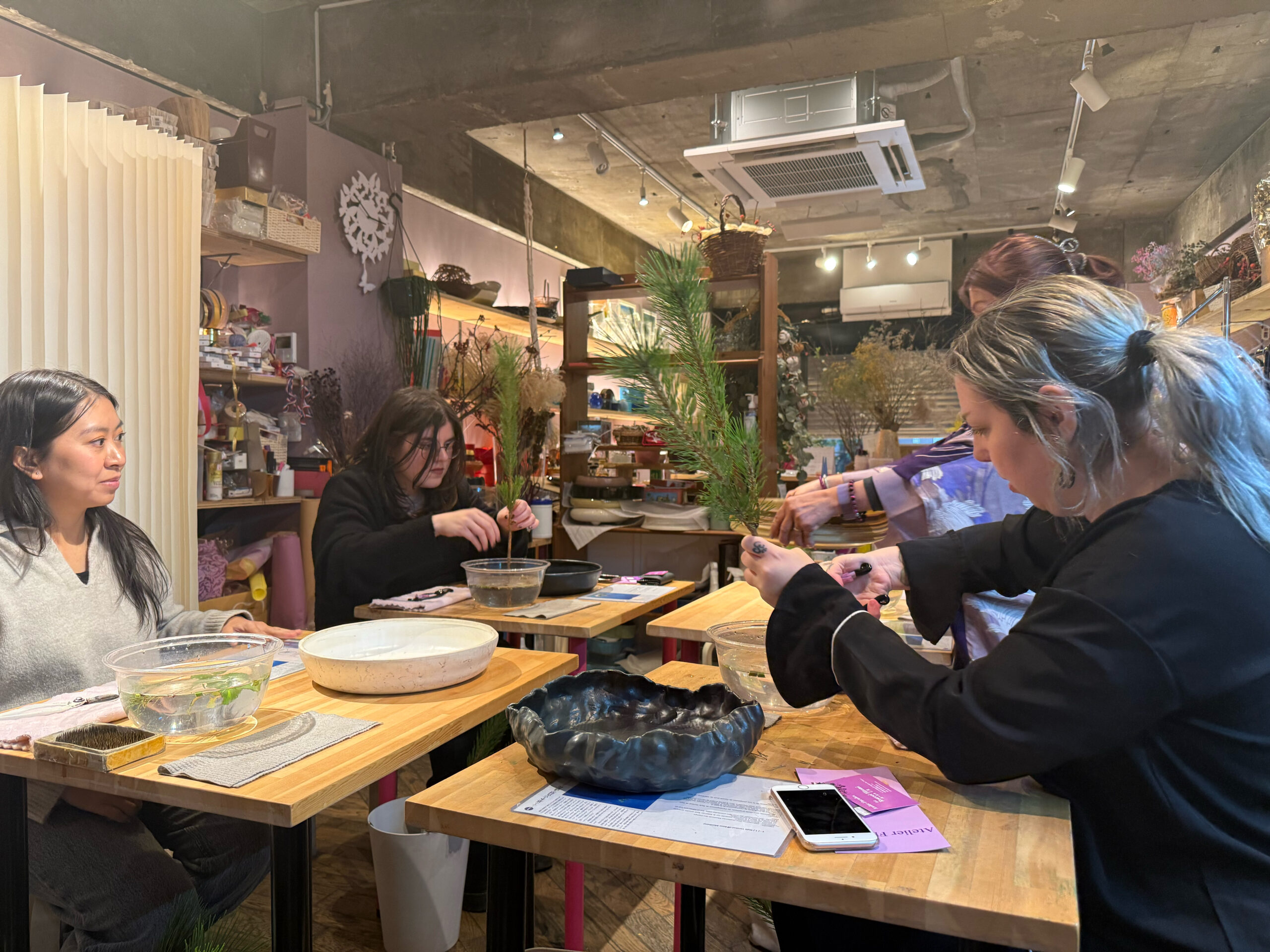
The Arigato Travel team participating in Hitomi san’s lesson – Photo Credit: Arigato Travel
For someone visiting your shop for a short-term course, could you walk us through the experience of creating their very first arrangement? Is the workshop accessible for beginners and families?
Many visitors to Atelier Floralies are experiencing ikebana for the very first time. For this reason, lessons do not begin immediately with arranging flowers. Instead, we start by gently introducing the history and philosophy of ikebana.
Participants are invited to view Sogetsu School textbooks and experience the basic concepts and expressions through them. Rather than distributing photocopies, guests are encouraged to take photos of the materials as a keepsake, allowing the experience to remain a personal travel memory.
During the practical session, seasonal flowers and vases are used. While encouraging individual creativity, I also carefully explain the fundamental rules of ikebana. Even first-time participants naturally find their hands moving, gradually creating an arrangement that feels uniquely their own.
At the end of the lesson, each participant receives a certificate of completion. Although the experience is brief, it offers the opportunity to learn, create, and take home a tangible memory of Japanese culture.
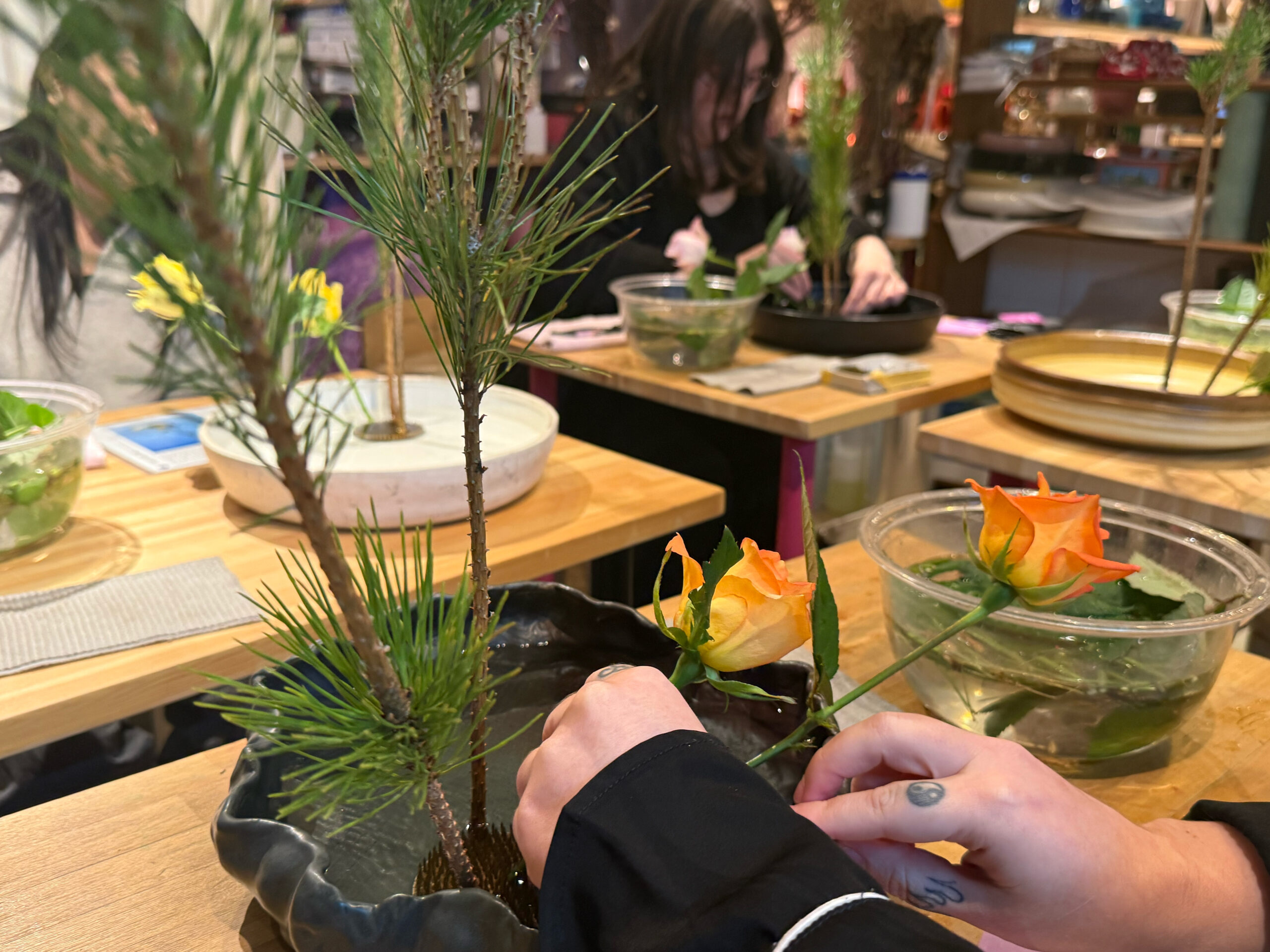
A close-up shot of Nicole’s (our travel specialist) ikebana – Photo Credit: Arigato Travel
What is currently included in your trial lesson for travelers looking to join you for a session?
Trial lessons at Atelier Floralies are designed to be accessible and reassuring for short-term visitors as well as complete beginners.
Lessons are conducted in small groups, allowing each participant to proceed at their own pace. All flowers and tools are provided, and guests are invited to choose the materials that resonate with them.
In the calm and welcoming atmosphere of the atelier, I hope participants can relax and enjoy a peaceful moment connecting with flowers.
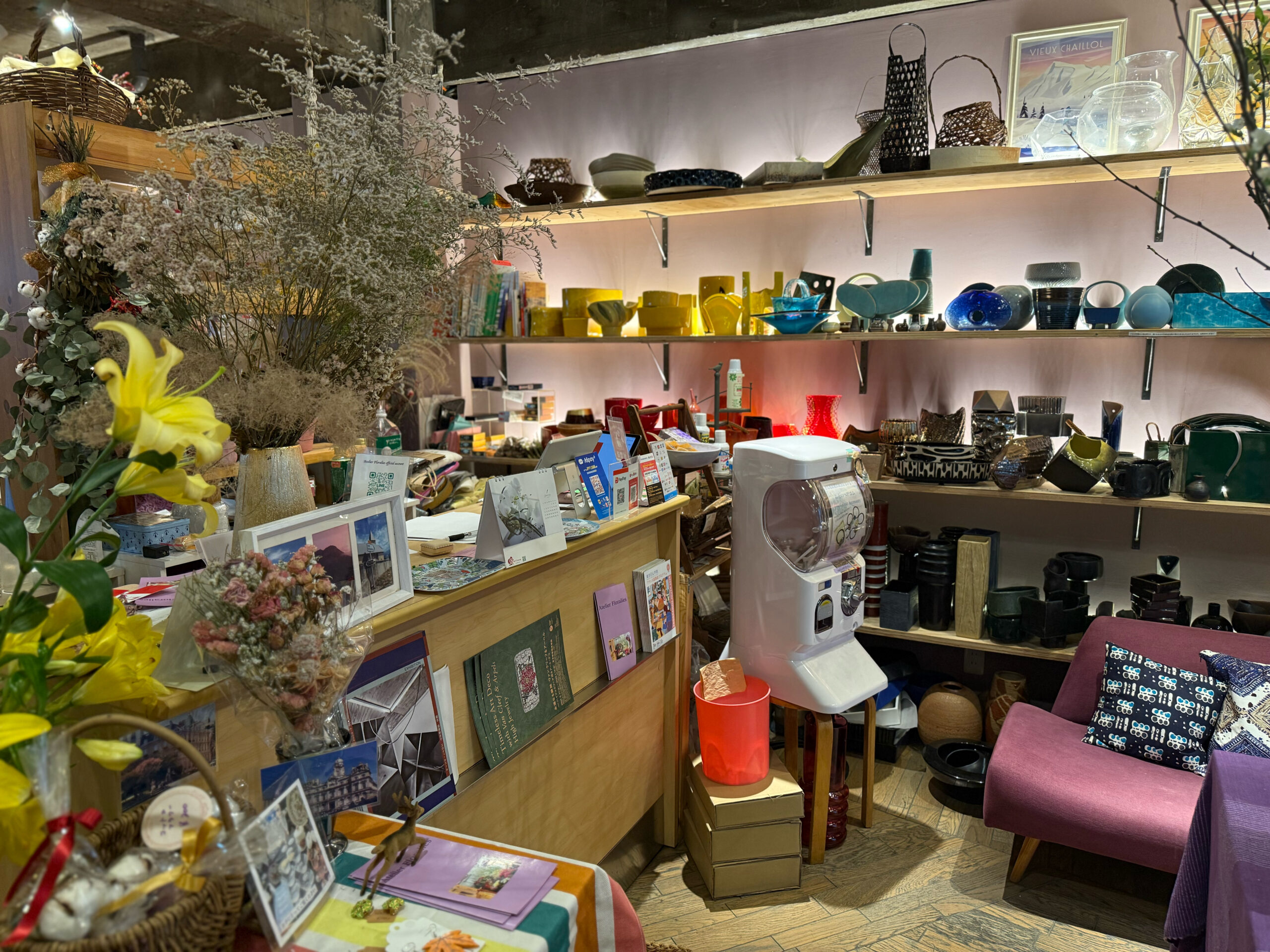
The front desk and entrance of Atelier Floralies – Photo Credit: Arigato Travel
You also create large-scale installations for companies and events; how do you go about translating a company’s identity or logo into a floral display?
For corporate projects and events, I begin by carefully listening to the company’s philosophy, image, colors, and story.
Rather than simply recreating logos or brand colors, I focus on expressing the essence of the brand through the movement of flowers and the surrounding space.
Beyond the workshop, you also support Cultural Activities Visas; what is the journey like for someone staying long-term to become a certified instructor?
Students who study long-term deepen not only their technical skills, but also their understanding of Japanese culture as a whole.
Through a step-by-step learning process over several years, a path opens toward becoming a certified ikebana instructor.
Being able to support students throughout this journey is a great source of joy for me.
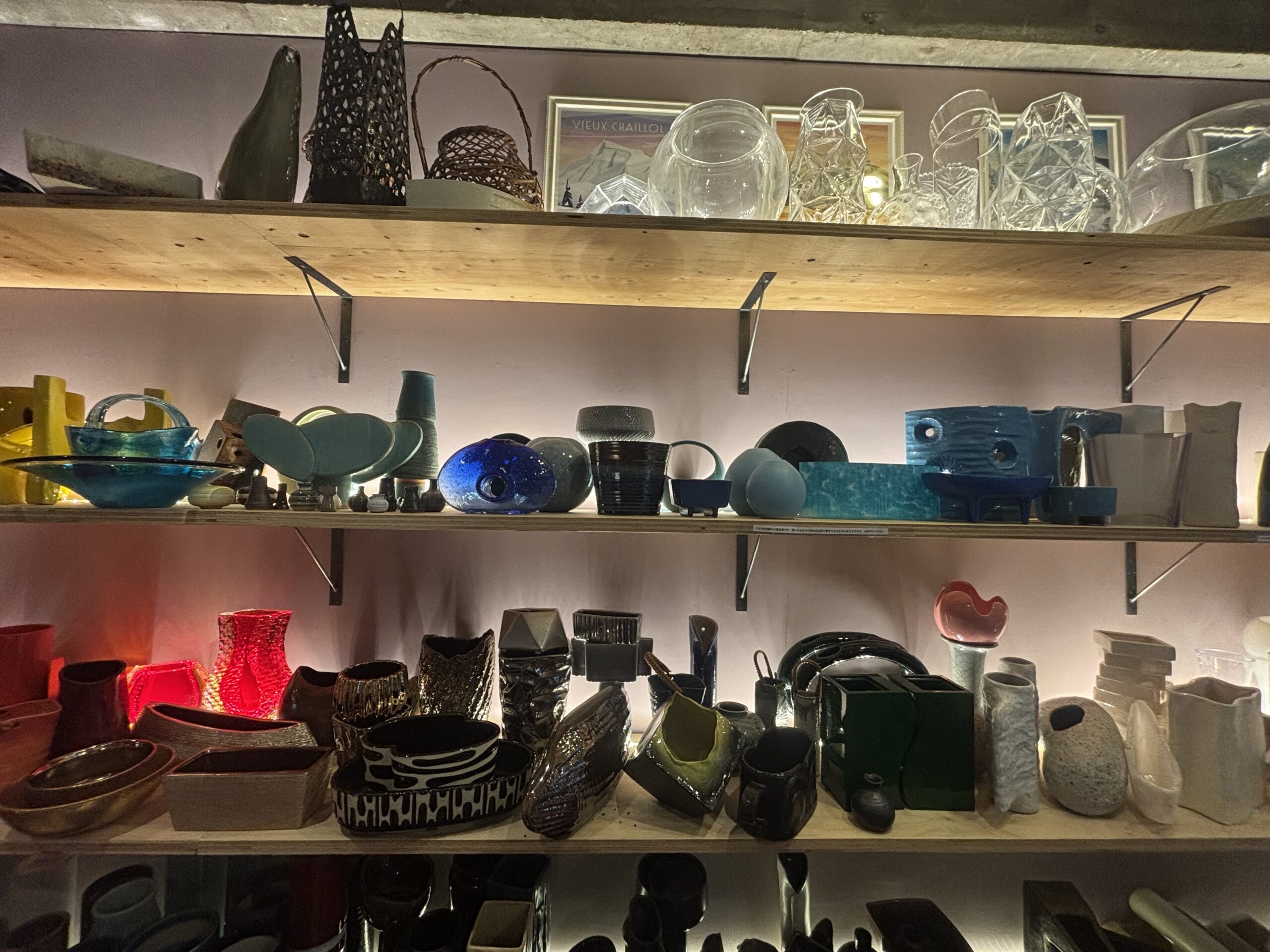
Many of the different vases and materials you can select for your own ikebana – Photo Credit: Arigato Travel
On a personal note, as a local, what are some of your favorite hidden gems or small shops in the neighborhood that our readers should visit after their lesson?
The Edogawabashi area is home to traditional Japanese sweet shops, quiet cafés, and small specialty stores.
I recommend taking a leisurely walk to experience a side of everyday Tokyo that differs from major tourist destinations.
Nearby, there are also many pleasant walking spots surrounded by nature. In spring, the cherry blossom-lined paths along the Kanda River, starting from Edogawabashi Park, are especially beautiful and offer a peaceful place to enjoy the season.
The garden of Hotel Chinzanso Tokyo is also close by; enjoying tea at the café allows visitors to explore the Japanese garden at a relaxed pace.
Additionally, the Higo Hosokawa Garden in Bunkyo Ward is a serene space where seasonal landscapes can be enjoyed throughout the year.
All of these locations are within a 15-minute walk from the atelier and are perfect for a stroll before or after a lesson.
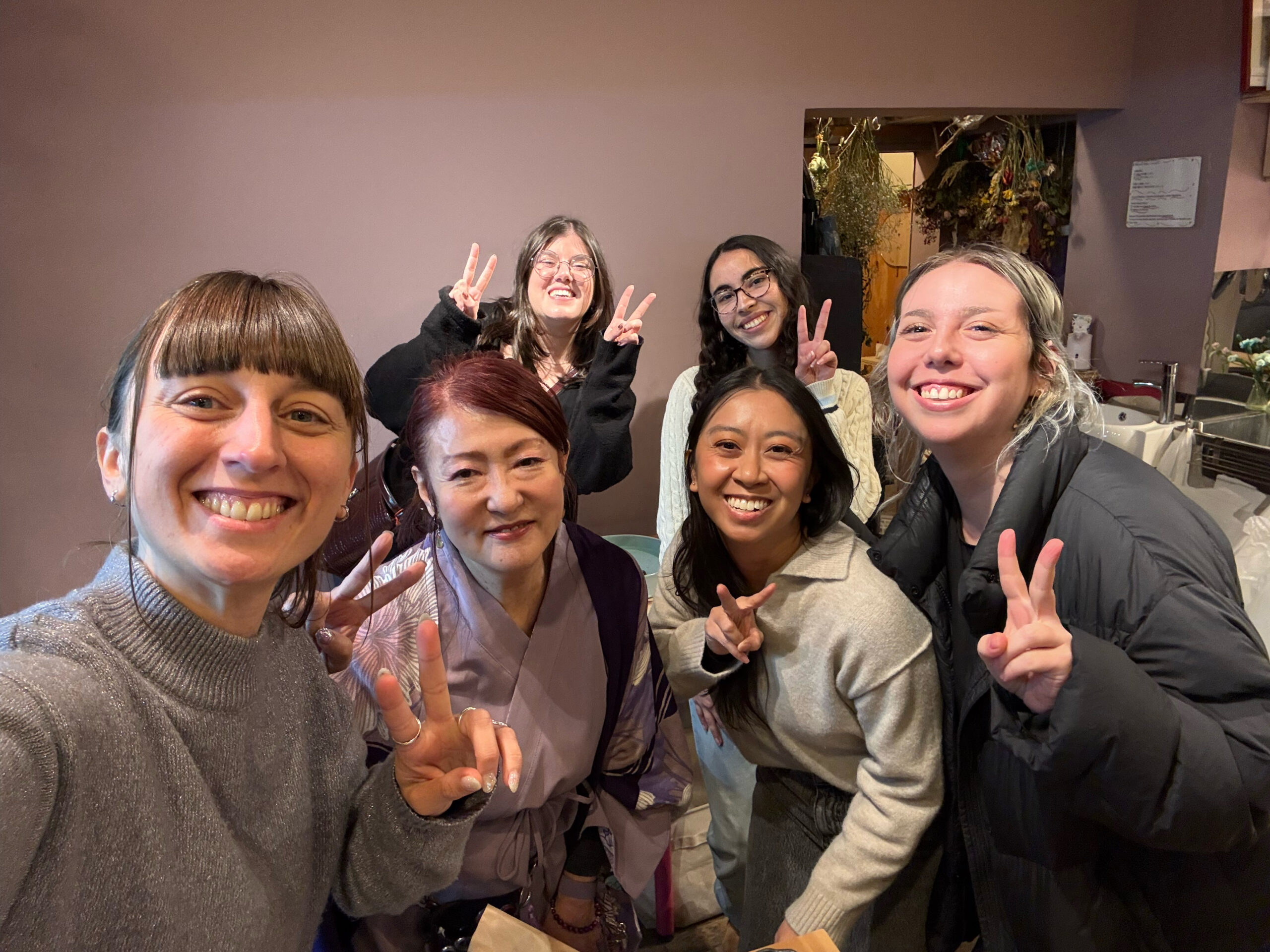
The team photo with Hitomi san (center left) – Photo Credit: Arigato Travel
Is there anything else you would like to share with our readers?
Ikebana is an accessible gateway into Japanese culture, even for those with no prior knowledge. Through flowers, I invite you to experience the beauty of Japan’s seasons and aesthetic sensibility.
Thank you, Hitomi san, for sharing the story of Atelier Floralies and for your dedication to making Ikebana floral artistry a universal language. By offering your workshops in English and French, you’ve created a rare space where international guests can truly connect with Japanese aesthetics in a hands-on, personal way.
Read more about Atelier Floralies on:
Website: https://r.goope.jp/atelierfloralies/
Instagram: https://www.instagram.com/atelier_floralies/
Facebook: https://www.facebook.com/100054477099469
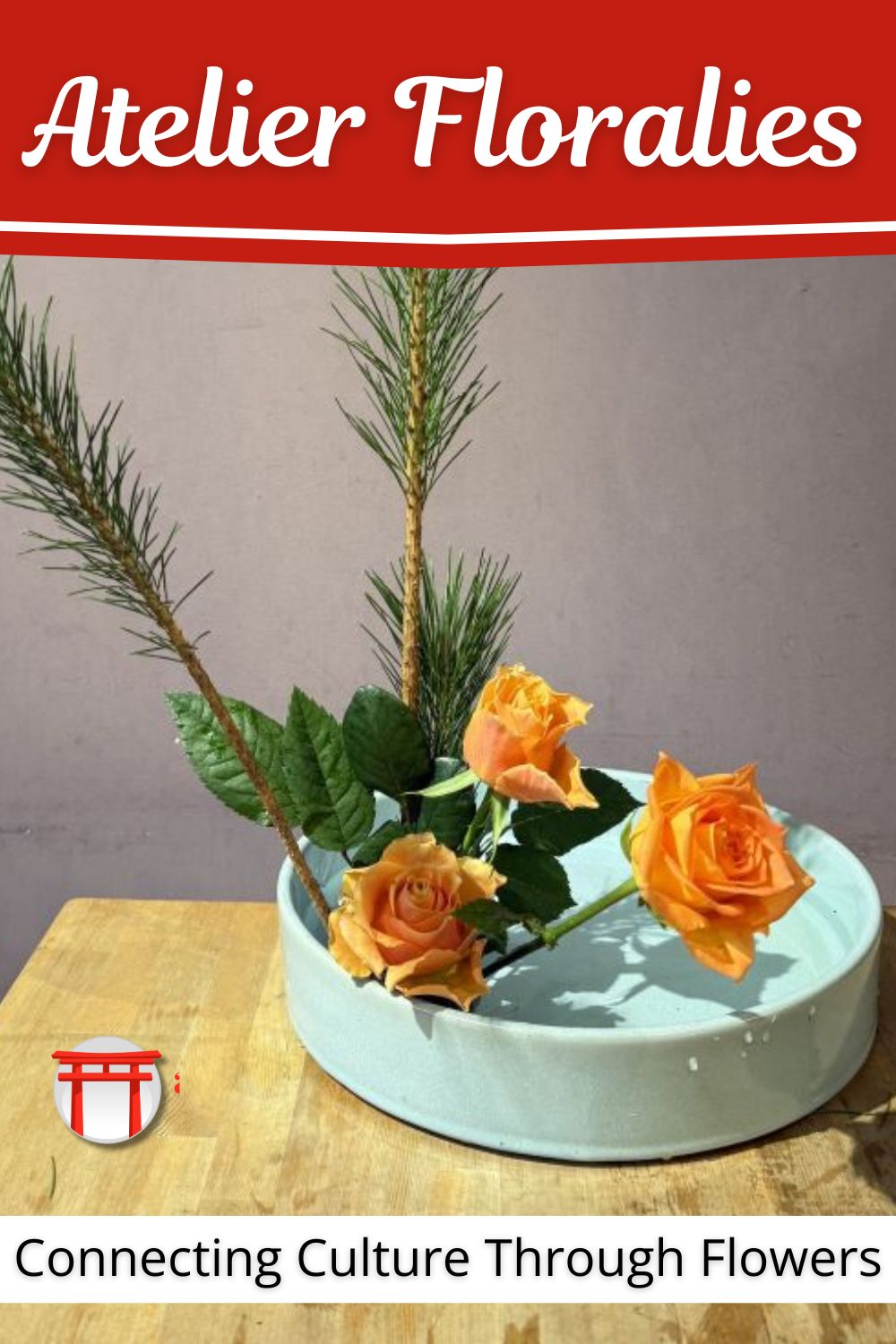
Featured Photo Credit: Atelier Floralies
If you’re interested in visiting Atelier Floralies or adding another artisan workshop to your Japan Journey, make sure to reach out to our team of expert travel specialists to add it to your personalized itinerary!
PIN THIS FOR LATER
0
shares
Book your pocket wifi now to stay connected through your entire Japan Journey!

Be sure to get the JR Pass to make navigating Japan during your trip that much easier!