Tea, Culture, and Mt. Fuji Views: An Interview with Provide Fuji Co
Jan 26, 2026
BY Kristian Robinson
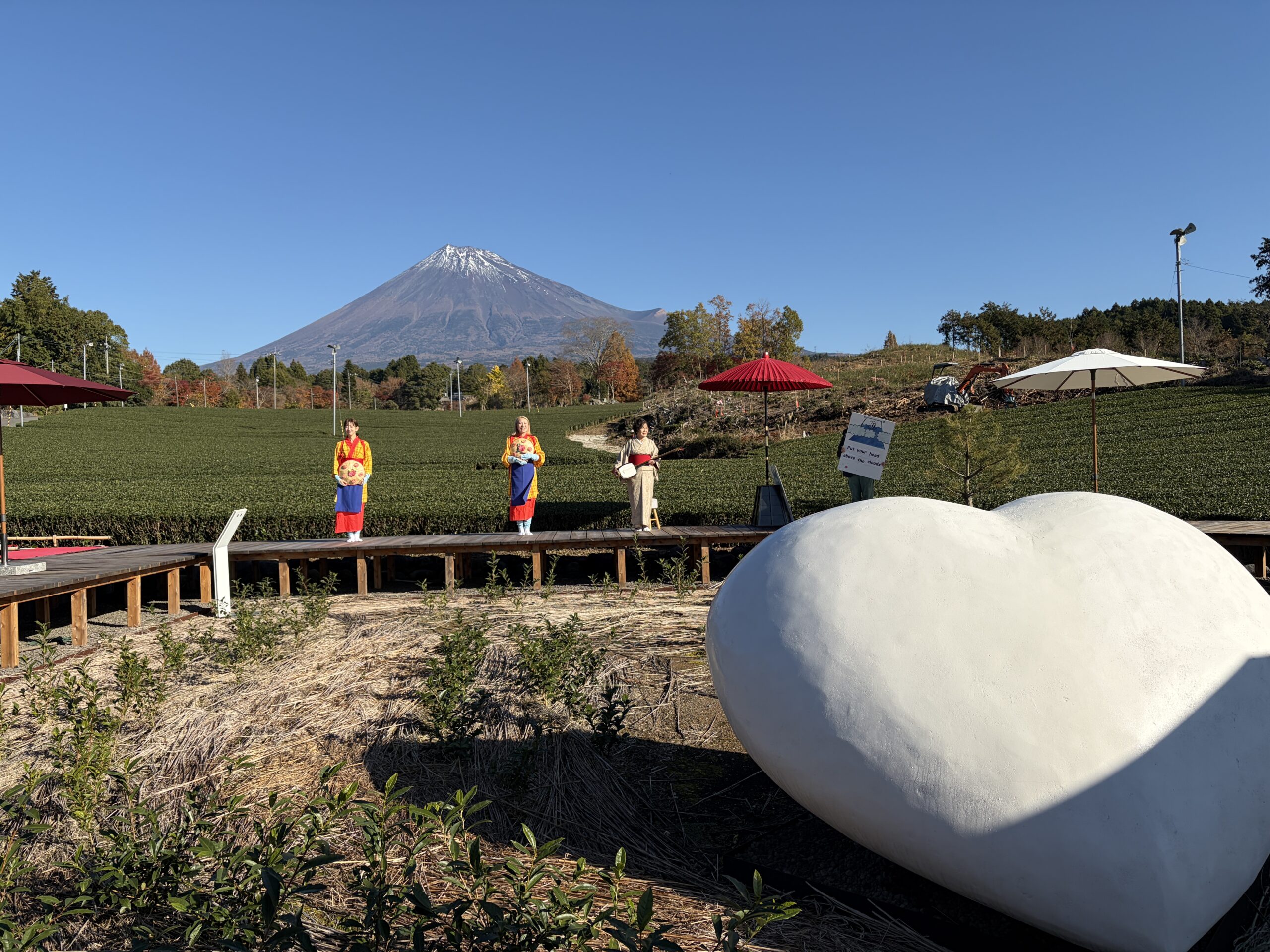
Finding that perfect cup of tea is often about the people you share it with. In the heart of Fuji City, Ogino Seicha invites you to their stunning tea farm for the “Tea Culture Experience to Connect People Through Tea.” Offered by Provide Fuji Co. Ltd. and hosted at the scenic Engawa Chaen and Tea Space Ogino, this visit offers much more than a drink. You’ll enjoy a 90-minute immersion, comparing the nuanced flavors of Ochayama and Kabusecha while looking out at Mt. Fuji from a private wooden deck. With traditional songs, dances, and genuine local hospitality, it’s a meaningful way to discover Shizuoka’s tea roots.
Let’s begin our next interview!
Hi, could you introduce yourself and a little about your background and the “Tea Culture Experience to Connect People Through Tea”?
Thank you very much for the opportunity.
My name is Masaharu Ogino, representative of Provide Fuji Co., Ltd., and I also run Ogino Seicha, a tea producer based in Fuji City, Shizuoka.
Our program, “Tea Culture Experience to Connect People Through Tea,” was created to offer more than tea tasting. It is a cultural experience where guests can slow down, learn directly from producers, and connect with Japanese tea culture through people, landscape, and tradition.
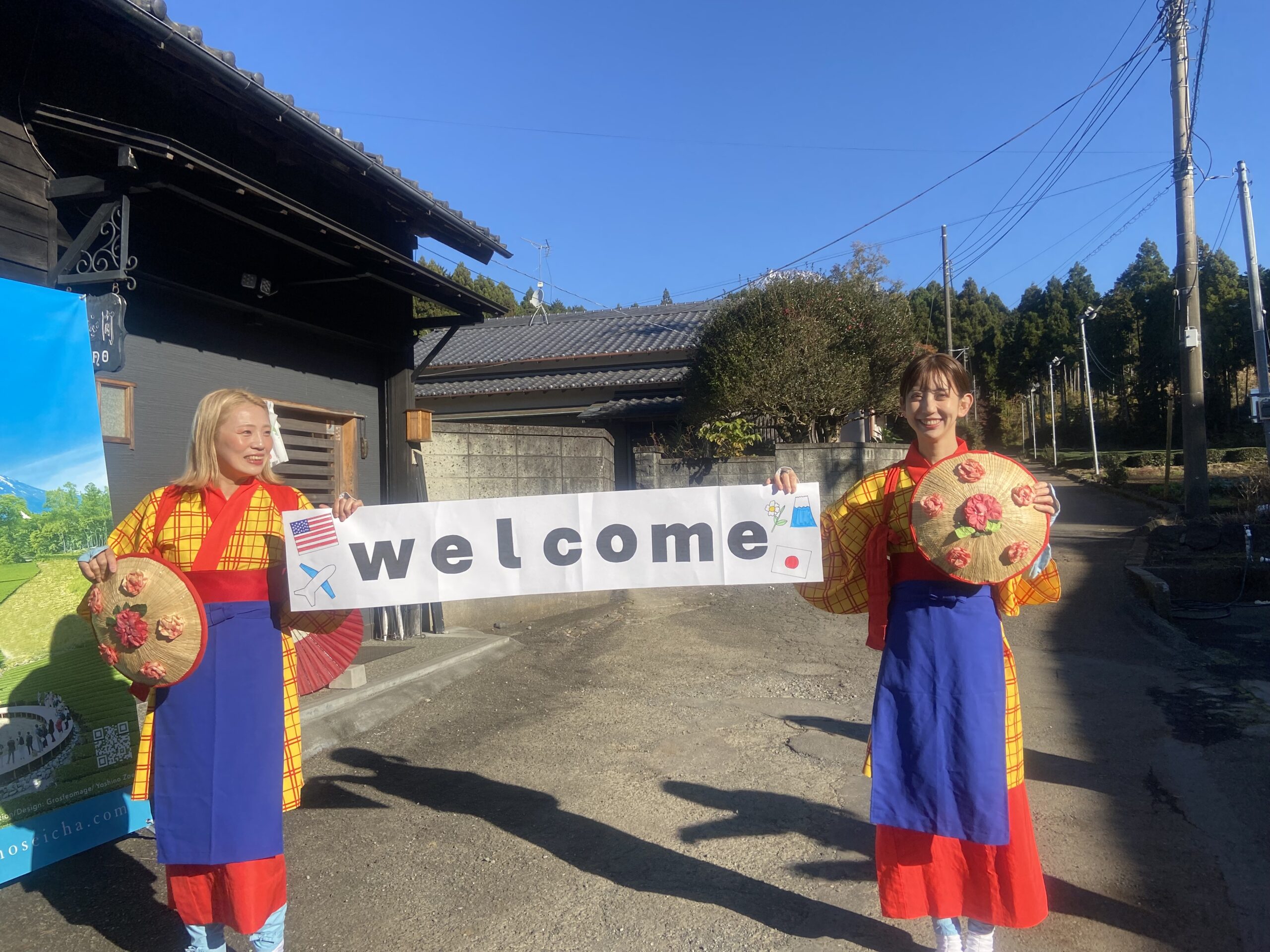
Cha-musume in traditional garbs holding a welcome sign – Photo Credit: Arigato Travel
Tea is such an important part of Japanese culture, especially in Shizuoka. What inspired you to create this experience, and why did you want to share it with inbound travelers?
Shizuoka produces about 40% of Japan’s green tea, yet many international visitors only know matcha.
We wanted to show that Japanese tea culture is not only about drinking tea, but it is also about how tea connects people.
Inbound travelers are often looking for something authentic, calm, and personal. Instead of a large tour, we chose a small, intimate experience where guests can interact directly with farmers and local hosts.
The view of Mt. Fuji from the fields is incredible. What is the atmosphere like on the farm, and what makes it such a unique place to enjoy a cup of tea?
The atmosphere is very quiet and open.
Guests sit on a private wooden deck overlooking tea fields, with Mt. Fuji visible on clear days. There is no city noise, only wind, birds, and the scent of tea leaves.
This environment naturally encourages conversation and reflection. Many guests tell us it feels like visiting a friend’s home in the countryside rather than a tourist site.
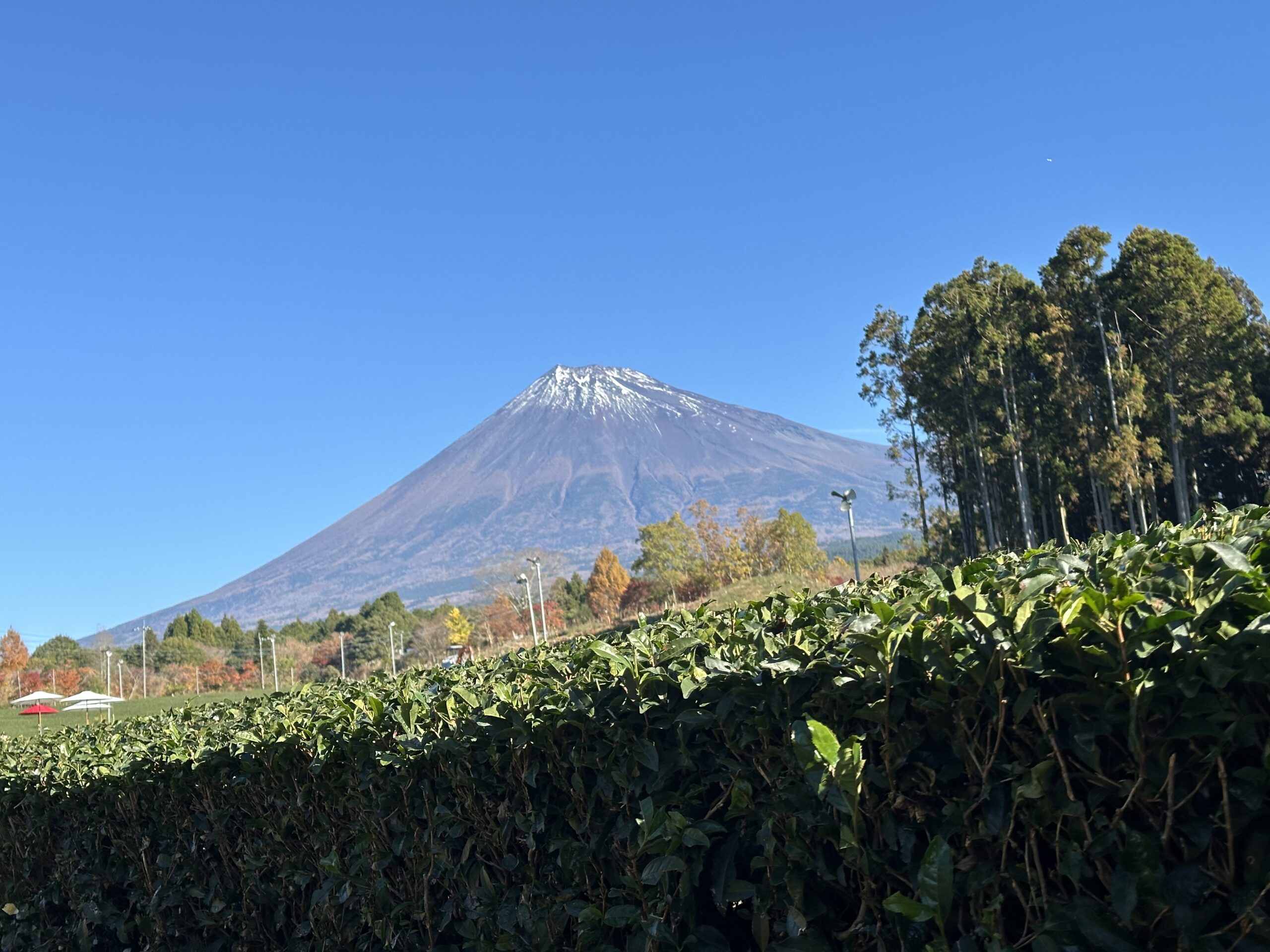
The tea fields with Mount Fuji in the background – Photo Credit: Arigato Travel
For a guest planning a visit, could you walk us through the 90-minute experience and tell us what is included?
Certainly. The experience includes:
- A welcome and introduction to Shizuoka tea culture
- Brewing and tasting Ochayama (sun-grown tea) and Kabusecha (shade-grown tea)
- Hands-on tea brewing with guidance
- Traditional tea songs and dances performed by Cha-musume (tea maidens)
- Time to relax on the deck while enjoying Mt. Fuji views
- Conversation with producers about cultivation and daily life
All activities are designed to be accessible, even for first-time tea drinkers.
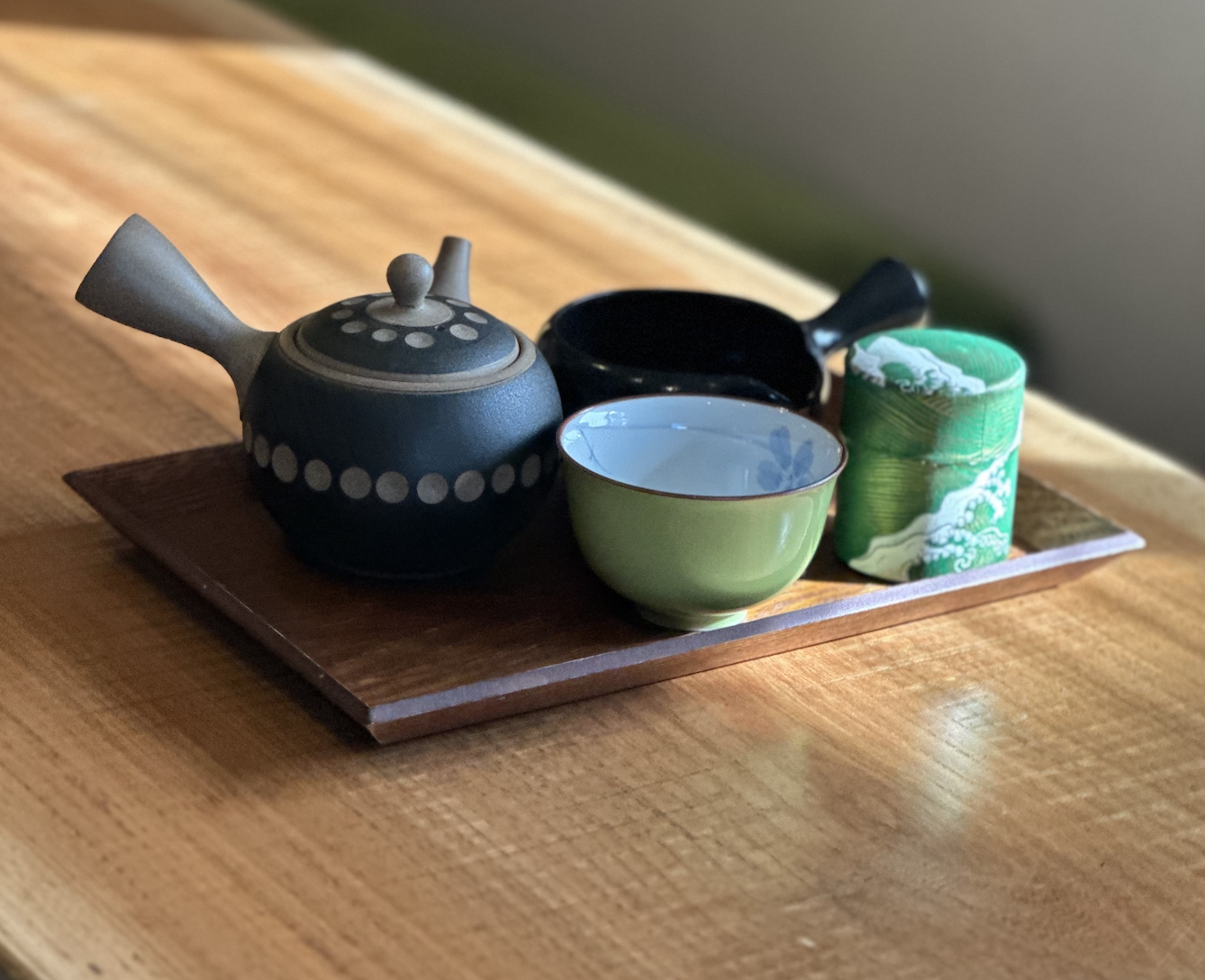
Tea utensils used during the experience – Photo Credit: Arigato Travel
In the experience, you allow guests to brew and compare Ochayama and Kabusecha. Could you explain how the different growing and cultivation techniques create such distinct flavors for the guest to enjoy?
Ochayama is grown fully under sunlight, which creates a clean, refreshing taste with gentle bitterness.
Kabusecha is partially shaded before harvest, increasing sweetness and umami while softening bitterness.
By brewing and tasting both side by side, guests can clearly understand how the cultivation methods shape flavor, even when teas come from the same region.
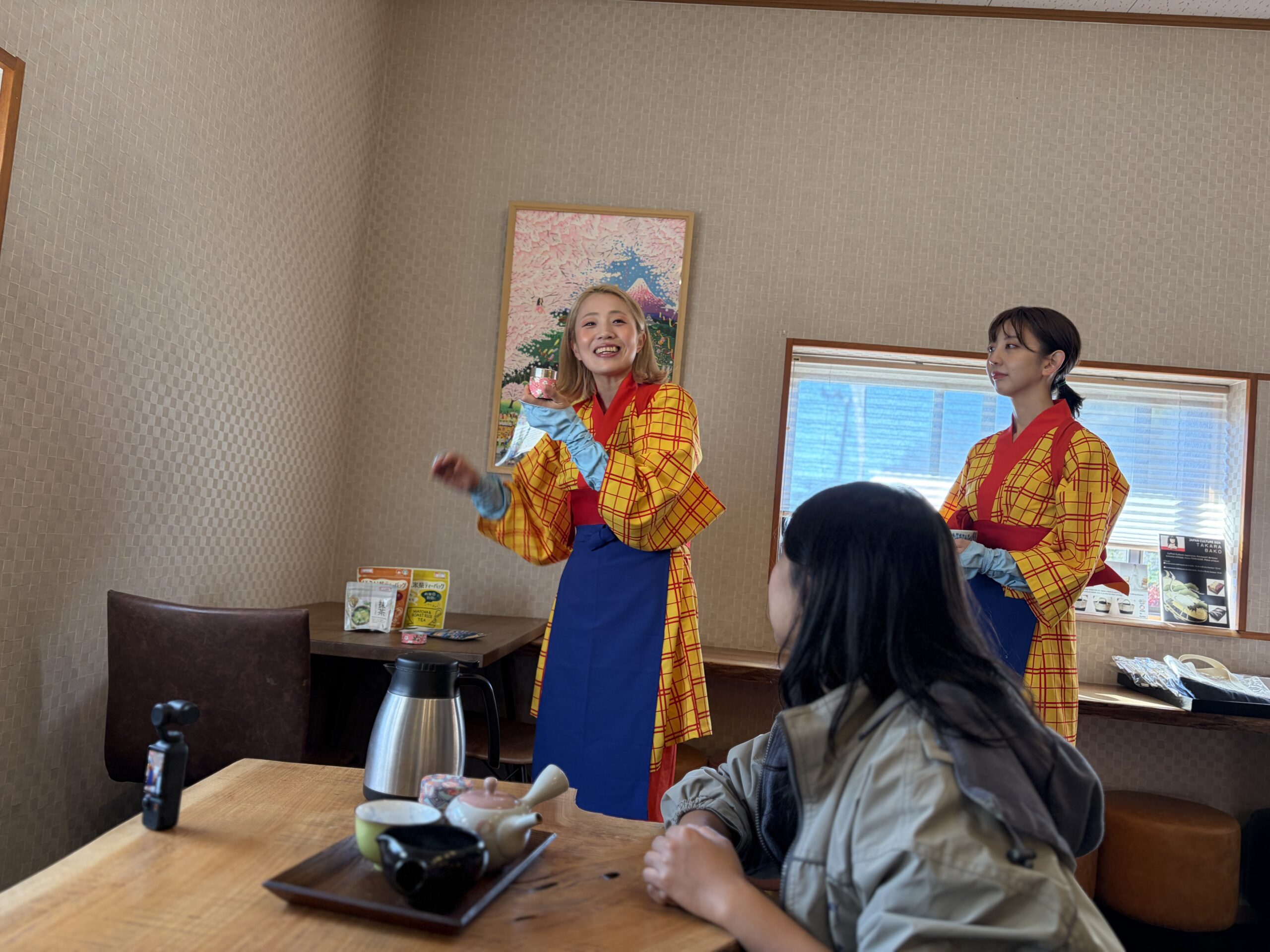
Tea brewing and tasting with the Cha-musume – Photo Credit: Arigato Travel
The Cha-musume costumes and traditional songs are such a vibrant part of the visit; where do these traditions come from, and why do you love sharing them with guests?
Cha-musume traditions come from Shizuoka’s tea-harvesting culture, where women played a central role in the fields.
The songs were originally sung during harvesting to keep rhythm and morale.
We share these traditions because they represent the human side of tea, the people who cultivated it, not just the product itself.
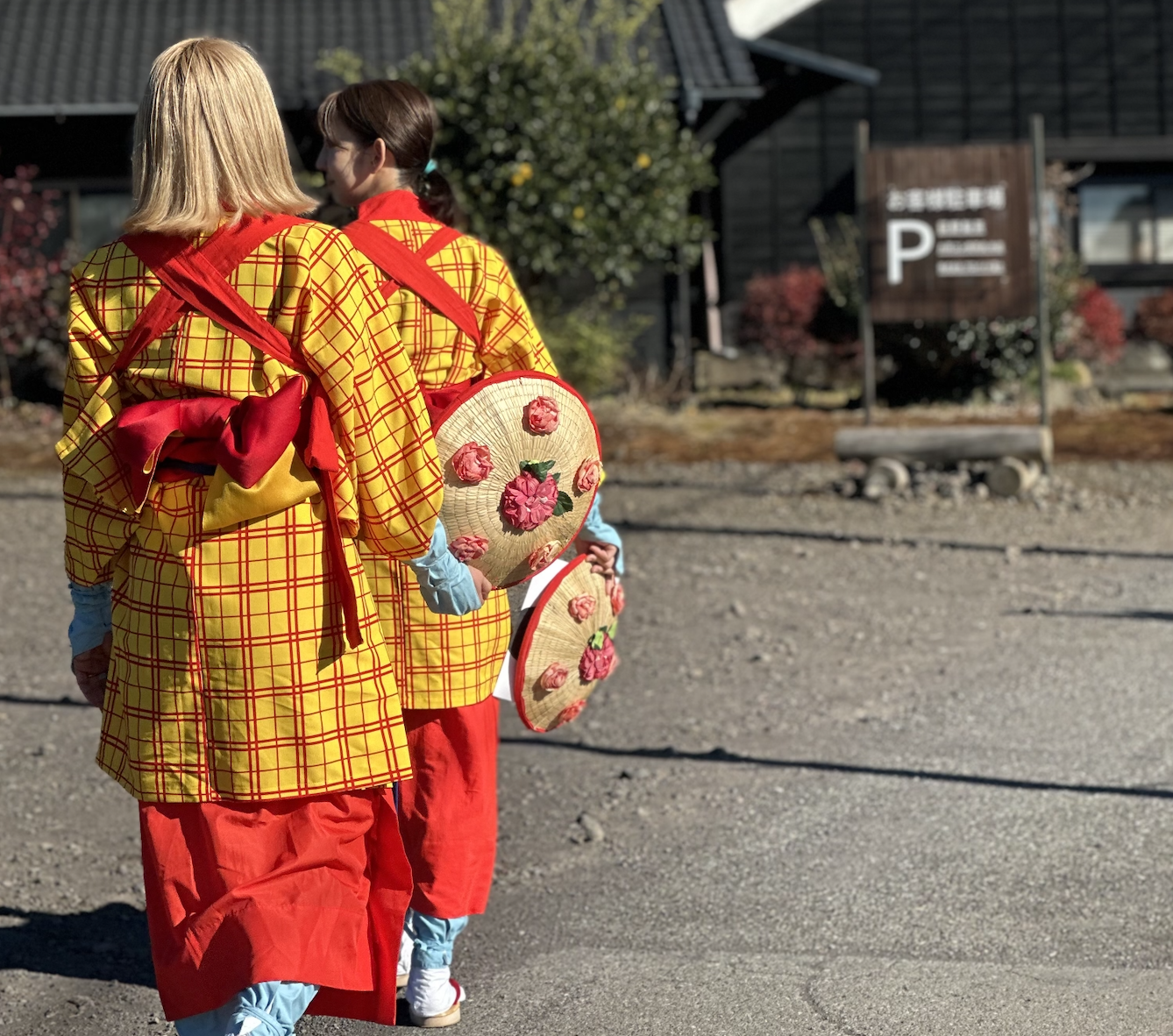
A close-up of the Cha-musume outfit as they guide the tour – Photo Credit: Arigato Travel
With 12 different tea varieties grown on-site, what is the best time of year to visit if someone wants to see the plantation at its most vibrant?
The most vibrant season is late April to early May, during the first harvest.
The fields are bright green, the aroma is strong, and Mt. Fuji is often still capped with snow.
That said, each season offers a different beauty, and we welcome guests year-round.
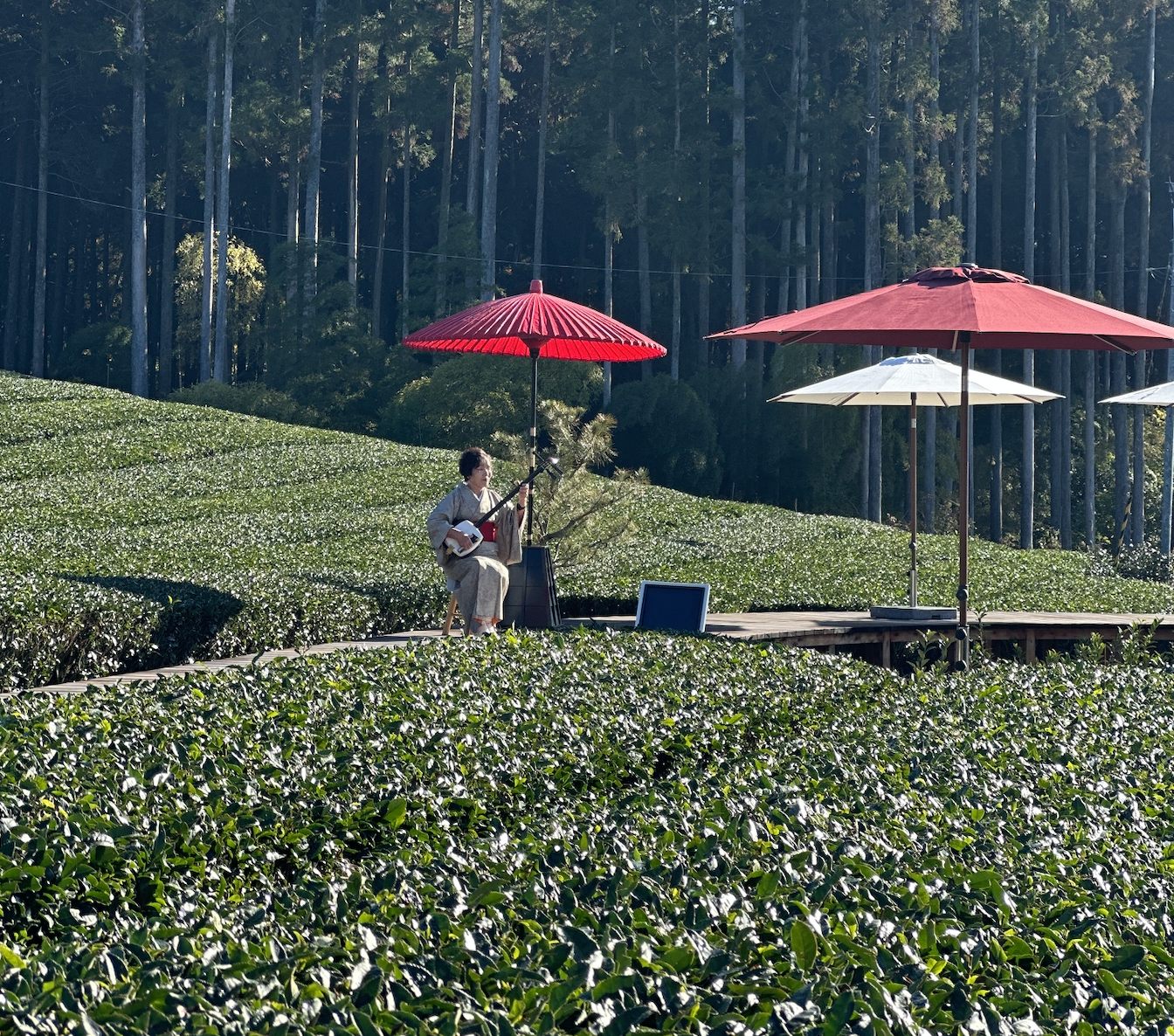
Traditional music being played in the tea fields – Photo Credit: Arigato Travel
While many people visit the popular tourist spots nearby, what do you think makes Fuji City and your specific corner of the tea world a “must-see” for travelers?
Fuji City sits between Mt. Fuji and Suruga Bay, but it is still largely untouched by mass tourism.
Here, tea fields are part of daily life, not a performance.
Visitors can see real working tea farms, meet producers, and experience tea culture where it actually lives.
That authenticity is becoming rare, and that is what makes this area special.
Aside from your wonderful tea experience, could you recommend some other interesting activities or sights that inbound travelers shouldn’t miss in Fuji City?
We recommend:
- Walking paths around the tea fields
- Local shrines and small temples
- Fuji River viewpoints
- Traditional wagashi (Japanese sweets) shops
- Local seafood from nearby Suruga Bay
Fuji City is ideal for travelers who enjoy slower, deeper exploration.
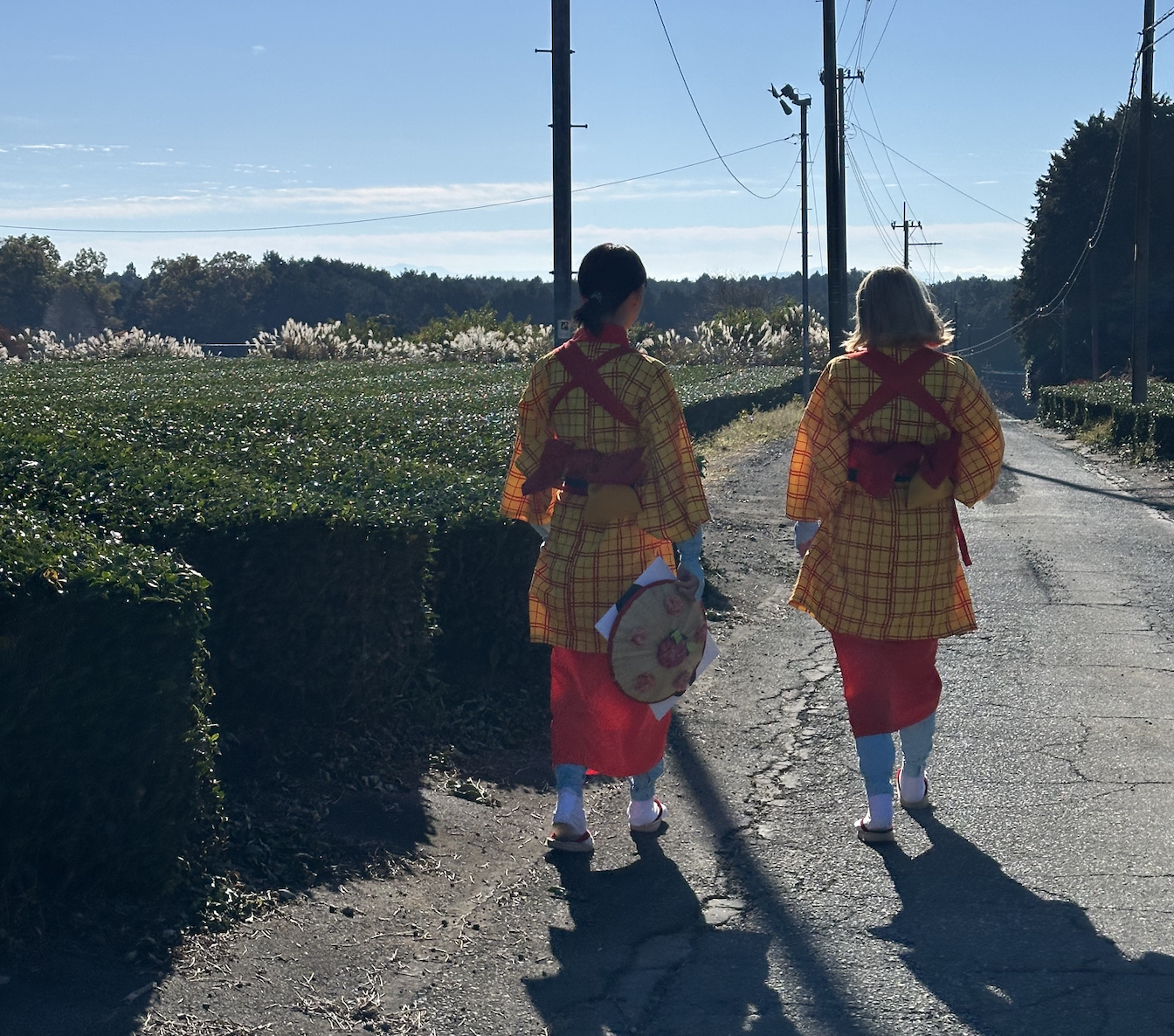
Walking along the tea fields – Photo Credit: Arigato Travel
Do you have anything else you would like to share with our readers?
Our goal is simple.
We want guests to leave feeling connected: to tea, to people, and to this place.
Tea is not something to rush.
If visitors leave with one quiet, memorable moment, then we feel we have succeeded.
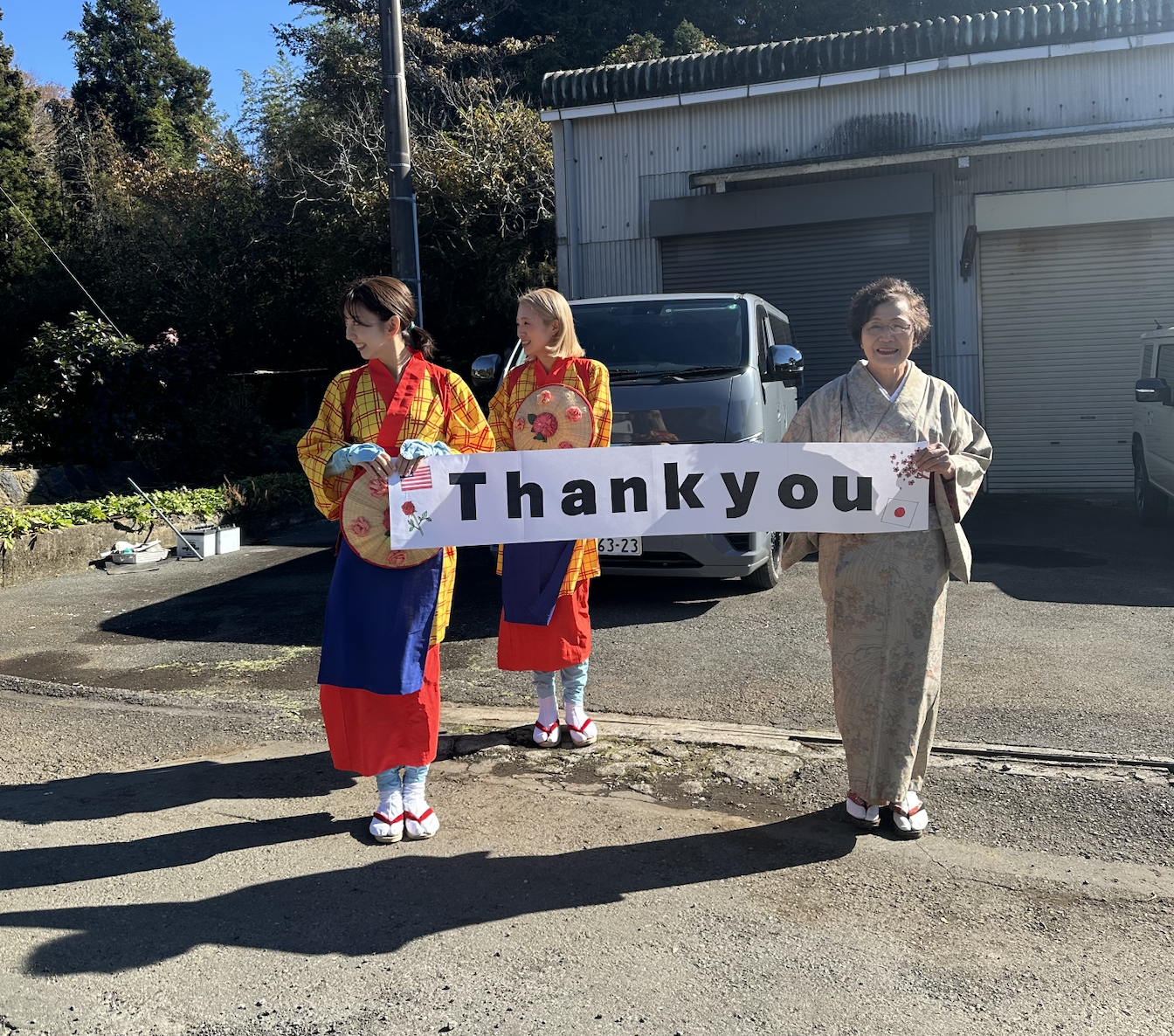
End of the tour with a thank you – Photo Credit: Arigato Travel
Thank you for sharing the story behind the “Tea Culture Experience to Connect People Through Tea” and your unique perspective on Shizuoka’s tea heritage. Your focus on personal hospitality and direct access to the beauty of the farm ensures that every guest finds a genuine connection to the local traditions and people you showcase.
Read more about Chaen’s Tea Culture Experience to Connect People Through Tea on:
Website: https://oginoseicha.com/konkatsu-cafe.html (Japanese)
Instagram: https://www.instagram.com/oginoseicha/
YouTube: https://www.youtube.com/watch?v=17NqH31kV4Y&t=1s
Featured Photo Credit: Arigato Travel
To make this tea farm experience part of your own unique journey in Japan, talk to our Tailored Travel team to create the perfect, personalized itinerary just for you. And while exploring the Shizuoka area, make sure to check out our Discovering Suruga Itinerary for a tea-tastic trip!
PIN THIS FOR LATER
1
shares
Book your pocket wifi now to stay connected through your entire Japan Journey!

Be sure to get the JR Pass to make navigating Japan during your trip that much easier!