THE BEAUTY OF RICE PLANTING FESTIVALS IN JAPAN
May 16, 2026
BY Maria Diaz
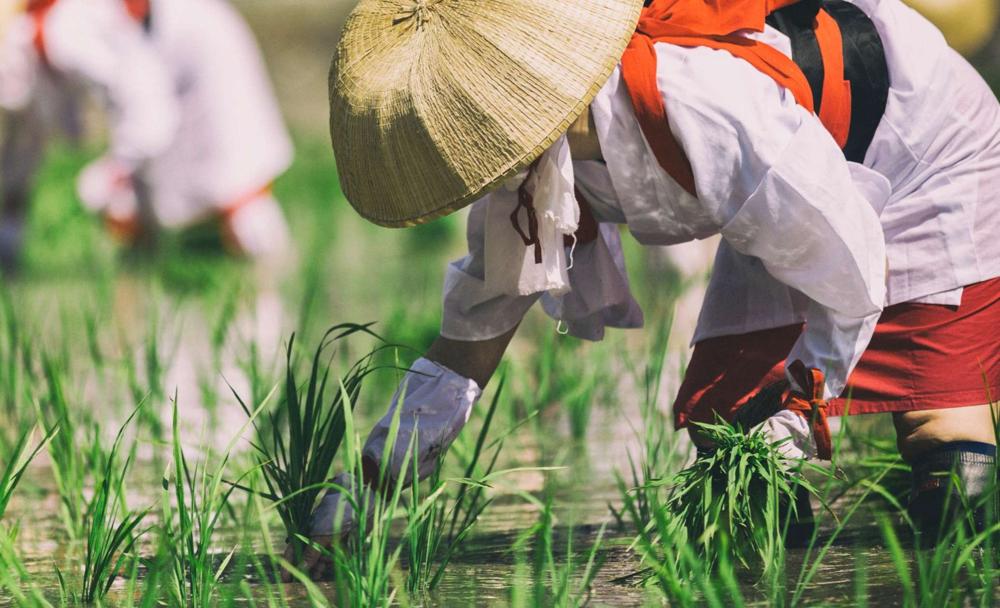
If you visit Japan in late spring or early summer, you might be lucky enough to witness one of the country’s most graceful and meaningful traditions, the Rice Planting Festivals, known in Japanese as “Otaue Matsuri” or “Taue-sai.” These festivals aren’t just about farming; they are a colorful mix of music, dance, prayer, and deep respect for nature that goes back more than a thousand years. Let’s explore what makes them so special.
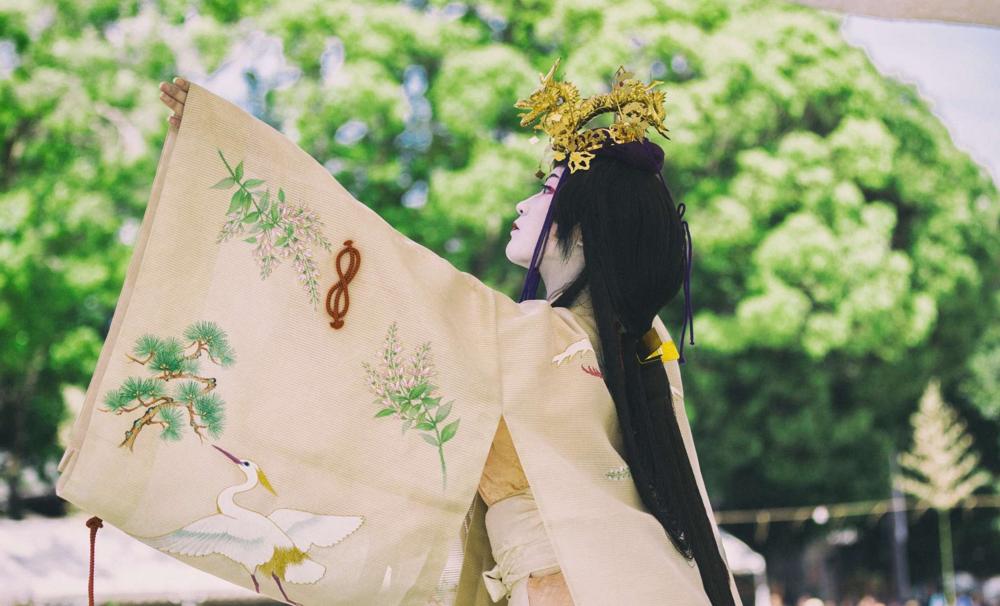
Performer during the Sumiyoshi Taisha’s Otaue Festival – Photo Credit: Sumiyoshi Taisha
What Are Rice Planting Festivals?
Rice is not only Japan’s most important harvest, but it’s also a symbol of life, community, and blessing. Every year, before the planting season begins, many shrines across Japan hold ceremonies to pray for a rich harvest. These Rice Planting Festivals are a joyful way to thank the gods of the rice fields, called Ta-no-Kami, for their protection and blessings.
During the festivals, priests perform rituals of purification, women dressed in traditional farming costumes delicately plant rice seedlings by hand, and musicians play flutes and drums. It’s a scene full of harmony, people working together, moving rhythmically as they place the green seedlings into the shallow, mirror-like paddies. The songs and dances that accompany the planting are thought to please the gods and ensure an abundant harvest in autumn.
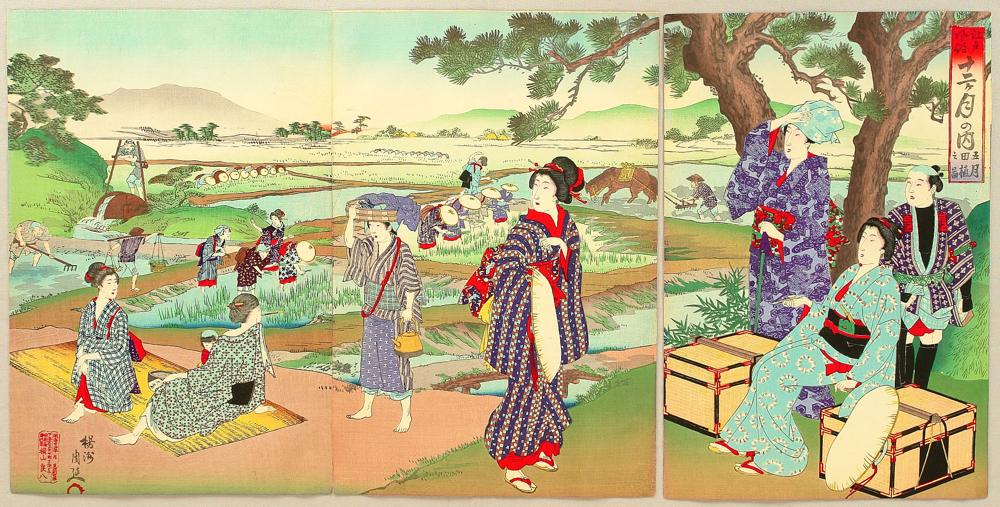
“Customs and Manners of Edo 12 Months” by Toyohara Chikanobu – Photo Credit: Ukiyo-e
A Quick Look Back
The history of rice planting festivals in Japan stretches back nearly two millennia. Rice cultivation reached Japan from the Asian mainland more than 2,000 years ago, and as it became central to Japanese life, rituals developed to honor the spirits believed to live in the fields. According to historical records, major rice-planting ceremonies were already being held as far back as the 14th century, like the one at Katori Jingu Shrine in Chiba Prefecture, which dates to 1391.
Over time, these sacred rituals evolved into grand public events that symbolized gratitude and unity. Even today, each festival keeps its ancient roots alive, blending Shinto religious practice with the rhythms of everyday village life. These ceremonies remind people of their connection to the earth, a bond that modern society sometimes forgets.
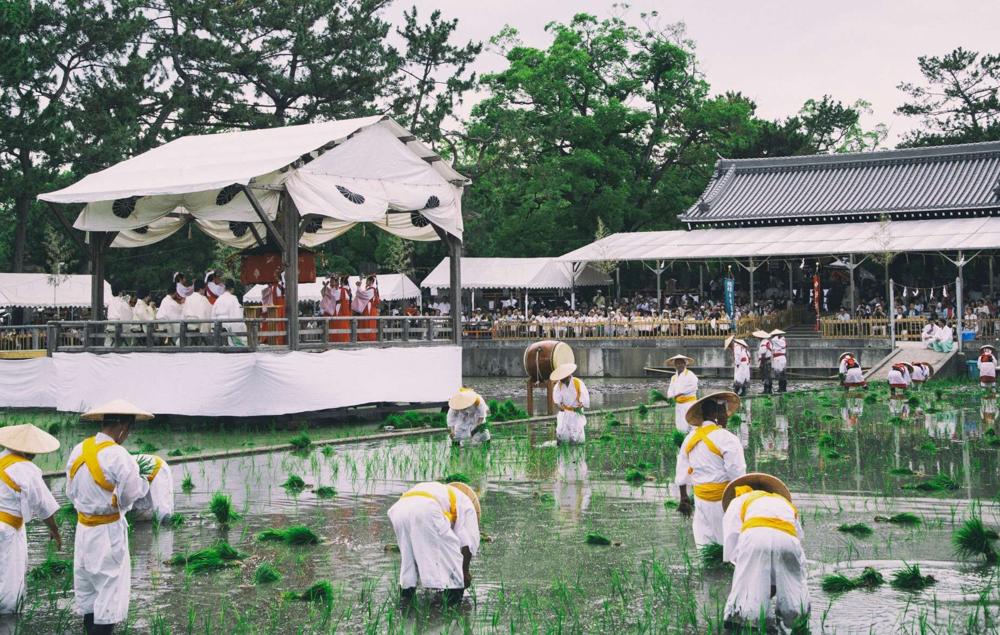
Sumiyoshi Taisha’s Otaue Festival – Photo Credit: Sumiyoshi Taisha
Where and When They Take Place
Several famous shrines across Japan hold rice planting festivals every year, each with its own traditions and atmosphere.
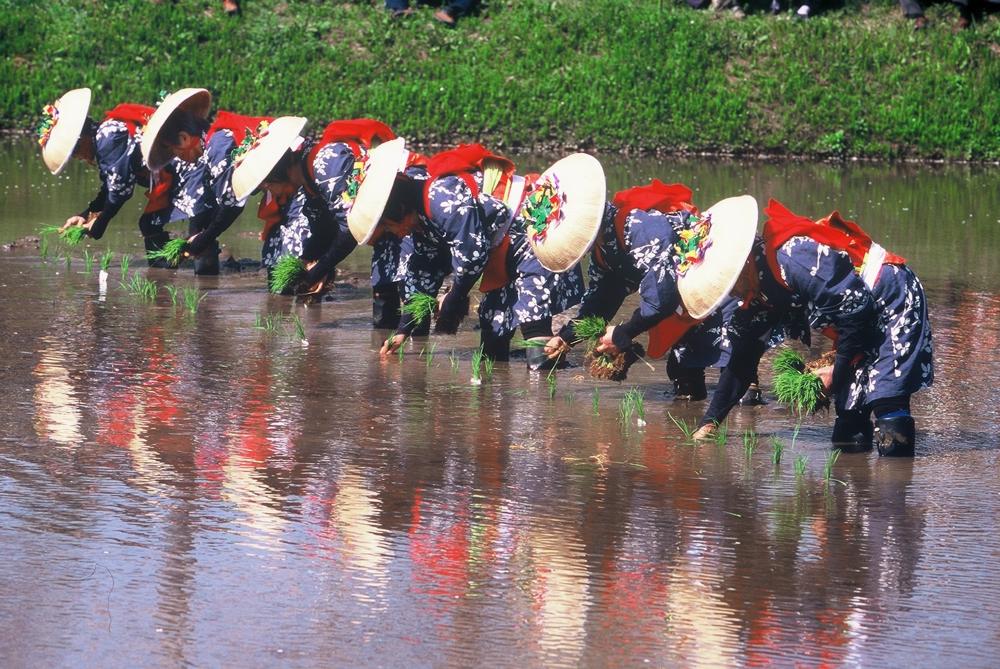
Katori Jingu’s Otaue Festival – Photo Credit: Nippon Tabi Magajin
Katori Jingu in Chiba Prefecture holds its Rice Planting Festival, one of Japan’s Three Great Rice Planting Festivals, on the first weekend of April each year, starting at 1 pm. The celebration is divided into two parts: Saturday’s Rice Paddy Cultivation Ceremony and Sunday’s Rice Planting Ceremony.
Dating back to 1391, the festival is held to pray for a successful harvest. On the first day, priests and children carry out a symbolic ritual to prepare the sacred field, using a cow along with traditional tools like a hoe and plow. On the second day, young women in traditional clothing carefully plant rice seedlings by hand, singing planting songs accompanied by drums and dance. The event takes place during cherry blossom season, which adds a particularly beautiful and seasonal atmosphere to the ceremony.
Website: https://katori-jingu.or.jp/event/ (in Japanese)
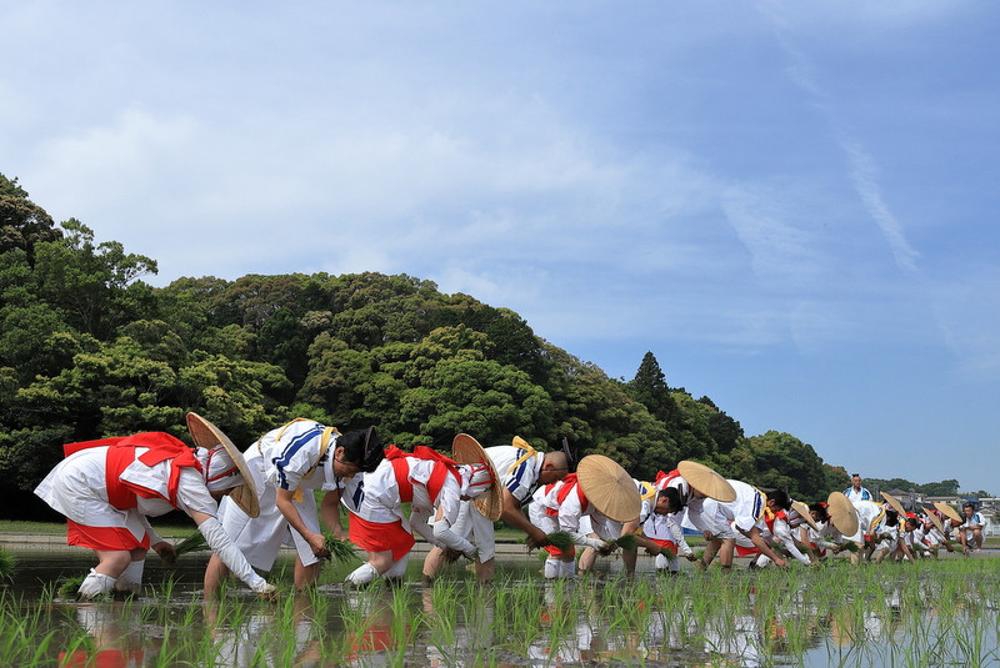
Ise Grand Shrine’s Otaue Festival – Photo Credit: Ise Jingu
The Otaue Festival at Ise Grand Shrine in Mie Prefecture is held on May 9th at 9 am. The ceremony takes place at the shrine’s sacred rice field near the Isuzu River, inside the Inner Shrine (Naikū) area. It is one of Japan’s Three Great Rice Planting Festivals, along with those at Sumiyoshi Taisha in Osaka and Katori Jingū in Chiba.
During the ritual, Shinto priests, shrine maidens, and local farmers perform traditional prayers and ceremonies before planting rice seedlings by hand. The event, accompanied by elegant music and simple dances, expresses deep gratitude for nature’s blessings and hopes for a bountiful harvest.
Website: https://www.isejingu.or.jp/en/ritual/index.html
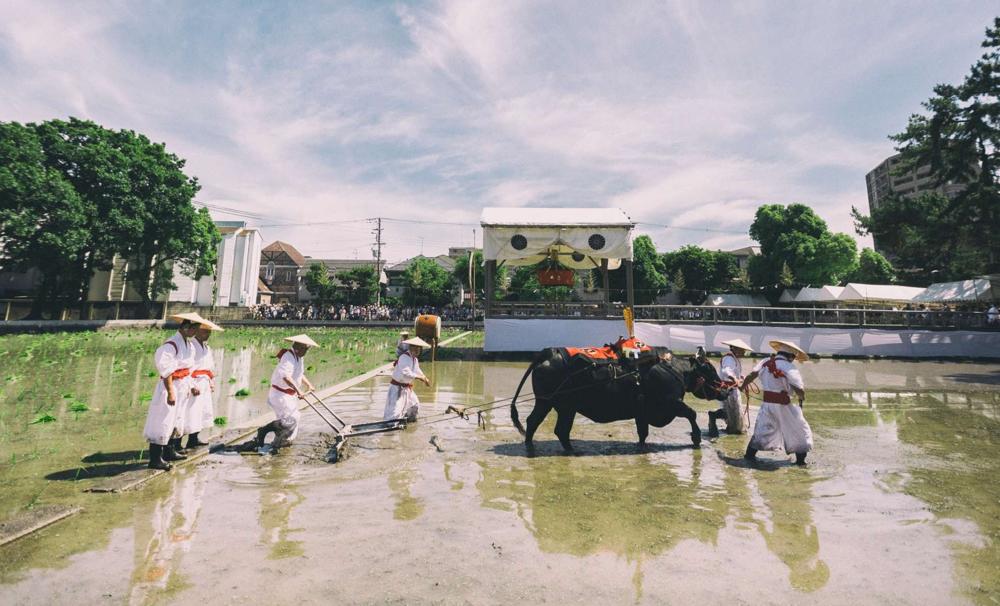
Sumiyoshi Taisha Shrine’s Otaue Shinji – Photo Credit: Sumiyoshi Taisha
Sumiyoshi Taisha Shrine in Osaka hosts the last of Japan’s Three Great Rice Planting Festivals, known as Otaue Shinji, on June 14th every year. This event, designated as an Important Intangible Folk Cultural Property, includes a gorgeous parade of people dressed in samurai armor, a solemn purification ritual, and lively rice-planting songs and dances.
Website: https://www.sumiyoshitaisha.net/en/rituals.html
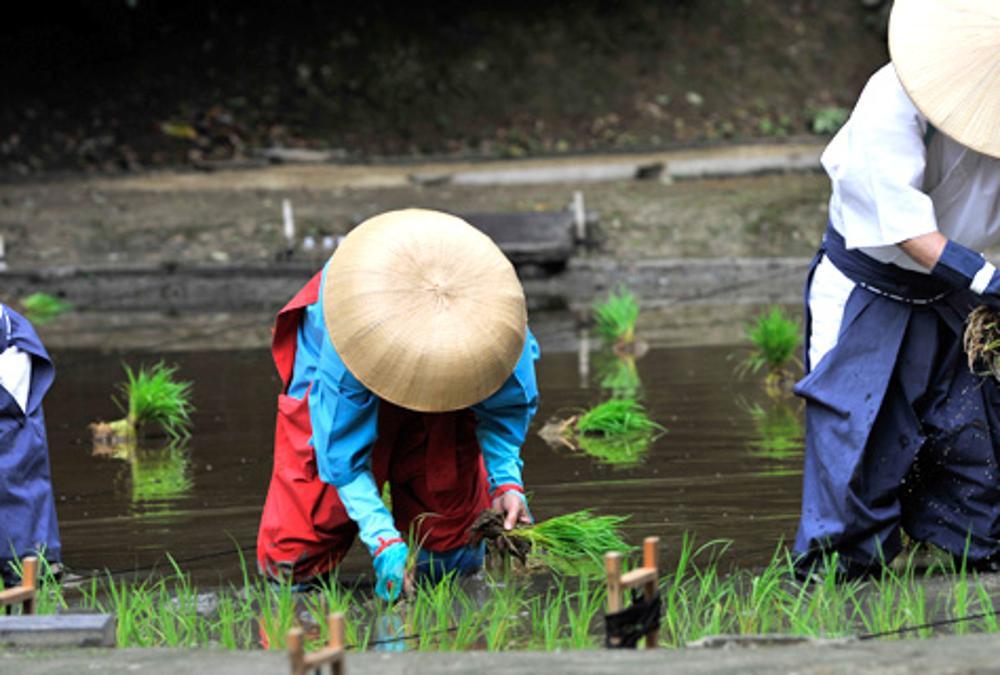
Fushimi Inari’s Otaue Festival – Photo Credit: Fushimi Inari Shrine
In Kyoto, the Fushimi Inari Shrine, dedicated to Inari, the god of rice, celebrates its Taue-sai on June 10th at 13h. Shrine maidens perform sacred dances, and women in Heian-era costumes plant rice seedlings in the shrine’s sacred paddy. The ritual is both spiritual and beautiful, accompanied by flutes and chanting that fill the summer air.
Website: https://inari.jp/en/rite/
Rice planting festivals in Japan turn a simple act into something magical. With music, rituals, and shared traditions, they celebrate nature, community, and the hope for a good harvest. They’re a beautiful reminder that even the smallest moments, like planting a grain of rice, can hold deep meaning. So no matter whether you’re a fan of Japanese history or just looking for a cultural experience like nothing else, Japan’s rice planting festivals are certainly not to be missed!
Featured Photo Credit: Sumiyoshi Taisha
Looking for more traditional Japanese experiences? Check out our special Samurai-inspired Itineraries based in Shiga- right next-door to Kyoto!
PIN THIS FOR LATER
Book your pocket wifi now to stay connected through your entire Japan Journey!

Be sure to get the JR Pass to make navigating Japan during your trip that much easier!
YOU MIGHT ALSO LIKE