The Secrets Behind Tokyo’s Deliciousness: What Really Makes Tokyo So Damn Good
Feb 7, 2026
BY Jessica Iragne
If you’ve ever come to Tokyo and thought, “Why is everything so good? Even at a random lunch place?” then congrats, you’ve already tasted the mystery.
We were recently invited to a media-only event called “The Secrets Behind Tokyo’s Deliciousness”, organized by Tokyo Tokyo: Old meets New, to learn more about why food is so good in Tokyo, but also hear about the evolution of it since the Edo Period.
Spoiler alert: it’s not just talent. And it’s definitely not luck.
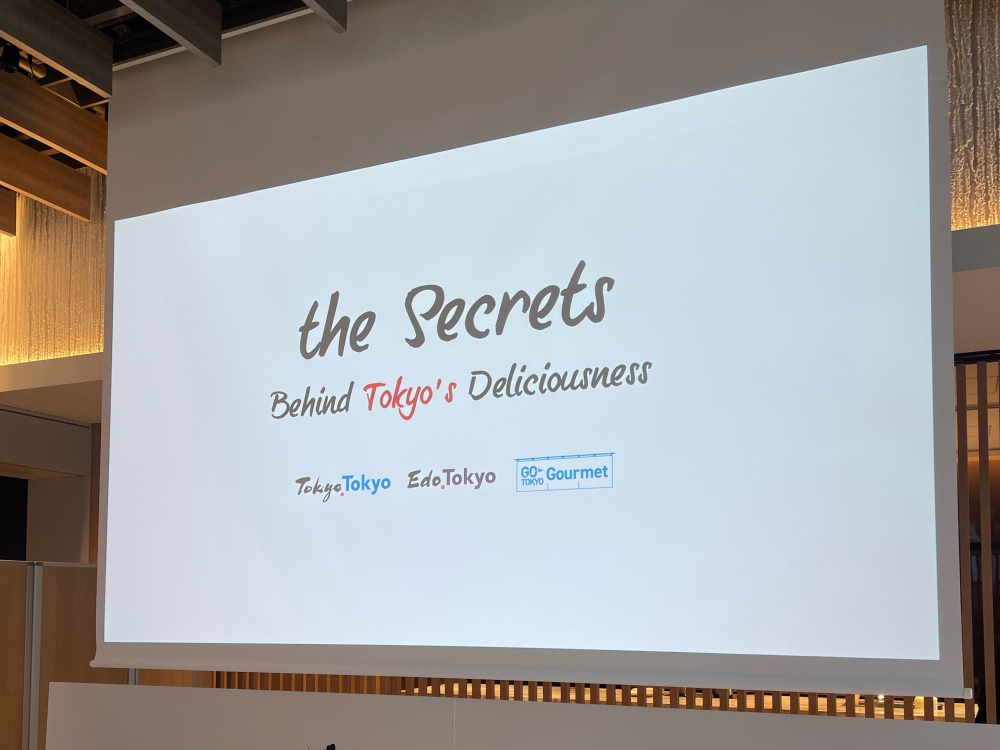
Big screen at the event – Credit: Carlotta Villa
Tokyo’s “Deliciousness” rests on 3 pillars (since Edo)
This came up again and again, and honestly, it makes so much sense once you hear it:
1: An insane supply network
Since the Edo era, Tokyo has been fed by the entire country. Fish caught in the morning arrive at the market on the same day. Vegetables, seafood, and meat, north to south, everything flows into the city.
Back then, five major highways connected Edo to the rest of Japan. Today? Add high-speed logistics, cold-storage tech, freezing innovation… and boom. Culinary evolution unlocked. Thanks to this fast, efficient, and huge supply network, Tokyo is full of fresh and delicious products that are instantly coming to our plates!
2: World-class markets
Nihonbashi is said to have emerged as a bustling merchant district, growing around Edo Castle after the Edo shogunate was established. So Tokyo started with Nihonbashi Market, but now there are 11 central wholesale markets, including Toyosu, that operate at a level that’s honestly hard to match globally.
These aren’t just “markets,” they’re ecosystems.
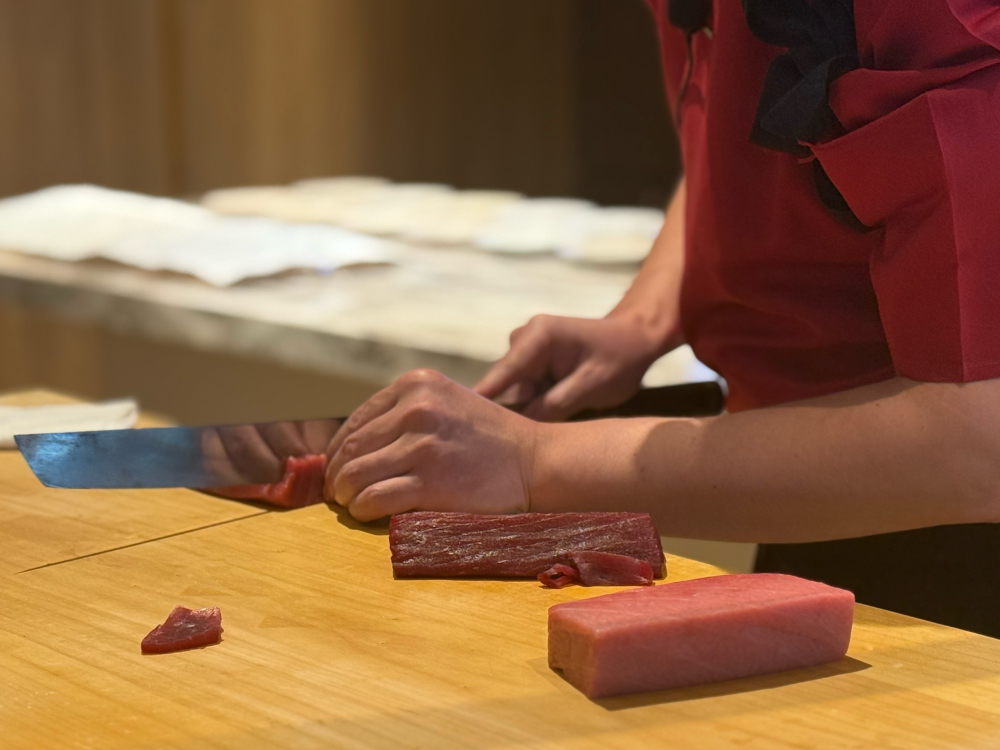
Chef at Hiroya Tokyo Mae cutting tuna – Credit Jessica Iragne
3: Specialists (aka absolute legends)
In Japan, the specialists have a deep expertise in their domain and a big commitment to their crafts. People can be experts who specialize in only one ingredient, making sure to provide the best of the best of it. Artisans have been doing the same thing for generations, and still obsess over getting better.
This deep specialization is definitely one of Tokyo’s real superpowers.
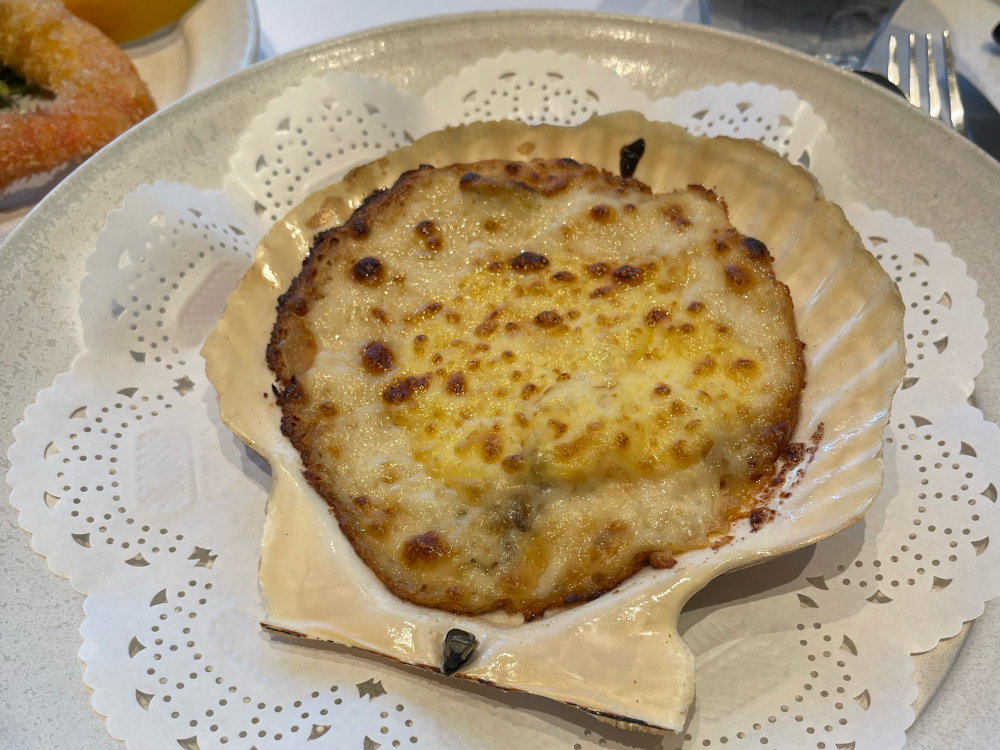
Shrimp gratin – Credit: Carlotta Villa
Day 1: Tradition that refuses to disappear
We started the event on day 1 with Ginza Mikawaya, one of Tokyo’s most iconic yoshoku restaurants. For those unfamiliar, Yoshoku is Japanese Western-inspired cuisine. It may look European on the surface, but it is deeply Japanese.
Mikawaya began as a French restaurant nearly 90 years ago, back when Ginza was still rebuilding its identity. What we tasted:
- Fried Japanese tiger prawn (ebi fry)
- Shrimp gratin with béchamel
Classic and simple on paper, but executed with terrifying precision. One thing that stood out: the relationship between the restaurant and its shrimp supplier. The owner explained how constant communication is the real secret behind consistency. Yoshoku may have European roots, but today it’s a uniquely Japanese genre, and if you are in Ginza, make sure to visit Ginza Mikawaya!
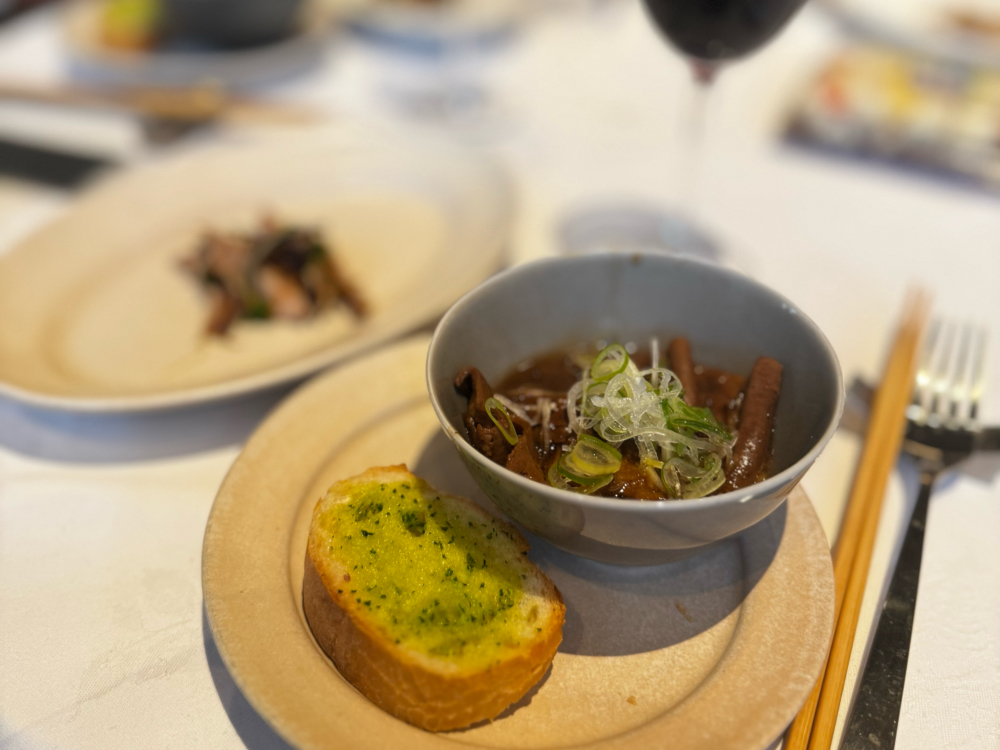
Nikomi and garlic toast – Credit: Wesley Nason
The next restaurant that was introduced to us was Yamariki, a century-old izakaya in Morishita that’s been open since 1924.
We tried:
- Offal stew (nikomi) simmered in Haccho miso, served with French-style garlic toast
- Pork stomach sashimi (gatsu-sashi) with ginger soy sauce
Yes, you read that right. Garlic toast with nikomi. And somehow… it works more than well!
What we loved here is how sustainability was part of the story long before it became a buzzword. Using offal wasn’t trendy; it was necessary after WWII. And now it’s tradition.
Also: pairing this with Pinot Noir instead of sake was very unexpected! Izakaya culture is uniquely Japanese, and Yamariki is a perfect example of how tradition evolves without losing its soul.
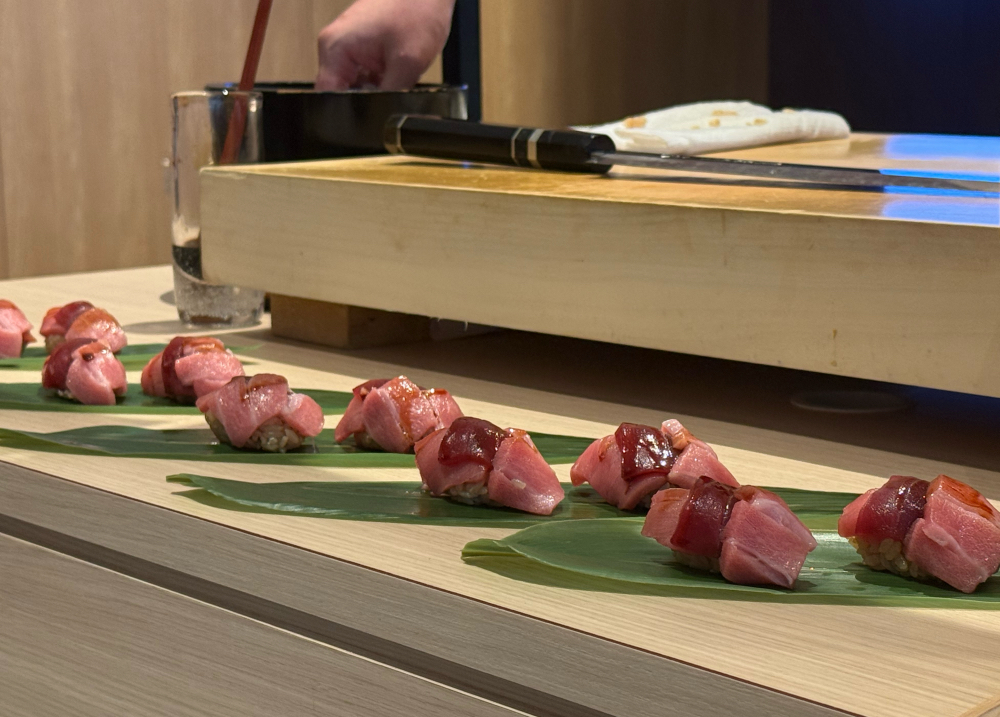
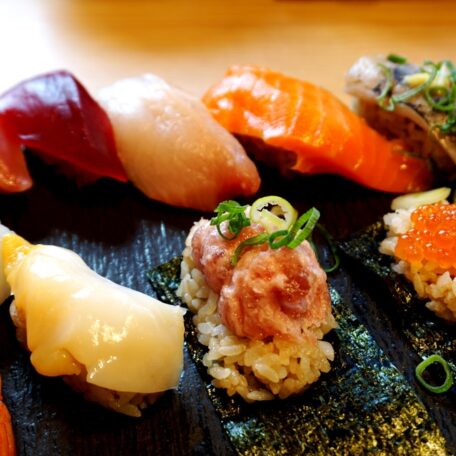
Tuna sushi made by the chef at Hiroya Tokyo Mae – Credit: Jessica Iragne
Day 2: Evolution, innovation, and why Tokyo never stands still
The second day focused on evolution, starting with sushi and Hiroya Tokyo-mae restaurant, where tradition meets advanced aging and cold-storage techniques. Thanks to the chef, we explored a modern interpretation of Edomae sushi, but Tokyomae style! Here is what we had to try:
- “Tuna tune TUNA” sushi
- Milt, Egg, Broth
The standout bite that I will always remember was the “Tuna Tuna TUNA,” three cuts from the same fish (tuna obviously!) sushi. As soon as it entered my mouth, it just disappeared… it was amazing! The revisited chawanmushi (savory egg custard) was very interesting too! The concept was to put some rice in it so it looked more like a risotto than the traditional dish we’re used to. As a drink, we were served a glass of doboroku (unfiltered) sake. First, we drank it just as it is (what I am used to!), but then the chef put some black pepper in it and… Oh my god! I would never have thought of it, and for sure I will do it again. The balance was perfect, and the taste was very unique with a punch!
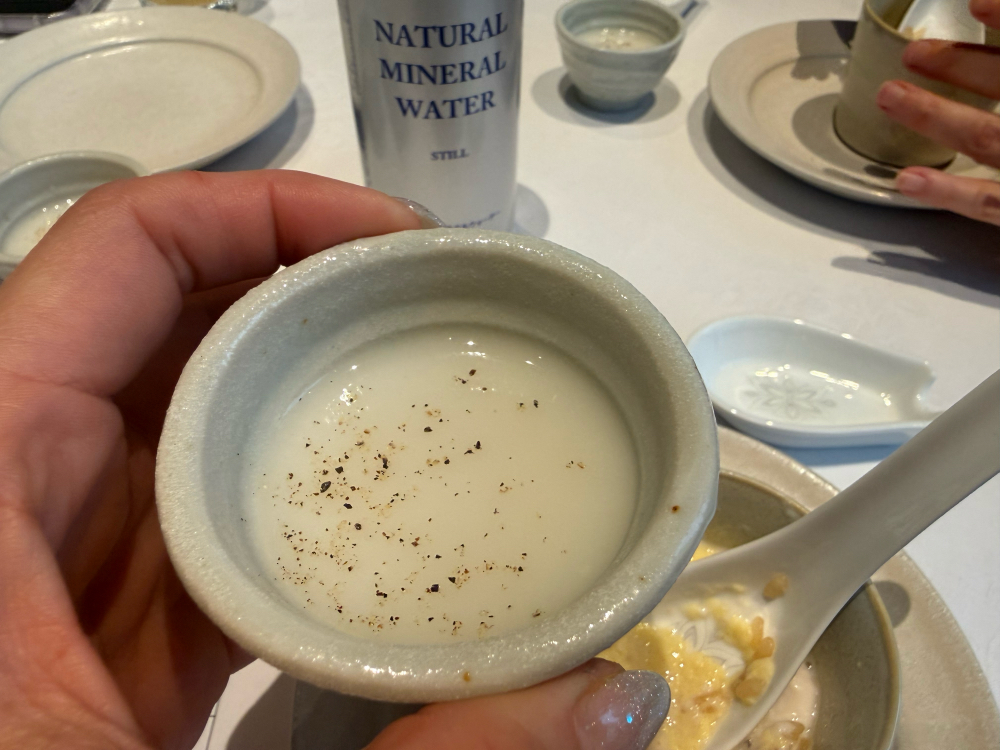
Doburoku sake with black pepper – Credit: Jessica Iragne
This wasn’t about showing off. It was about understanding how technology has expanded what sushi can be. Nowadays, aging, freezing, and precise sourcing aren’t shortcuts; they’re tools. And yes, the chef still buys from the same trusted supplier who knows exactly what he wants. Evolution doesn’t erase relationships. It builds on them.
Then came the chefs at Tenki, a restaurant in Shibuya where tempura gets a very Tokyo twist via French technique.
The highlights were:
- Shrimp tempura with citrus-herb sauce
- Seasonal vegetable tempura “taco style” (yes, you eat it with your hands, and it was my favorite to be honest!)
- Strawberry tempura
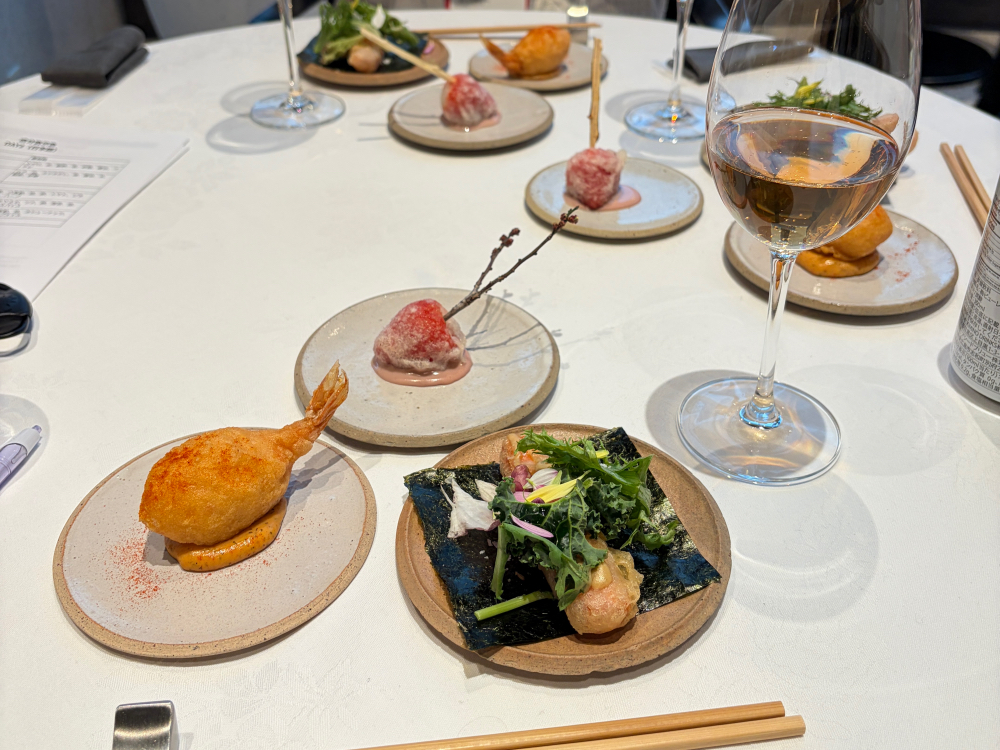
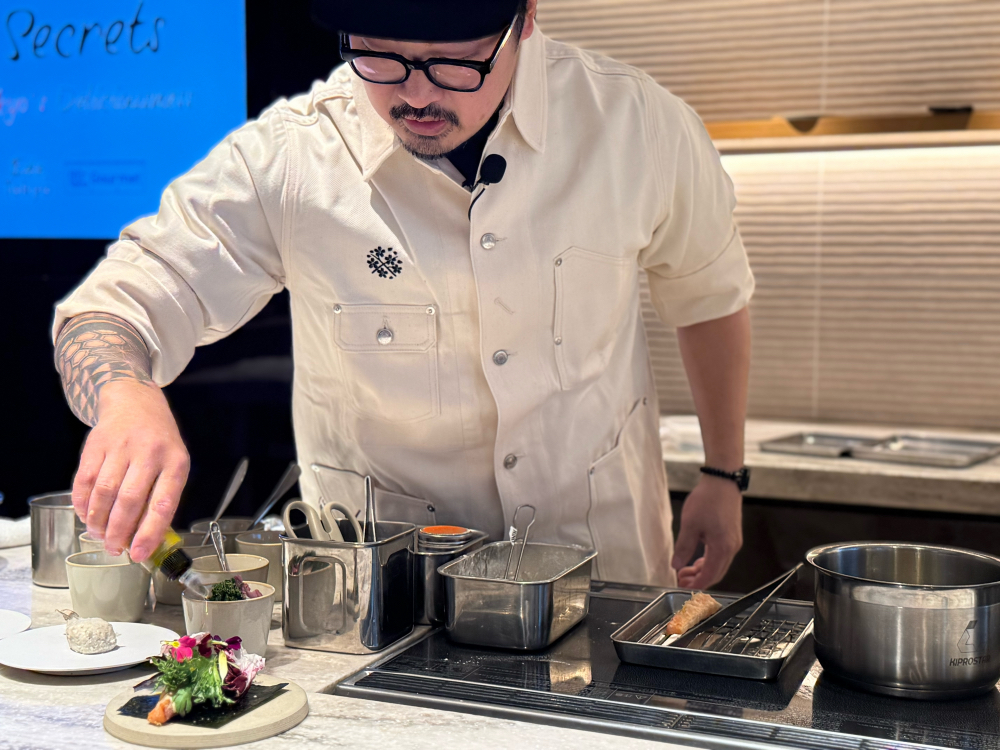
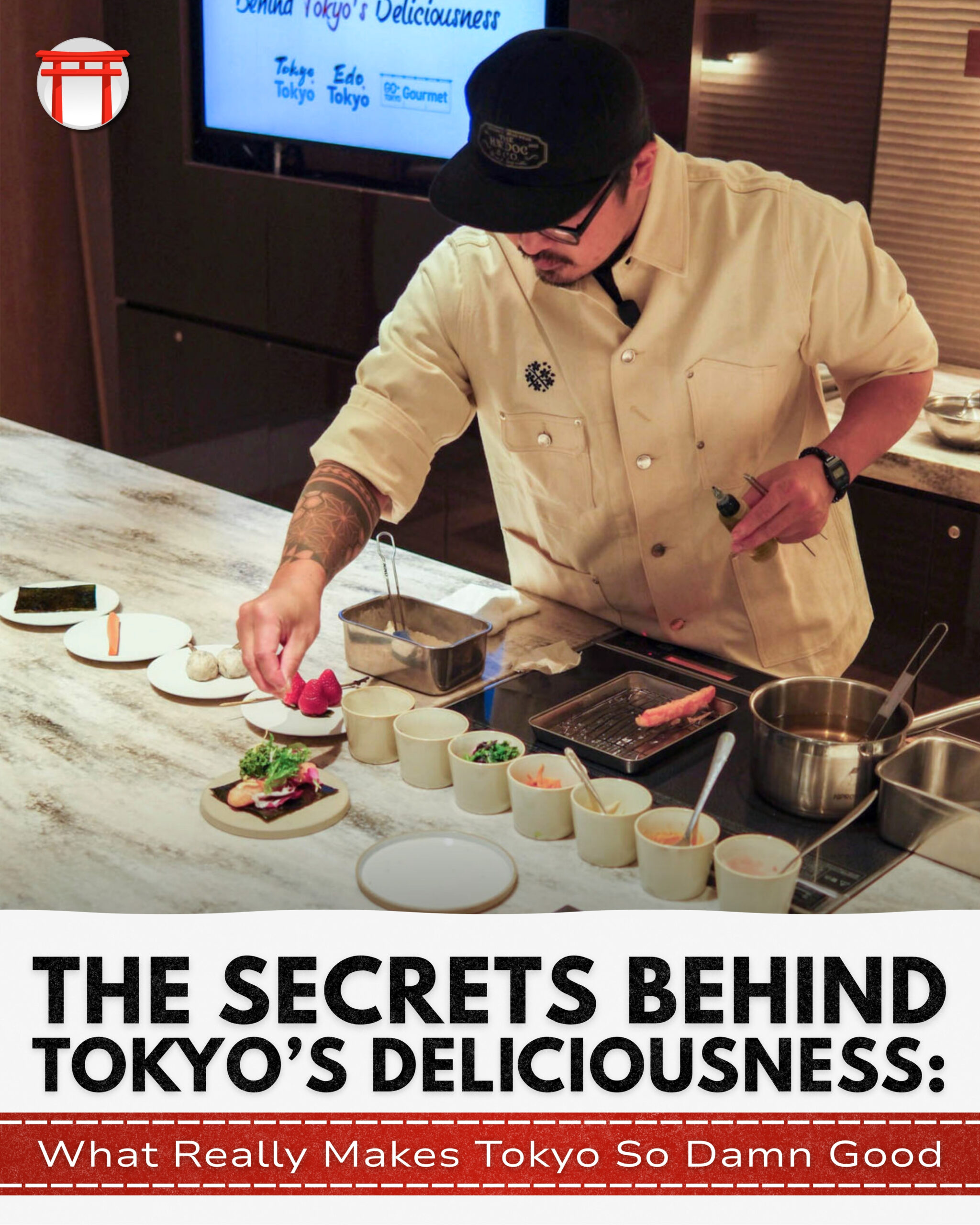
Tempura dishes made by the chef at Tenki – Credit: Karina Kilibayeva
Tenki focuses on:
- A batter that is carefully designed to match the character of the shrimp/ vegetables they use
- Precise choice of oil and temperature
- Seasonal, sometimes unexpected ingredients
- A completely new way of eating tempura (with your hands)
Is it traditional? Yes. Is it innovative? Also yes. Is it very Tokyo? 100%.
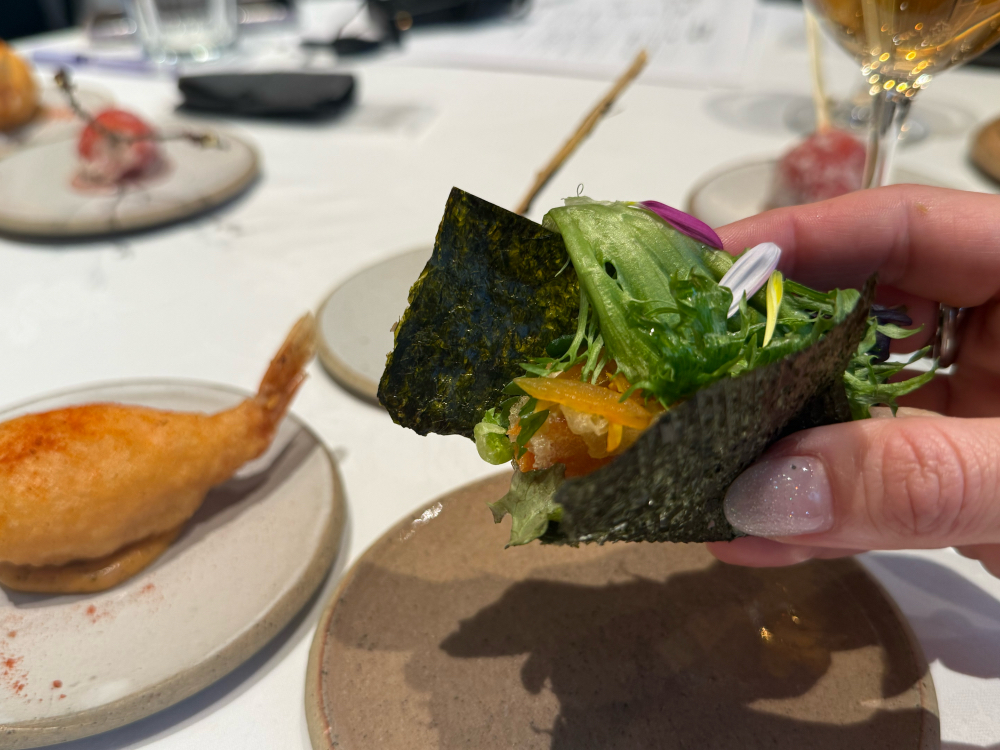
Seasonal tempura, Tacos style – Credit: Jessica Iragne
Tokyo’s food scene isn’t great despite change; it’s great because of how tradition and innovation coexist.
This event reminded us that Tokyo’s “deliciousness” isn’t accidental. It’s the result of:
- Centuries-old systems
- Relentless attention to quality
- Deep relationships between chefs, markets, and specialists
- And a city that never stops refining what it already does well
Also, fun fact to casually drop at dinner parties: Tokyo has around 150,000 restaurants and more Michelin stars than any city in the world. You know where you need to travel now, right?!
As a team that spends its life introducing travelers to Japanese food culture, this kind of behind-the-scenes storytelling is exactly why Tokyo never gets boring, even after years of living here.
And yes, it also confirmed something we already knew: Tokyo isn’t just a place to eat. It’s a place to understand food. Now excuse me while I go think about that tuna, tuna, tuna sushi again…
Feature Photo: Jessica Iragne
Make sure to join one of our expert-led Food Tours in Tokyo to experience why it’s one of the best culinary destinations in the world!
PIN THIS FOR LATER
Book your pocket wifi now to stay connected through your entire Japan Journey!

Be sure to get the JR Pass to make navigating Japan during your trip that much easier!
YOU MIGHT ALSO LIKE