Vintage Kimono Buying Guide in Tokyo
Feb 11, 2026
BY Natalie Burnes
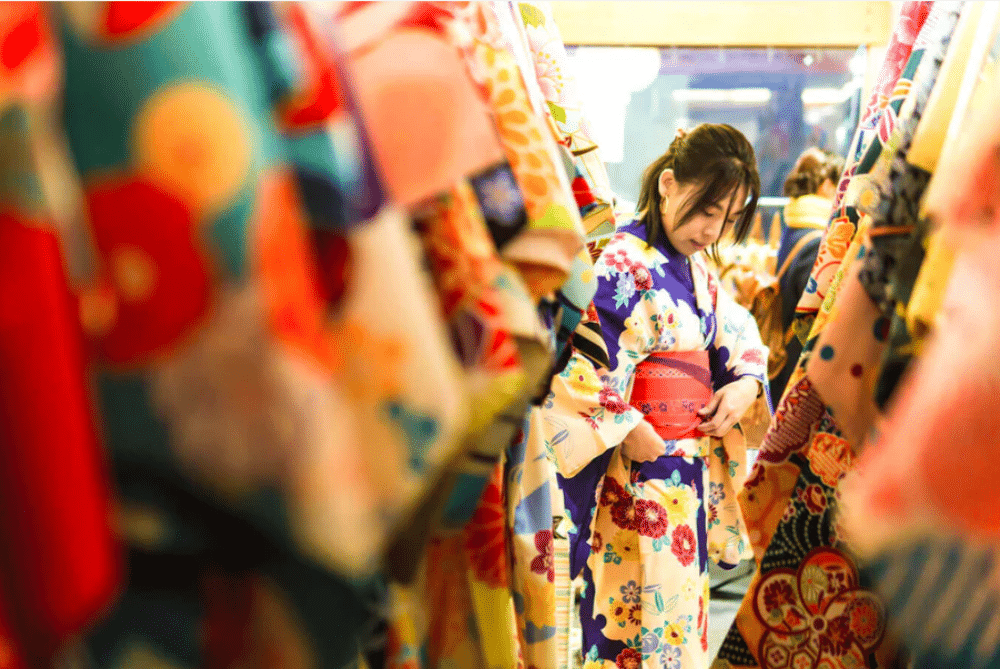
With the kimono being such a staple of Japanese tradition, and many people still choosing to wear them today, it’s no surprise that travelers often hunt for these beautiful garments to bring home. A kimono is more than just a souvenir; it is a piece of clothing steeped in cultural significance.
Tokyo is home to many vintage stores that offer second-hand pieces, making these exquisite garments affordable and accessible to everyone. The variety is truly endless, ranging from bold, retro Showa-era patterns to elegant silk kimono delicately stitched with phoenixes or shrines. Beyond the purchase itself, browsing for vintage finds allows you to literally touch a piece of history from decades past.
Having visited countless shops and owning several pieces myself, ranging from everyday wear to formal furisode, I’ve put together this guide to the best-rated spots in the Tokyo area.
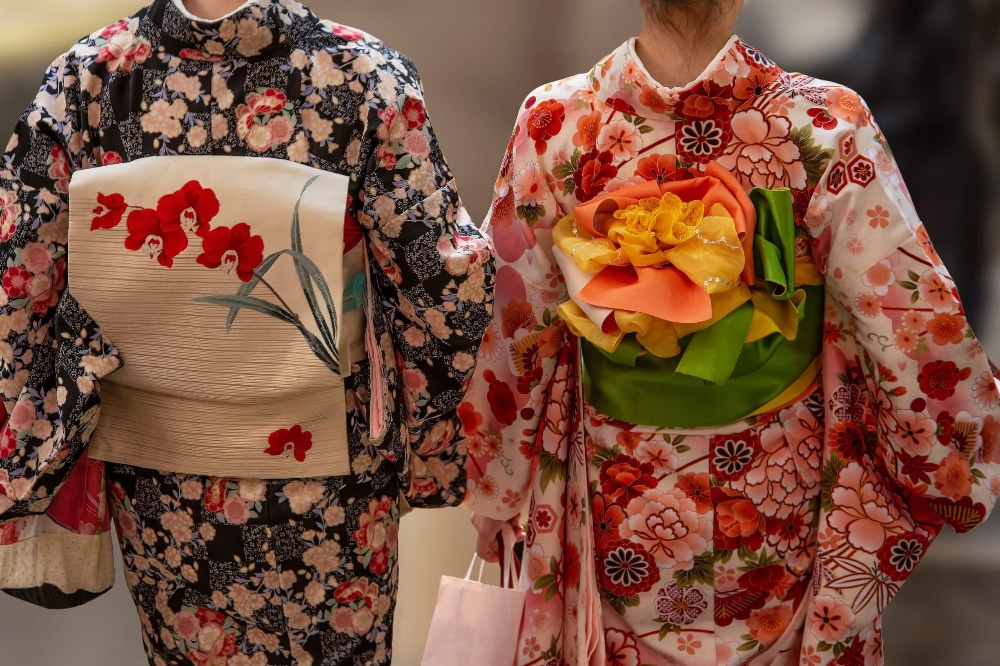
A kimono and a furisode side-by-side – Photo Credit: Bokksu
A quick kimono overview
Before you begin your search, it’s helpful to understand the different types of kimonos so you can find the one that best suits your needs. Because there are so many varieties, it is easy to accidentally purchase a style not intended for your specific occasion. A primary example is the difference between male and female structures.
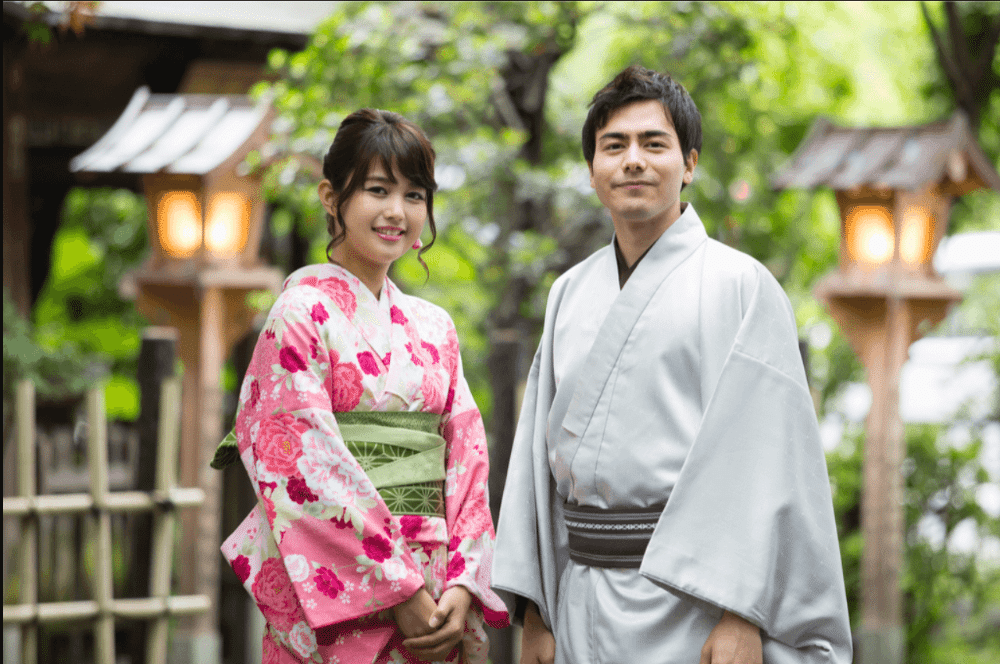
Typical female and male kimono – Photo Credit: sakura.co
Regular sleeved kimono
While the terminology can be confusing, a good rule of thumb is to look at the sleeves. Female sleeves are detached from the body with an opening along the side, whereas male sleeves are sewn directly to the body of the garment. Male kimono also tend to be more understated, featuring plain designs and dark colors. In contrast, female designs are often vibrant, printed, and designed to stand out.
Here are the most common types of regular kimono:
Homongi: These feature flowing designs that wrap around the body. They are semi-formal pieces worn by both married and unmarried women for tea ceremonies or shrine visits. If you want a garment with intricate patterns, this is the one for you.
Iromuji: This is a plain-colored kimono without any patterns. It is perfect for those looking for something simple, elegant, and less flashy.
Komon: Instead of intricate hand-stitching, these are decorated with repeated stencil-dyed patterns. These are excellent for daily wear and often feature seasonal motifs, like cherry blossoms for spring or maple leaves for fall.
Tomesode: Available in black or white, these feature 3 to 5 family crests and are highly formal, typically worn at weddings or funerals. Since these are very specific to ceremonies, you might find fewer opportunities to wear a tomesode back home!
Montsuki: This is the standard male formal kimono, typically dark blue or black. It is often paired with hakama (pleated trousers), a haori (jacket), and a thin obi.
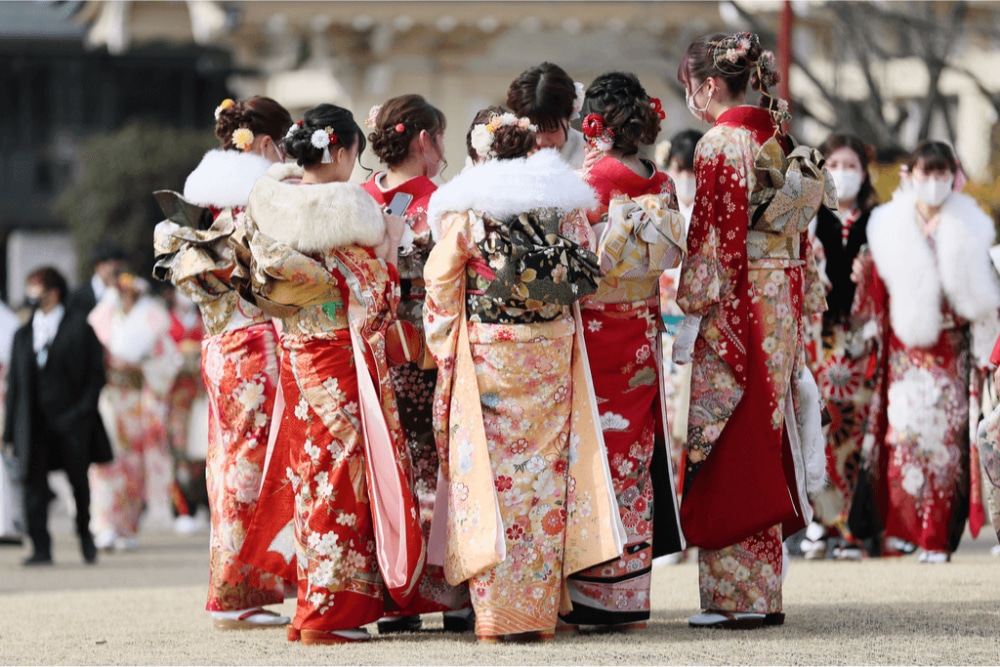
Coming of Age Day Ceremony – Photo Credit: sakura.co
Furisode
Meaning “swinging sleeves,” the furisode is easily recognized by its long, flowing sleeves. They come in almost every color, though red is a classic favorite, and are paired with a large obi tied into an elaborate bow or flower. Traditionally worn by unmarried women celebrating their 20th birthday (Seijin-no-hi), this is a youthful, elegant style. If you are attending a Japanese wedding or a formal event, a furisode makes for an unforgettable and stunning choice.
Note: During winter ceremonies, many women pair these with fluffy white mufflers to stay warm!
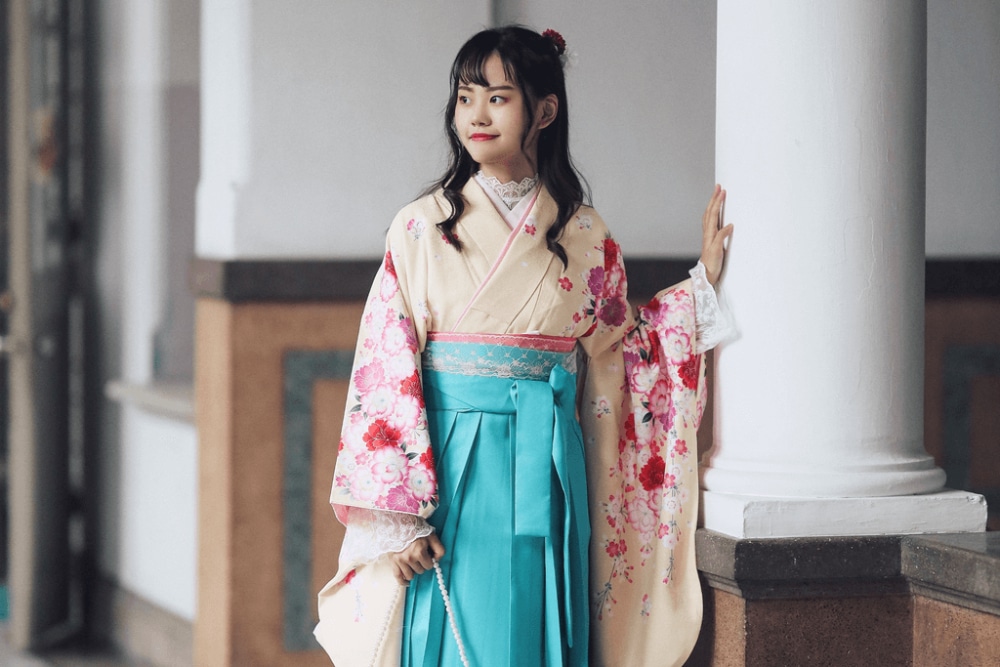
A young woman wearing Hakama – Photo Credit: sakura.co
Hakama
This style features a long pleated skirt worn over the kimono. These are typically meant for graduation ceremonies, so be wary of purchasing these if you aren’t graduating soon. Like the furisode, the kimono paired with hakama often feature long sleeves.
These are the three main types of kimono, but there’s a wide variety beyond these, including wedding varieties, yukata, and many more. If you’re searching for something more specific, some of the shops mentioned in this article carry them, though you may need to visit a few before finding exactly what you’re looking for.
Where to buy kimono in Tokyo
From dedicated boutiques to hidden flea markets, here are my top recommendations for finding the perfect piece.
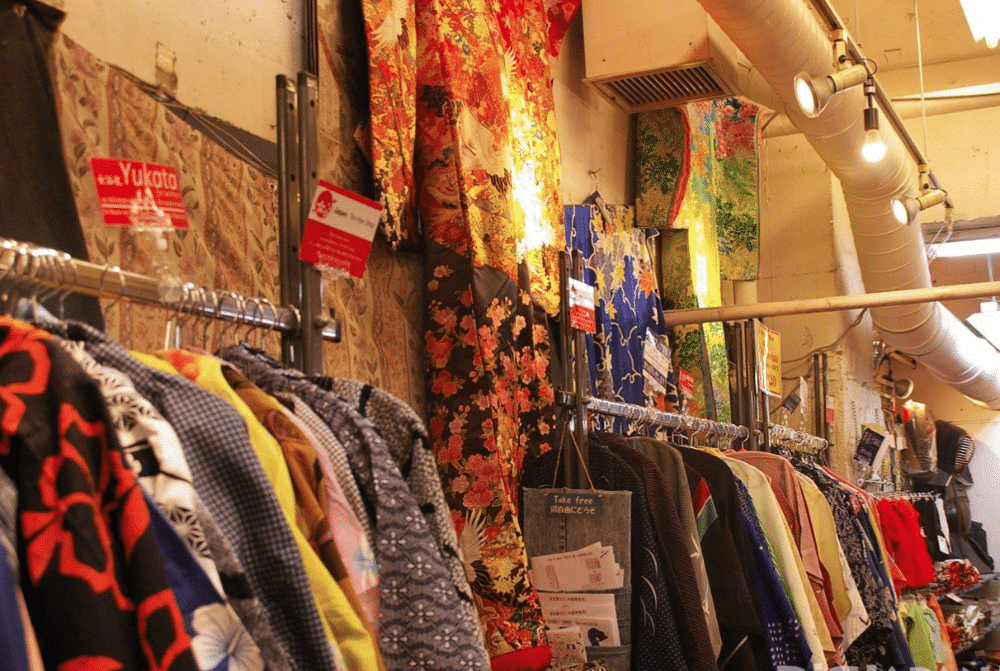
Chicago’s kimono section – Photo Credit: earthtoiris
Chicago
With three locations in the Harajuku area, Chicago boasts an amazing collection of all types, including wedding versions and furisode. It is also a one-stop shop for accessories like gold and silver obi, obijime (decorative waist strings), and hairpieces.
Since these stores are located in a bustling part of the city, they are perfect for a quick browsing session. While the kimono section is usually at the back of the store, the selection is vast and very affordably priced.
Address: 〒150-0001 Tokyo, Shibuya, Jingumae, 6 Chome−31−15 マンション31 2F
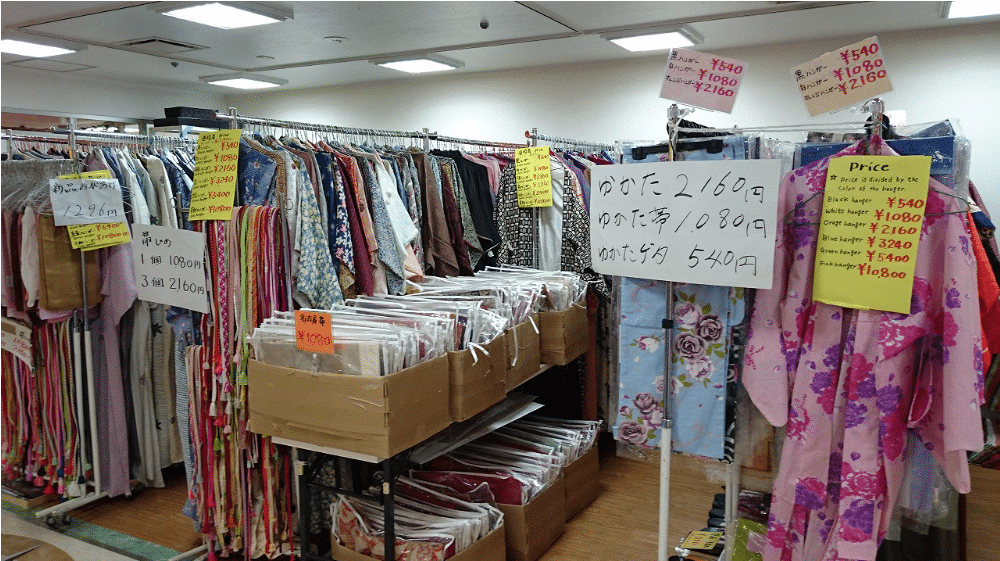
Miyoshiya’s kimono – Photo Credit: japanesefortravelers
Miyoshiya (Located inside Nakano Broadway)
Located inside the famous Nakano Broadway, Miyoshiya is a gem. The surrounding shopping street is a fun experience on its own, and once you enter the building, you’ll find racks of colorful garments.
The shop is cozy, but they maximize every inch of space with accessories and clothing. Additionally, this store utilizes hangers as price determiners, so you can easily know the price of anything. I personally love their affordable hakama selection, which comes in many beautiful color combinations.
Address: 〒164-0001 Tokyo, Nakano City, Nakano, 5 Chome−52−15 B1
Website: https://nakano-broadway.com/
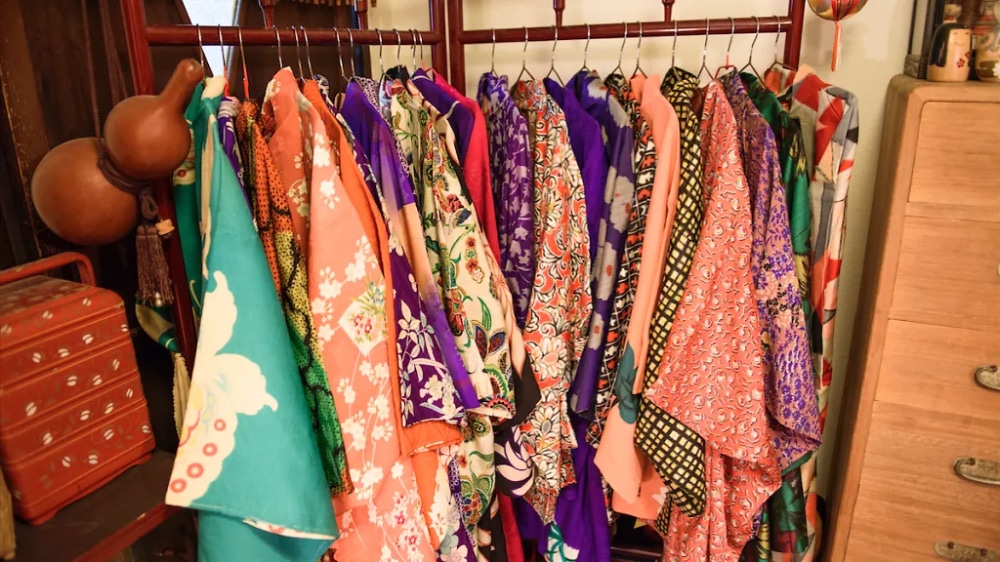
Colorful kimono rack – Credit: timeout
Kimono Hazuki
A bit off the beaten path in Daitabashi, Kimono Hazuki is well worth the trip. The owner, Hazuki-san, takes incredible care of her inventory and is happy to help with color coordination. Whether you are a beginner or an enthusiast, her expert advice will help you leave with a piece that truly fits you.
Even if you know nothing about kimono, or just want to look to get an idea of what interests you, Kimono Hazuki welcomes you!
Feel free to look at their Instagram before your trip to get an idea of new and current kimonos being sold!
Address: 〒168-0063 Tokyo, Suginami City, Izumi, 2 Chome−2−24 1階
Instagram: https://www.instagram.com/kimonohazuki77
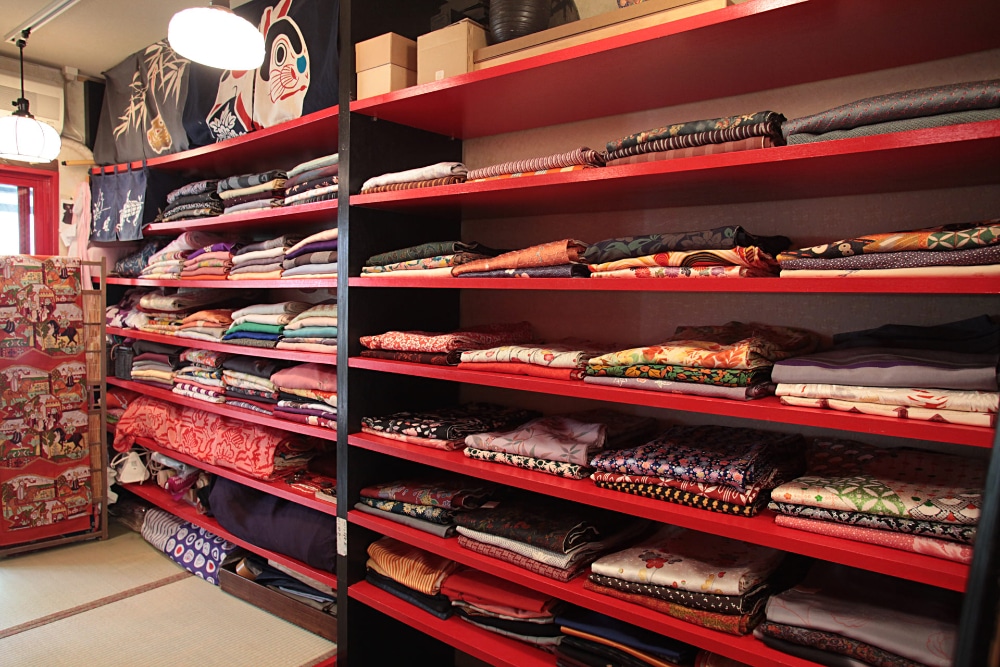
Kimono Kien’s interior – Photo Credit: stylearena
Kimono Kien
This Shimokitazawa shop offers a unique experience: the owner, Mai-san, serves beer on tap! You can enjoy a craft beer (sometimes even strawberry beer!) or a coffee, and maybe some snacks while you browse or just sit and chat. The shop is tucked away in a quiet alley with a beautiful garden path, making you feel like you’ve stepped back in time.
Address: 〒155-0031 Tokyo, Setagaya City, Kitazawa, 2 Chome−9−22 着縁アパートメント 1F
Website: http://kimono-kien.com/
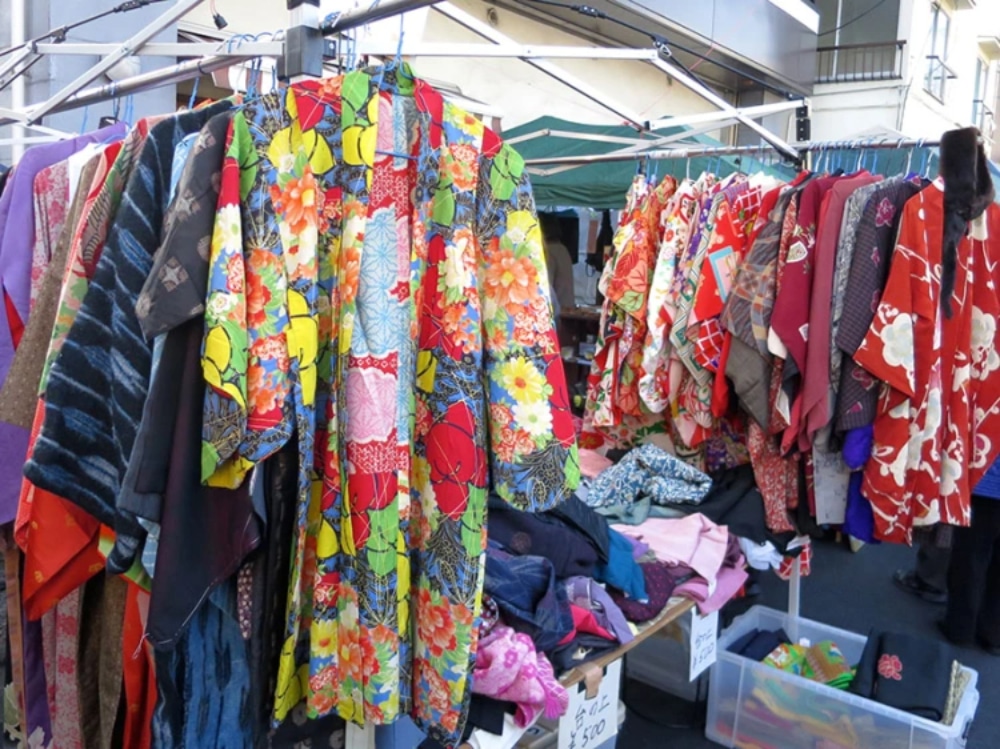
Boroichi kimono selection – Photo Credit: jonellepatrick.com
Boro-Ichi Flea Market
This massive flea market only happens twice a year (December and January), but it is a paradise for bargain hunters. Take the small trolley from Sangenjaya station to Kamimachi station, and you’ll find streets closed off for the market. You can find bins full of accessories for as little as 100 yen. I actually bought my own furisode here! Because the sellers change every year, the selection is always a surprise.
As a reminder, this flea market occurs only twice a year, once in December and once in January. If you happen to be in the Tokyo area during those specific times, I’d strongly suggest going! For the exact dates, check out Setagaya City’s website!
Address: 1-chōme-32 Setagaya-ku, Tokyo
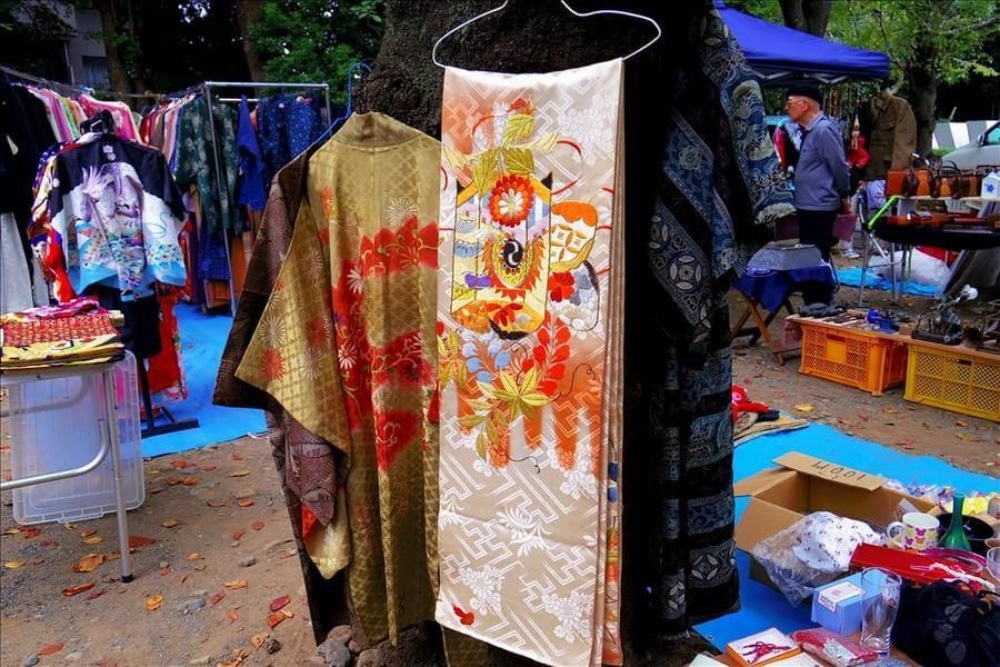
Obis and Kimonos at Hanazono Shrine Flea Market – Photo Credit: fleamapket
Hanazono Flea Market
For something more frequent, this Shinjuku market happens almost every Sunday on the grounds of Hanazono Shrine. It is easy to find thanks to the large red torii gate. The sellers here are consistent and offer a great mix of kimono, mufflers, and traditional shoes.
In my experience, the entrance usually begins with a specific seller each time, but there are also a couple more within the shrine grounds if you’re looking for a more diverse selection.
Additionally, make sure to check the market’s X account regularly, since they post if they are going to open each Sunday on the day of!
Address: 5 Chome-17-3 Shinjuku, Shinjuku City, Tokyo 160-0022, Japan
X: https://x.com/hanazonoantique
Now, Let’s Go Kimono Shopping!
With a better understanding of the different styles and where to find them, you are ready to start your own search. Whether you want a casual yukata for summer or a formal piece for a special occasion, Tokyo’s vintage scene has something for everyone.
Shopping for a kimono is a joyful experience that connects you with Japan’s past. By chatting with passionate owners like Hazuki-san or Mai-san, you’ll gain not just a garment, but the knowledge and appreciation of a timeless tradition.
Featured Photo Credit: akarouge
After thrifting your new stylish kimono, make sure to give our Beauty, Fashion, and Wellness Tours a look and reach out to our Travel Experts to learn more about Japan’s fashion subcultures!
PIN THIS FOR LATER
Book your pocket wifi now to stay connected through your entire Japan Journey!

Be sure to get the JR Pass to make navigating Japan during your trip that much easier!
YOU MIGHT ALSO LIKE