Beyond Mt. Fuji: Must-Visit Scenic Spots in Shizuoka
Dec 22, 2025
BY Vijayalakshmi R.
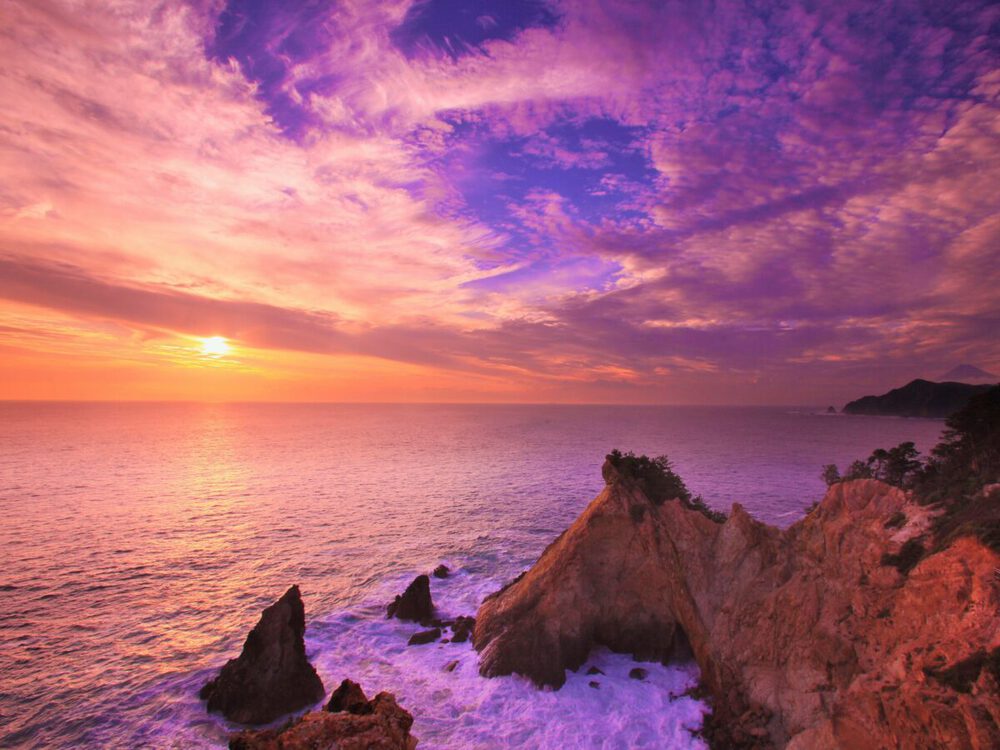
Looking for an active vacation in Japan? You’ll enjoy Shizuoka Prefecture, then. Shizuoka has dozens of picturesque spots because it lies between Japan’s iconic Mt. Fuji and its deepest bay – Suruga Bay. Easily accessible from Tokyo via the Tokaido Shinkansen, it is also home to swathes of tea fields. The white of the mountain snow, the clear, blue waters of its rivers and waterfalls, the lush greenery of its forests and tea plantations, and the tales associated with them combine to make Shizuoka one of Japan’s magnificently beautiful prefectures. And, these spots are great for a variety of outdoor activities, including surfing, kayaking, cycling, and hiking. Whether you travel for the love of food, history, hiking, or photography, there’s something for everyone in Shizuoka. Here, we introduce some of our favorite locations in the prefecture.
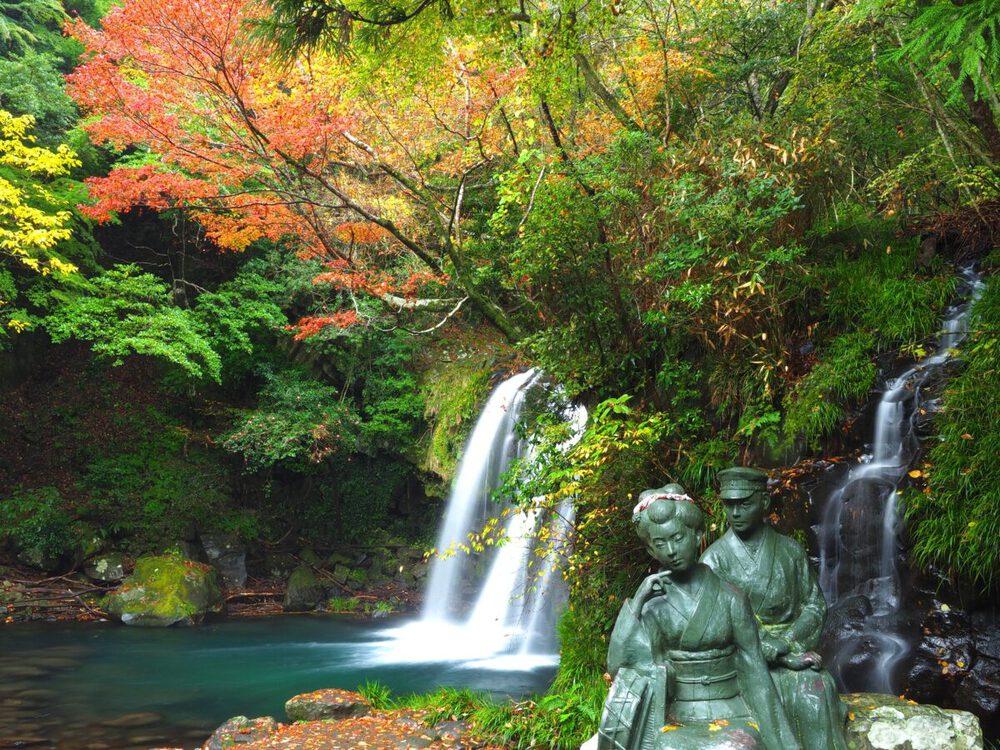
Kawazu Nanadaru – Photo Credit: Explore Shizuoka
Kawazu Nanadaru
Not far from the sleepy town of Kawazu in the eastern Izu Peninsula, lies a walking trail that will take you past seven waterfalls, small and large. The largest, Otaki, is first along the verdant forest trail. Whether it is spring or fall, Shokeidaru, a photographer’s delight, with its iconic statues of the dancing girl of Izu and her lover, modeled after Japanese Nobel Laureate Yasunari Kawabata’s “Dancing Girl of Izu”, is not likely to disappoint either. The remnants of an ancient volcanic eruption in the region result in a unique landscape and waterfalls enticingly named after a crab (Kanidaru), a snake (Hebidaru), and a shrimp (Ebidaru). The perfect hike if you love the sound of gently cascading waters and the hum of the wind gently blowing among tall trees. Also, the perfect chance to enjoy Kawazu specialties—its blueberries as well as its mokuzugani (mitten crab).
Google Maps link: Kawazu Nanadaru
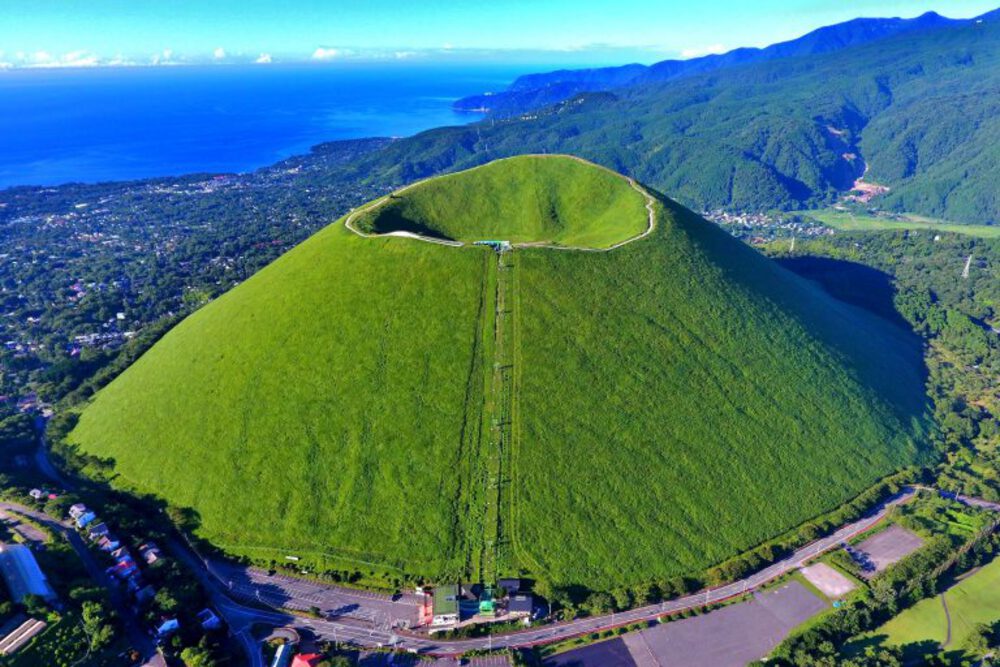
An aerial view of Mt. Omuro – Photo Credit: ITO City
Mount Omuro
If you are looking for something that is slightly off the beaten path, maybe you should try Mt. Omuro in Shizuoka’s Izu Peninsula. At first glance, Mt. Omuro looks like a gentle hill, but it hides a surprise at the top: an extinct volcanic cinder cone. Covered by moss-green vegetation in summer and snow in winter, Mt. Omuro is a must-visit for geology buffs. Consider taking the chairlift to the top of Mt. Omuro for a truly breathtaking view of Mt. Fuji and the Izu Islands. The bowl of the volcano has been converted into an archery range, where you can try your hand at shooting arrows. The bowl is also a great location for a stroll or a bike ride on a clear day. We bet that you will take a few rounds around the rim of the bowl, for one round won’t be enough to sate your appetite for amazing views.
Google Maps link: Mount Omuro

Dogashima Sanshiro Islands – Photo Credit: Explore Shizuoka
Dogashima
What’s so special about this coastal feature in the Izu Peninsula, you ask? Geology buffs will find another treasure here. The rugged rock formations are believed to be solidified magma from an ancient volcanic eruption. Historical significance apart, the dramatic coastal cliffs and the Izu Islands are popular with tourists, and sightseeing boats dot the Nishi-Izu (western Izu) coastline. If you are adventurous, go ahead and explore hiking trails and sea caves, like the Dogashima Sea Cave skylight, where the sunlight filters through a hole in its rocky roof. Another remarkable feature of this coastal area is the tombolo off the coast. At low tide, you can literally walk across water to the Sanshiro Islands or Zojima Island, but be careful to time your walk well, lest you be stranded overnight. And if you are tired of hiking, then check out the water activities in nearby Tagose, Futo, or Kogenazaki beaches.
Google Maps link: Dogashima Sea Cave Skylight
Google Maps link: Sehama Beach
Google Maps link: Tombolo Land Bridge
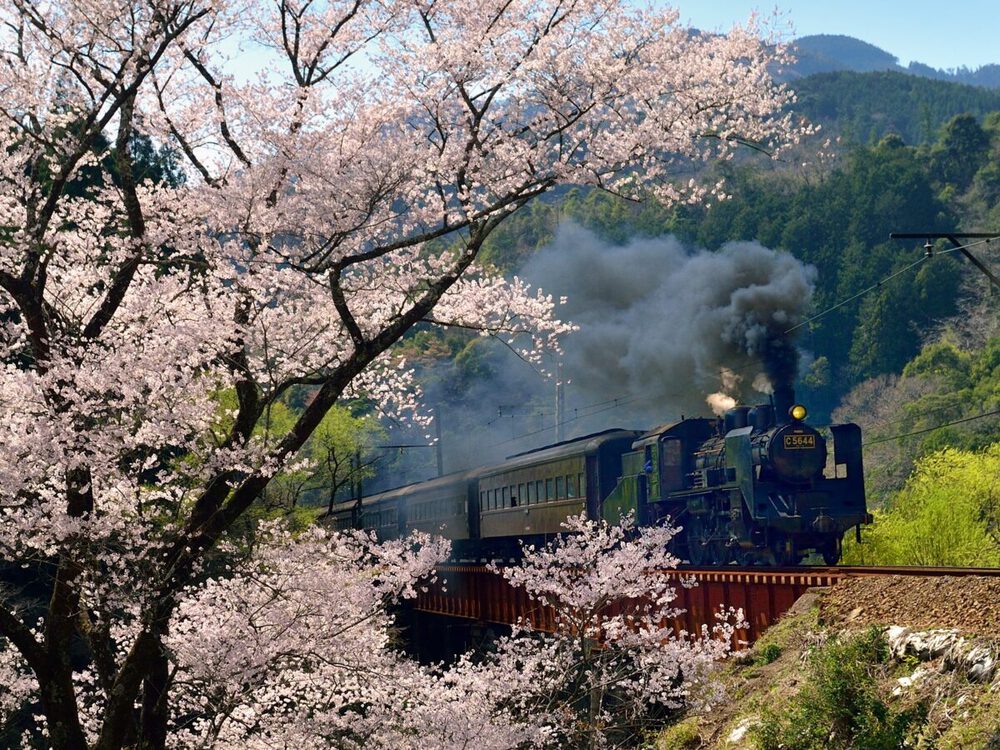
Steam locomotive on Oigawa Railway on its way to Sumata Gorge – Explore Shizuoka
Sumata Gorge
Up in the Southern Alps, located deep in Shizuoka Prefecture, Sumata Gorge, an amphitheatrical valley surrounding the Sumata River, offers splendid views and is a great place to hike and explore trails. One of the most picturesque ways to get there is to take the steam locomotive Oigawa Railway from Senzu Station up to the floating Oku-oi Kojo Station on Nagashima Dam. The ride, as the charming red train takes steep turns and winds its way through tunnels, is a memorable journey in itself. Plus, the Oku-oi Kojo Station offers panoramic views of the lake, the surrounding mountains, the red bridge, and the station itself. If you are there, don’t forget to try out the Rest & Coffee Kojo Station cafe.
Google Maps link: Senzu Station
Google Maps link: Oku-oi Kojo Station
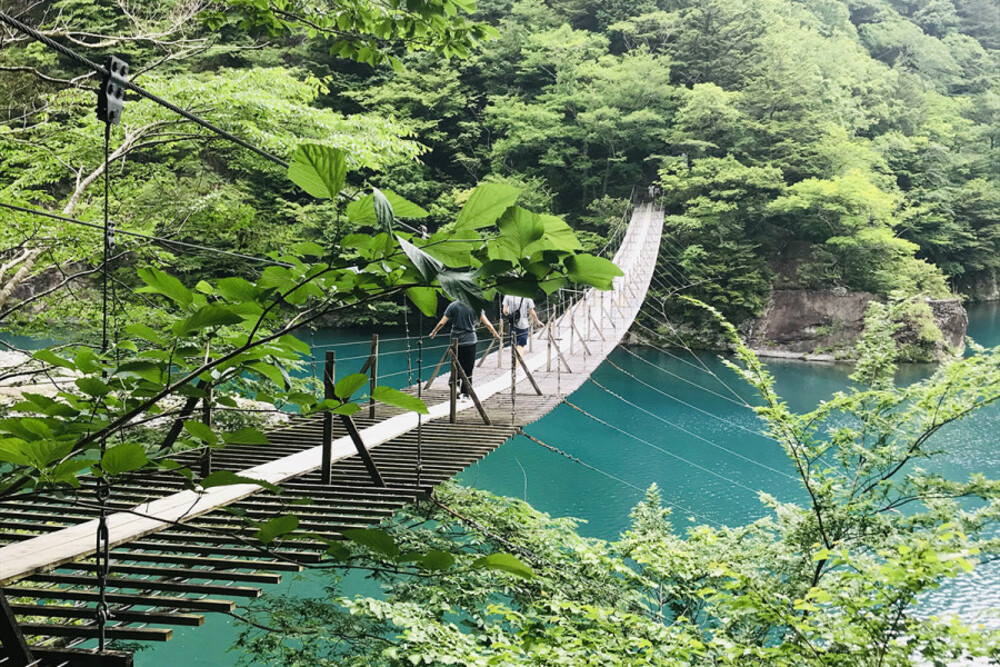
Yume no Tsuribashi (Dream Suspension Bridge) – Photo Credit: BACK TO MEDIA PAGE
Yume no Tsuribashi Bridge
The narrow Yume no Tsuribashi (Dream Suspension Bridge) over the Oma Dam lake formation in the Sumata River is also renowned for its awe-inducing mountainside views. Take a stroll on this bridge suspended eight meters above the lake to experience the thrill of its sways. Adventure takes on a whole new meaning as the boards creak softly underfoot and the emerald green lake shimmers below. The scenery is ravishing in autumn when red-orange fall foliage fills the valley and the mountain slopes. Legend has it that if you make a wish for love in the middle of the bridge, it will come true.
Google Maps link: Yume no Tsuribashi Bridge
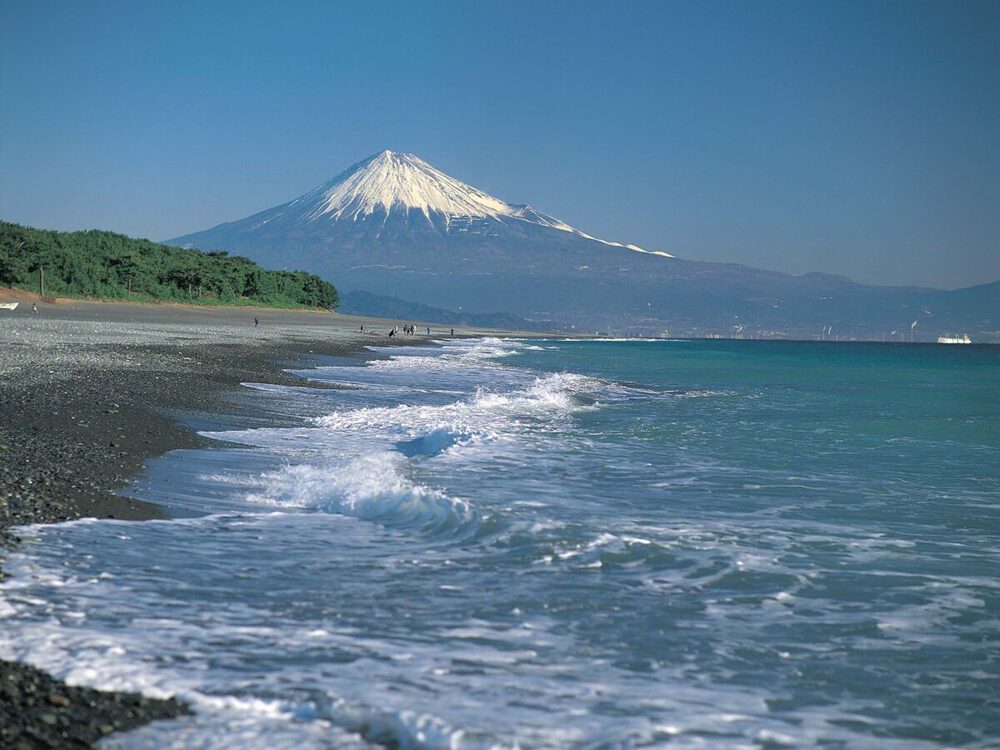
Mt. Fuji seen from the Miho Coast – Photo Credit: Explore Shizuoka
Miho no Matsubara
If you are looking for a lazy, laid-back vacation, look no further. Miho no Matsubara stretches for about seven kilometers and is famous not only for its sweeping views of Mt. Fuji across Suruga Bay but also for its dense pine grove of over 30,000 trees. This centuries-old grove is the setting of the beloved Japanese legend Tennyo no Hagoromo (天女の羽衣), in which a celestial maiden hung her feathered robe on a pine tree while bathing, only to be discovered by a fisherman. The spot is still home to the sacred “Hagoromo-no-Matsu” pine that commemorates the tale.
Both Miho Matsubara Beach and the nearby Miho Masaki Beach offer superb vantage points of Mt. Fuji and the Miho Peninsula, especially on clear days. The area’s striking black volcanic sand, the lush green of the pines, and the backdrop of Japan’s most iconic mountain have inspired countless works of art, including ukiyo-e by Hiroshige. Today, Miho no Matsubara is part of the UNESCO World Heritage Site “Mt. Fuji, sacred place and source of artistic inspiration,” making it a must-visit for anyone seeking the perfect combination of natural beauty, cultural history, and myth.
Google Maps link: Miho no Matsubara (Miho Pine Forest)
Google Maps link: Miho Matsubara Beach
Google Maps link: Miho Masaki Beach
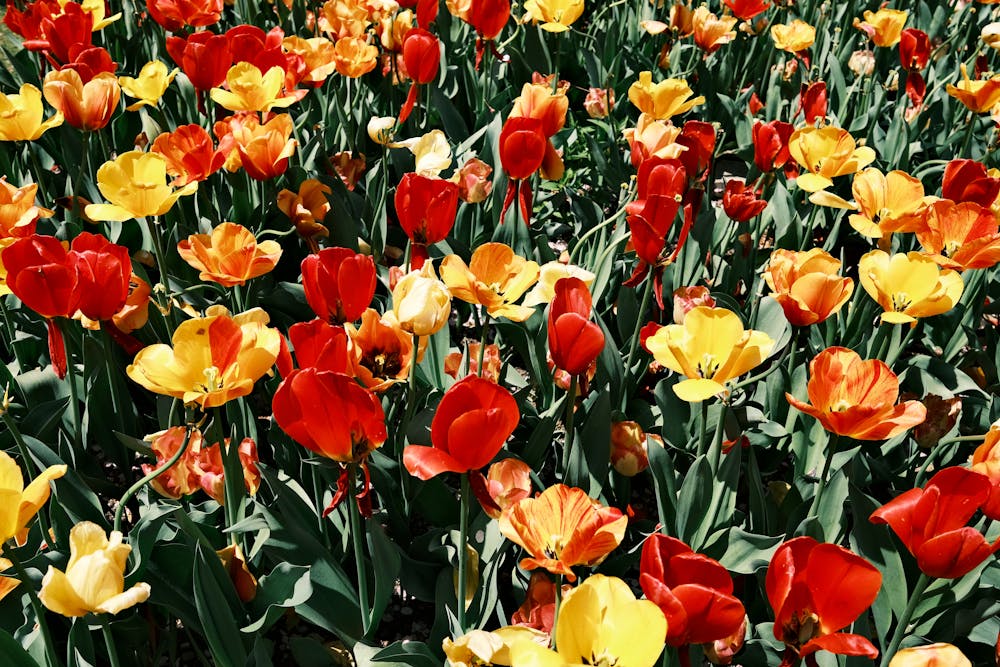
Flowers at Hamamatsu Flower Park – Photo Credit: Huu Huynh
Lake Hamana
A brackish water lake that is situated close to the sea in south-western Shizuoka, Lake Hamana has a seventy-kilometer cycling route around it for you to take in its beauty. But if you are not that into cycling, a stroll along the lake can be just as invigorating. On the edge of the lake is also the famed Hamamatsu Flower Park, where you can spot every shade of the rainbow and more, all year round. If you love flowers, there are azaleas, tulips, irises, hydrangeas, and more than 3,000 other species of flowers to admire. Think of it as being in Amsterdam all year round. Hamamatsu Flower Park is also home to Kanzanji and Hina cherry trees, which bloom in early March, and has an illumination festival in December when its beauty becomes manifold. When you are at Lake Hamana, don’t miss trying the Hamana eel in its many variations – classic kabayaki (grilled eel with soy sauce), shirayaki (grilled eel without sauce), and mabushi chazuke (chopped eel on rice with hot tea poured on it).
Google Maps link: Lake Hamana
Google Maps link: Hamamatsu Flower Park

Water Wheel at Hanazawa no Sato Village – Photo Credit: VisitSuruga
Hanazawa no Sato Village
Ever wanted to experience a true Edo-period village in Japan, all while being surrounded by jaw-dropping and breathtaking nature? Let us introduce you to Hanazawa no Sato Village, perfectly maintained and preserved in all of its traditional glory! Containing 30 local family households, the village is a resounding example of how nature and people can exist in harmony, with the surrounding landscape remaining untouched since the town was established. It’s not just the naturally made wonders that make Hanazawa no Sato so unique; it’s also the manmade, with the Hokkeji Temple symbolizing all of the town’s undiscovered secrets. What’s more, for those who are fans of hiking, just beyond the temple, you can find the starting point of a trail that leads to Mankanho Hill, a 470-meter-tall mountain ridge that reaches out to Suruga Bay.
Google Maps Link: Hanazawa no Sato Village
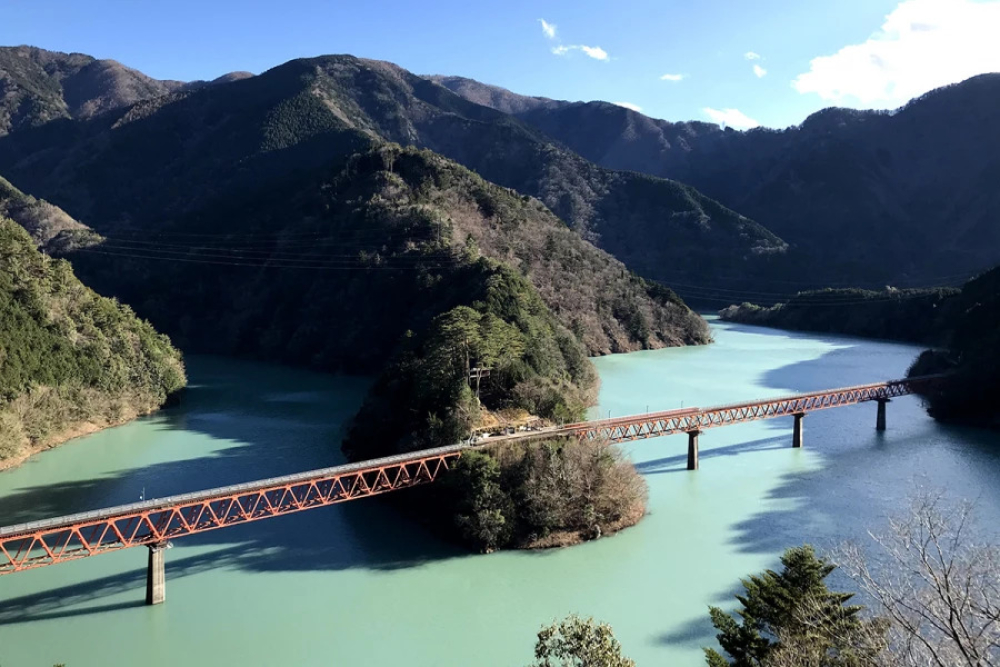
Scenic overview of the Okuoi Area and the Rainbow Bridge – Photo Credit: VisitSuruga
Okuoi Area
Considered to be the gateway to the Southern Alps of Japan, the Okuoi Area is a majestic landscape filled with clear waters, blue skies, and gorgeous, lush greenery. Home to the Rainbow Bridge, the area is just a 20-minute drive from Oigawa Railway Senzu Terminal Station, making it an easy trip for anyone looking to experience Shizuoka’s natural landscapes in all their glory. Okuoi is also almost completely secluded from modern life, providing you with a unique chance to not only get lost in the landscape, but also escape from the hustle and bustle of everyday city life and reset for a truly relaxing trip. Whilst there, make sure to hop on a kayak and paddle across Nagashima Dam Lake, taking in the beautiful emerald-green color beneath you. And if kayaking isn’t for you, why not simply trek the manmade wall around the lake, discovering abandoned tunnels and hidden secrets along the way. When you visit Okuoi, there is truly no end to the natural adventures waiting at your fingertips.
Google Maps Link: Okuoi Rainbow Bridge
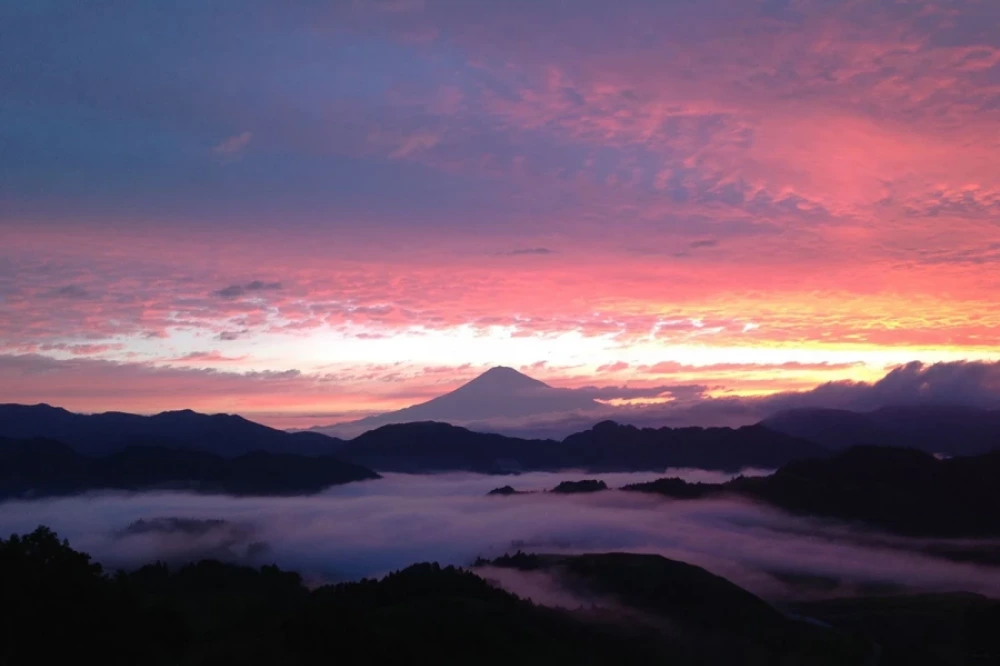
View of Mt. Fuji from Murakami Tea Garden in Shizuoka – Photo Credit: BACK TO MEDIA PAGE
Shizuoka beyond Mt. Fuji: Drop-dead Gorgeous
Shizuoka, one of Japan’s most stunningly beautiful prefectures, has several scenic spots for the curious traveler to explore and enjoy. There is much more to Shizuoka than just Mt. Fuji, and it is a relaxed train ride away from Tokyo. Sumata Gorge, Kawazu Nanadaru, and Dogashima combine hiking trails with some unique geographical features and have their own unique charms. Mt. Omuro is an easy trail for hikers looking for joyful treks. Plus, it offers impressive views of Mt. Fuji and Suruga Bay. Miho Matsubara Beach is an idyllic vacation spot for those who hate to miss their beach vacations. Lake Hamana is a spectacular location that photographers and flower lovers will absolutely adore. On your next trip to Japan, consider adding Shizuoka to your itinerary to discover its magic.
Feature Photo Credit: Explore Shizuoka
Ready to start planning your own trip through Shizuoka? Contact our Tailored Travel team today and get ready to explore all that this gorgeous region has to offer!
PIN THIS FOR LATER
Book your pocket wifi now to stay connected through your entire Japan Journey!

Be sure to get the JR Pass to make navigating Japan during your trip that much easier!
YOU MIGHT ALSO LIKE