A Local’s Guide to Plant-Based Japan: Chatting with Victoria of Mame Sama Vegan
Nov 22, 2026
BY Kristian Robinson
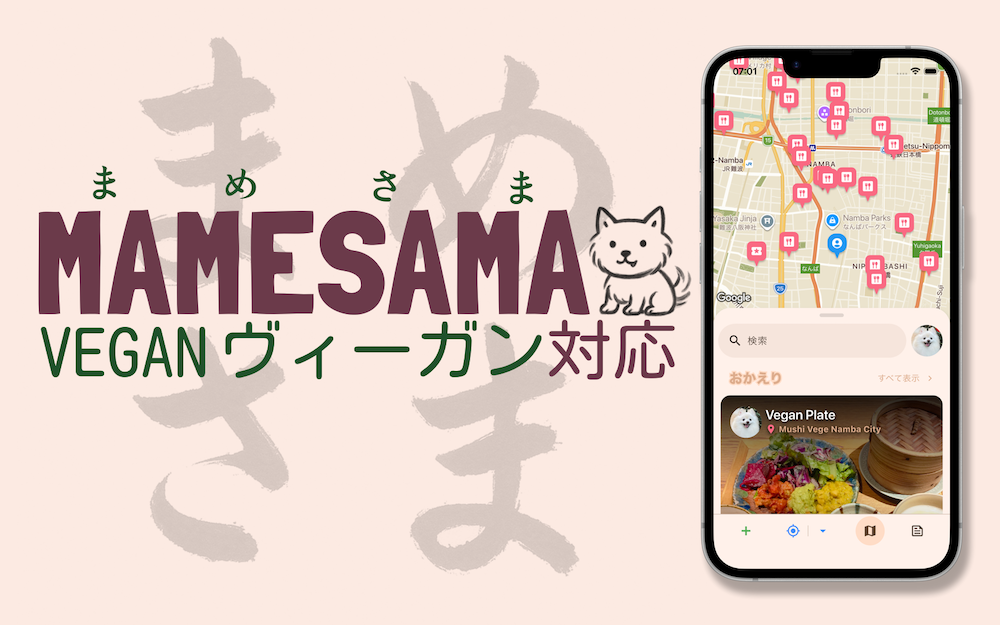
Finding a truly animal-free meal in Japan used to feel like a daunting endeavor, but Victoria, the creative mind behind Japan’s first vegan mobile application, is changing that. After thirteen years of navigating the local food scene in Japan, she’s transformed her deep expertise into Mame Sama, the first bilingual app dedicated to vegan life across the country. More than just a directory, it’s a community-led project providing reliable, real-time information on everything from hidden cafes to animal sanctuaries. We caught up with Victoria to discuss her journey from a Facebook group leader to an app founder and her mission to make Japan accessible for everyone.
Read on as Victoria shares her insider tips for exploring Japan through a plant-based lens and introduces us to this incredible vegan community resource.
Hi Victoria! To start us off, could you share a bit about your background, what initially drew you to Japan, and what your specific role is within the Mame Sama team?
When I was around 12 years old, I stumbled across slaughterhouse footage on the early internet and went vegetarian. During my first year studying literature at Marywood University, I decided to go vegan after learning more about the dairy and egg industries.
I first came to Japan after receiving a plane ticket as a college graduation gift. During that trip, I visited the Nara Tokai Matsuri and became completely fascinated by Nara’s atmosphere and culture. Less than a year later, on a whim, I moved to Japan.
Over the years I learned Japanese, built connections in the vegan community, and spent a lot of time wishing there was a better resource for vegans navigating life here. Growing up in a small town in Pennsylvania, I was already familiar with the difficulties of finding vegan options. Japan presented an entirely different set of challenges. These challenges really fueled my motivation to learn to speak Japanese and advocate for the animals here in Japan.
My co-founder, Matthew, is also a life-long vegan and has been working in software development for over 20 years. We combined our respective strengths to launch the project.
My role centers around outreach and community-building. I work directly with businesses, manage communications and social media, help organize events, and handle much of the day-to-day creative coordination behind the project. I am the one who talks to business and restaurant owners. We consult with them to implement vegan options and try to show that a vegan menu doesn’t need to be complicated.
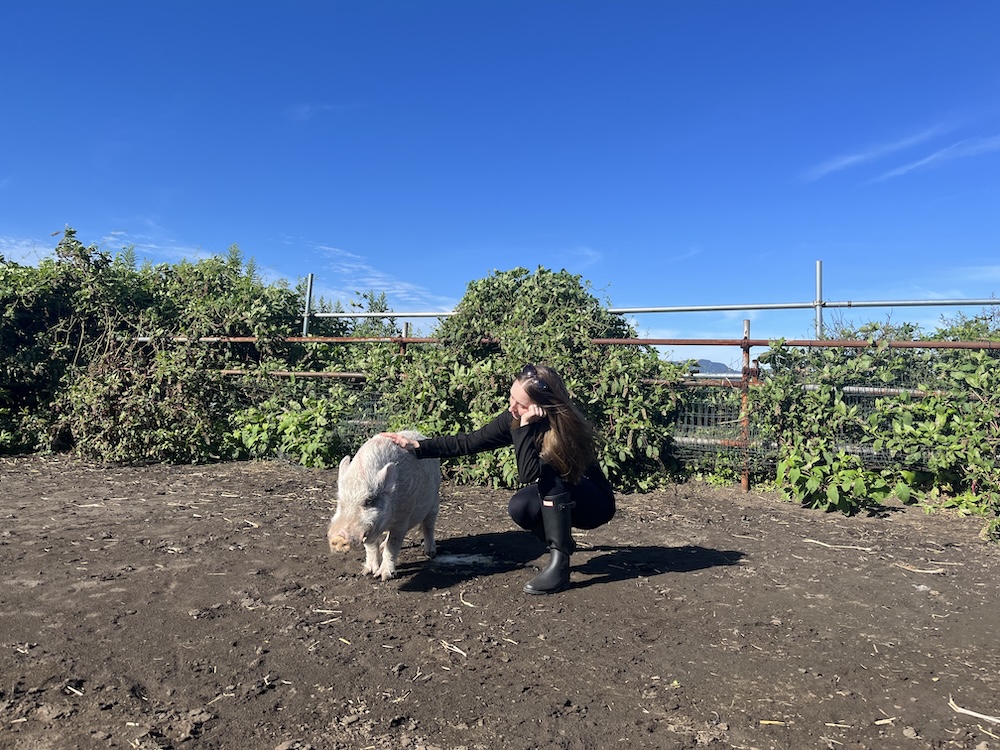
Victoria with a pig at open sesame farm sanctuary, kumamoto – Photo Credit: Mame Sama Vegan
Could you tell us about the meaning behind the name “Mame Sama,” and what sparked the initial idea to form a vegan Facebook group and eventually a dedicated app?
I adopted a rescue dog 5 years ago named Mameyakko. We took the Mame from her name because vegans tend to be associated with beans and the ‘Sama’ comes from the Japanese honorific and lightly references the hospitality phrase “お客様は神様” (the customer is god).
I am not the original creator of the “Vegan Japan” Facebook group but I’ve been an admin for many years. The group originally served as a place for English-speaking residents to discuss the realities of vegan life in Japan. Since then, we have had a lot of tourists and those visiting Japan temporarily use the page for recommendations and advice. Mame Sama centralizes a lot of this and other information about veganism in Japan with the hopes of helping more people go and stay vegan here.
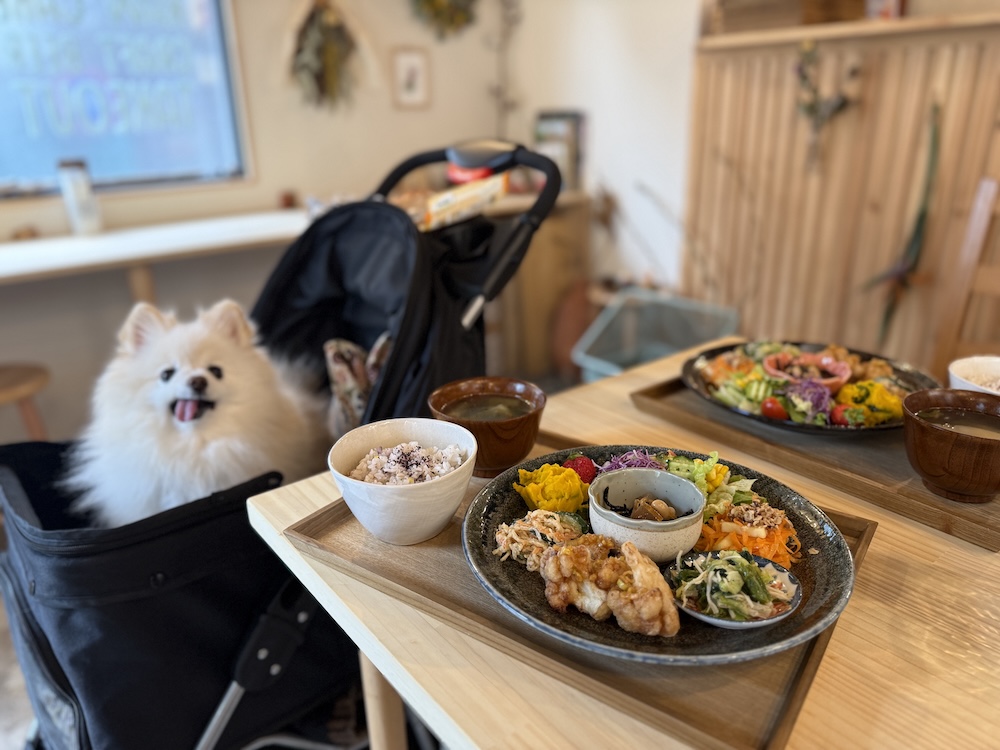
Lunch with Mame at Plantbased Cafe ANDPON in Osaka – Photo Credit: Mame Sama Vegan
Next, could you introduce us to the application, and explain how it works and what types of listings/experiences are currently offered?
Mame Sama is a community-powered vegan guide to Japan. Food is often the first thing people look for, but Mame Sama is designed to support vegan life far beyond meals. Right now, listings include dining, cafes, bakeries, hotels, ryokans, groceries, cosmetics, tour companies, theme parks, entertainment, events, and sanctuaries. Users can search the map, browse listings, and add helpful places themselves, so the app grows through real knowledge from vegans living in or traveling through Japan.
Some of my favorite listings are the ones that show how wide-ranging vegan life in Japan can be. Studio Zen, for example, is a vegan-owned escape room, and it shows that vegan life is not only about food. We also include animal sanctuaries where people can visit or volunteer, which is a big part of the mission to help people support a more vegan world in practical, local ways.
Is the app free to use, or do you offer different tiers with exclusive perks and services?
It is and will always remain free to use. We are paying for the server costs on our own but eventually we’d like to welcome donations to the platform from those who find our work valuable. We are also open to accepting help in the form of skilled professional experience and simply adding content to the app as a user.
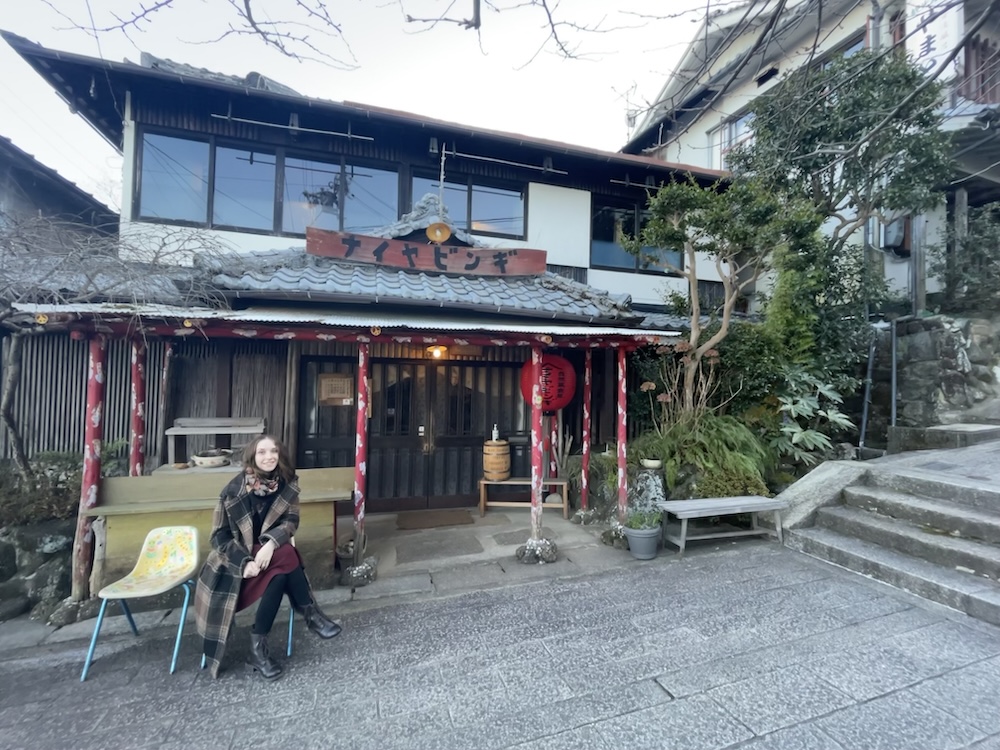
Victoria at Naiyabingi, Ikoma, Nara – Photo Credit: Mame Sama Vegan
While food is usually one of the first things on a traveler’s mind, I’ve heard you have big plans to turn Mame Sama into a complete lifestyle resource. What does that broader vision look like for things like salons, schools, or even healthcare?
Yes! Anything helpful to being a vegan in Japan is welcome to be listed. The listings will also be community submitted. We’d love to be able to help those who struggle with finding a vegan-knowledgeable doctor or with vegan-friendly childcare and schools. More often than not, it’s more complicated than just “pack your own bento” and we’d love to compile that information and make finding helpful institutions easier.
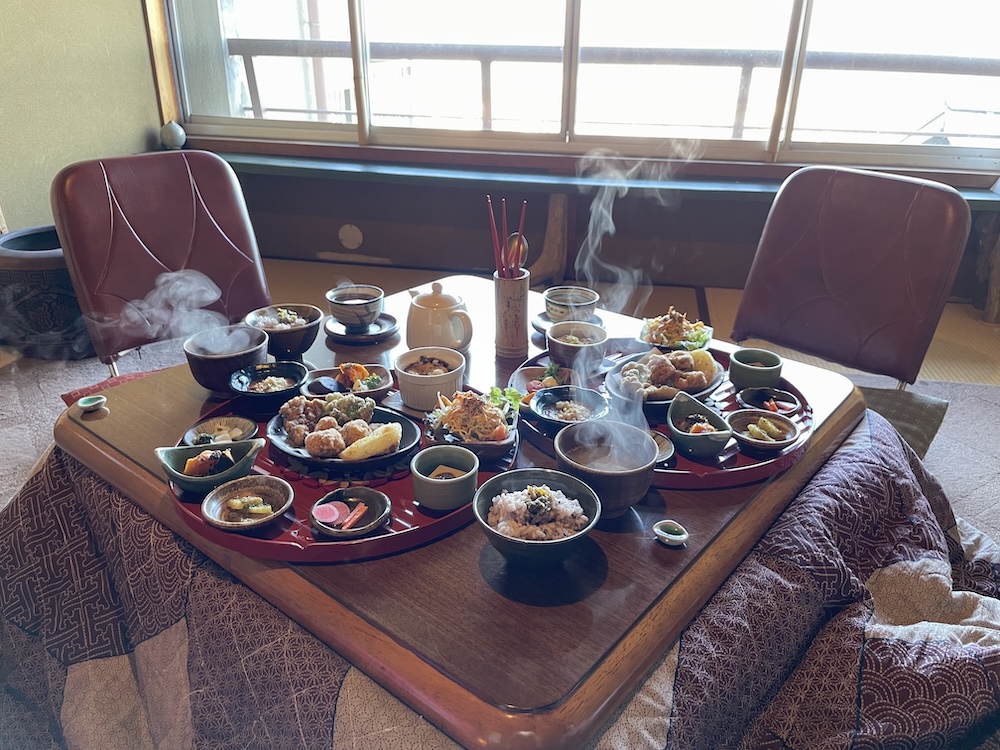
Naiyabingi, Ikoma, Nara (lunch plate) – Photo Credit: Mame Sama Vegan
You’ve lived in Japan for over a decade, what is the most surprising thing you’ve learned about Japanese culture through the lens of veganism?
A few years ago, I met a vegan activist who was the son of a slaughterhouse worker. He told me about the historical shunning of slaughterhouse workers and the social prejudices that still affect his family to this day. He taught me a bit about Buddhism and the history of Japan’s relationship with eating animals.
For long periods of Japanese history, meat consumption was prohibited under Buddhist-influenced policies. During this prohibition, people bent language to avoid punishment when buying black-market animal flesh. For example, wild boar and deer were referred to as mountain whales, and horse meat was euphemized as sakura. Unfortunately for the animals, Japan began to eat meat again in 1872 as part of a Meiji Era initiative to westernize Japan. That historical complexity still contrasts sharply with some modern animal welfare realities in Japan. According to independent research done by the Humane Society International, Japan’s animal welfare laws rank E overall, with certain categories going as low as Rank G.
I experienced this disparity firsthand after adopting two dogs discarded by breeders. My first dog, Volpe, had been overbred to heartbreaking conditions. She passed away only 11 months after rescue. When I adopted Mameyakko, the veterinarian who spayed her said it appeared she had undergone multiple non-professional cesarean sections. Mameyakko’s story is not an uncommon one in the animal breeding scene here in Japan.
Since you live in the Kansai region, we’d love to ask: what is your absolute favorite, “must-visit” plant-based-friendly restaurant in that area?
If I had to choose, one of my favorite places is Luu’s Bao, which recently moved from Osaka to Nara. It’s 100% vegan, and they serve the most delicious handmade bao bun sandwiches, the kind of food that feels comforting but still special. They’re also dog-friendly and just a short walk from Nara Park, so it is the perfect place to stop before or after walking around the area.
Outside of the world of veganism, what are your favorite ways to spend a day off in Japan, any hobbies or activities?
Aerial yoga and plant collecting. Japan has so many unique and beautiful plant shops, so I love exploring them whenever I can. I also volunteer at animal sanctuaries, both here and abroad. Recently, I’ve been especially involved with Elephant Nature Park in Thailand, and I’m excited to go back again next month!
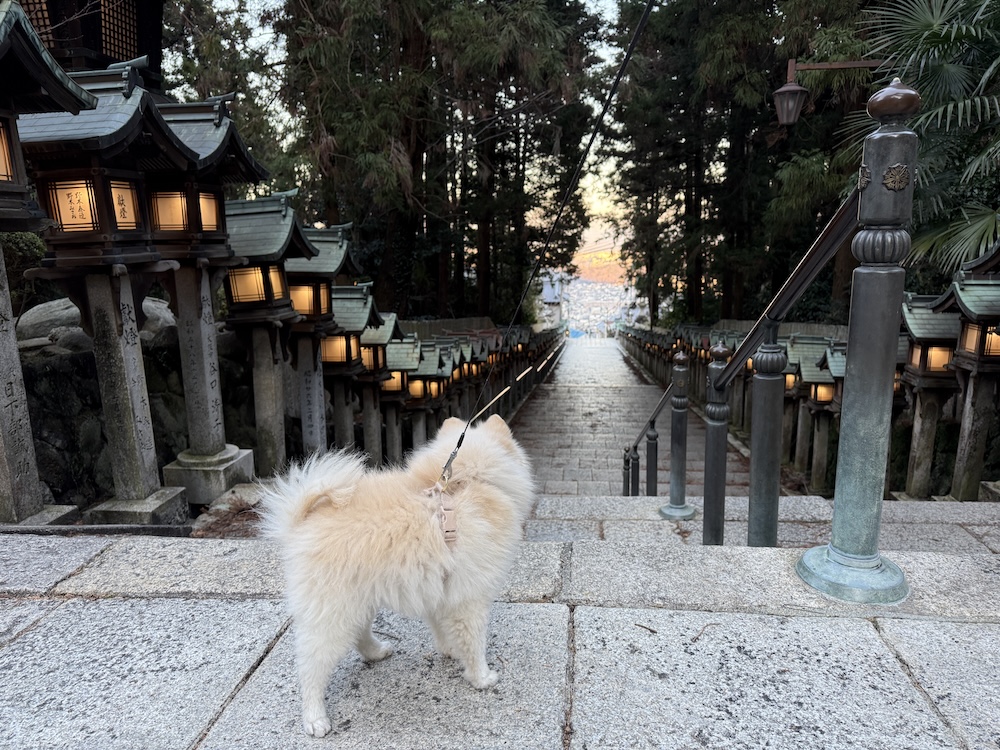
Mameyakko at Hozanji Temple – Photo Credit: Mame Sama Vegan
Are there any unique areas or towns in Japan that you find surprisingly easy or enjoyable to navigate as a vegan?
The Hōzan-ji area of Ikoma in Nara comes to mind. It has so many vegan options, and the temple area is one of the most beautiful places in Nara, though it is often overlooked by tourists. What I love most is that the restaurants are set in really memorable buildings and locations. For example, Naiyabingi is housed in a beautifully renovated old ryokan, a traditional Japanese inn, along the historic pathway to Hōzan-ji Temple. There are private rooms with kotatsu tables in the winter and views of Ikoma through the big windows.
Along the beautiful stone steps leading to Hōzan-ji, you can also find Indonesian food at Mahara Jyaya, Japanese-style lunch plates at Peace Cafe, and Lucky Garden tucked further into the forest of Mt. Ikoma. Lucky Garden is an award-winning Sri Lankan restaurant with plenty of land, a dog run, and even a fire pit, which is a rare find in Japan.
Finally, is there anything else you would like to share with our readers?
Being vegan is becoming easier every day as options increase and resources like Mame Sama become available. Our current food system is a crisis for the animals. Please go vegan and stay vegan!
Thank you, Victoria, for taking the time to answer our questions today. Whether you’re a long-time resident or planning your first trip, Victoria’s dedication makes it clear that a plant-based journey through Japan is more rewarding than ever. We are so grateful to her for sharing these local insights and for building a resource that helps us all travel more mindfully.
Ready to find your next favorite meal? Download Mame Sama on the App Store or Play Store and start exploring Japan’s vegan gems today!
Check out Mame Sama Vegan on:
Instagram: https://www.instagram.com/mamesama.vegan/
(Application) Google Play Store: https://play.google.com/store/apps/details?id=com.mamesama&fbclid=IwY2xjawRLjrpleHRuA2FlbQIxMQBicmlkETFTUDkxaUY3WGI4NkNvTVp3c3J0YwZhcHBfaWQQMjIyMDM5MTc4ODIwMDg5MgABHsB7wz_8Ad6R_QyY5Xw-w2aPh1LAolnbCgKXdtxRY-ykH3Y8kjVVCwJnplDb_aem_A4wy0nA763mlNLf-66w-hg
(Application) Apple Store: https://apps.apple.com/us/app/mame-sama-%E3%81%BE%E3%82%81%E3%81%95%E3%81%BE/id6746381767
Featured Photo Credit: Mame Sama Vegan
Simplify your plant-based journey by downloading the Mame Sama app for real-time vegan listings. And, if you’re in Tokyo, check out our Vegan-friendly Best of Shibuya Food Tour to uncover the city’s absolute best meat- and dairy-free spots alongside a local guide!
Book your pocket wifi now to stay connected through your entire Japan Journey!

Be sure to get the JR Pass to make navigating Japan during your trip that much easier!
YOU MIGHT ALSO LIKE