Discovering the Craft and Character of Japan’s Wine Culture: Three Grapes
Oct 4, 2026
BY Kristian Robinson
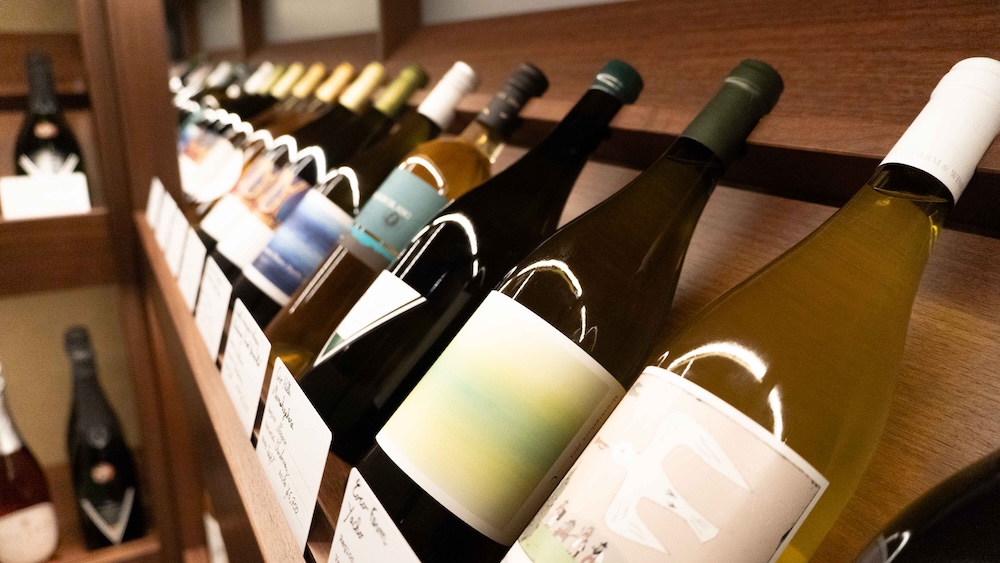
While many travelers focus on sake, Japan’s boutique wine scene is quietly producing world-class bottles that reflect the country’s diverse landscape. Our Head of Marketing, Jess recently visited Three Grapes in Yoyogi with a small group and, even as a French person with plenty of “wine pride,” she was genuinely surprised by the high quality of the local pours. This craft takes center stage through an intimate exploration of local viticulture, where you’ll navigate five premium wines from Hiroshima’s volcanic soils to Nagano’s high-altitude valleys. Each glass is paired with seasonal small plates that highlight domestic flavors, all while the fluent English-speaking staff shares an interesting look into the 150-year history and artisanal techniques of Japanese winemaking. It is the perfect spot just steps from Meiji Jingu to relax and toast to the incredible craftsmanship found in Japan’s vineyards.
Read on to hear from the team about how they are making Japan’s finest bottles accessible to every curious traveler.
Hi, could you share a bit about yourself, and share a bit about your own journey into the world of wine and what your day-to-day role looks like at Three Grapes?
Hi, I am Anzu. I was born in Kyoto, but part of my childhood was spent in Belgium, where wine was simply part of everyday life. It wasn’t treated as something formal or intimidating — it was just naturally present around family dinners, home parties, and gatherings with friends. Looking back, I think that shaped the way I see wine today: less as a luxury product, and more as something that creates connection and conversation.
The name THREE GRAPES actually comes from the fact that I’m one of three sisters. Whenever the three of us get together, there’s almost always a bottle of wine on the table. Wine became tied to memories, travel, family, and storytelling long before it became a business for me.
Since we only officially launched THREE GRAPES last December, my day-to-day role still involves a little bit of everything. On some days I’m speaking with wineries and tasting new bottles; on others I’m preparing the space, organizing pairings, or even cleaning up after sessions. Building something from scratch means there’s no real separation between “strategy” and “hands-on work.”
But the part I value most is spending time with our guests during the Japanese Wine Experience. Watching someone discover Japanese wine for the first time — especially when it completely changes their expectations — is incredibly rewarding. Many guests arrive knowing Japanese whisky or sake, but not wine, so seeing that moment of surprise and curiosity is probably my favorite part of the job.
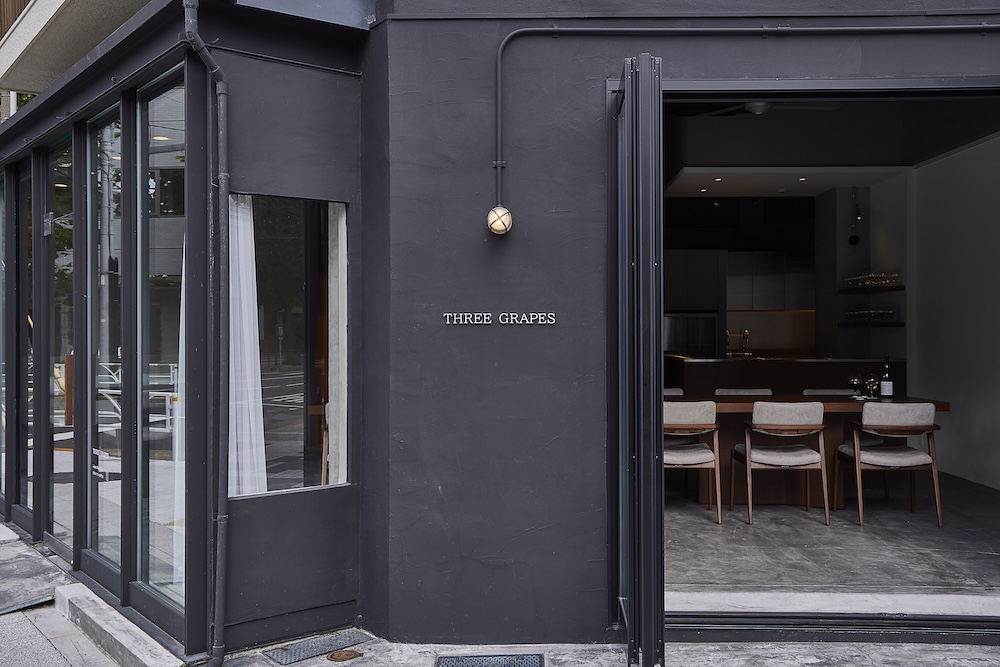
Three Grapes entrance – Photo Credit: Three Grapes
What sparked the idea to create a space specifically dedicated to showcasing Japanese wines to an international audience?
The idea really began during a three-month stay I had in Paris about two years ago. Being there made me realize, in a very tangible way, how geographically and culturally far Japan can feel from the West. Even though the world feels connected online, people’s mental images of Japan are often — sushi, anime, whisky, maybe sake — but not much beyond that.
After returning to Japan, a French friend came to visit, and we went out for dinner together. While looking at the wine list, he casually asked me, “Wait… Japan makes wine?”
The funny thing is, I already knew Japan produced wine, but until that moment, I had never really paid attention to it myself. His question stayed with me. It made me realize that something can exist quietly in your own country for years and still remain almost invisible — both to outsiders and even to locals.
That moment became the starting point of my journey into Japanese wine.
Having traveled to more than 30 countries, I’ve learned that what feels completely ordinary to locals can feel fascinating and entirely new to visitors. For example, anyone in Japan naturally knows that Hokkaido is located in the north. But if you asked people in general to immediately point to Bordeaux on a map — despite it being one of the world’s most famous wine regions — many probably couldn’t. Perspective changes depending on where you stand.
I also felt there was a communication gap. Japan is an island nation, and despite growing international interest, language still creates barriers. There is so much depth to Japanese culture that remains difficult for visitors to access in English, especially beyond the more globally recognized exports like Pokémon or Matcha (green tea) .
Through wine, I felt there was an opportunity to tell a different story about Japan — one connected to climate, geography, craftsmanship, agriculture, and regional identity. Wine became less about the drink itself, and more about giving people another lens through which to understand the country.
Could you describe how a typical session unfolds, specifically how you introduce the different wines and pairings to your guests?
A typical session is designed to feel more like an interactive cultural experience than a formal wine class. We use a large screen and presentation slides throughout the experience, but the goal is never to make guests feel like they need professional wine knowledge to participate. If you simply enjoy wine — or are curious about Japan — that’s enough.
The guided tasting itself lasts about an hour and includes five different glasses of Japanese wine. Rather than giving a one-sided lecture, we try to make it participatory. Guests taste the wines while following along visually, answering quizzes, comparing regions, and discovering the stories behind each bottle. I think people understand wine more naturally when they can both see the context and taste at the same time.
One thing that surprised me was feedback from guests who had attended tastings all over the world. Some told us they had never experienced a wine session that used visuals and storytelling in such a detailed and accessible way, and that it helped them understand the wines intuitively rather than feeling like they were studying for an exam. That was very meaningful to hear, because we want wine to feel approachable, not intimidating.
After the guided tasting, most guests naturally want to continue exploring Japanese wine a little further. Many stay on and order additional wines by the glass, and it often turns into a relaxed, social atmosphere where guests start talking and connecting with other participants as well. To encourage people to try a wider variety of styles, we offer both small pours and regular-sized glasses, allowing guests to explore at their own pace instead of committing to a full glass each time.
Since we also have a wine shop attached, many guests revisit the wines they enjoyed during the tasting and take bottles home with them afterward.
When it comes to pairings, we intentionally avoid being too prescriptive. Personally, I’ve always preferred discovering food and wine pairings on my own rather than being told exactly how a wine should be experienced. So instead of saying, “This wine must be paired with this food,” we prefer giving guests the freedom to explore different combinations for themselves.
Interestingly, some guests become so absorbed in tasting and comparing the wines that they barely touch the snacks until the very end — which I think is always a good sign.
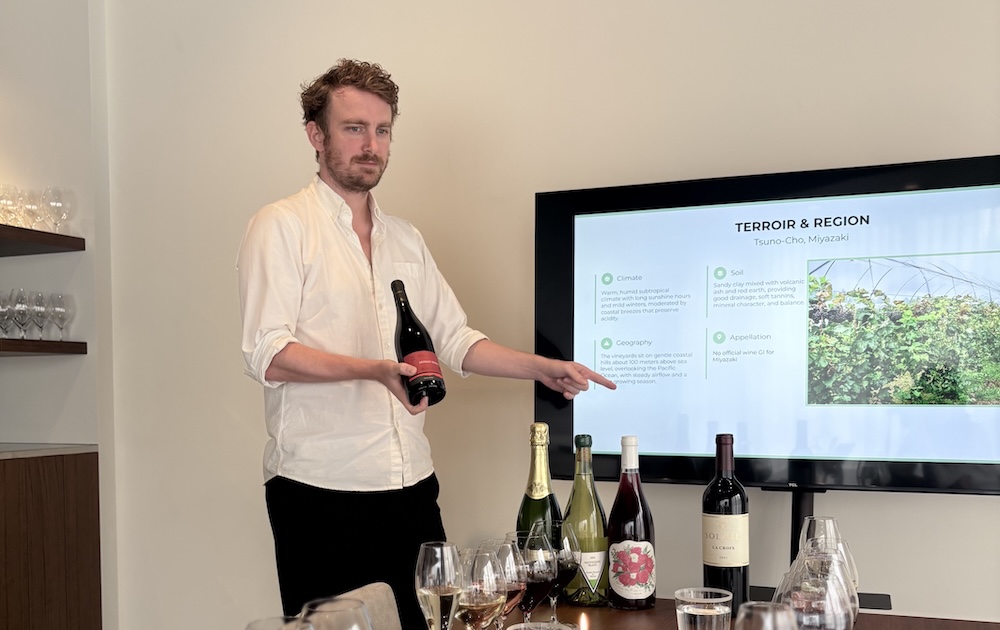
A presentation taking place during a tasting – Photo Credit: Three Grapes
Japanese wine is still a bit of a “hidden gem.” Could you introduce a few, and tell us about what makes the terroir in regions like Nagano or Hiroshima so distinct compared to European vineyards?
People are often surprised to learn that Japan actually sits within the same global “wine belt” as many famous European wine regions — roughly between 30 and 50 degrees latitude north and south of the equator. France and Italy are part of that zone, but so is Japan. In theory, the country has the geographical conditions to grow quality wine grapes.
The challenge, however, is that Japan’s climate is very different from Europe’s. We have much more rain and humidity, especially during key growing periods. Because of that, making great wine in Japan can be incredibly difficult. If you choose randomly, you may sometimes encounter wines that feel diluted or overly delicate — almost as if water had been mixed into them. I experienced that myself many times when I first started exploring Japanese wine.
But that difficulty is also what makes the best Japanese wines so interesting. Winemakers here have to work with the climate rather than against it. In many European regions, terroir often speaks very loudly through the land itself. In Japan, I sometimes feel the personality and philosophy of the winemaker plays an even bigger role in shaping the final wine.
That’s one reason I find Japanese wine fascinating today: the industry still feels experimental and deeply personal. Many producers are still defining what “Japanese wine” should become rather than following centuries of fixed tradition.
For example, I often recommend the Private Reserve lineup from Tsuno Winery in Kyushu. Despite the warm and humid climate, they produce wines with remarkable precision and balance. I’m also very fond of the wines from Vinoble Vineyard, which show a completely different expression of Japanese winemaking — lighter, more nuanced, and very connected to the local environment.
What makes Japanese wine exciting to me is not that it tries to imitate Bordeaux or Burgundy. It’s that the country is still in the process of discovering its own identity, region by region and producer by producer.
How do you select the small plates used for pairings to ensure they enhance the delicate notes of Japanese wine?
When thinking about wine pairings in general, we always start with one principle: the wine should remain the main character.
Japanese wines are often more delicate and subtle compared to many Western wines, so if the food is too rich or overpowering, it can easily overshadow the character of the wine.
We call them “small plates” rather than tapas because we wanted the experience to feel distinctly Japanese. The inspiration comes more from the idea of “mamezara” — small Japanese dishes designed to be enjoyed little by little.
At the moment, we serve five different small plates alongside the wines. Even though each dish is only a bite or two, we still try to create the feeling of a miniature full-course experience: something from vegetables, seafood, meat, cheese, and finally, a dessert-inspired touch.
For example, one of the meat pairings we sometimes serve is prosciutto from Iwamizawa in Hokkaido, which has a clean and gentle flavor profile that works beautifully with Japanese wine. And one pairing that has almost become our signature is cream cheese marinated in soy sauce with black pepper and olive oil. It sounds simple, but guests are always surprised by how well it works — the umami from the soy sauce and the richness of the cheese somehow make people want to keep drinking wine endlessly.
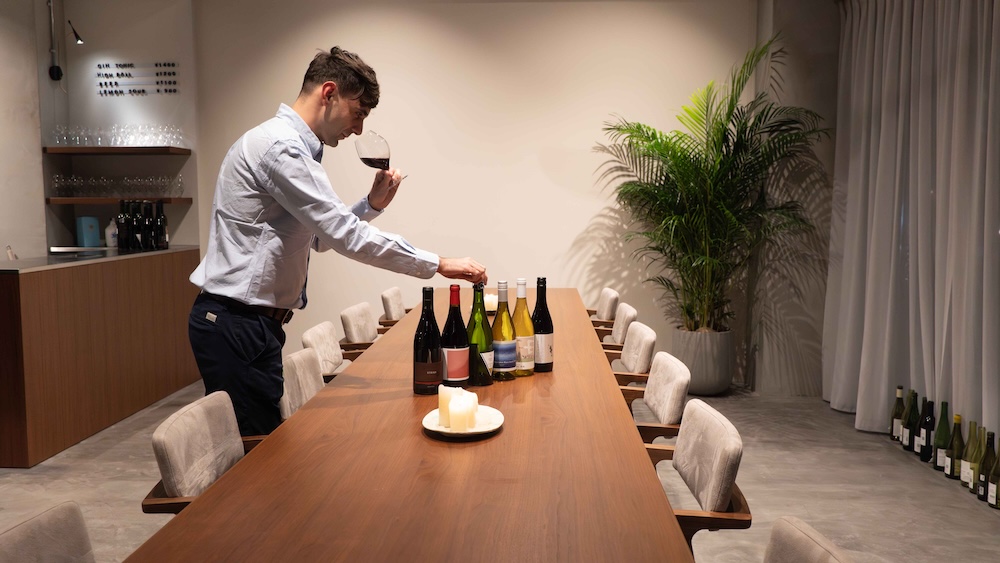
Sampling a selection of wine: Photo Credit: Three Grapes
The tasting room is in Yoyogi; what do you love most about this specific neighborhood and how it fits the Three Grapes vibe?
When we were looking for a place, we knew we didn’t want to be in the middle of somewhere overly crowded like the Shibuya Scramble Crossing. For me, wine is something people should enjoy slowly and comfortably, so having a calmer atmosphere was important.
At the same time, we still wanted the location to be easily accessible for visitors to Tokyo. What we like about Yoyogi is that it has a nice balance — it’s very central, but the neighborhood still feels more open and relaxed compared to nearby busy areas like Shibuya or Shinjuku. We are also a few steps away from Meiji shrine’s forest park which is a peaceful haven in the heart of vibrant Tokyo.
Many guests discover our wine salon while walking on their way to Meiji shrine.
Since many of these artisanal bottles are hard to find elsewhere, how do your cellar recommendations and international shipping services help guests continue their journey at home?
Because of legal restrictions, we currently can’t ship wine internationally, so we often recommend that guests bring the bottles back with them on the plane. Many visitors even buy an extra suitcase for the trip home, and it’s not unusual for guests to leave with dozens of bottles after discovering how difficult these wines are to find outside Japan.
Of course, wine bottles are heavy, so we arrange domestic delivery within Japan, including shipments to hotels or directly to the airport, which makes traveling much easier for visitors.
We also send out a monthly newsletter introducing new stories about Japanese wines. In the end, the easiest way to continue the journey might simply be to come back to THREE GRAPES the next time you’re in Japan.
After the formal tasting, guests can stay for “bar time” and what are some of the most interesting conversations or connections you’ve seen happen during that extra hour?
Guests come from all over the world, but one thing I find especially interesting is how often we meet people who are deeply involved in wine themselves, including winery owners. We’ve even welcomed owners from well-known wineries in places like Napa.
For me personally, one of the nicest parts is that these conversations sometimes continue beyond the tasting itself. After meeting the owner of a winery who joined one of our sessions last month, I’m already thinking about visiting their winery during my next personal trip.
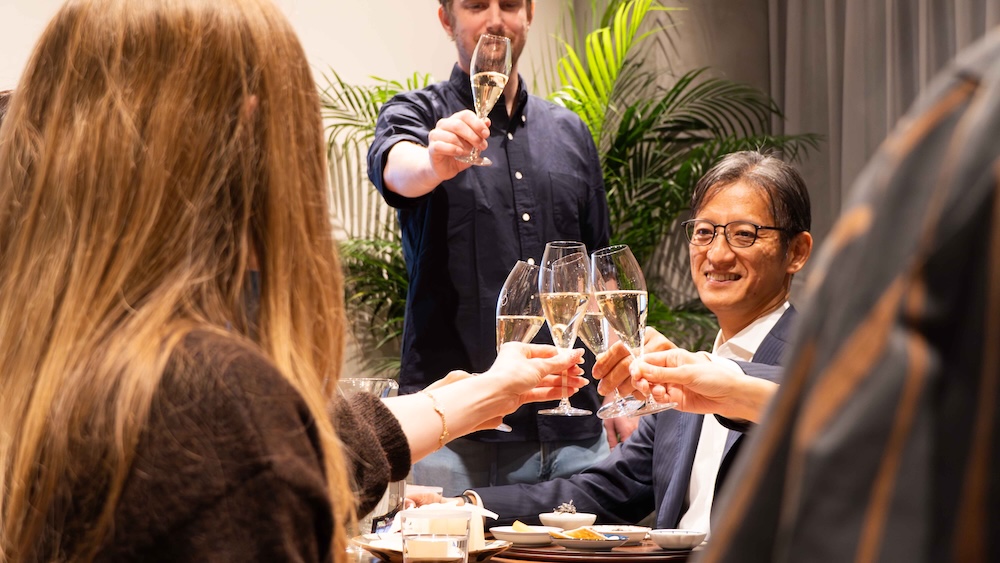
Guests making a toast – Photo Credit: Three Grapes
Finally, is there anything else you would like to share with our readers?
I think one of the most exciting things about Japanese wine is that the industry still feels very young compared to Europe. There’s still a sense of discovery — every region, winery, and winemaker seems to be searching for its own identity.
Because of that, I always encourage people not to approach Japanese wine expecting “the Japanese version” of Bordeaux or Napa. The interesting part is discovering something different.
Even within Japan, there are still many wines I haven’t tried myself yet, which is probably what makes the journey so enjoyable.
Thank you, Anzu-san, for answering our questions today and giving us such a welcoming look into the history and craft behind Japan’s local bottles. We were so impressed by the bilingual staff and the distinct character of the wines we sampled. Be sure to book your own session in Yoyogi to find your new favorite Japanese pour.
Read more about Three Grapes on:
Website: https://www.3grapes.co/japanese-wine-experience
Instagram: https://www.instagram.com/3grapes_tokyo/
Facebook: https://www.facebook.com/people/Three-Grapes/61581629896501/
Featured Photo Credit: Three Grapes
Ready to taste Japan’s wine country for yourself on a fully immersive day tour? Join our Wine Country Day Tour to meet the people behind the wines, explore the region, and discover a delicious side of Japan you might not expect.
Book your pocket wifi now to stay connected through your entire Japan Journey!

Be sure to get the JR Pass to make navigating Japan during your trip that much easier!
YOU MIGHT ALSO LIKE