Hidden Retreats: Lesser-Known Onsen Towns and Hot Springs in Japan
Jan 20, 2026
BY Brad Stephens
When travelers think of Japanese hot springs, the names Hakone and Beppu often come to mind. While these destinations are iconic, Japan is home to countless onsen (温泉, hot springs) towns tucked away in mountains, valleys, and seaside cliffs. These hidden gems not only offer soothing mineral-rich waters but also rich cultural traditions and seasonal beauty. Let’s take a journey through some of Japan’s lesser-known onsen escapes.
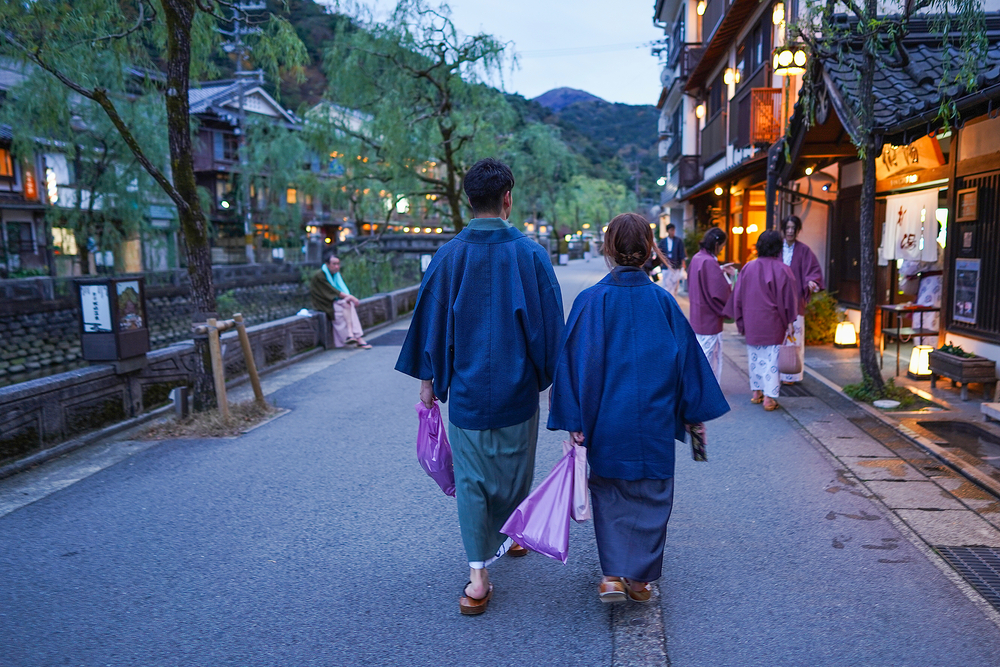
Japanese couple wearing yukata – Photo Credit: Rei Imagine
Kinosaki Onsen (城崎温泉) – A Stroll Through Tradition
Located in Hyogo Prefecture, Kinosaki Onsen is a charming town famous for its seven public bathhouses, each with its own theme and history. What makes Kinosaki unique is the tradition of wearing yukata (浴衣, casual kimono) and wooden geta (下駄, sandals) as you stroll from bath to bath. The willow-lined canal and wooden bridges create a timeless atmosphere.
Historically, the town flourished during the Edo period as a retreat for scholars and writers. Even today, the slow pace of life and the seasonal scenery, ranging from cherry blossoms in spring to snow-covered roofs in winter, make Kinosaki an immersive cultural experience. Read more about Kinosaki Onsen here!
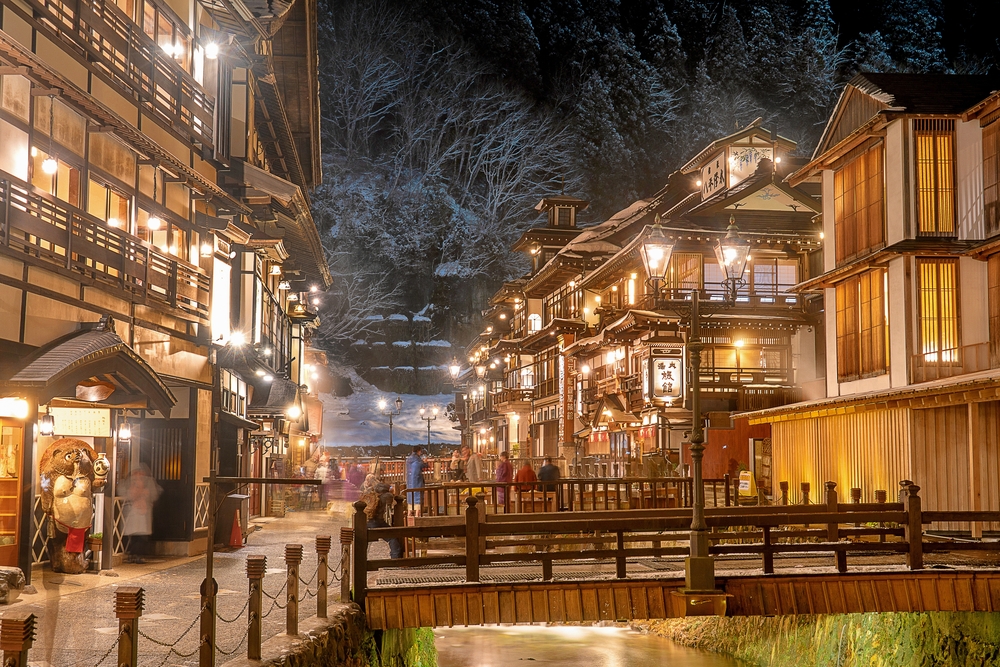
Ginzan Onsen during the winter season – Photo Credit: oneSHUTTER oneMEMORY
Ginzan Onsen (銀山温泉) – The Silver Mountain Retreat
Tucked away in Yamagata Prefecture, Ginzan Onsen is a picturesque town that looks straight out of a storybook. The name translates to “Silver Mountain Hot Springs,” as the area was once a thriving silver mining region. Today, visitors come not for minerals but for the romantic rows of wooden ryokan (旅館, traditional inns) that glow warmly with lantern light at night.
In winter, the snow-covered bridges and gas lamps transform Ginzan Onsen into a dreamy escape. The town’s association with mining also ties into local folklore about hidden mountain spirits said to guard the natural springs.
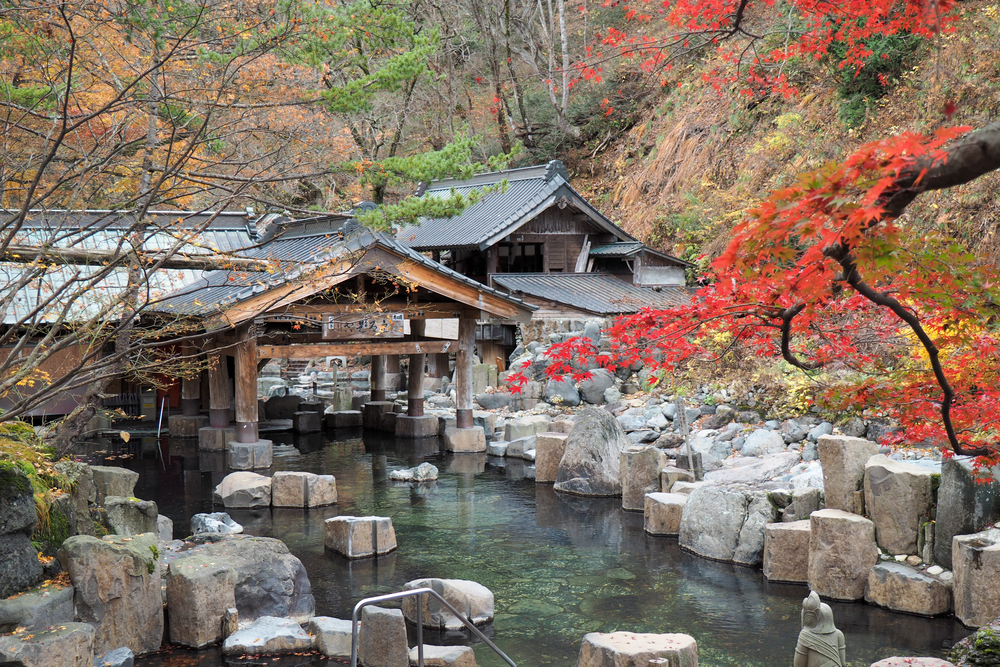
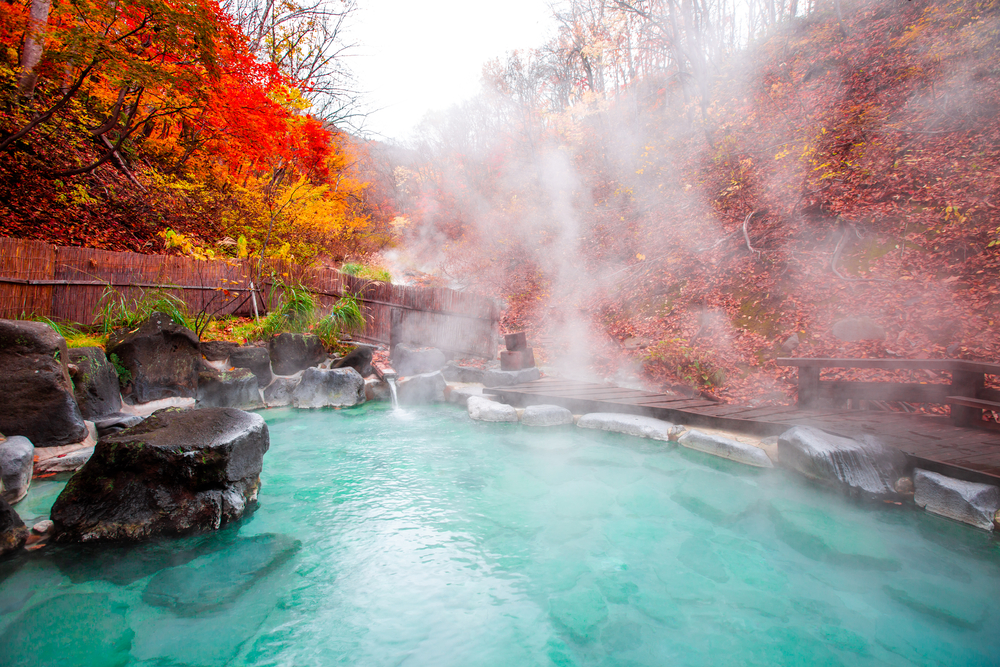
Takaragawa Onsen in autumn foliage – Photo Credit: Ear Iew Boo
Takaragawa Onsen (宝川温泉) – Riverside Serenity
Gunma Prefecture is known for its many onsen, but Takaragawa Onsen is a treasure for nature lovers. The outdoor baths here are set along the Takaragawa River, with sprawling rotenburo (露天風呂, open-air baths) that blend seamlessly into the surrounding landscape.
Each season offers a new backdrop. In spring, cherry blossoms scatter across the river’s surface. In summer, lush greenery creates a tranquil oasis. Autumn brings fiery red and gold leaves that reflect in the water, while winter blankets the area in silence and snow. Takaragawa is especially famous for its mixed-gender baths, a practice rooted in older traditions before gender-segregated bathing became standard.
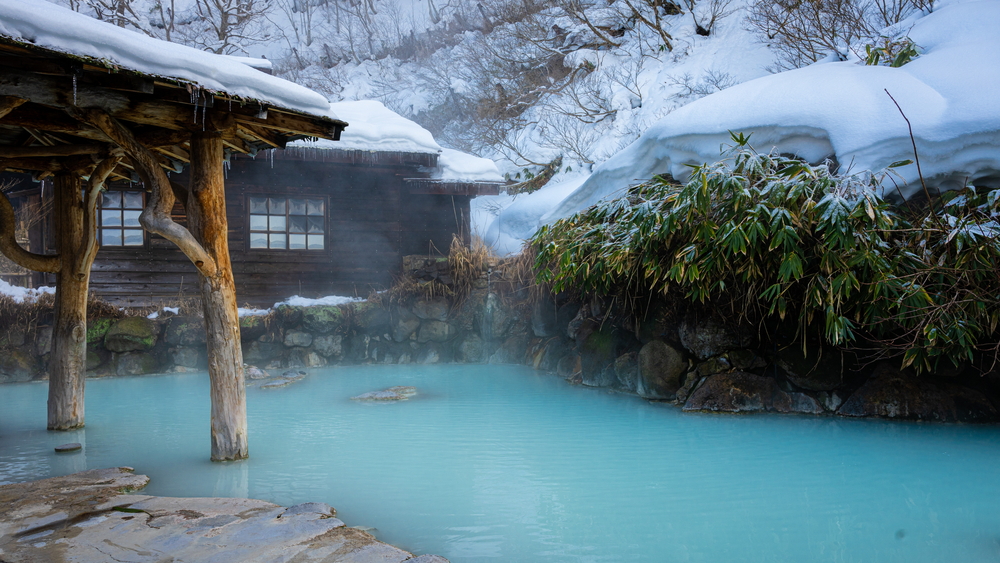
Tsurunoyu Onsen in Nyuto Onsenkyo – Photo Credit: dryadphotos
Nyuto Onsenkyo Tsurunoyu Onsen (乳頭温泉郷 鶴の湯温泉) – A Hidden Mountain Haven
Deep in the mountains of Akita Prefecture lies Nyuto Onsenkyo, a collection of rustic hot spring inns rather than a single town. Each ryokan has its own spring source and healing mineral qualities. Some baths are milky-white from sulfur, while others are crystal clear.
Nyuto Onsenkyo is cherished for its untouched, secluded feel. In the snowy months, travelers trek through powdery forests to reach steaming open-air baths. This creates an unforgettable contrast between freezing air and enveloping warmth. Local tradition holds that the waters can soothe fatigue and even aid in longevity, making the journey as rewarding as the soak itself.
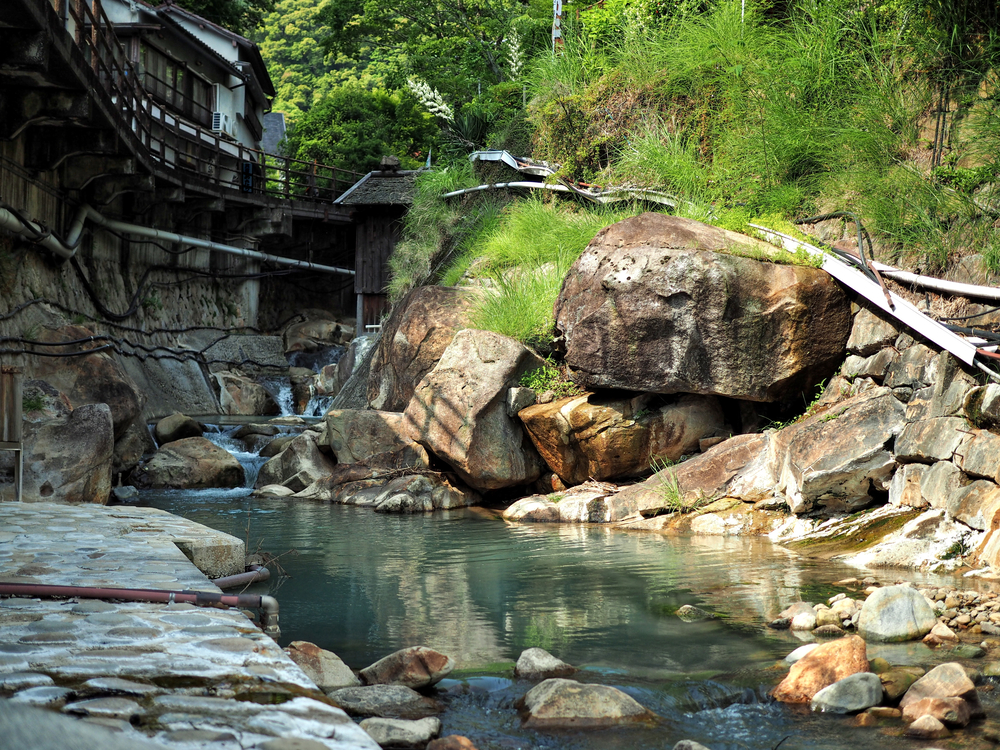
Yunomine Onsen in Wakayama Prefecture – Photo Credit: Petr Brezina
Yunomine Onsen (湯の峰温泉) – Healing Waters of the Pilgrims
In Wakayama Prefecture, Yunomine Onsen is one of Japan’s oldest hot springs, with a history tied to the sacred Kumano Kodo (熊野古道, pilgrimage routes). Pilgrims walking these spiritual paths would bathe in the healing waters before visiting the revered Kumano shrines.
The most famous bath here is Tsuboyu (壺湯, stone bath), a small hut built over a natural spring that allows private soaking. This bath is recognized as a UNESCO World Heritage Site. Beyond bathing, visitors can also cook food in the onsen water, a practice called onsen tamago (温泉卵, hot spring eggs), which adds to the unique cultural experience.
Seasonal Beauty and Cultural Connections
Onsen culture is deeply tied to Japan’s seasonal rhythms, and many towns celebrate festivals that highlight local traditions. In winter, hot spring towns often host snow festivals where lanterns and fireworks illuminate icy backdrops. In autumn, koyo (紅葉, autumn foliage) viewing is perfectly paired with an outdoor soak. Even in summer, when the air is humid, onsen towns often host river festivals and fireworks that make evenings lively after a relaxing bath.
Beyond relaxation, onsen represents community, healing, and connection with nature. The ritual of bathing together fosters a sense of harmony, while the mineral-rich waters remind visitors of Japan’s volcanic heart.
Japan’s lesser-known onsen towns offer more than hot water. They provide cultural depth, historical resonance, and a seasonal beauty that connects travelers to the spirit of the land. Whether you seek riverside serenity, snowy mountain retreats, or ancient pilgrim baths, these hidden gems invite you to slow down, immerse yourself, and experience Japan in its most authentic form.
Featured Photo Credit: Dpongvit
Coming to visit an onsen town yourself? Make sure to reach out to our Travel Specialists to craft a perfect onsen itinerary for your trip!
PIN THIS FOR LATER
Book your pocket wifi now to stay connected through your entire Japan Journey!

Be sure to get the JR Pass to make navigating Japan during your trip that much easier!
YOU MIGHT ALSO LIKE