Step Back in Style: Japan’s Heritage Hotels and the Spirit of Omotenashi
Oct 9, 2026
BY Megan Kawakami
While Japan is renowned for its vibrant shrines and ancient temples, another architectural wonder awaits those who look beyond the typical tourist path. Scattered across the country are historic hotels that serve as living time capsules, each echoing whispers of eras long past and origin stories like nothing else. These aren’t just places to sleep; they are gateways to the true soul of Japanese hospitality, also known as omotenashi. If you’re looking to amplify your next journey with a sense of wonder and deep-rooted history, join us as we explore a few of these legendary institutions that offer much more than just a simple room for the night.
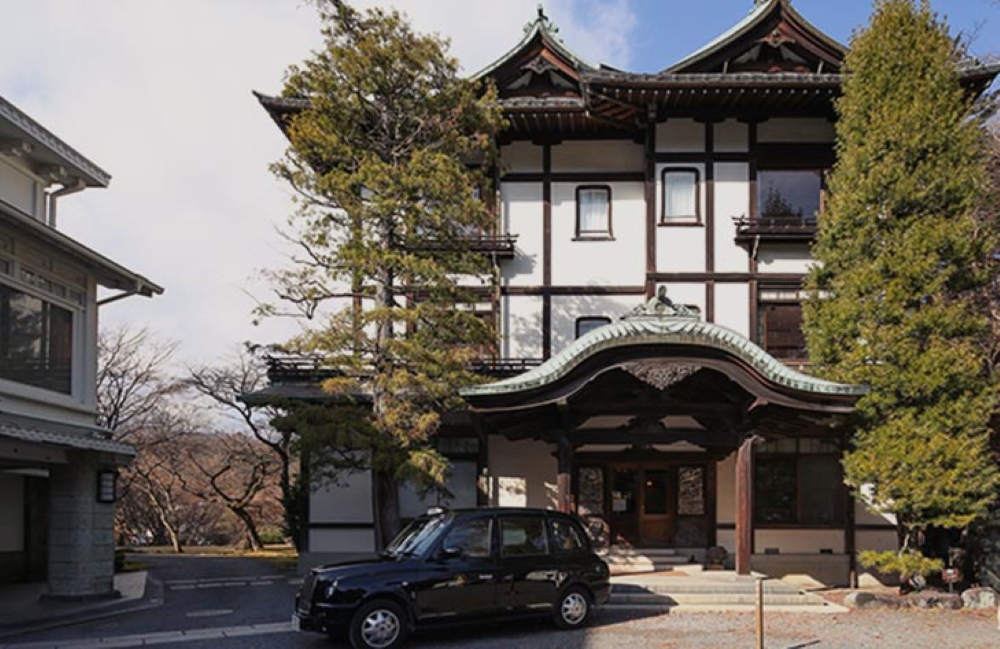
Kanaya Cottage Inn, the “Samurai House” – Photo Credit: Nikko Kanaya Hotel Official Webpage
Nikko Kanaya Hotel
Walking into the Nikko Kanaya Hotel is like stepping through a time portal, transporting you all the way back to 1873. As Japan’s oldest existing Western-style resort hotel, it holds a legacy spanning over 140 years. Its humble beginnings lie within the “Samurai House”, the personal residence of Zenichiro Kanaya, a local samurai. This blending of warrior heritage with international flair is what earned it a place as a nationally designated cultural property in 2015. Today, you can visit the beautifully preserved Kanaya Hotel History House to immerse yourself in this legacy firsthand.
The hotel’s transformation into an international destination itself was sparked by a chance meeting during the Meiji Era. Dr. James C. Hepburn, a missionary known for creating the Hepburn romanization system, recognized Nikko’s appeal to foreigners and encouraged Zenichiro to open his home to them. Despite the era’s prejudices, Zenichiro’s open-mindedness helped him see past the troubles of the times and led to the creation of the Kanaya Cottage Inn. This spirit of welcoming the world made the inn an instant success, truly proving that hospitality knows no borders.
By 1883, the hotel had found its permanent home atop a hill overlooking the rushing and beautiful Daiya River. Over the decades, the guest books have even become a sort of “who’s who” of history. So by staying the night, you might find yourself sleeping in the same halls where Isabella Bird rested during her 1878 expedition, or even where Albert Einstein stayed shortly after winning his Nobel Prize in 1922! And that’s just two of the major names who have walked the halls of Nikko, from Helen Keller in 1937 to President Dwight D. Eisenhower in 1957; this hotel has witnessed the presence of historical giants, whilst the breathtaking views enjoyed by all have remained unchanged even to today.
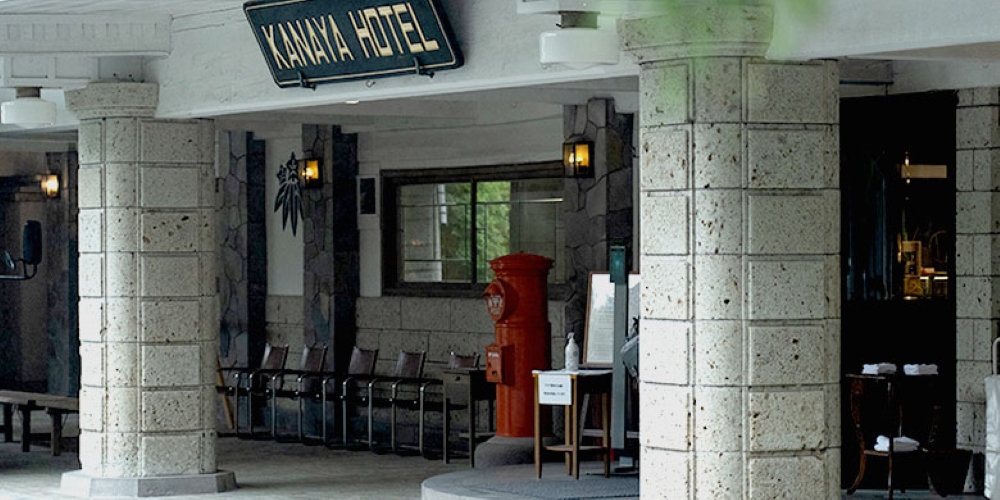
Present-day Kanaya Hotel – Photo Credit: Nikko Kanaya Hotel Official Webpage
The hotel weathered the storms that came with the 20th century primarily thanks to the management of Zenichiro’s son, Shinichi, surviving military drafts of WWII and a subsequent occupation by the U.S. forces up until 1952. Through it all, the Kanaya family remained strong and steadfast in their commitment to tradition. To reward this dedication, the hotel and its history were officially honored in 2005 when it was designated as a Tangible Cultural Property, ensuring its samurai-rooted spirit continues to thrive.
Beyond the architecture, the hotel’s culinary heritage is a story of its own, featuring a history of adaptation and excellence. Early chefs spent years perfecting a menu that bridged Japanese and Western tastes, resulting in classics like the “100 Year Curry on Rice” and the “Nikko Rainbow Trout Kanaya Style.” Whether you’re enjoying the daily-rotating French cuisine or their legendary breakfast omelette, the most popular dish for over a century, every bite is a taste of the hotel’s long-standing pursuit of perfection.
Address: 1300-1300 Kamihatsuishimachi, 上鉢石町 Nikko, Tochigi 321-1401, Japan
Phone Number: +81288540001
Website: https://www.kanayahotel.co.jp/nkh/?utm_source=google&utm_medium=gbp&utm_campaign=gbp_nkh
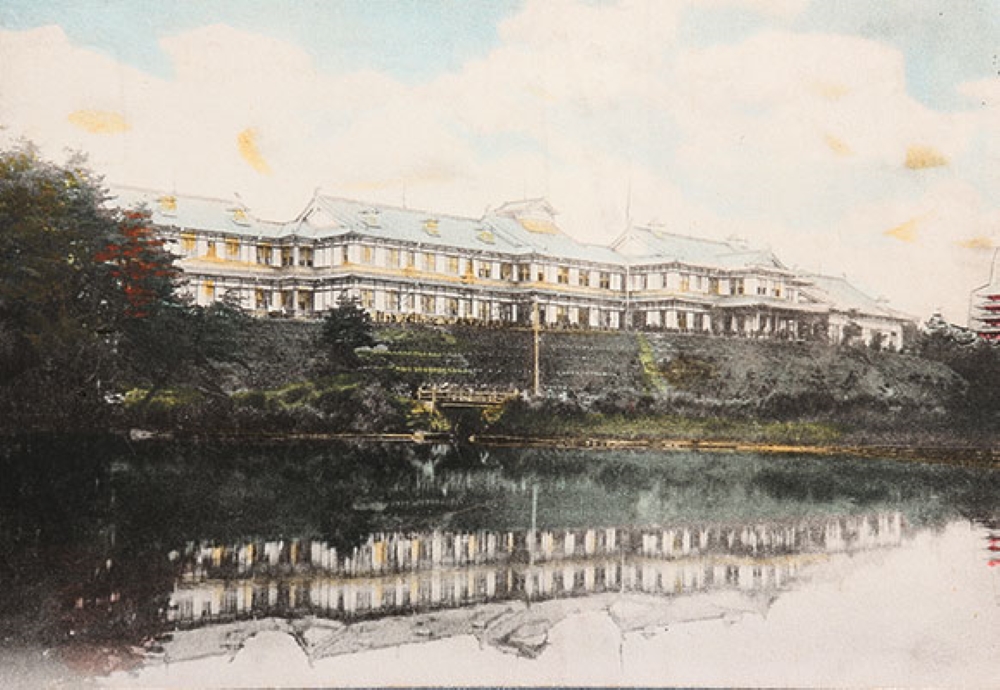
Original Nara Hotel – Photo Credit: Nara Hotel Official Website
Nara Hotel
If the Nikko Kanaya is the Samurai House, the Nara Hotel is undoubtedly the “Guest House of the West.” Located beside the serene Meisho Former Daijyoin Garden and just a short stroll from the heart of Nara, this hotel offers a sanctuary of tranquility amidst a city already filled with well-known World Heritage Sites. It is a place where the noise and business of the modern world fade away, ultimately replaced by the hushed elegance of a bygone era.
Born from a desire for harmony, the hotel was commissioned by the Railway Institute with a specific mission: to blend ancient Japanese aesthetics with Western functionality. Construction began in 1906, following Japan’s victory in the Russo-Japanese War, and by 1909, a magnificent wooden structure stood ready. It was designed to look as if it had always belonged to Nara’s historic landscape, proving that progress doesn’t have to mean leaving the past behind.
The hotel’s early years were truly a struggle for survival, with a small staff number being only able to serve a handful of daily guests. Like many of its peers, it was seized by the U.S. military after WWII. Curiously, many former employees actually remember this period fondly, forming a unique bond with the soldiers, sharing meals and enjoying better wages than many others in the post-war era. However, the return to independence in 1953 brought about deep deficits thanks to the stall in international tourism. It took the intervention of Miyako Hotel Co., Ltd. in 1956 to set the hotel on the path for its grand revival.
The Nara Hotel’s true golden age arrived and coincided with Japan’s economic boom. The 1964 Tokyo Olympics sparked a surge in international visitors that never truly ended, and by 1970, the hotel was hosting royalty and heads of state almost weekly during the Osaka World Expo! Thanks to this, it quickly transformed from a quiet resort into a bustling city hotel that served as a stage for both global diplomacy and high society alike.
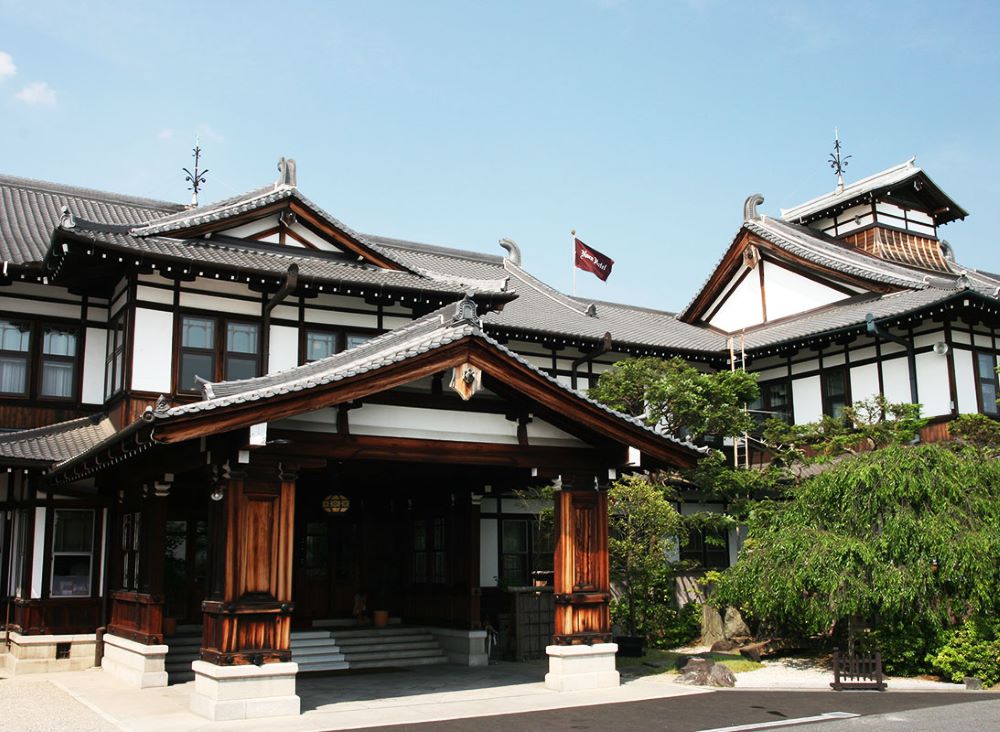
The Nara Hotel as it stands today – Photo Credit: Nara Hotel Official Website
The need for modernization led to a major expansion in the early 1980s. When the new wing opened with 65 luxury rooms in 1983, its very first guest was the legendary Audrey Hepburn. Staying just a day before the official opening, she reportedly sang the hotel’s praises, cementing its reputation as a destination for the world’s most elegant travelers.
Adapting to the modern Heisei Era, the hotel evolved once more to become a premier wedding venue. By adding a chapel, fine-dining restaurants, and sophisticated bars, it ensured it remained relevant to a new generation whilst still retaining the charm of the past. Guest rooms were thoughtfully updated, including the transformation of historic spaces into the “Tenpyo” and “Asuka” Parkside Twin Rooms, blending 21st-century comfort with centuries of style.
The Nara Hotel’s centenary in 2010 coincided with the 1,300th anniversary of Nara’s capital status, a fitting milestone for an institution so deeply tied to the city’s identity. Recent renovations, such as the “Kongo no Ma” banquet hall and the new rooftop terrace, ensure that while the hotel honors its 1909 roots, it continues to offer a premier experience for contemporary gatherings and celebrations.
Finally, a visit is incomplete without dining at “Mikasa,” where the French cuisine has been a staple since the day the doors opened. For a more intimate evening, “The Bar” offers a retro, Meiji-inspired atmosphere, perfect for sipping a cocktail and reflecting on the century of stories that have unfolded within these walls.
Address: 1096 Takabatakecho, Nara, 630-8301, Japan
Phone Number: +81570666088
Website: https://www.narahotel.co.jp/
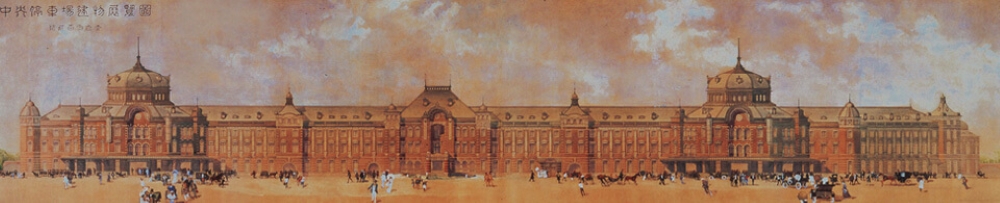
Original Tokyo Station building – Photo Credit: The Tokyo Station Hotel Official Homepage
Tokyo Station Hotel
In the heart of the capital lies the Tokyo Station Hotel, born in 1915 as the grand gateway to the city. Its path was never easy, with plans being canceled twice due to economic instability and local opposition. It took the persistence of industry leaders like Mitsugu Sengoku to finally see the 56-room hotel open its doors inside the iconic station building, just one year after the station itself began operations.
The hotel’s legendary reputation for service was forged by its first general manager, Hiroki Kenmochi. His obsession with quality led to the creation of Japan’s first comprehensive service training manuals. His methods were so effective that, years later, Japan Airlines used the hotel’s training system as the blueprint for their very first flight attendants, establishing a gold standard for Japanese hospitality that reached across the globe!
Located in one of the world’s busiest transit hubs, the hotel has always been a magnet for creative minds. Literary giants like Seicho Matsumoto and Kawabata Yasunari drew inspiration from its rare views of the Marunouchi district for their works. Today, that legacy of inspiration continues across 150 meticulously restored rooms, 10 world-class dining venues, and a luxurious spa, offering a peaceful retreat just steps away from the rush of the trains.
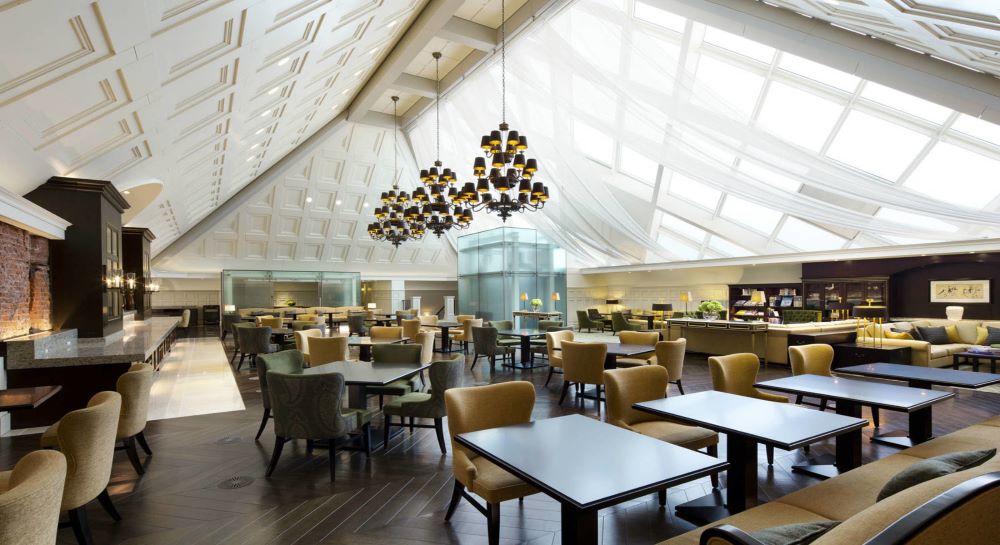
Tokyo Station Hotel atrium – Photo Credit: The Tokyo Station Hotel Official Webpage
The hotel has always been a pillar of the community, serving as a shelter during the devastating 1923 Great Kanto Earthquake. Though it suffered damage from both earthquakes and WWII firebombings, and even at one point being better known for its popular coffee bar than its guest rooms, its spirit remained unbroken, waiting for its chance to shine once more.
That chance came in 2006, when the hotel closed for a massive five-year restoration project. Reopening in 2012, it was returned to its original Taisho-era glory. Under the leadership of current General Manager Hitoshi Fujisaki, the hotel is treated not just as a business, but as a cultural heritage site that lives and breathes. His goal is simple: to ensure every guest leaves with an unforgettable experience that honors the past 100 years while looking forward to the next.
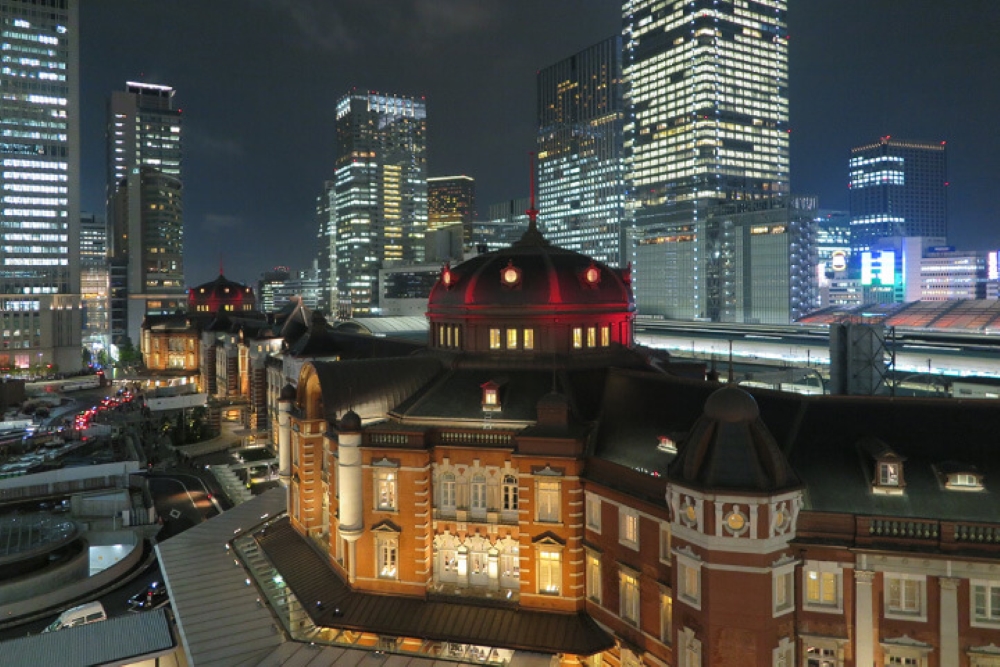
The light-up of the Marunouchi Station Building celebrating the 100th Anniversary of Tokyo Station – Photo Credit: The Tokyo Station Hotel Official Homepage
The 100th-anniversary celebrations in 2015 were a city-wide event, marked by the station building being lit in festive colors and guests voting for the now-permanent “2015” cocktail. Having survived a century of change from the Meiji Era to the Reiwa Era, the Tokyo Station Hotel remains a beloved landmark, proving that true style and exceptional service never go out of fashion.
Address: 1 Chome-9-1 Marunouchi, Chiyoda City, Tokyo 100-0005, Japan
Phone Number: +81352201111
Website: https://www.tokyostationhotel.jp/?utm_source=google&utm_medium=knowledgepanel&utm_campaign=top
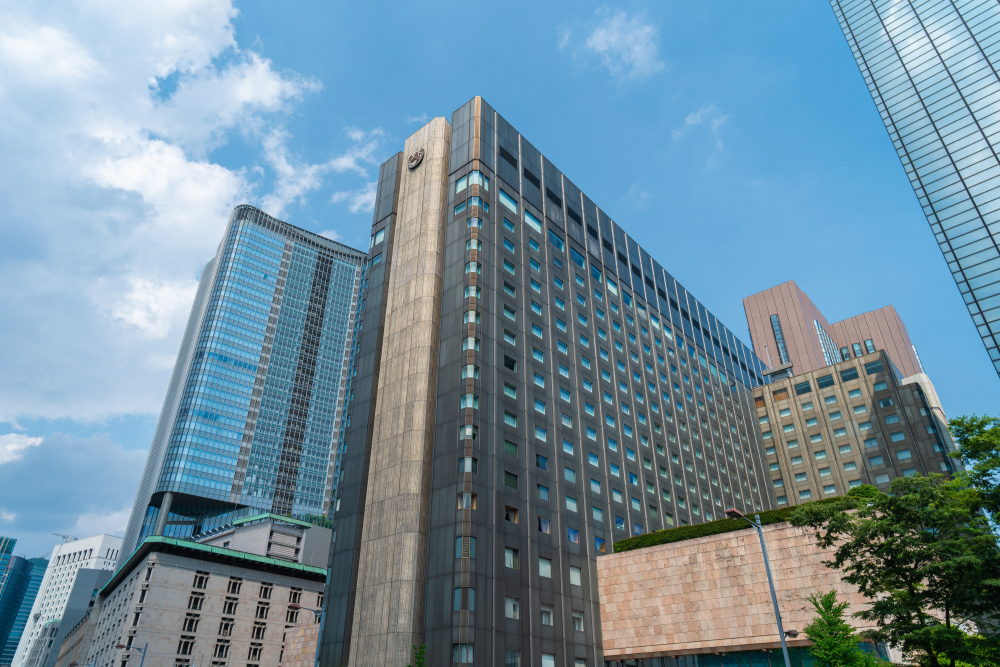
Imperial Hotel Tokyo as it stands today – Photo Credit: yu_photo
Imperial Hotel, Tokyo
In 1890, the Imperial Hotel rose in Tokyo’s Hibiya district, born from the vision of Eiichi Shibusawa and Kihachi Okura. It was established as Japan’s official “guest house,” designed to welcome the world and elevate the country’s international image. Just south of the Imperial Palace, it became the epicenter of Japanese omotenashi, a tradition of hospitality that continues to define the hotel today.
Perhaps its most famous chapter began when Frank Lloyd Wright was chosen to design the new main building. Known as “The Wright Building,” it was a masterpiece of geometric patterns, utilizing Oya stone and custom-made yellow bricks. Wright was so dedicated that he lived on-site during construction, meticulously designing everything from the furniture to the tableware. Completed in 1923, it was a bold fusion of East and West that forever changed the landscape of Japanese architecture.
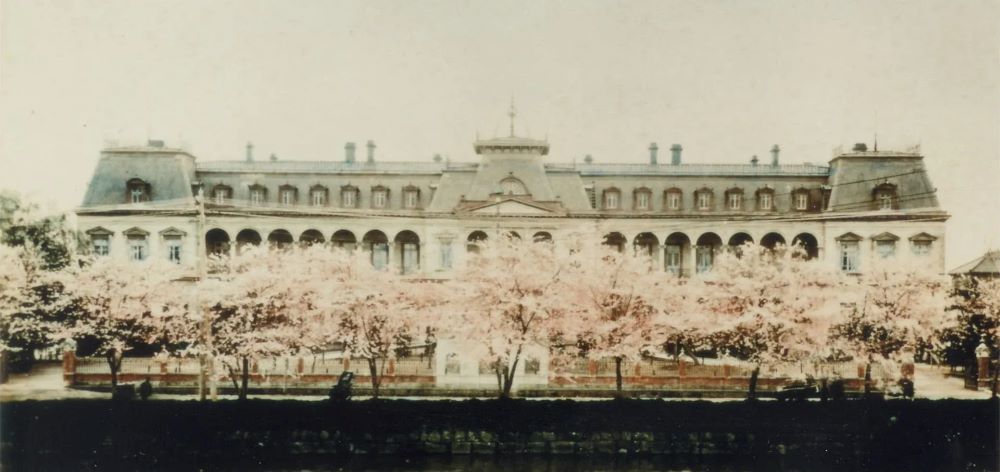
The first Imperial Hotel, designed by Yuzuru Watanabe – Photo Credit: Imperial Hotel, Tokyo Official Homepage
The Wright Building’s grand opening on the very day of the Great Kanto Earthquake was an omen and testament to its resilience. Despite sustaining damage, it became known as the “Jewel of the Orient,” serving as a cultural bridge for over 40 years. It was here that the tradition of hotels hosting grand social events was born, creating a legacy that influenced the entire nation’s hospitality culture until the building’s closure in 1967.
Wright’s influence went beyond the walls; he helped create the concept of the “hotel arcade.” Originally home to 19 stores showcasing the best of Japanese art and culture, the arcade has grown to 50 shops today. It remains a testament to the idea that a hotel should be a complete destination, offering comfort and culture under one roof.
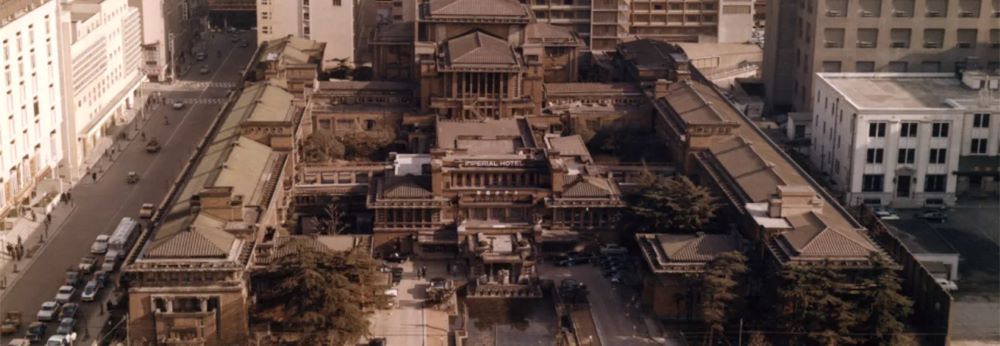
The Wright Building – Photo Credit: Imperial Hotel, Tokyo Official Homepage
One of the most enduring Japanese traditions, the “hotel wedding,” also found its origins here. After the 1923 earthquake destroyed many shrines, the Imperial Hotel established its own shrine on the premises, offering an all-inclusive service that combined the ceremony, reception, and photography. This revolutionary concept spread across Japan and remains the preferred choice for many couples today.
But that’s not all; the hotel was also a pioneer in entertainment. The grand Peacock Room hosted banquets for up to 1,000 guests, while a partnership with the Hatano Band introduced the sounds of salon jazz to Japan. By providing a stage for professional musicians, the Imperial Hotel played a vital role in bringing Western music to the Japanese public
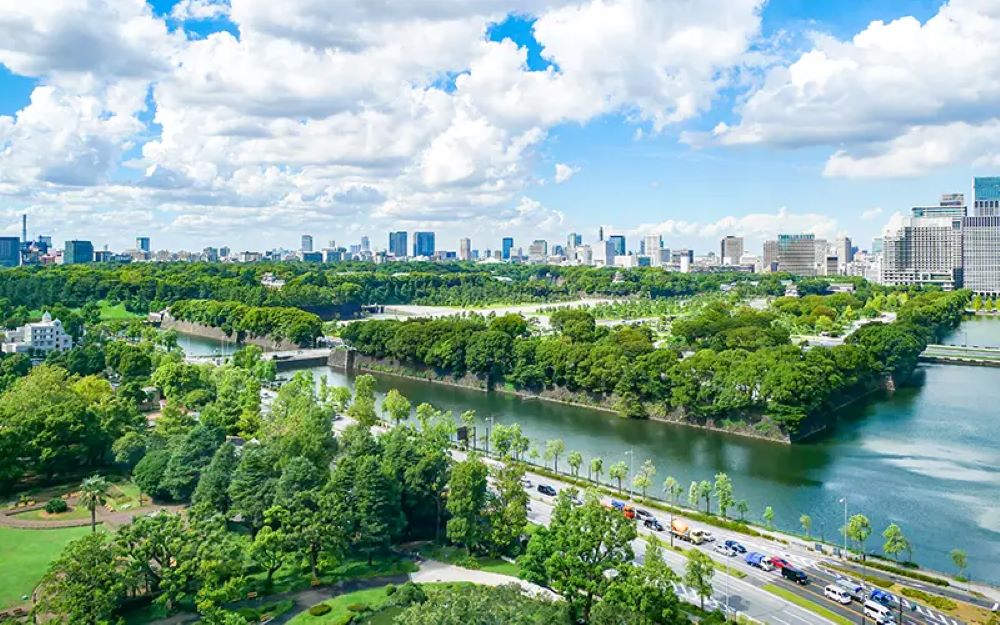
Hibiya, the area surrounding the Imperial Hotel – Photo Credit: Imperial Hotel, Tokyo Official Webpage
The guest list of the Imperial reads like a history book of the 20th century. Marilyn Monroe and Joe DiMaggio spent their 1954 honeymoon here, and figures like Charlie Chaplin and Helen Keller were frequent visitors. It was a place where global fame met Japanese tradition, creating a unique atmosphere of international glamour.
The decision to demolish the Wright Building in 1967 sparked international debate. Thanks to the passionate efforts of preservationists, the lobby and entrance were saved and painstakingly relocated to the Meiji-mura architectural museum in Aichi. Today, while the original site has changed, you can still visit those saved portions to experience Wright’s genius in person.
The current Imperial Hotel was built in stages, with a 17-story tower opening in time for the 1970 World Expo and a 31-story Plaza Annex following in 1983. While the landscape of Tokyo continues to evolve, including the recent 2024 demolition of the Tower Annex, the Imperial Hotel remains a steadfast symbol of Japan’s ability to reinvent itself while honoring its role as the nation’s premier guest house.
Address: 1 Chome-1-1 Uchisaiwaicho, Chiyoda City, Tokyo 100-8558, Japan
Phone Number: +81335041111
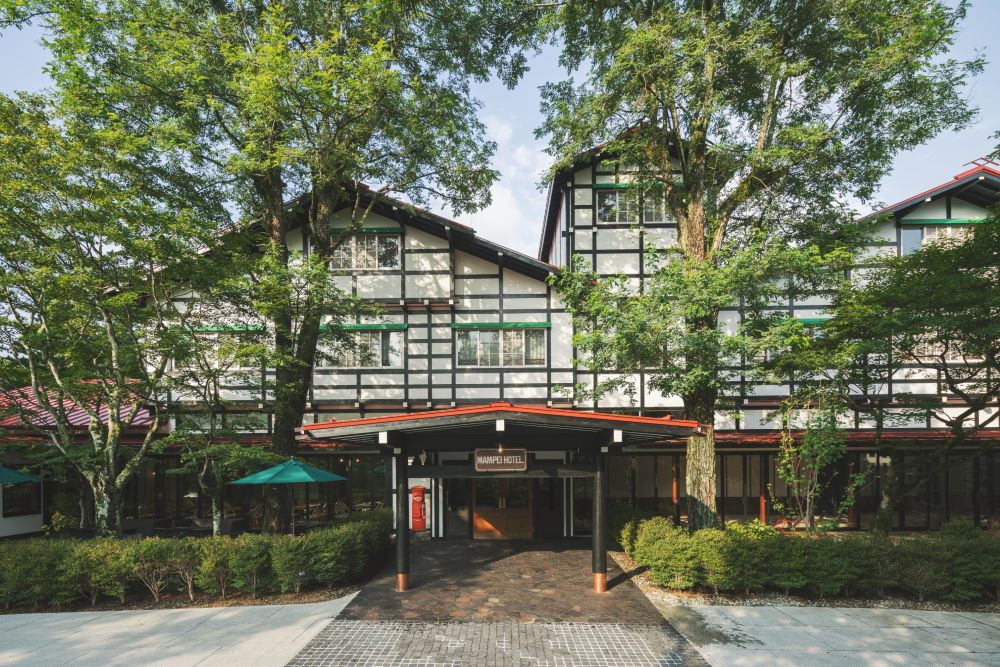
Mampei Hotel Alps Wing – Photo Credit: Japan Hotel Association
Mampei Hotel
Finally, we find ourselves in the tranquil forests of Karuizawa, home to the Mampei Hotel. Its ancestor, the Kameya Inn, dates back to 1764, an era when Karuizawa was a bustling station town for travelers crossing the Usui Pass. But as new roads bypassed the settlement, the town began a slow decline, waiting for a new purpose.
That purpose arrived in 1886 in the form of Alexander Croft Shaw, a Canadian missionary. Despite the language barrier, the owner, Mampei, provided such exceptional hospitality that Shaw and his colleagues returned to Tokyo singing Karuizawa’s praises. This unexpected encounter transformed the quiet mountain village into a premier summer retreat for Japan’s international community.
Anticipating a new wave of global travel, Mampei rebranded his inn as a Western-style hotel in 1894. Two years later, he simplified the name to “Mampei Hotel” for easier pronunciation, though he kept the turtle (kame) as a lasting symbol of the hotel’s long life and heritage.
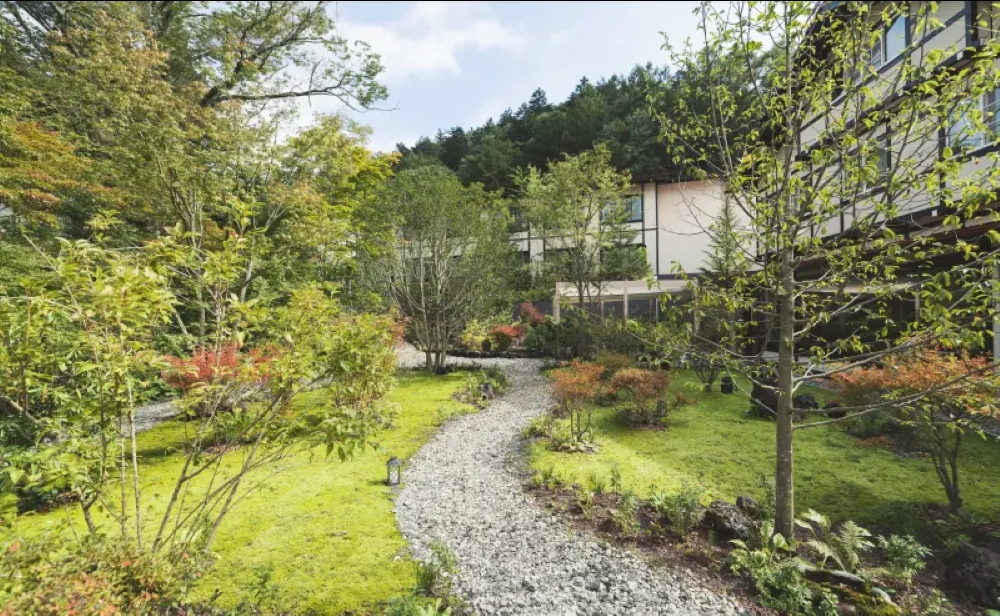
Mampei Hotel courtyard – Photo Credit: Mampei Hotel Official Webpage
The current Alps Wing, designed in 1936 by Gonkuro Kume (the same architect behind the Nikko Kanaya), is a masterpiece of timbered European style. Though it served as a recovery center for Japanese officers during the Pacific War, it emerged from the conflict with its charm intact, ready to welcome a new generation of peacetime travelers.
Today, the Mampei offers a different kind of luxury, one that is defined by the sound of birdsong and the rustle of leaves on the courtyard terrace. Unlike its city-center counterparts, this is a place to slow down, offering everything from all-inclusive weddings to quiet afternoons in its famous cafe, all surrounded by the natural beauty of Nagano.
The hotel continues to grow, with the Atago, Asama, and Usui wings added over the decades. Having celebrated its 130th anniversary in 2024 following a major renovation, the Mampei Hotel proves that like the turtle it honors, it is built for the long journey ahead.
Address: 925 Karuizawa, Kitasaku District, Nagano 389-0102, Japan
Website: https://www.mampei.co.jp/
Whether you seek the electric energy of Tokyo, the ancient whispers of Nara, or the forest serenity of Karuizawa, Japan’s heritage hotels offer more than just a place to stay. They offer a connection to the past and a front-row seat to the timeless art of omotenashi. These stories are just the beginning; each hotel has a unique voice, waiting for you to hear it. Which one will you visit first?
Featured Photo Credit: Blanscape
Need help finding the perfect accommodation for your trip to Japan? Reach out to our team of expert travel planners!
Book your pocket wifi now to stay connected through your entire Japan Journey!

Be sure to get the JR Pass to make navigating Japan during your trip that much easier!
YOU MIGHT ALSO LIKE