Make a Wish on Tanabata: The Magic of Tanzaku and Starry Skies
Jul 6, 2026
BY Brad Stephens

Every summer in Japan, colorful strips of paper flutter in the breeze, tied to bamboo branches that sway under the night sky. Each strip carries a handwritten wish. This is the heart of Tanabata (七夕, Star Festival), one of Japan’s most beloved seasonal celebrations.
If you are visiting Japan in early July or August, you may stumble upon vibrant decorations in shopping arcades, shrines, schools, and train stations. Take a closer look and you will see wishes written in careful handwriting, hopeful scribbles, and even playful doodles. Participating is simple, meaningful, and deeply rooted in centuries of legend.
Let’s explore how you can make a wish on Tanabata and discover the story behind the delicate paper strips known as tanzaku.
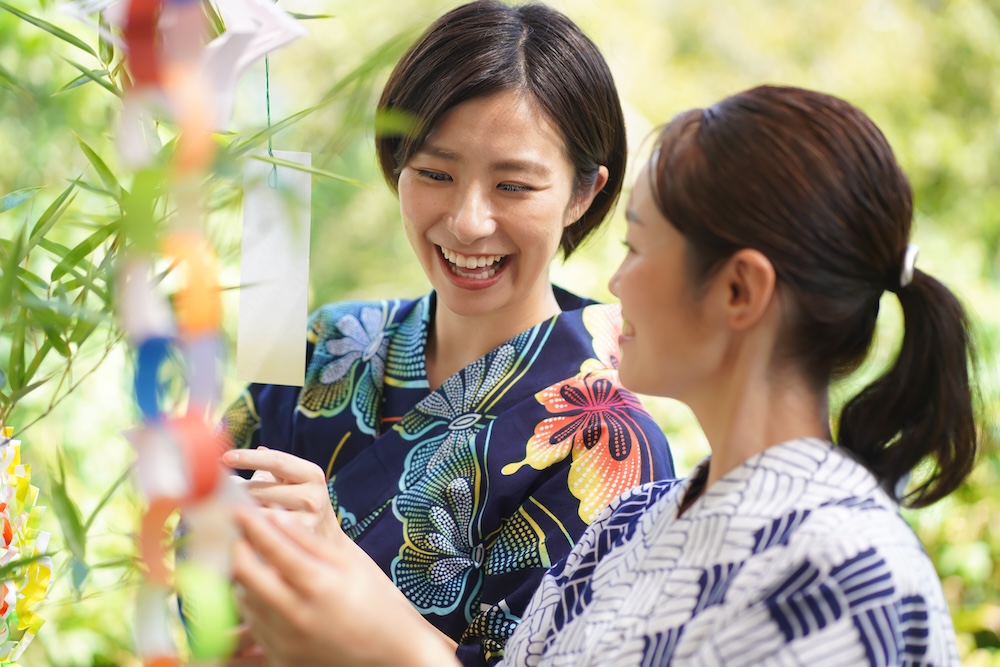
Two friends share a laugh while decorating a bamboo tree for Tanabata – Photo Credit: yamasan0708
The Star-Crossed Legend Behind Tanabata
Tanabata is based on an ancient Chinese legend that was introduced to Japan during the Nara period. The story tells of two celestial lovers, Orihime and Hikoboshi.
Orihime was a skilled weaver princess, represented by the star Vega. Hikoboshi was a hardworking cowherd, represented by the star Altair. After falling deeply in love, they neglected their duties. The Sky King, angered by their distraction, separated them by the Milky Way. Moved by their sorrow, he allowed them to reunite once a year on the seventh day of the seventh month.
On that night, it is said that magpies form a bridge across the Milky Way so the lovers can meet. If it rains, their reunion must wait another year.
The romantic and slightly bittersweet tone of this tale gives Tanabata its emotional charm. It is a celebration of hope, longing, perseverance, and dreams.
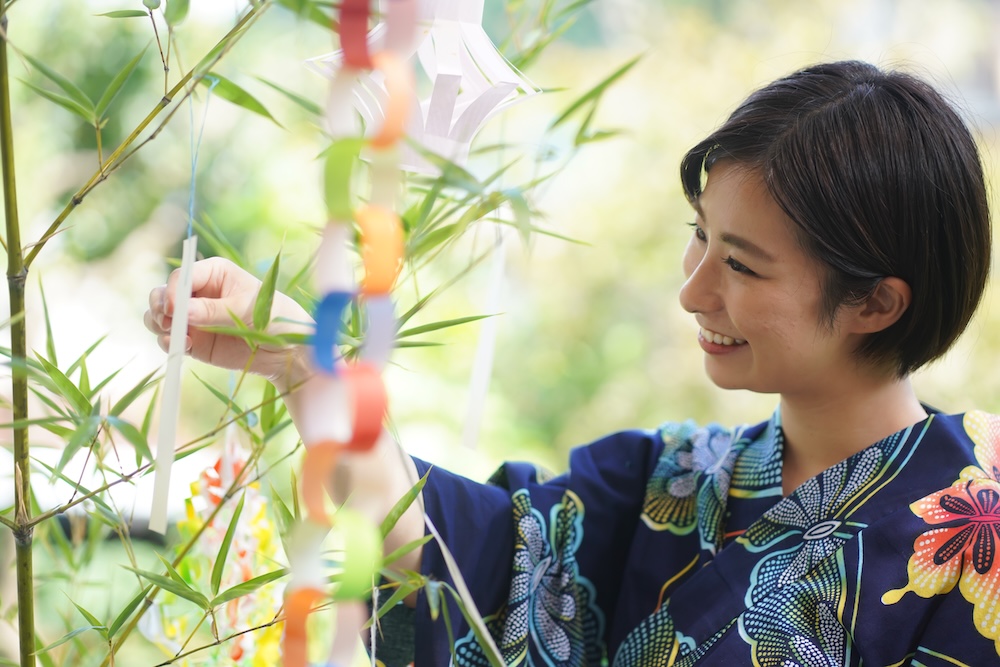
Smiling woman in a yukata hangs a tanzaku on a bamboo branch – Photo Credit: yamasan0708
Tanzaku: Writing Your Wish
At the center of Tanabata tradition is tanzaku (短冊). These are narrow, rectangular pieces of colored paper where you write your wish.
Originally, wishes focused on improving skills, especially calligraphy and weaving, reflecting Orihime’s craft. Over time, the tradition expanded. Today, you will find wishes for:
- Academic success
- Career advancement
- Health and happiness
- Love and relationships
- Personal growth
- World peace
The five traditional colors of tanzaku often follow elements from Chinese philosophy. Each color carries symbolic meaning:
- Blue or green for growth and harmony
- Red for gratitude and respect
- Yellow for relationships
- White for purity and determination
- Purple for wisdom
After writing your wish, you tie the tanzaku to a branch of sasa (笹, bamboo grass). The tall bamboo reaching toward the sky symbolizes a connection between the human world and the heavens. Watching dozens of wishes flutter together creates a beautiful sense of shared hope.
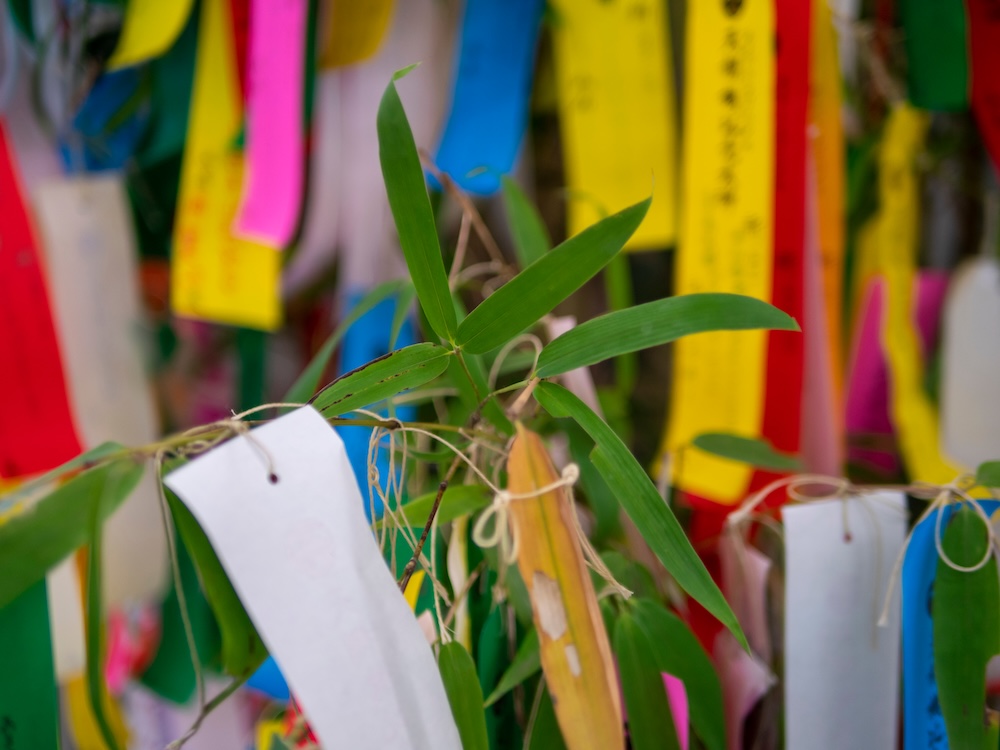
Close-up of bamboo with vibrant wish strips for Tanabata – Photo Credit: Lee waranyu
When and Where to Celebrate
Although Tanabata is traditionally held on July 7th, many regions celebrate it later in the summer according to the lunar calendar. This means you can experience the festival well into August.
Some of the most famous celebrations include:
Sendai Tanabata Festival
The Sendai Tanabata Festival in Miyagi Prefecture is one of Japan’s largest Tanabata celebrations. Massive, intricate streamers hang from shopping arcades, and the city bursts into color each August. The craftsmanship is extraordinary, and walking beneath the decorations feels like stepping inside a living artwork.
Tanabata is celebrated all across Japan, so you’ll find plenty of chances to enjoy the festivities no matter where you go.
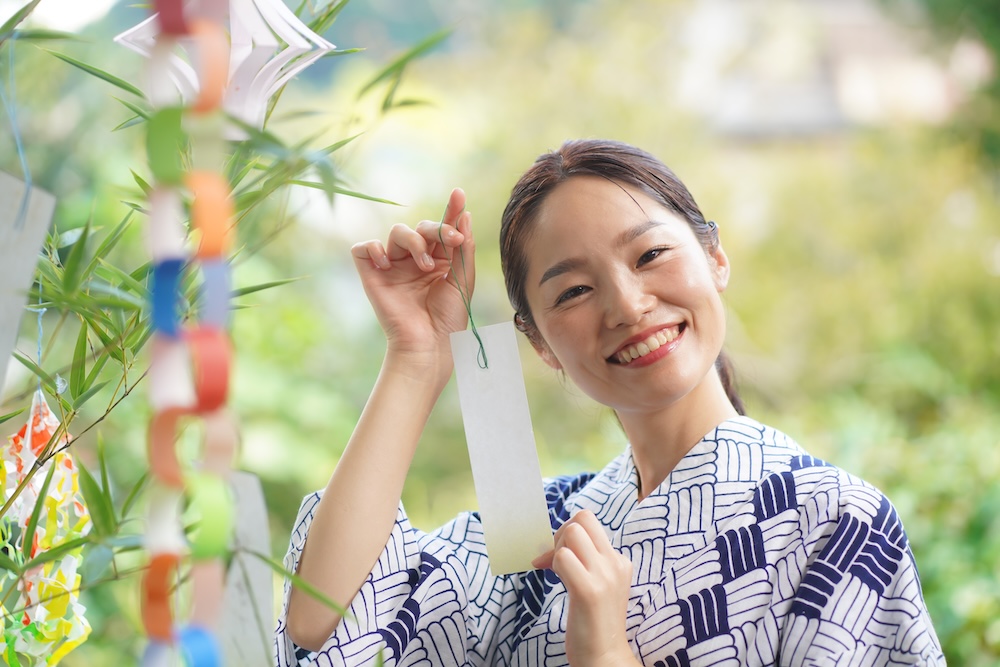
Happy woman holds up a paper wish strip – Photo Credit: yamasan0708
How to Make a Wish Like a Local
Participating in Tanabata is wonderfully simple.
- Find a bamboo display at a shrine, temple, shopping street, or festival venue.
- Pick up a tanzaku provided at the site.
- Write your wish clearly. Some people write in Japanese, but you can write in your own language.
- Tie the paper securely to the bamboo branch.
Easy! No complicated rituals required.
If you want to add a thoughtful touch, reflect on your wish carefully before writing. Tanabata is less about instant results and more about expressing sincere intention.

Family writing wishes together – Photo Credit: yamasan0708
Seasonal Atmosphere and Cultural Context
Tanabata arrives during Japan’s humid early summer. Fireworks festivals begin lighting up the skies. Cicadas buzz in the trees. Yukata appear at evening events. The air carries both heat and anticipation.
Unlike the exuberant energy of spring cherry blossom season, Tanabata feels introspective. The festival encourages quiet reflection while still celebrating community.
In schools, children practice handwriting through their wishes. In offices, coworkers sometimes share bamboo displays. In neighborhoods, families stroll through decorated streets after sunset. The festival blends ancient legend with everyday life.
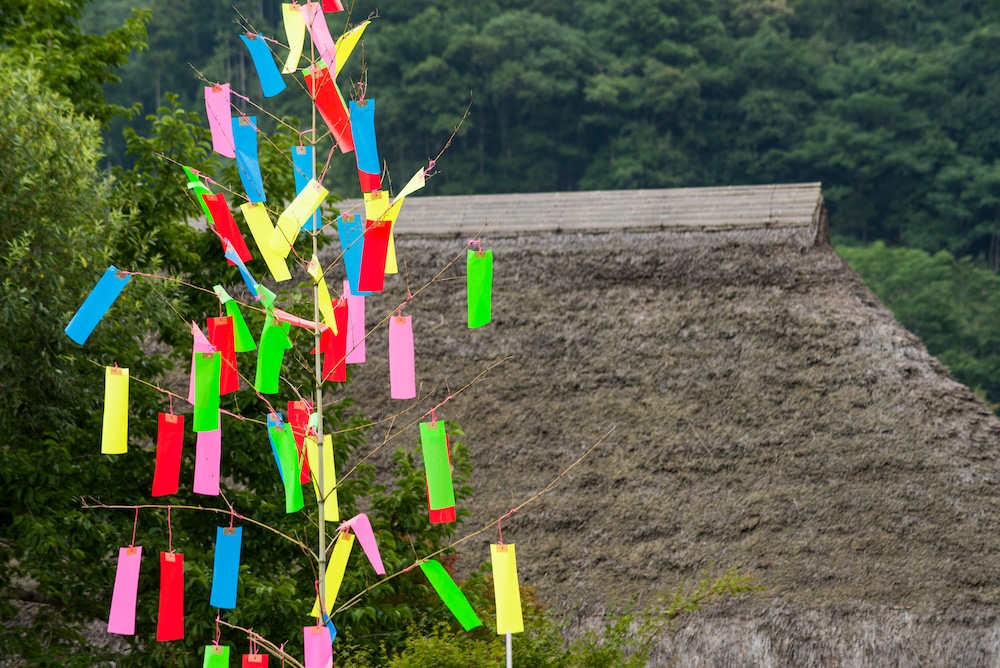
Colorful Tanabata decorations – Photo Credit: Varts
Beyond Japan
Tanabata’s roots connect to China’s Qixi Festival and similar star-crossed lover legends across East Asia. Yet in Japan, it has evolved into a uniquely visual and participatory celebration. The sight of bright paper against deep green bamboo has become an iconic symbol of summer.
If you cannot be in Japan during Tanabata, you can still recreate the experience at home. All you need is paper, string, and a small branch. Write your wish. Hang it somewhere visible. On a clear night, look toward the stars Vega and Altair and remember the story of reunion and hope.
A Night of Wishes
Tanabata invites you to pause and dream. It reminds you that longing is part of being human, and that hope connects us across distance, just like the stars.
When you tie your tanzaku to bamboo and watch it sway in the evening breeze, you are participating in a tradition that has lasted for over a thousand years. Beneath the same summer sky, countless others are wishing too.
On the seventh night of the seventh month, let yourself believe in the possibility of reunion, perseverance, and dreams carried upward on strands of colored paper.
Keep exploring Tanabata and its beautiful traditions in our related blog post here.
Featured Photo Credit: lkunl
Want to experience the magic of a Japanese summer beyond the festival decorations? Join us for one of our Summer Food Tours to taste seasonal treats and discover how locals celebrate the hottest time of year!
PIN THIS FOR LATER
Book your pocket wifi now to stay connected through your entire Japan Journey!

Be sure to get the JR Pass to make navigating Japan during your trip that much easier!
YOU MIGHT ALSO LIKE