Skiing Made Simple: Japan’s Best Resorts for Beginners
Dec 7, 2025
BY Kainu'u Gavin
Welcome to the Slopes
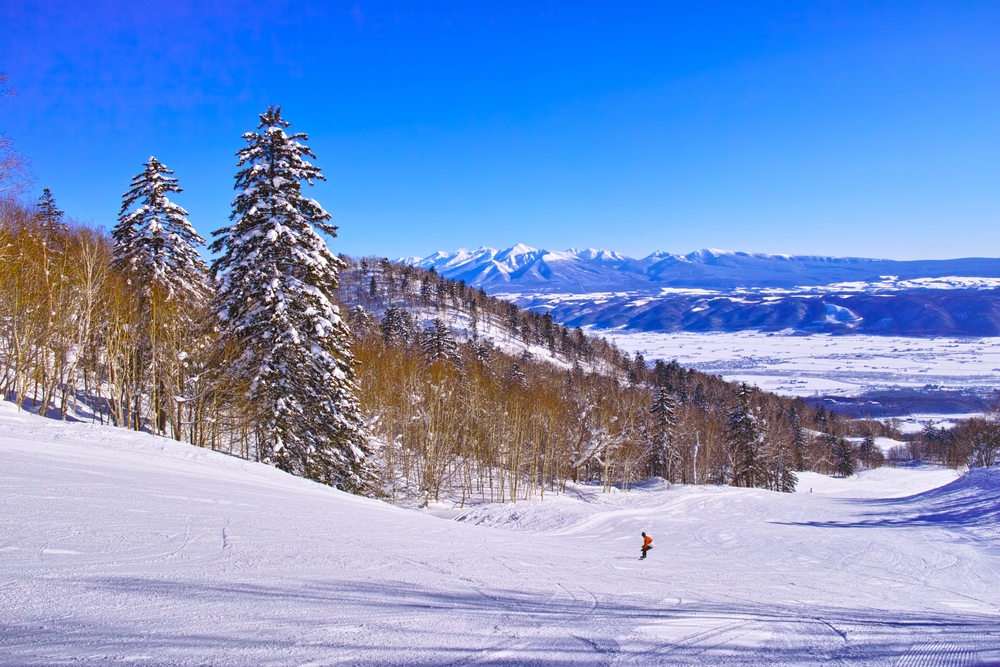
Known for its lush springtime views and bustling metropolitan cities, Japan has long been one of the most visited countries in the world during the spring and autumn seasons. What many travelers don’t realize is that Japan also offers countless wonders during the winter. Once winter arrives, the country transforms into a snow lover’s paradise. The powdery white landscapes stretch across the prefectures of Hokkaido, Nagano, and beyond, drawing in a new type of traveler: thrill seekers.
While the country boasts many slopes used by professional athletes, Japan is also welcoming to beginners. Whether you’re strapping on skis for the first time or learning to balance on a snowboard, Japan offers gentle slopes, top-of-the-line instructors, and warm hospitality that make learning a joy for all who visit.
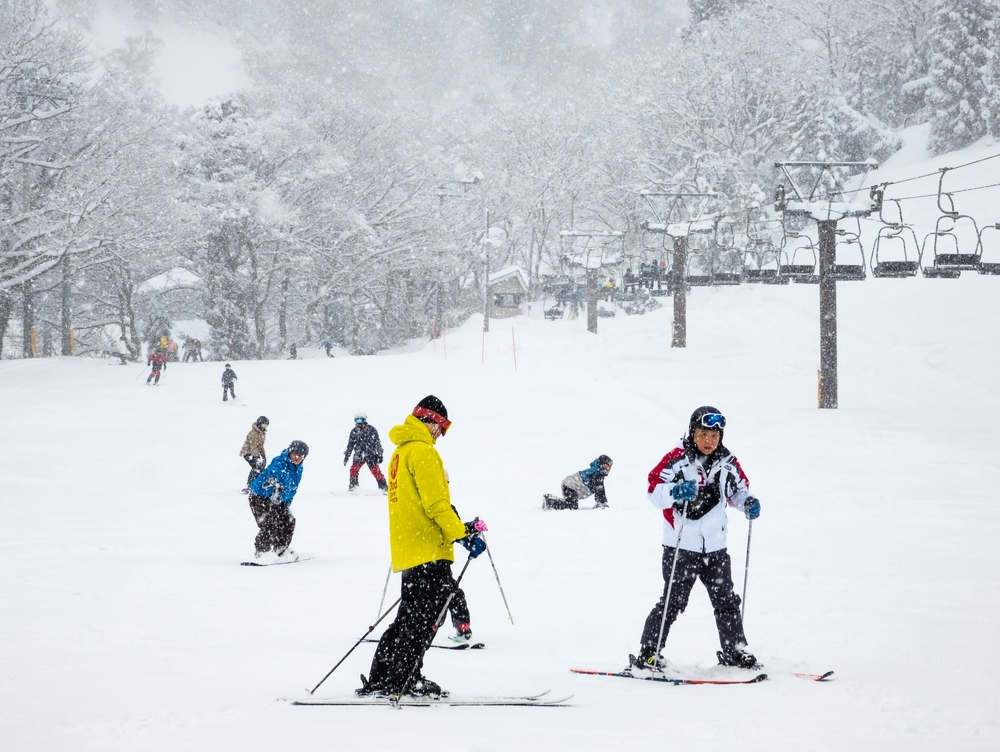
Beginner and learner level snowboarders and skiers on the practice slopes at Yuzawa Kogen in Niigata prefecture, Japan – Photo Credit: Richard Whitcombe
Soft Snow & Easy Starts
For those familiar with Japan’s skiing world, many know about its famous snow. You may be asking, “What makes the snow in Japan so special?” Cold Siberian winds meeting the moisture of the Sea of Japan give rise to Japow, Japan’s world-famous powder snow. Known for being incredibly dry and fluffy, it blankets much of the country’s mountainous terrain, making Japan one of the planet’s premier destinations for winter sports. It’s an especially good type of snow for first-time skiers. If someone were to take a big tumble into it, Japow’s gentle texture makes each fall feel more like landing on a pile of soft pillows than on hard concrete. Additionally, especially in Hokkaido, there are sheltered tree areas where snow piles up, allowing for thrilling freeride experiences for skiers and snowboarders who want to navigate through beautifully spaced forests.
Luckily for most travelers, whether experienced or not, each resort prides itself on providing as much help as possible. Nearly all resorts offer maps with well-marked trails, smooth lifts, and spacious learning zones separate from advanced slopes, allowing anyone to practice safely and comfortably. Some resorts, which will be mentioned later, also provide professional ski schools with English-speaking instructors who can help anyone learn the slopes in a timely and enjoyable manner. As a recommendation, depending on how much time you have, taking a short class to learn the basics at any resort offering such programs is highly recommended.
Finally, many newcomers to skiing may not have their own equipment and may be wondering where to find some. At many resorts, high-quality gear rentals are available and easy to arrange on-site if you don’t have time to book in advance.
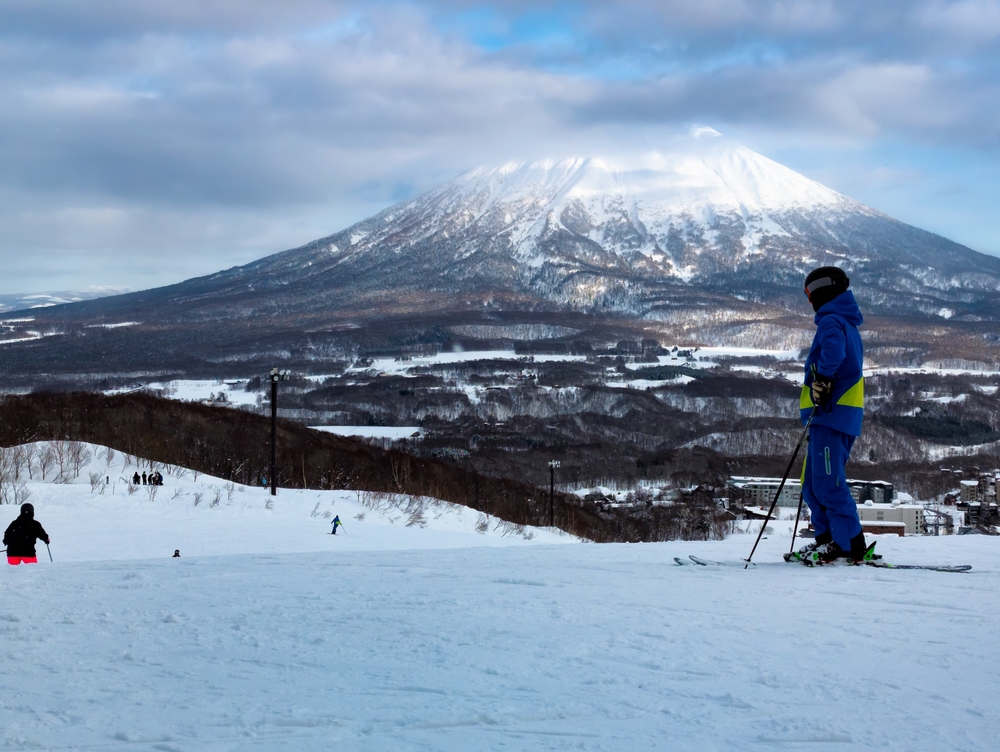
Skiers on top of a piste with Mount Yotei behind (Hirafu, Niseko) – Photo Credit: Richard Whitcombe
Top Beginner Ski Resorts Across Japan
Based on the brief information provided, it is now time to get to the source of the fun: the resorts. From the north of Hokkaido to the mountain ranges of Nagano, there are a plethora of ski resorts that welcome skiers of all levels. Each region also has its own personality, making them unique in different ways. Whether you are looking for a quiet getaway or a snow town that never sleeps, the perfect slope is waiting for you.
Serving as Japan’s northernmost island, Hokkaido is one of the top destinations for skiers in the country. For beginners, Niseko United is considered the go-to area. As one of the most famous ski regions in the world, Niseko United is made up of four connected resorts: Hirafu, Hanazono, Niseko Village, and Annupuri. Each resort has slopes of varying skill levels, but Hanazono is considered the best overall for beginners. This is evident in its wide, gentle slopes, excellent grooming, and dedicated beginner zones separate from advanced runs. Additionally, it is home to the Niseko International Snowsports School (NISS), regarded as one of Japan’s best English-speaking ski schools.
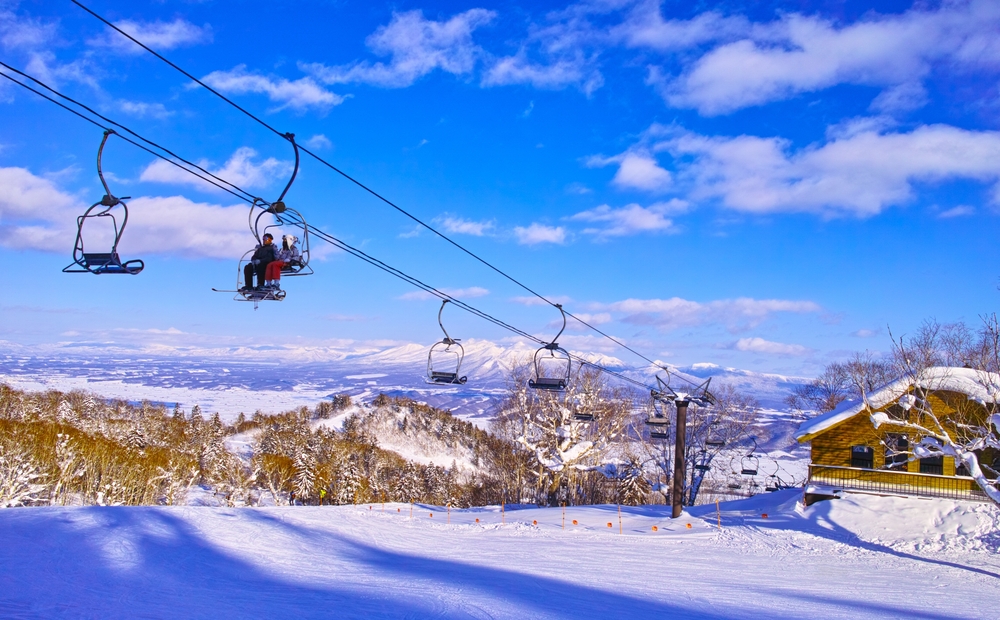
A mountain lodge-style restaurant and ski lift near the top station of the Furano ropeway – Photo Credit: 7maru
The second-best option is Grand Hirafu for those looking for more variety and slightly more challenging slopes. There are more cafés, shops, and aprés-ski spots, making it suitable for a wider range of travelers. The third option is Niseko Village, which is geared more toward families and relaxation. Some beginner slopes are located close to the village, and the Niseko Village Snow School is available for both beginners and children.
A few other resorts recommended for beginners in Hokkaido are Furano and Kiroro Resort. Furano is ideal for those seeking a quieter option and stunning views of the surrounding areas. The most notable view near Furano is Mount Tokachi, which is about 41 minutes by car and can be climbed by those who are adventurous. On the other hand, Kiroro Resort, located near Otaru, is smaller than the previous two but often less crowded. Its soft powder and beginner-friendly slopes are great for skiers of all levels and can especially help beginners build confidence over time.
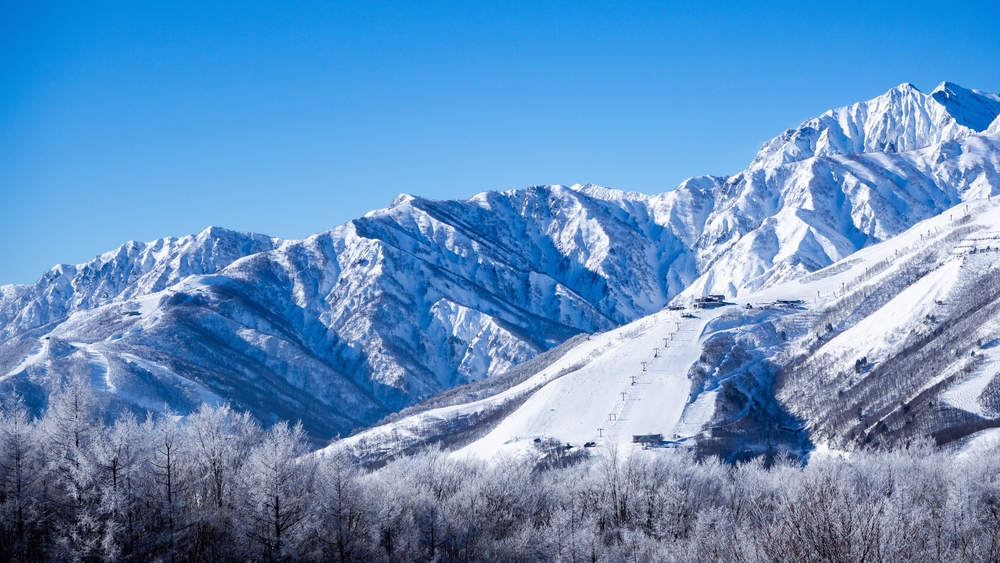
Snow-capped Northern Alps shining against a clear blue sky, Hakuba Village, Nagano Prefecture – Photo Credit: RATM
Home of the 1998 Winter Olympics, Nagano has long been considered a favorite destination for skiers of all levels. The most recommended resorts for beginners are Hakuba Goryu, Hakuba 47, Nozawa Onsen, and Shiga Kogen.
Located in the heart of Hakuba Valley, Hakuba Goryu and Hakuba 47 are two interconnected resorts that serve as ideal destinations for many skiers in Nagano Prefecture. Hakuba Goryu features a variety of broad, gentle slopes, such as Toomi Slope, perfect for new skiers who want to learn turns and practice at their own pace. Many slopes are also open at night for night skiing, allowing skiers to continue once the sun has set. Hakuba 47 offers slightly steeper beginner terrain but provides some of the most stunning mountain views, giving new skiers a taste of adventure without feeling intimidated. Because both resorts are interconnected, they offer high-quality English-speaking instruction at the Evergreen Outdoor Center. There are also excellent shops, restaurants, and onsens located nearby in Happo Village.
For those looking for an interesting blend of skiing culture and traditional Japan, look no further than Nozawa Onsen. This small yet vibrant village offers nearly 30 different slopes, with the majority developed specifically for beginners. Many beginner slopes are located around the Uenotaira and Nagasaka areas. The Nozawa Onsen Ski School is also available to help teach anyone the basics of skiing and provide guidance on the best slopes for beginners. After a thrilling day on the slopes, you can enjoy the nighttime atmosphere by exploring the roughly 10 public onsens scattered throughout the village. From my stay there this past winter, the onsens, restaurants, and shrines are all worth visiting at any time of day. If anyone reading this manages to visit all the onsens in one night, you have my highest praise.
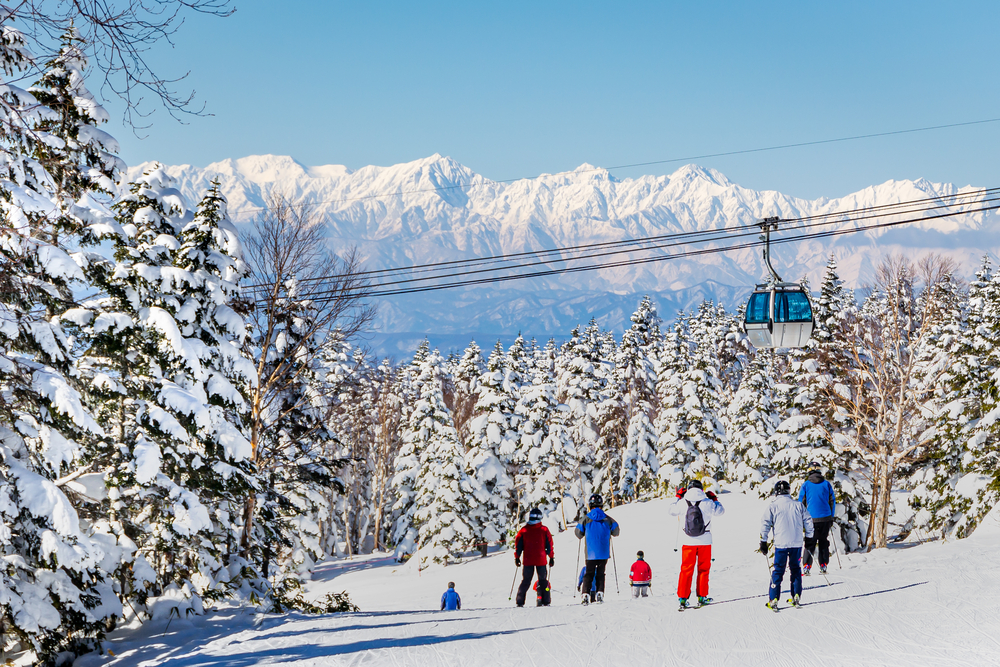
Mountain ski resort Shiga Kogen, Japan, during a sunny day – Photo Credit: Tetyana Dotsenko
The final resort in Nagano to check out is Shiga Kogen. Known as Japan’s largest ski area, Shiga Kogen may sound overwhelming at first, but it is an excellent choice for both beginners and veteran skiers. With over 50 lifts and 18 connected ski areas, Shiga Kogen provides a wide range of gentle slopes for beginners. The Sun Valley, Ichinose, and Maruike zones are typically the best for beginners. One of the best features of the slopes is that the snow remains light and dry well into April, allowing you to enjoy skiing even in the early stages of spring. After a day on the slopes, you can also visit Jigokudani Snow Monkey Park, which is not far from the ski area.
While Hokkaido and Nagano are considered the top areas for skiing, the Niigata and Tohoku regions also offer excellent options for both beginner and experienced skiers. In Niigata, Myoko Kogen is a hidden gem, ideal for those seeking smaller crowds. Myoko Kogen combines welcoming beginner terrain with traditional Japanese charm, similar to Nozawa Onsen. The resort is made up of multiple connected zones, including Akakura Onsen and Ikenotaira Onsen, both known for their wide, gentle runs that are perfect for learning the basics of skiing. The local Myoko Snowsports School is an excellent place to master these fundamentals. Traditional ryokan inns and onsen baths further showcase Myoko’s down-to-earth vibe and authentic feel, which many travelers appreciate.
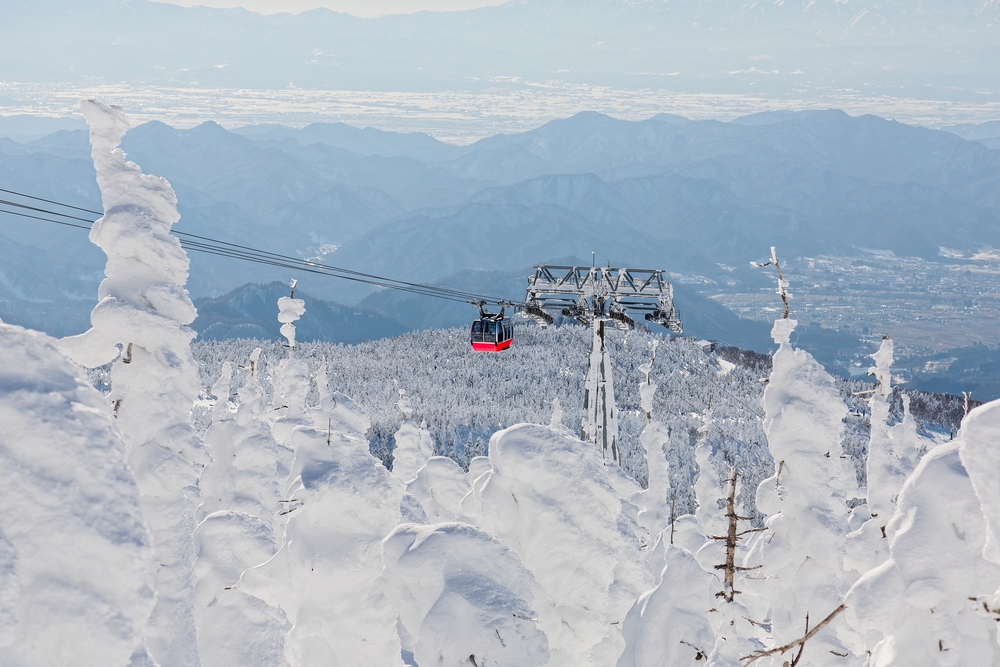
A cable car flying over Juhyo forests on the snowy mountainside near Zao hot spring and ski resort, Yamagata, Japan – Photo Credit: AaronChenPS2
Lastly, located in Yamagata Prefecture, Zao Onsen is another resort that perfectly blends Japanese culture with its surrounding natural beauty. Since the resort accommodates skiers of all levels, it has designated beginner zones that are gentle and ideal for practice. One feature that makes this area popular is Zao’s famous Juhyo, the mystical “snow monsters” formed when icy winds cover trees in unique shapes. The village itself has many natural hot springs, traditional ryokan inns, and outdoor baths, making the experience a memorable one.
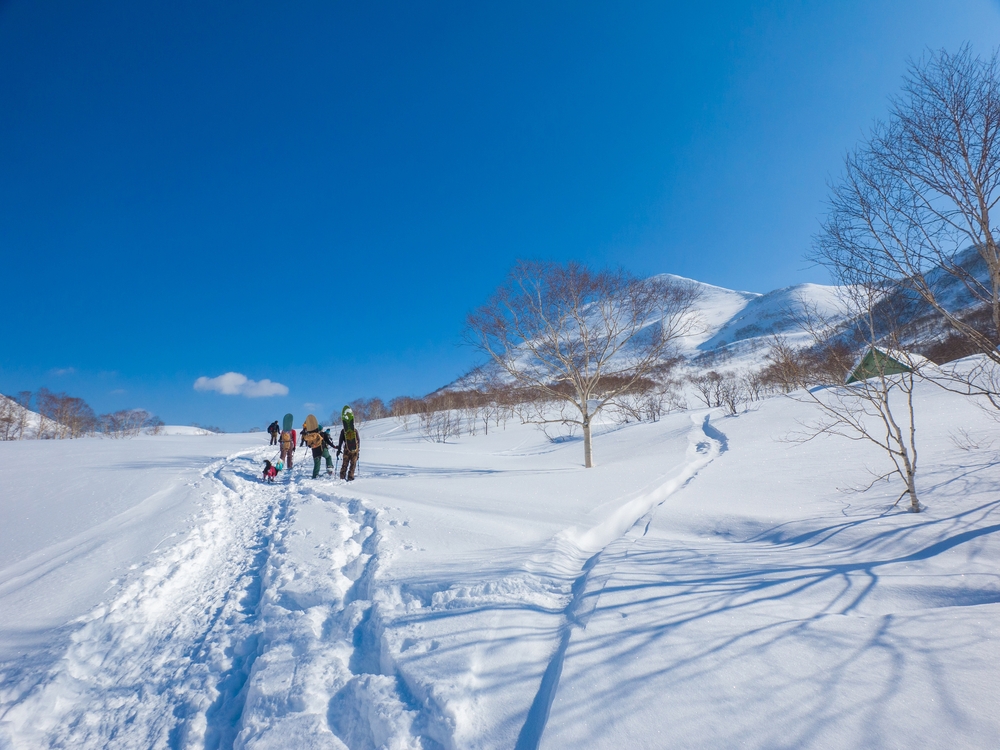
People walking through snowfields with snowboards on their backs (Niseko, Hokkaido, Japan) – Photo Credit: Mayumi.K.Photography
Snowshoeing & Cross-Country Adventures
While skiing is the main attraction for many, some may want to take it easy and try something different. For those interested in a new sport in the Japanese snow, snowshoeing and cross-country skiing are excellent options. Both sports are suitable for beginners and experts alike, offering a peaceful yet adventurous way to enjoy the winter season. They are also one of the best ways to observe Japan’s snowy landscapes at your own pace.
In Hokkaido, Niseko and its surrounding areas are considered among the best places for both activities. The Niseko Adventure Centre (NAC) offers half-day and three-hour snowshoeing and cross-country skiing tours through scenic spots such as Lake Hangetsu (the crater lake at the base of Mt. Yotei), Tokeien Forest, and Iwaonupuri. The trails are wide and gentle, making them perfect for beginners, and every tour includes a professional guide who can teach the basics of the activity as well as provide information about the surrounding area. All tours provide the necessary snowshoe gear, warm drinks, and local snacks to ensure an enjoyable experience.
For those in Nagano, Hakuba Iwatake offers a series of well-marked forest trails accessible from the gondola station. Each route is designated for first-timers and families. Snowshoes can be rented at the base, and guided tours are available to take you through the peaceful alpine forests of the Japanese Alps. For those interested in cross-country skiing, Hakuba’s Snow Harp is highly recommended. Originally built for the 1998 Winter Olympics, it still operates as a public venue, offering trails ranging from easy 2 km loops to 7.5 km tracks.
In Nozawa Onsen, the cross-country and snowshoeing trails offer a blend of history, tradition, and charm that is hard to find elsewhere. Similar to Hakuba’s Snow Harp, Nozawa Onsen was also used for events during the 1998 Winter Olympics. Because of this, many of the courses are still well-maintained, with several winding through the calm forest paths above the village. Local operators, such as Nozawa Onsen Tours, lead guided snowshoe hikes through the woods and show visitors parts of the mountains that are not visible from the ski slopes.
Finally, Tohoku’s Appi Kogen in Iwate Prefecture is a popular spot for cross-country skiers. The resort has flat, scenic routes that are ideal for beginners or casual skiers looking to join in on the fun. Rental snowshoes and other gear are always available at the resort. If you are unsure where to go, resort staff or local guides can help organize the ideal experience for the day.
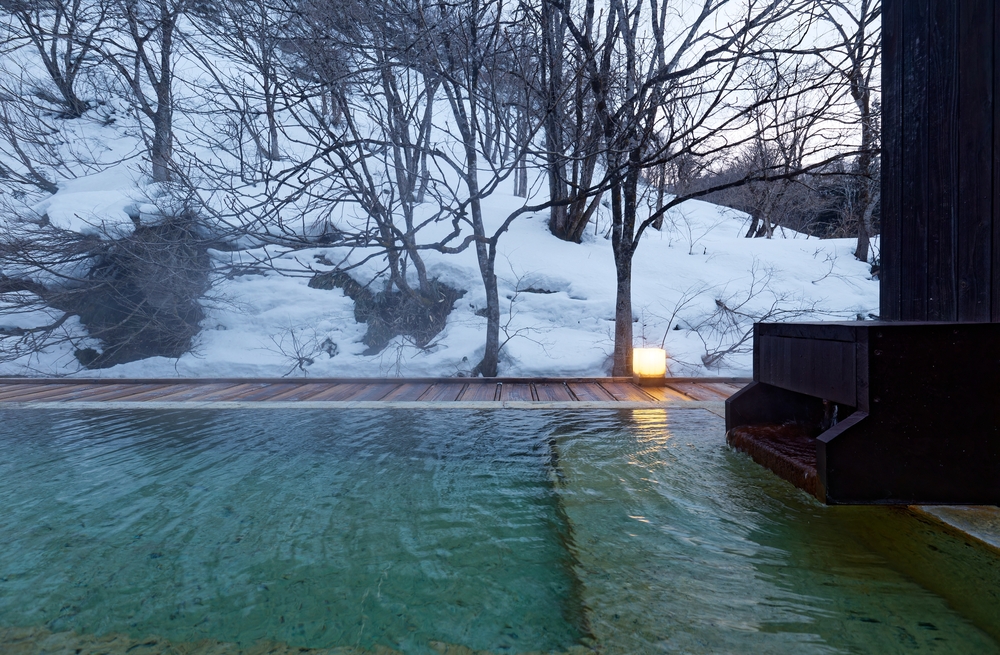
A calm, relaxing winter scene of a chartered open-air hot bath of natural thermal spring at Onsen Ryokan in Iwate, Japan – Photo Credit: AaronChenPS2
Snack & Relax
After a fun day on the slopes or trekking through the beautiful trails, nothing completes the experience quite like Japan’s après-ski culture. With an emphasis on relaxation as a ritual rather than a chore, Japan’s après-ski culture blends the soothing comforts of natural hot springs with the savory aromas drifting from local eateries.
To begin the “ritual,” starting at a local onsen is recommended. With their all-natural spring waters soothing your body and mind, you can enjoy some of the healing benefits that an onsen provides, primarily easing sore muscles after a long day on the slopes. While Nozawa Onsen was mentioned earlier, Zao Onsen offers a similar experience. With an emphasis on natural sulfur springs, their onsens leave your skin soft and rejuvenated after a chilly day outside. These types of onsens are also available at modern resorts such as Niseko and Hakuba, where outdoor baths allow views of the scenic snow-covered pines and mountains.
Once you’ve had a chance to relax, be sure to enjoy some of the winter cuisine that Japan has to offer. Many ski resorts also serve as excellent food destinations in their respective prefectures, offering hearty dishes designed to comfort and refuel you for the next day of adventures.
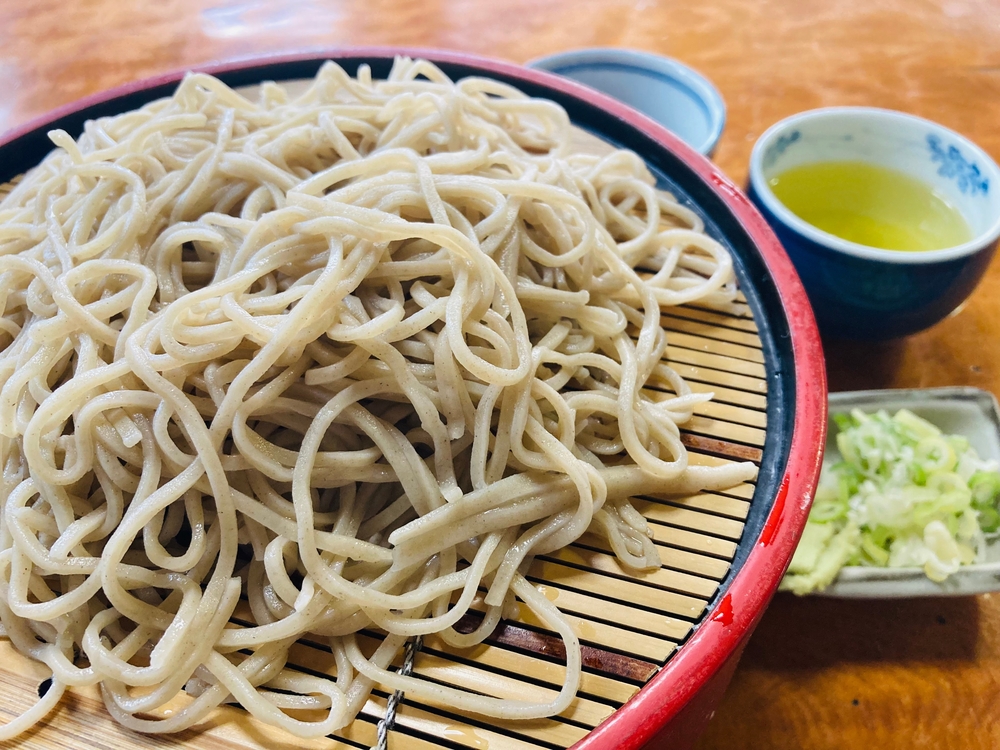
Nagano Prefecture, Japan. Traditional Zaru Soba noodles can be enjoyed in post towns – Photo Credit: sekky15
In Hokkaido, be sure to try the region’s famous soup curry, butter corn ramen, or Hokkaido milk soft serve. While soft serve on a cold day may not sound ideal, it is well worth trying, especially after a relaxing time at the onsen. Nagano is well-known for its soba noodles, oyaki dumplings filled with local vegetables and miso, and hearty hotpot dishes that are perfect for large gatherings. In Niigata, rice and a nice cup of sake take center stage. Take the opportunity to enjoy local sake tastings when available and try koshihikari rice bowls topped with fresh catches from the sea.
If you are looking for a livelier evening, resort villages like Hakuba and Niseko Hirafu never sleep, thanks to their cozy izakaya pubs. These spots are great for locals and travelers to come together over yakitori, bowls of oden, and a variety of drinks.
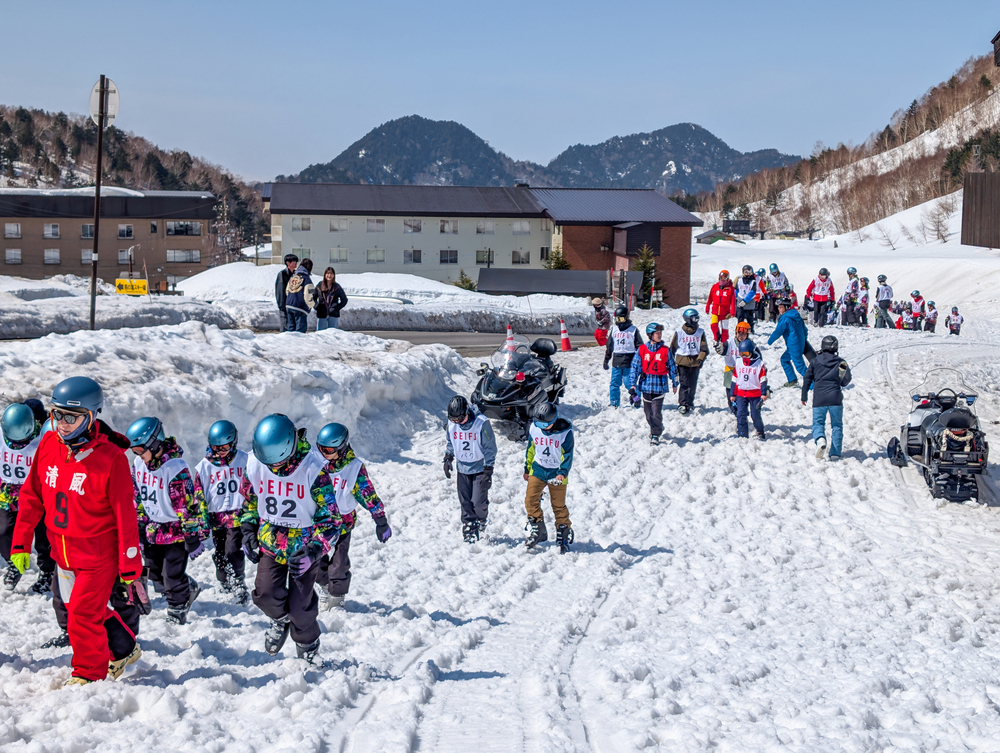
Large group of school children walking in ski boots for a lesson at a Japanese resort – Photo Credit: Richard Whitecombe
Snow Smart Tips
Before planning your winter trip to Japan, it’s important to know a few things both beforehand and once you hit the slopes. Japan’s ski season typically runs from late December to early April, with the most snow falling between mid-January and late February. While many beginners prefer to visit during mid-season when the snow is deep and temperatures are stable, visiting toward the end of the season can also be a good option. Although the snow may not be as deep and may be slowly melting, there are smaller crowds, and it is easier to make reservations at resorts at more reasonable prices.
When choosing your ideal resort, it is best to look for one that offers accessible lessons and rentals. Most major resorts, such as Niseko and Hakuba, provide English-speaking classes and tailored beginner packages that include everything: lift passes, rentals, and small-group lessons. At smaller resorts like Myoko Kogen, local instructors specializing in teaching newcomers are available and are ideal for those who prefer private lessons. For families, many of the previously mentioned resorts offer gentle learning areas, conveyor lifts, and “family parks” where children can play safely while their parents take lessons nearby.
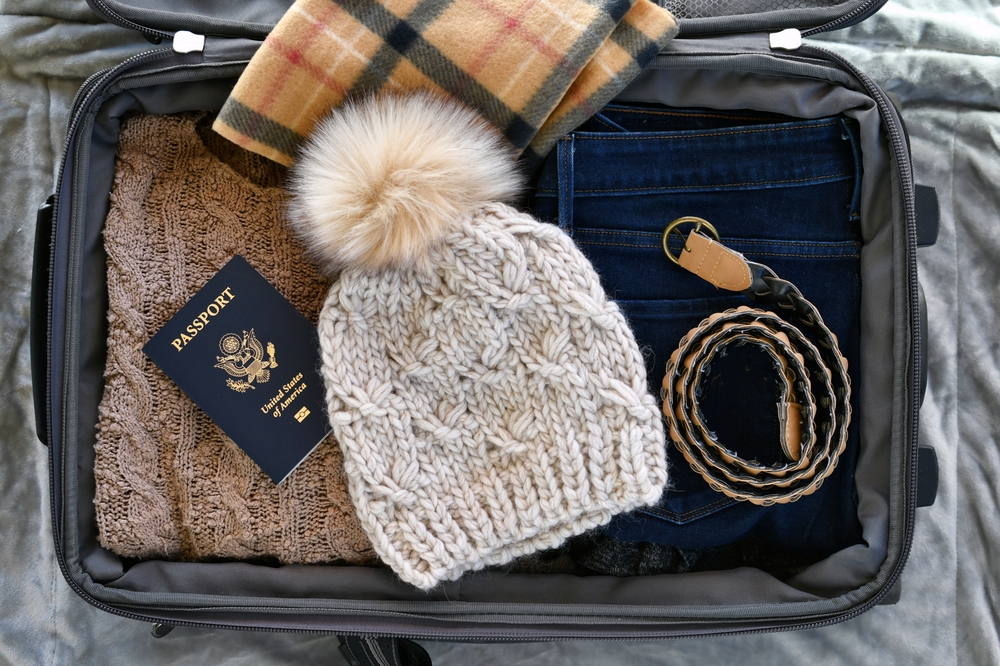
Suitcase flat lay packing for cold weather travel trip sweater, warm scarf, knit stocking cap hat – Photo Credit: MargJohnsonVA
One of the most important things to consider is knowing what to pack. For the Japanese winter, layering is key. Be sure to bring a thermal shirt and pants, an additional layer such as another shirt and pants, and finish with a waterproof jacket and pants. Don’t forget gloves, proper socks, neck warmers, and UV protection, as the sun reflects strongly off the snow. If you are unable to get these items in time, many resorts offer rental gear or stores where you can purchase appropriate thermal wear. In general, pack lightly and bring only the essentials, such as gloves, goggles, and base layers, to leave room for any souvenirs you may bring home.
Once you’re packed and have arrived in Japan, it’s time to figure out how to get around. With one of the best public transport systems in the world, traveling is easy. While the language barrier may seem intimidating, much of Japan’s public transport has become more accommodating for international travelers. For those staying on the mainland, it is best to take a train to Tokyo Station and purchase a Shinkansen ticket to Nagano, Niigata, or Yamagata. The Shinkansen will get you to these locations in just a few hours. Once you arrive, you can take local trains or buses to reach your resort. Many resorts also provide private shuttles, so be sure to check ahead of time. For those traveling to Hokkaido, it is best to fly into New Chitose Airport and take one of the airport buses that run to Niseko, Furano, or Rusutsu.
Additionally, it is helpful to know a few etiquette tips when traveling to these locations. On the trails, always stay on marked paths. While it may be tempting to explore off-course, it is best to follow the designated routes to avoid issues with the resort. Respect the lift lines, as they move quickly, and delays can affect everyone. At the onsen, be sure to wash before entering, keep your towel out of the water, and be mindful of the water temperature to accommodate others. It also helps to know a few basic Japanese phrases, as they can make getting around easier, help you explore new areas, and foster long-term friendships.
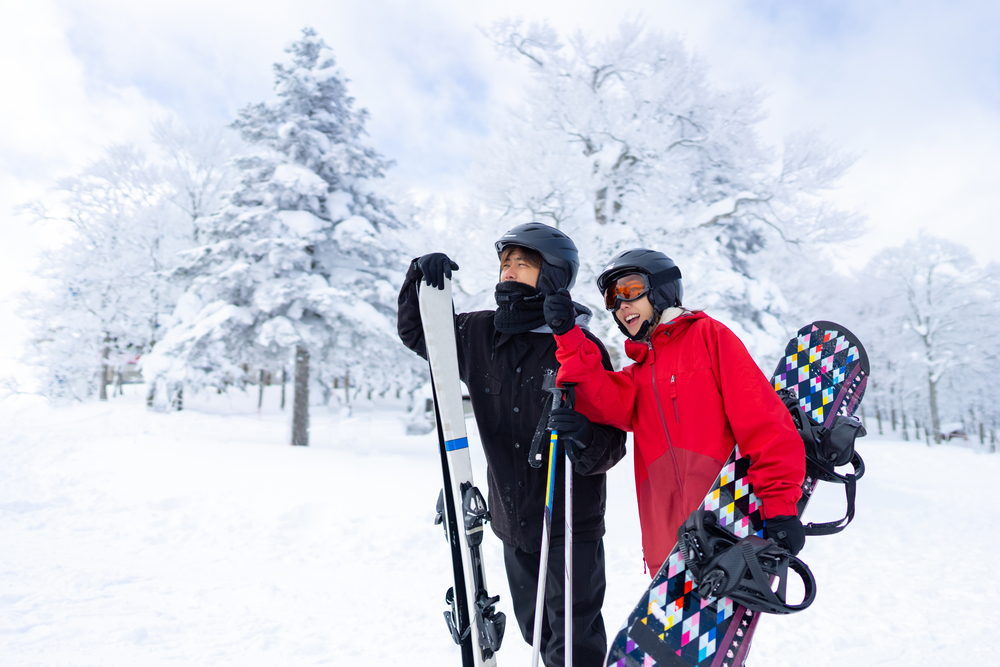
A couple practicing freeriding snowboard and ski on a snowy mountain at a ski resort. – Photo Credit: CandyRetriever
The Thrill of the Slopes Awaits
From the powdery peaks of Hokkaido to the tranquil onsen villages of Nagano, Japan offers some of the best ski resorts for beginners of all ages. At the same time, these destinations provide opportunities for other winter activities for those less interested in skiing who want to enjoy Japan’s beautiful scenery.
Skiing in Japan is not just about the sport; it’s about the journey. You wake up to fresh, powdery snow, meet your friends to get ready, and set out for another day on the slopes. For beginners, it is a mix of discovery, courage, and the quiet satisfaction of taking in the surrounding beauty once you have conquered each challenge.
So if you’re ready to join the many newcomers, be sure to grab your gloves, book your trip, and head to Japan’s snowy countryside. Whether it’s for a simple glide, a stroll, or a soak, the country’s winter spirit will welcome you with open arms. The thrill of the slopes awaits, so let’s go!
Featured Photo Credit: 7maru
Discover the ultimate winter adventure in Japan! Our travel experts will tailor your ideal winter vacation, ensuring an extraordinary experience. Don’t miss this unforgettable journey!
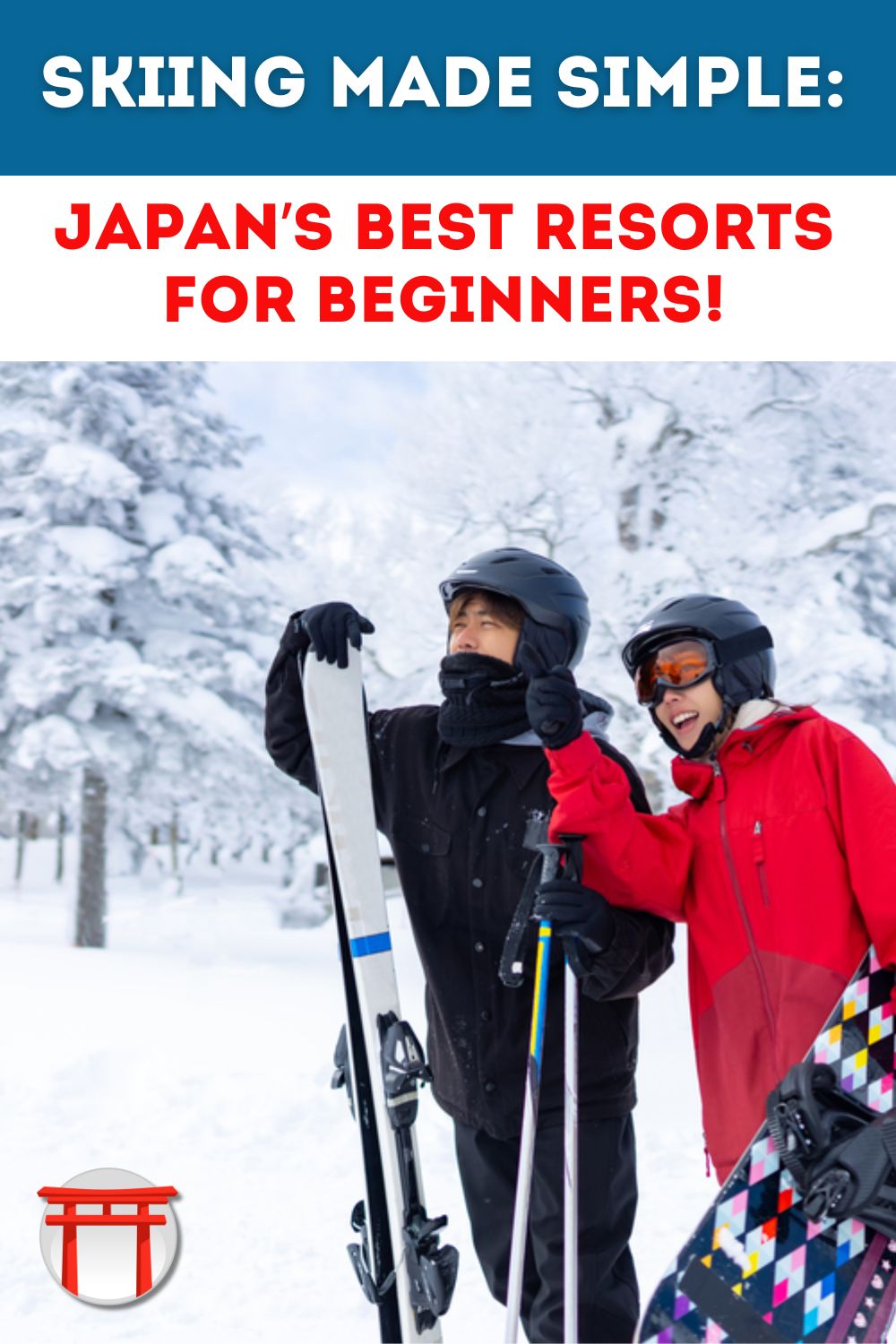
PIN THIS FOR LATER
Book your pocket wifi now to stay connected through your entire Japan Journey!

Be sure to get the JR Pass to make navigating Japan during your trip that much easier!
YOU MIGHT ALSO LIKE