SUMMER FRUITS IN JAPAN AND THE BEST WAY TO ENJOY THEM
Jul 3, 2026
BY Maria Diaz
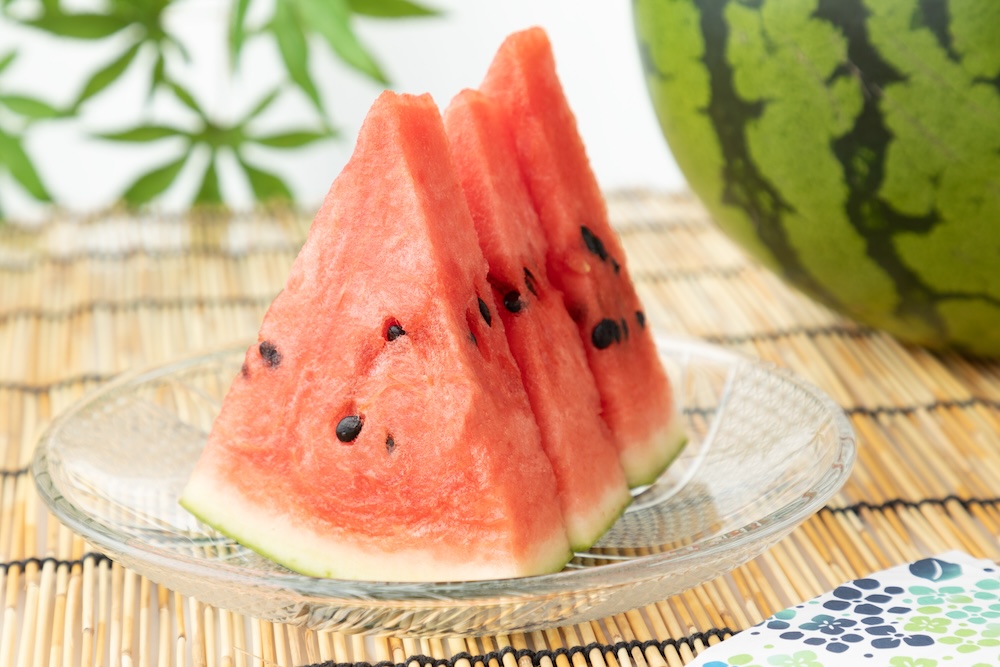
If you’ve been to Japan before, or if you enjoy watching Japanese content, you probably know how hot and humid the summer can be. Even so, there are plenty of ways to enjoy the season, and one of them is through nature’s candy. In Japan, produce isn’t just a snack; it’s something people truly appreciate and savor.
Japanese farmers treat cultivation almost like an art form. From perfectly shaped melons to glossy grapes that look like jewels, the attention to detail is remarkable. Many crops are raised with meticulous care, sometimes even wrapped individually on the tree to protect them from sun and insects. The result? Harvests that are unbelievably sugary, beautifully presented, and sometimes so luxurious they’re given as gifts.
If you’re spending the summer in Japan, here are some treats you definitely shouldn’t miss, and the best ways to enjoy them like a local.
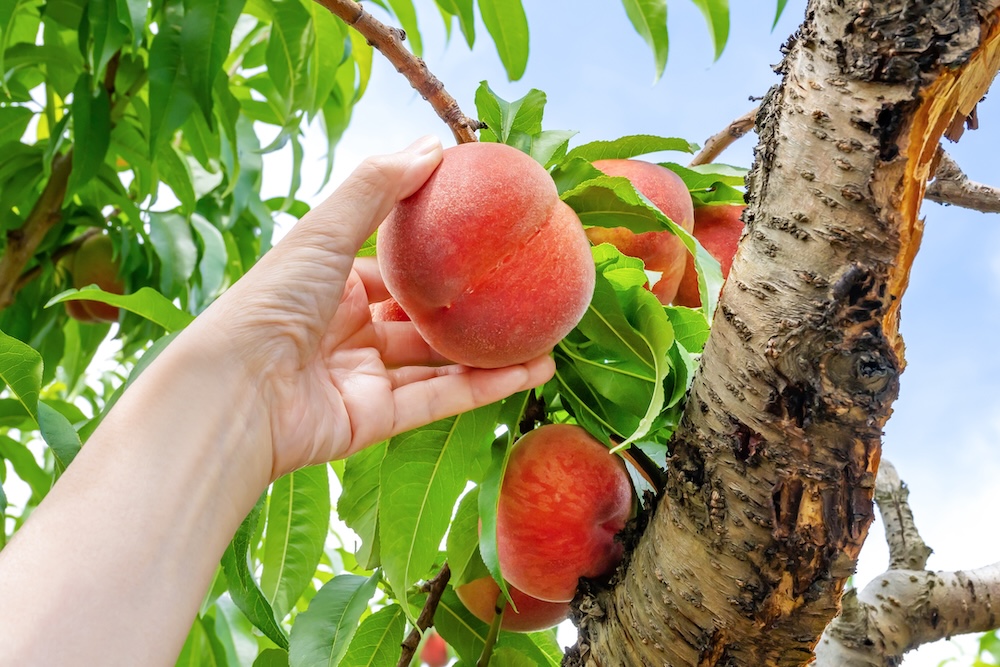
Peach picking – Photo Credit: Princess_Anmitsu
Where are summer fruits grown?
Most seasonal produce in Japan is actually raised locally rather than imported. Thanks to the country’s diverse climate, from the cooler north to the warmer southern regions, many prefectures specialize in specific varieties. For example, Yamanashi Prefecture, often called Japan’s “Fruit Kingdom,” is famous for peaches and grapes, while Fukushima and Wakayama also provide high-quality stone fruits during the summer months. Grapes such as Shine Muscat and Kyoho are widely cultivated in Yamanashi and Nagano, where warm days and cool nights help develop their natural sugars. Japan’s luxurious melons are grown mainly in Hokkaido, home to the famous Yubari King, as well as Ibaraki and Shizuoka, while Kumamoto and Chiba are known for producing watermelons.
Although Japan does import some tropical items like bananas, mangoes, and pineapples, most typical summer offerings are proudly domestic because freshness and quality are highly valued. Prices can vary greatly depending on where you shop: a typical item from a supermarket might cost around ¥200 to ¥500, while whole watermelons can range from ¥1,500 to ¥3,000. However, Japan is also known for its luxury gift culture. Perfectly nurtured peaches, grapes, or melons sold in department stores can cost tens or even hundreds of dollars and are often given as elegant presents.
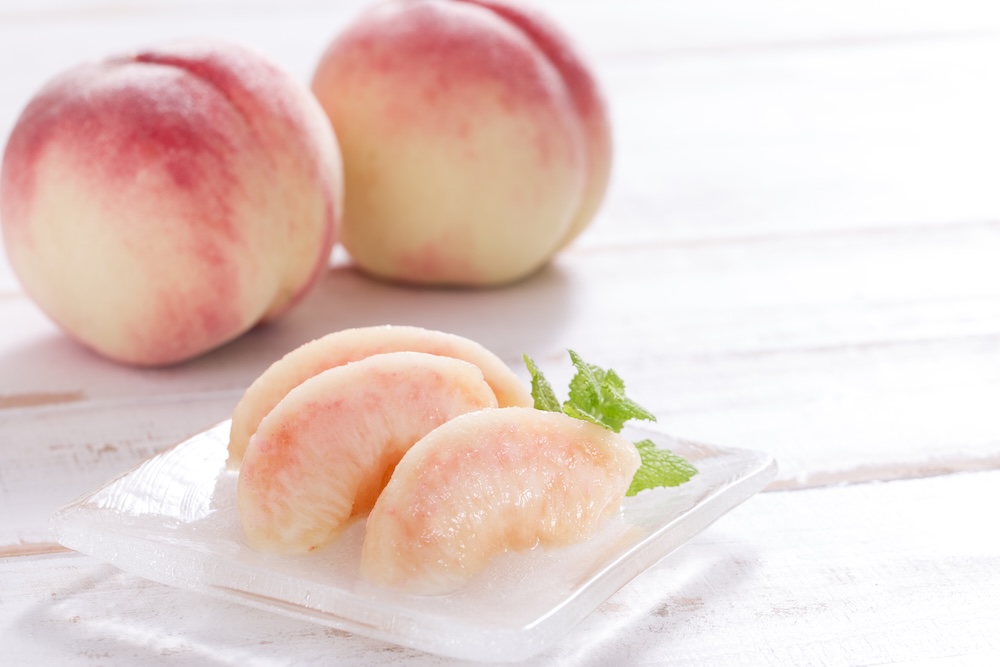
Shimizu White Peach – Photo Credit: kazoka
Peaches
Peaches are one of the stars of Japanese summer, loved for their incredible nectar, delicate fragrance, and melt-in-your-mouth texture. Unlike the firmer yellow varieties common in many countries, Japanese versions are usually pink or white-fleshed, larger, and much less acidic, which makes them taste exceptionally syrupy and juicy. Farmers raise them with extraordinary care. Each individual peach is often covered with a small paper bag while still on the branch to protect it from insects and sunlight, helping the skin develop its signature pale color. Some of the best come from Yamanashi, Fukushima, and Nagano, where sunny days and cool nights create ideal conditions.
One of the most famous types is the Shimizu White Peach from Okayama, known for its elegant skin and flesh that practically overflows with juice when you take a bite. But there are many varieties to explore depending on what you’re looking for. Kawanakajima Hakuto is large and soft with a longer shelf life, Hakurei is extra juicy with a beautiful pale exterior. Setouchi Hakuto ripens later in the season, and Hakuto peaches are considered premium. Varieties like Sakura are known for their high sugar content and size, while others offer a more delicate, refined flavor. Because of the labor involved in harvesting them, Japanese peaches are sometimes considered luxury items and are even given as traditional summer gifts.
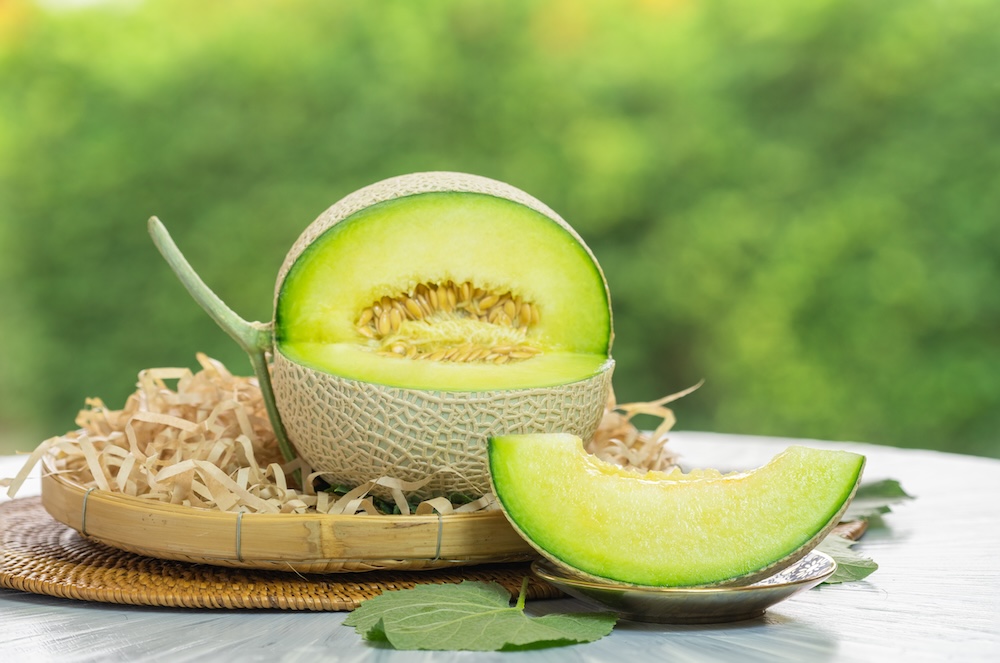
Crown Musk Melon – Photo Credit: MERCURY studio
Melons
Melons in Japan are practically legendary. Luxury varieties such as Yubari King from Hokkaido or Crown Melon from Shizuoka are famous for their perfect ripeness and silky texture, but they’re just the beginning. There are many other types to explore, each with its own unique profile. Andes melon is a popular everyday choice with green flesh and a light, well-balanced flavor, while Quincy melon offers bright orange flesh and a richer, almost tropical taste. Prince melon is smaller and more delicate, perfect for a refreshing bite on hot days, and Takami melon has a slightly firmer feel with a clean, elegant finish. Some regional types, like Raiden melon from Hokkaido, are especially flavorful thanks to local soil conditions.
Unlike in many countries where these are just another grocery item, in Japan, they can be incredibly high-end gifts. Perfectly grown specimens are often presented in elegant boxes and can cost over ¥10,000 (sometimes much more!), making them feel more like edible luxury than everyday food.
The best way to enjoy them is beautifully simple: let the melon ripen at room temperature, then chill it for a few hours. Cut it in half, remove the seeds, and scoop the flesh straight from the rind with a spoon, or slice it into wedges for sharing. In cafes, you might also come across extravagant desserts like whole melon parfaits, where the shell becomes a bowl filled with ice cream, whipped cream, and fresh slices, just as Instagram-worthy as it is delicious.
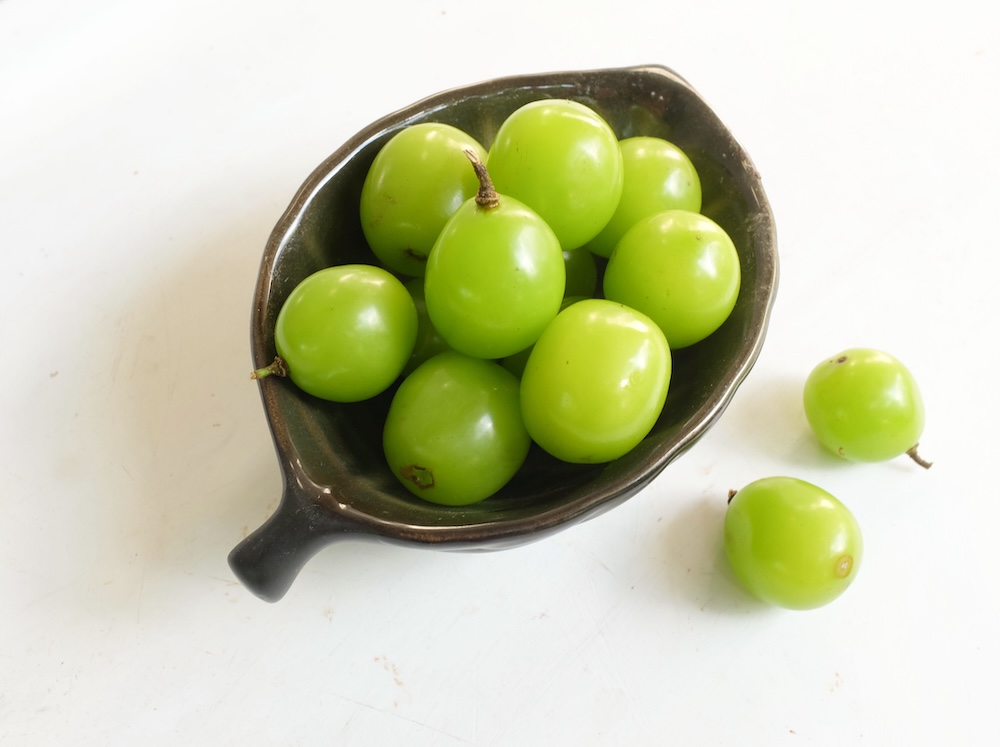
Shine Muscat grapes – Photo Credit: NANTAWAN PATAMAROT
Grapes
Japanese grapes are large, juicy, and incredibly sweet, making them one of the highlights of the season. While there are many varieties to try, two iconic types stand out. Shine Muscat grapes are bright green, seedless, and prized for their crisp bite and delicate, floral notes. Since their skin is thin and not bitter, they’re meant to be eaten whole. In contrast, Kyoho grapes are deep purple with a bold, almost wine-like flavor and a “slip-skin” texture, so they’re usually peeled before eating to reveal their rich interior. You might also come across varieties like Pione, known for its balanced profile, or Nagano Purple, a premium seedless grape with a deeper, more complex taste.
Unlike in many countries where grapes are just a casual snack, in Japan, they can also be considered a luxury item. Perfectly grown bunches, especially Shine Muscat, are often beautifully packaged and can cost several thousand yen, particularly in department stores.
The season runs from July to September, and it’s a great time to visit orchards in regions like Yamanashi or Nagano, where you can pick and enjoy them straight from the vine. The best way to eat them is simple: chill them slightly to enhance their flavor, then enjoy them fresh, either popping Shine Muscats whole into your mouth or peeling Kyoho grapes one by one for that extra burst of juice.
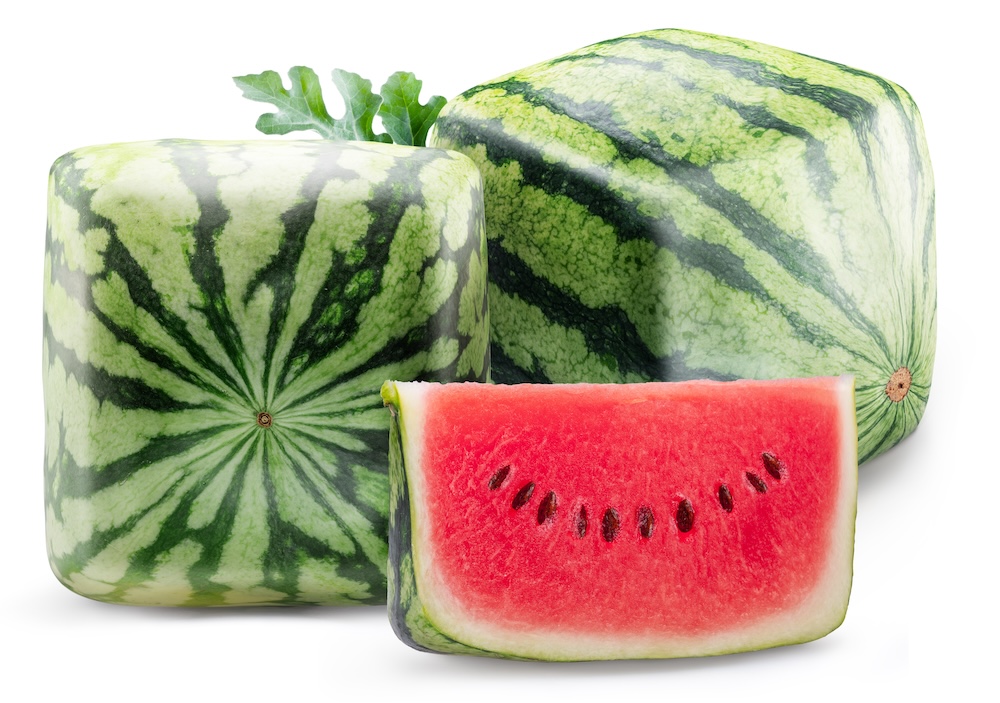
Square striped watermelons – Photo Credit: Valentyn Volkov
Watermelon
Nothing says Japanese summer quite like a big slice of watermelon. Families often chill a whole one in a bucket of ice water or even a cold stream before cutting it open on a hot day.
But watermelon isn’t just about eating; it’s also about fun. A classic summer activity is suika-wari, a lively game often played at beaches or festivals where a blindfolded person tries to smash the fruit with a stick while friends shout directions. It’s chaotic, hilarious, and always ends with everyone sharing the slices together!
A popular Japanese trick is to sprinkle a tiny pinch of salt on the red flesh. It might sound strange, but it actually enhances the sweetness and helps replenish electrolytes during the humid weather.
And yes, Japan is also famous for square watermelons. These are grown in boxes so they develop a cube shape. They’re mostly decorative (and very expensive!), but fascinating to see.
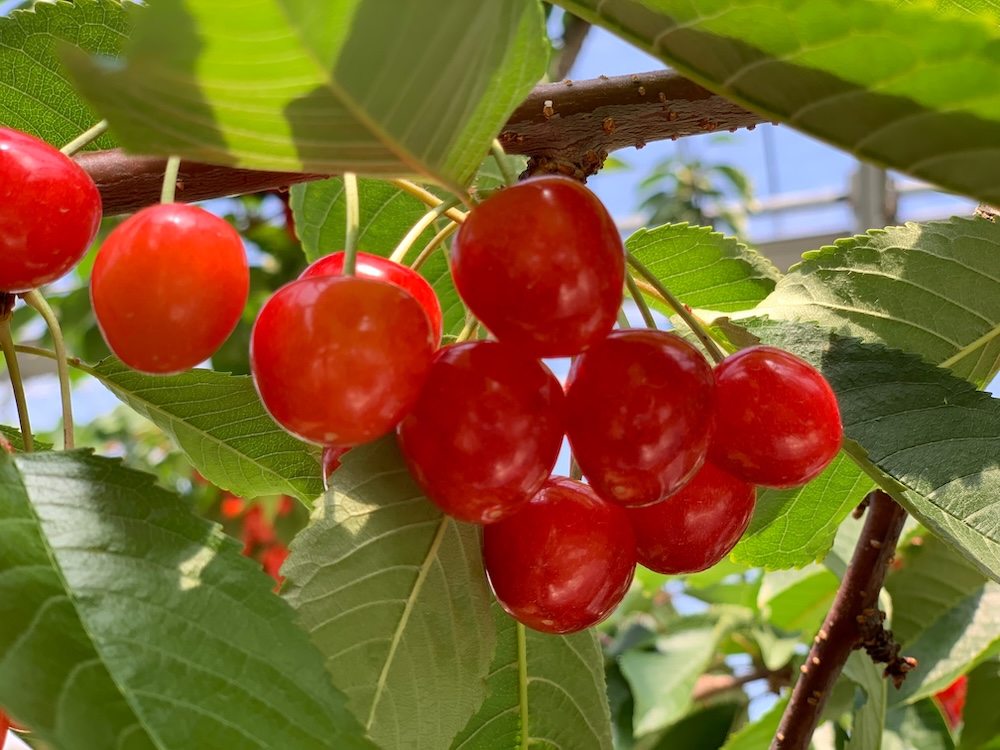
Sato Nishiki Cherries – Photo Credit: retirementbonus
Cherries
Early summer belongs to cherries, delicate little gems that mark the start of the season. The most famous variety is Sato Nishiki, grown mainly in Yamagata Prefecture, which is known as Japan’s cherry capital. These are small, glossy, and bright red, with a perfect balance of sugar and mild acidity that makes them incredibly refreshing. Alongside them, you might also find varieties like Benishuho, which are slightly larger and deeper in color, or Napoleon, a firmer cherry with a more noticeable tartness.
Because they are so delicate and require careful cultivation, Japanese cherries are often considered a luxury. They are beautifully arranged in elegant boxes and given as seasonal presents, especially during early summer. When displayed in department stores, they almost look like polished gemstones, perfectly shaped, evenly colored, and almost too pretty to eat.
The best way to enjoy them is simple: lightly chilled and eaten fresh, one by one, savoring their crisp bite and juicy interior.
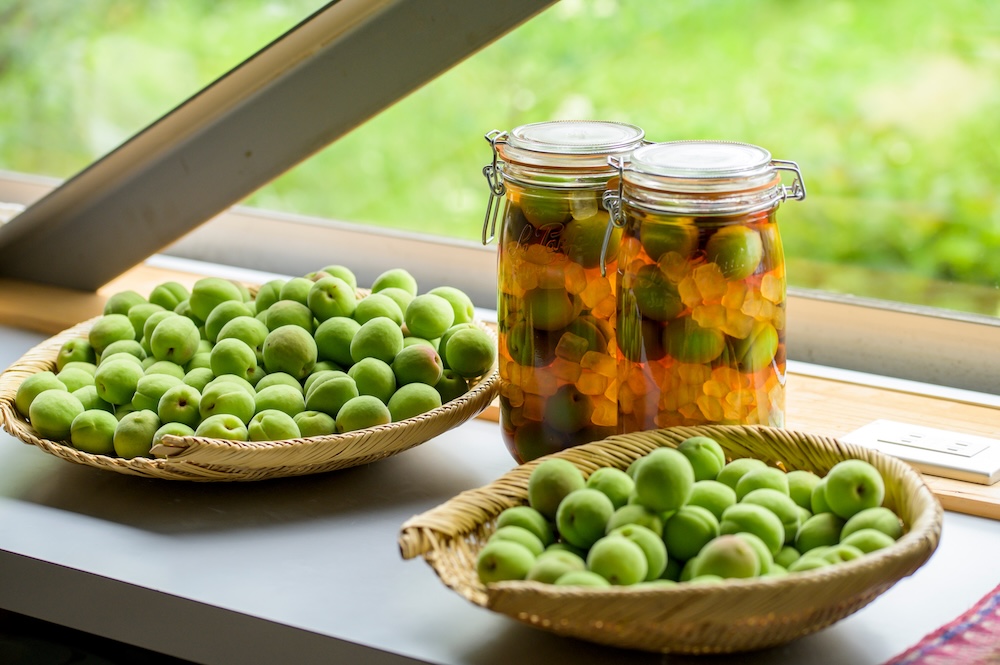
Ume-shigoto – Photo Credit: Tsurukame Design
Japanese Plum
June marks the start of plum season, and with it comes something called ume-shigoto (plum work). During this time, many households buy bags of firm green plums and turn them into homemade drinks and preserves. In Japan, ume are often translated as plums, but they’re actually closer to apricots in taste. They are firm, sour, and not usually eaten raw. There are a few main types used for this seasonal ritual, such as Nanko-ume from Wakayama (the most famous variety, prized for its large size and fragrant flesh), as well as smaller or slightly more tart regional varieties used for pickling or syrups.
Two of the most popular preparations are umeshu, a sweet liqueur made by soaking ume in rock sugar and clear spirits, and ume syrup, a non-alcoholic version that’s mixed with soda water for a refreshing drink. You’ll often see jars of ume quietly steeping in kitchens all over Japan at the start of summer, slowly transforming into something delicious. It is a simple, nostalgic tradition that many families look forward to every year.
Plenty of ways to enjoy them!
Now that you know the different types of summer treats you can find in Japan, it’s time for the fun part: enjoying them! Each variety isn’t just delicious on its own, but also incredibly versatile. These are some activities you can do:
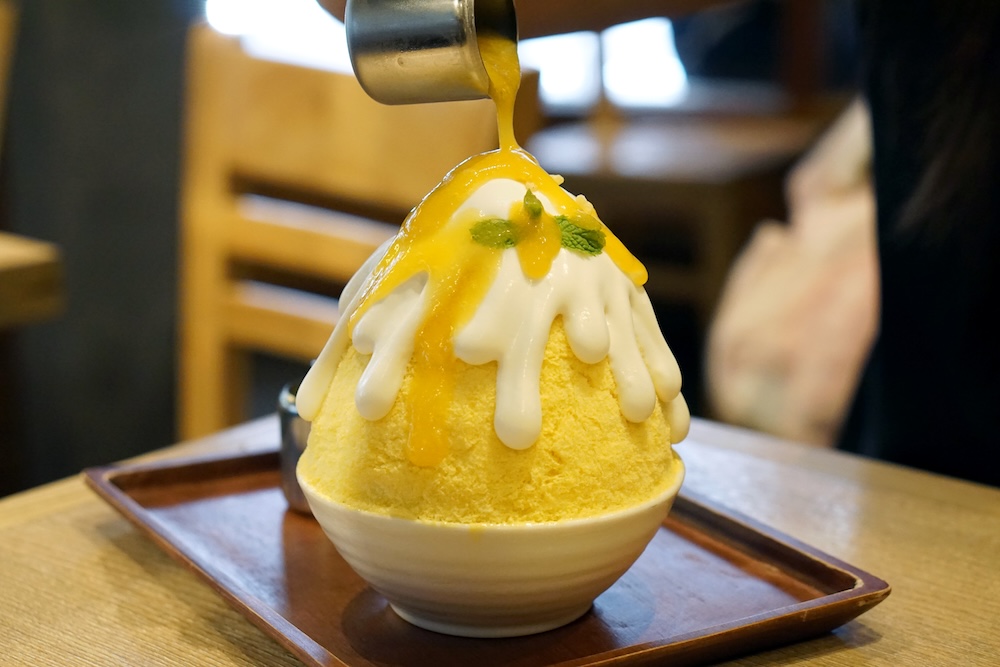
Kakigori topped with condensed milk and syrup – Photo Credit: thaweerat
Kakigori
Another must-try summer treat is kakigōri, Japan’s famous shaved ice dessert that’s perfect for cooling down on a hot day. Made with finely shaved ice that has a light, fluffy texture, it’s typically topped with colorful syrups like strawberry, melon, or matcha. It is often finished with condensed milk or sweet red bean paste for extra richness. You’ll find kakigōri everywhere in summer, from street stalls at festivals to specialty cafés serving beautifully crafted versions. Refreshing, customizable, and fun to eat, it’s the kind of simple pleasure that quickly becomes a favorite on warm Japanese afternoons.

A woman holding a muscat grapes – Photo Credit: yamasan0708
Go fruit picking
One of the best ways to experience the harvest in Japan is by going fruit picking, known as kudamono-gari. Instead of buying from a store, you can visit an orchard and pick it straight from the tree, enjoying it at peak freshness. Popular spots include Yamanashi for peaches and grapes, Yamagata for cherries, and Nagano for grapes. Many orchards offer all-you-can-eat sessions lasting around 30 to 60 minutes, making it a fun, hands-on, and delicious day trip.
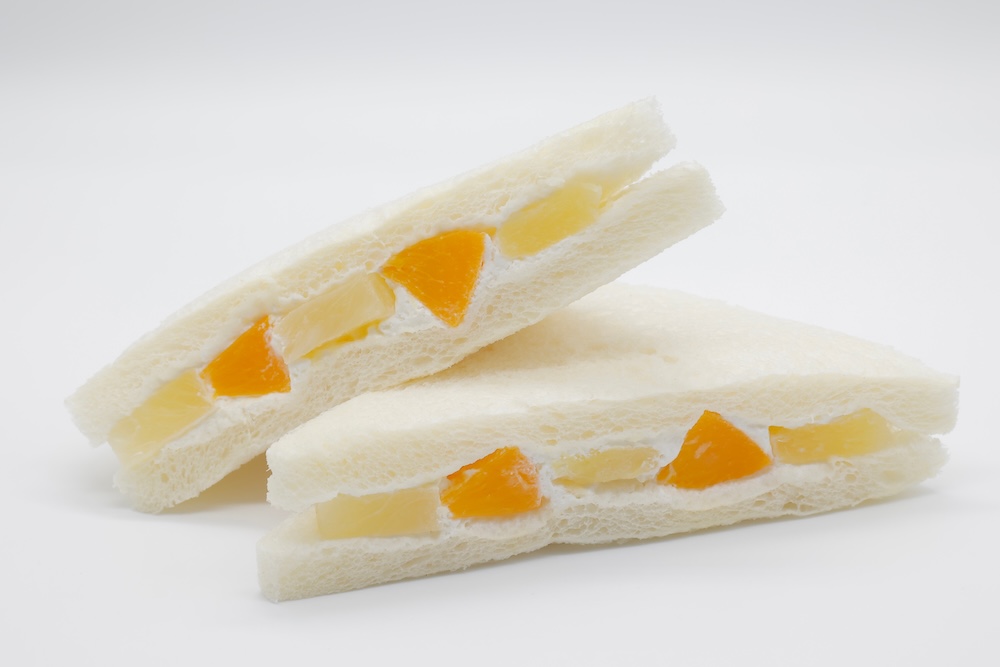
Pineapple and peach sandwich – Photo Credit: umaruchan4678
Try Japan’s famous fruit sandwich
If you’re looking for something quick and sweet, don’t miss Japan’s iconic fruit sandwiches (furutsu sando). Found in bakeries and convenience stores, these soft, fluffy sandwiches are filled with whipped cream and beautifully arranged slices of seasonal items like strawberries, kiwi, mango, or peaches. They’re simple, refreshing, and surprisingly addictive. They have become a very popular treat all over social media.

Suika-wari in the garden – Photo Credit: T.TATSU
Suika-Wari
As I mentioned earlier, suika-wari is a fairly common tradition among Japanese people, especially among the younger generation. It’s a summer game full of laughter and excitement. Beyond the result, what really matters is the shared moment: the fun, the festive atmosphere, and of course, enjoying the freshly chilled watermelon together afterward. So if you’re planning to spend time at a beach in Japan, this could be a lovely memory to share with your family or friends.
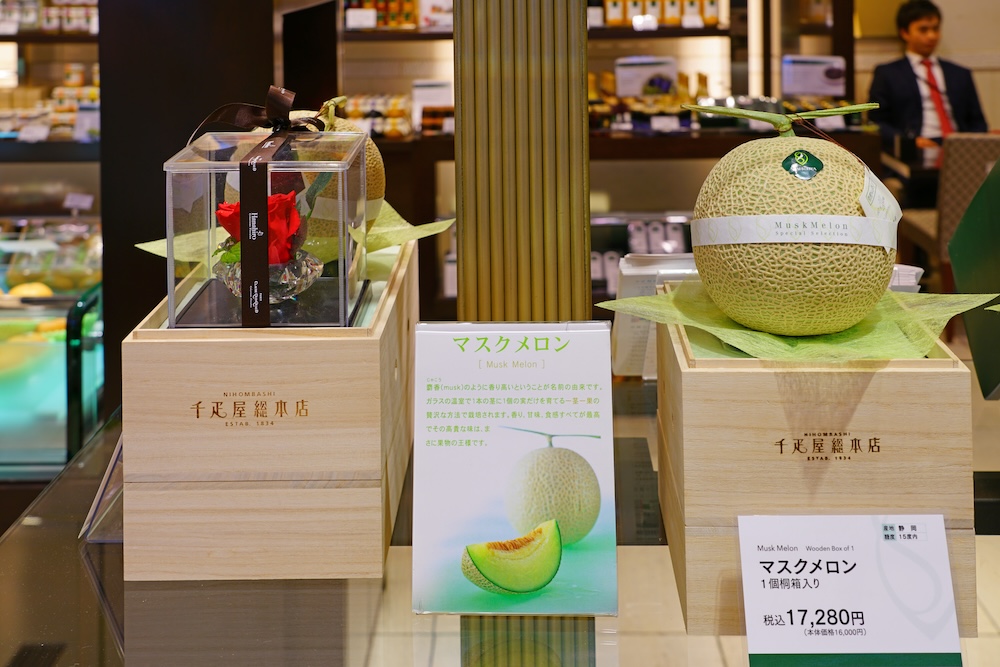
View of expensive musk melon fruit – Photo Credit: EQRoy
Visit a Department Store Food Hall
For a glimpse into Japan’s luxury culture, head to a depachika, the basement food halls of department stores like Isetan Mitsukoshi. Here you’ll find perfectly displayed produce, elegant gift boxes, and labels showing the Brix level, which measures sugar content. As a guide, peaches with 12+ Brix are considered very sweet, while grapes with 18+ Brix are premium quality. Even if you’re just browsing, it’s a fascinating place to see how seriously Japan takes its food and how beautiful it can be!
From perfectly wrapped peaches to jewel-like grapes and playful watermelon traditions, summer fruit in Japan is more than just something to eat. It’s an experience to savor. So go ahead, chill that melon, pick a handful of grapes, or try your luck at suika-wari. However you dive in, one thing’s for sure: Japanese summer tastes pretty unforgettable.
Featured Photo Credit: yukinoshirokuma
Our selection of Summer Tours is also a great way to beat the heat while discovering Japan’s incredible food culture.
Don’t forget to browse our Food Tours Page to find the experience that suits you best, or reach out to us to create a Customized Culinary Adventure during your time in Japan.
PIN THIS FOR LATER
Book your pocket wifi now to stay connected through your entire Japan Journey!

Be sure to get the JR Pass to make navigating Japan during your trip that much easier!

YOU MIGHT ALSO LIKE