The Story of Oyakodon (Chicken-and-Egg Rice Bowl)
Jul 30, 2026
BY Toshifumi Yata
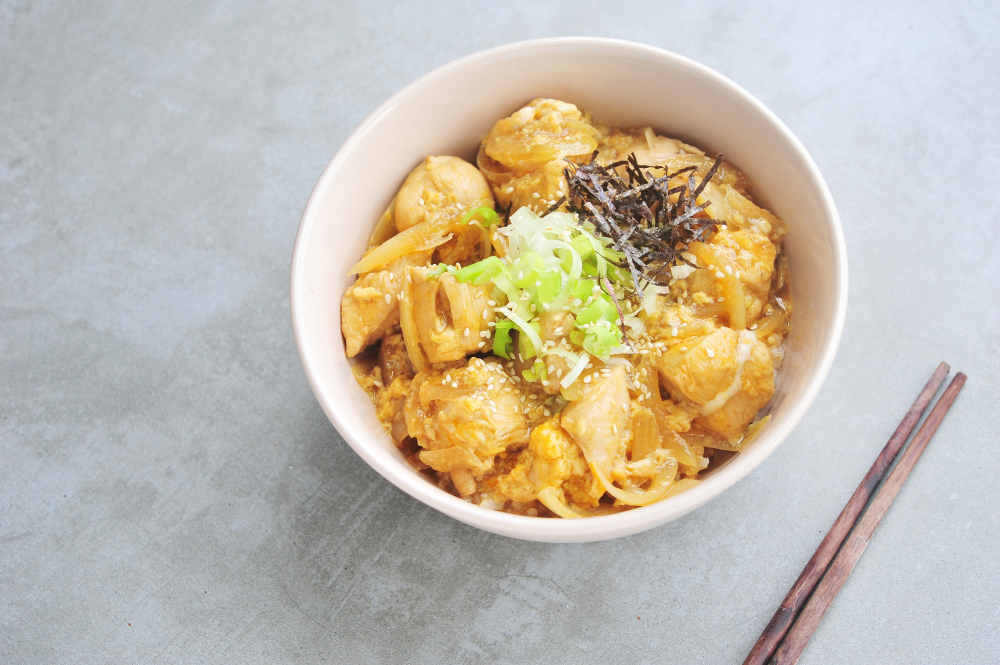
Oyakodon is one of the most popular dishes in Japan. It is also one of the easiest and most affordable meals to prepare, consisting simply of chicken and onions simmered with eggs and a dashi broth over rice. However, it has a unique name for a dish made with these ingredients. Instead of describing what the dish is made of, the name actually refers to the relationship between them, that of a parent and a child. It’s a name that leaves you curious about the origins, hinting at a much longer story about food and its relationship to the people of Japan. So, to really understand what makes this dish so special, let’s take a look at the basics of donburi as well as the history of meat and how it’s led to such unique names.
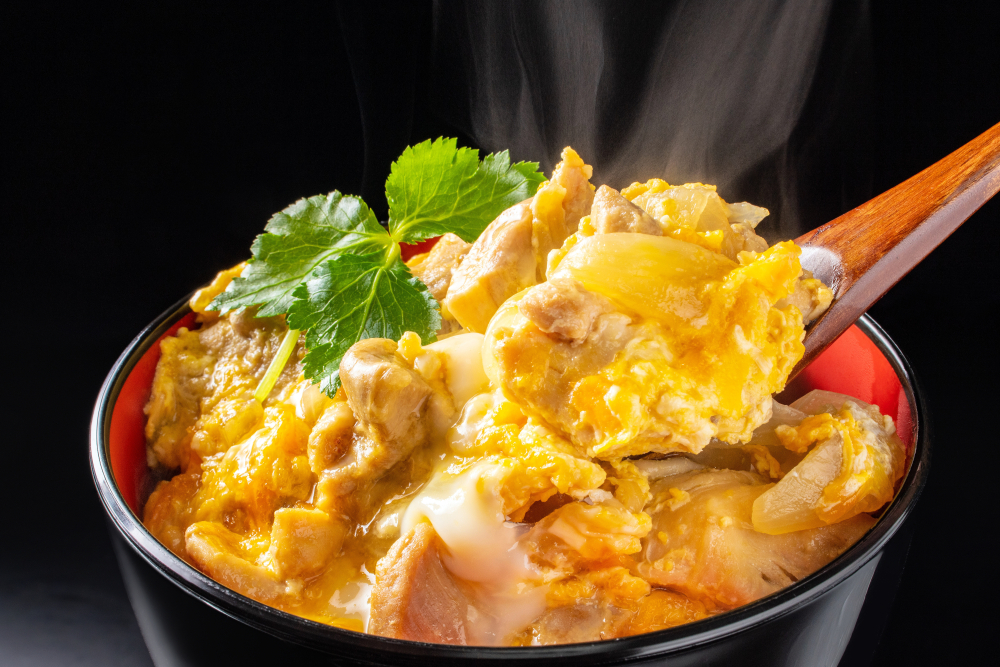
Close-up of a freshly cooked Oyakodon – Photo Credit: Basico
What is Donburi?
Donburi is a dish that combines rice and various toppings into one bowl, allowing for not only an easier, shorter cooking time but also quicker eating. Traditional Japanese cuisine, called Washoku, typically consists of one soup and three dishes, following the rule of ichiju-sansai (一汁三菜). On the other hand, a Donburi puts everything in one bowl, with the regular dishes now on top of the rice. Many people refer to the dish as Japan’s own fast food, but for me, it offers the thrill of eating everything together in one delicious, heartwarming bowl, which is, of course, a stark contrast to most cuisines, like French cuisine, where each element is savored individually.
Popular varieties include Beef bowl (Gyudon), Pork cutlet bowl (Katsudon), the main feature of this blog: Chicken and egg bowl (Oyakodon), Tempura bowl (Tendon), Eel bowl (Unadon), and Fish bowl (Kaisendon). Donburi dishes featuring meat and/or eggs are actually relatively new to Japanese cuisine. This was because all meat products, including eggs, were prohibited from being eaten before the Meiji Restoration in 1868 due to religious or customary reasons.
Most visitors to Japan, as well as those who enjoy the country’s food, are likely to have not yet had the chance to even try Oyakodon. The largest reason behind this is that the most popular (and, honestly, easiest) everyday family dishes are not promoted as heavily as dishes like Sushi and Tempura. Further adding to this, they are often only offered as off-menu items or side options. For example, a soba noodle shop might offer Oyakodon to customers who aren’t happy with just noodles and would prefer rice as well. However, I do highly suggest you try an Oyakodon at a Soba Restaurant, as it is cheap and extra delicious due to using the high-quality dashi (soup stock) typically found at these shops to cook the chicken and eggs. Proving that, even with the more “modern” ingredients, the roots of the dish are still rooted in the traditional flavors of Japan.
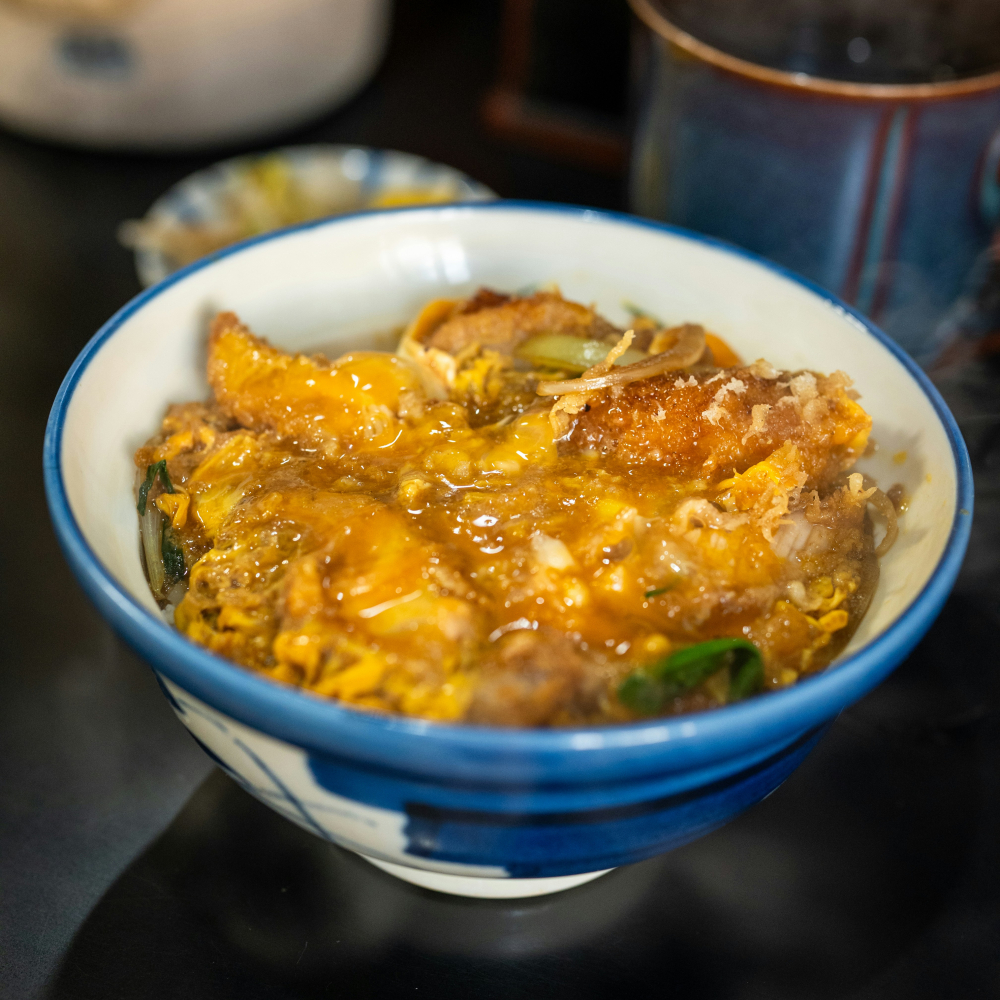
Bowl of Oyakodon – Photo credit: Kouji Tsuru on Unsplash
Mystery of Oyakodon and a History of Prohibited Ingredients
Generally speaking, most Japanese dishes tend to be quite literal in their naming, and this is usually true for Donburis as well. This can be seen with Unadon, the Eel Rice Bowl, as Una is short for Unagi, the Japanese word for eel, and even Gyu in Gyudon being part of the Japanese word for beef (Gyuniku). Yet Oyako doesn’t mean chicken at all, nor does it talk about eggs; in fact, it instead literally translates to “Parent and Child”. But why is that? Well, at the simplest level, the dish certainly does represent the parent and child relationship, but this isn’t the only reason why. I believe that the name also came about because whoever invented Oyakodon wanted to avoid using the words “chicken” and “egg” directly.
For a long time now, chickens, specifically roosters, have been kept more as “alarm clock” pets, making the act of eating them seem wrong. In Japan itself, before the Meiji era, people would often eat wild birds, like ducks and pheasants, but chicken was typically out of the question. Even eggs were seen more as medicine for those who were sick, not as something to be eaten. But views and customs like these didn’t mean there weren’t people out there who wanted to try this off-limits meat. Thus, as a way to achieve this goal, the people who invented Oyakodon named it “parent and child” to reflect the chicken-and-egg relationship and successfully avoid criticism and rules. And, honestly, it’s not like it’s an overly odd name either, as it really does sound warm and homely to the Japanese.
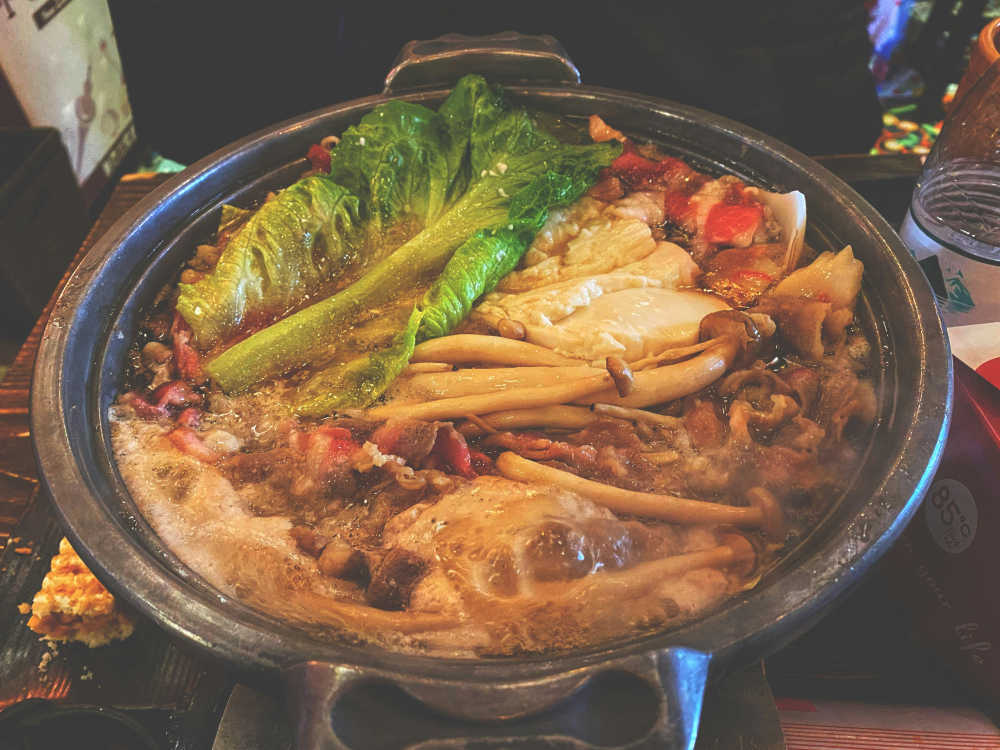
Sukiyaki – Photo Credit: Cheng Qi Huang on Unsplash
Similar to Oyakodon, the use of Sukiyaki, the dish now commonly referred to as Gyudon, follows a similar pattern. In the past, people were also forced to avoid using the word beef due to it being a prohibited ingredient. So how did they come up with the new secret name for the meal? Trust me, they got just as creative as using the relationship between chickens and eggs. In this case, the “Suki” in Sukiyaki means spade, that flat, pointed farming and gardening tool used to dig things up. Then, in the second half, Yaki means to cook it like you’re using a frying pan. So those who wanted to eat Sukiyaki cooked the beef secretly by using their spades to avoid criticism from others and breaking the rules that had been developed by religion.
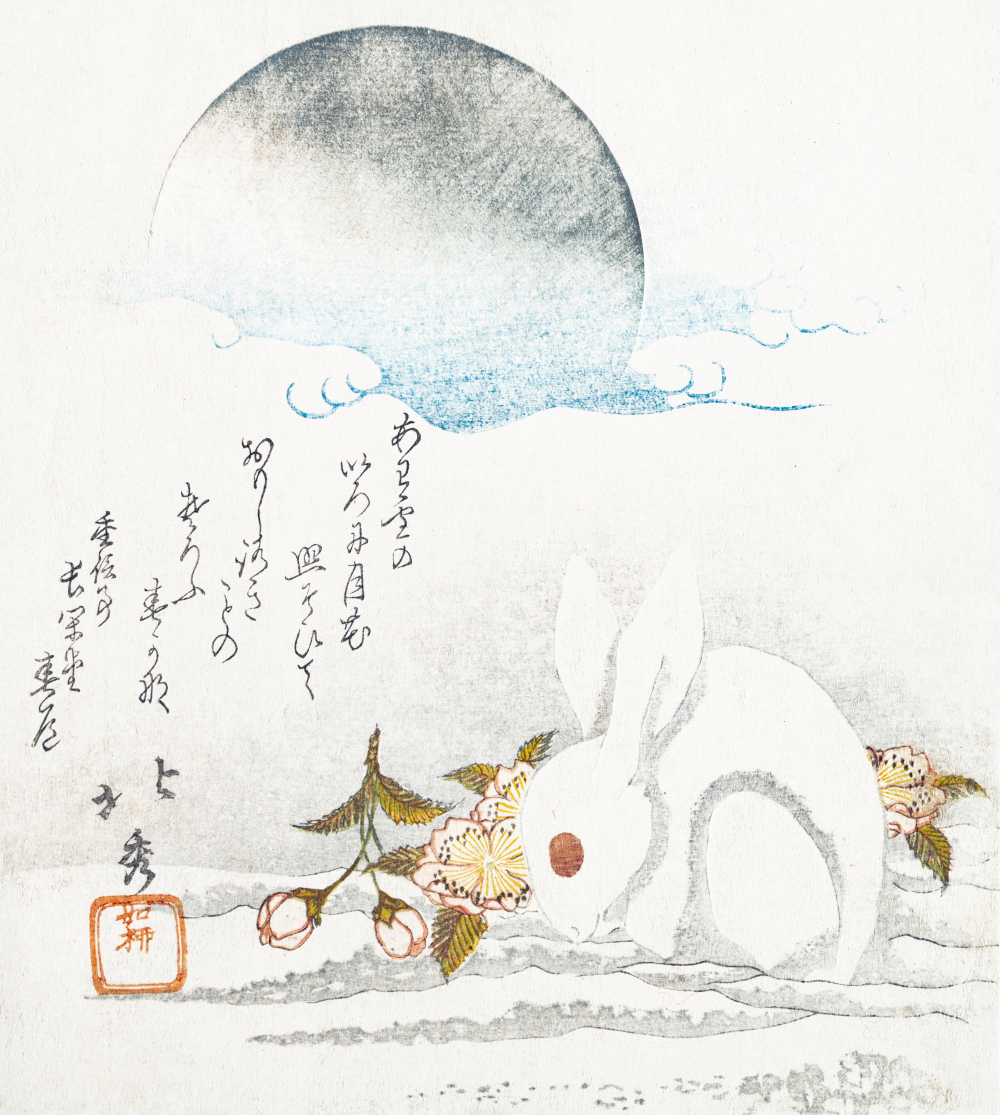
Ukiyo-e of a white hare by Taisosai Hokushu – Photo Credit: Rawpixel.com
The Mystery of Counting Rabbits and How They Came to Be Regarded as Birds
Incidentally, this creative use of language to get around prohibited foods extends beyond the world of Donburi and has even been used for animals you might not have expected. In fact, you can find a similar story about how to avoid criticism for eating the meat of pretty much all of the then-considered forbidden animals. One particular story that I’ve always found interesting revolves around rabbits and how the Japanese came to use the counter word “ha” (羽) for them, which is also the counter word for birds.
Historically, many Buddhist monks wanted to eat rabbits, but since they are scientifically classified as small animals, they are typically considered inedible. However, birds are not included in these religious taboos, so they can be eaten. How does this relate, you ask? Well, because rabbits have long, floppy ears, they are actually considered to have bird wings. In other words, since they have “wings,” they must be birds, and can be counted using the same counter word, and, of course, are thus viable to eat!
Difference Between Japan and Korea
Even the neighboring country of Korea shares a similar history of not eating meat due to the influence of Buddhism. But there is one major difference. Because Korea also saw the introduction of Confucianism and experienced the influence of meat-eating Mongolian culture, the aversion to meat products was not as widespread. Ultimately, this meant that, unlike Japan, the rules and limits placed on meat did not become as large a part of Korea’s cuisine and cultural history.
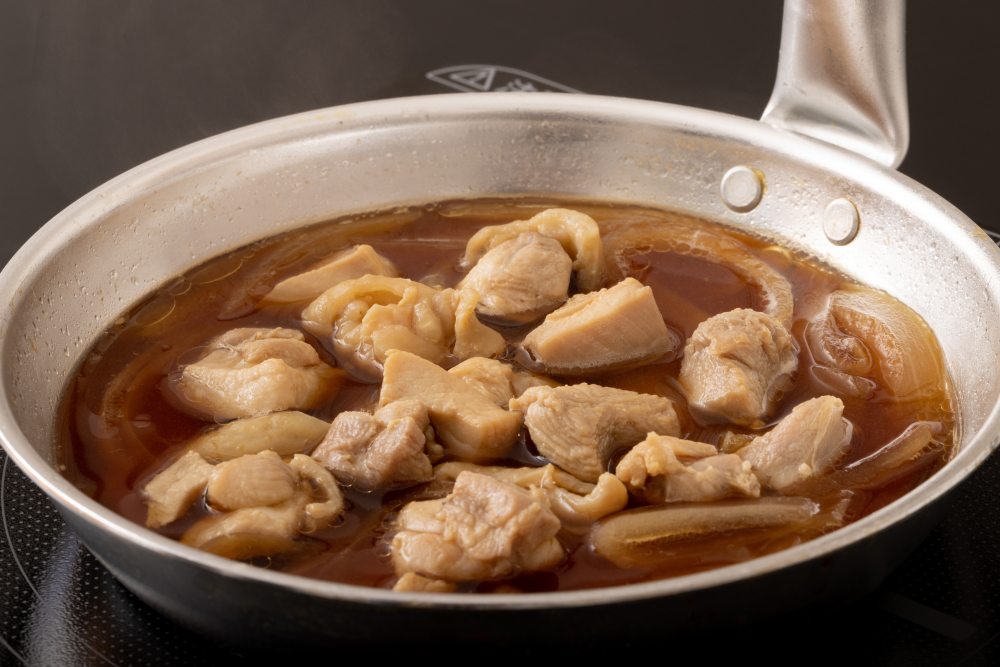
Chicken and onion cooking in dashi mix – Photo Credit: KOHUKU
How To Cook Oyakodon?
As I’ve mentioned earlier, the most popular type of donburi is Oyakodon, and it is served at restaurants such as Soba shops for reasonable prices. But that doesn’t mean you can’t have it outside of a restaurant. Because Oyakodon is so quick and simple, it’s also a perfect dish to make at home. Here is how I prepare it!
Ingredients (for 2 people):
- 200g Chicken
- ½ Onion
- ¼ bunch Mitsuba or green onions
- 3-4 Eggs
- 200cc Dashi soup
- 20cc soy sauce,
- 10g Sugar (this, along with the dashi and soy sauce, can be substituted with Tsuyu no moto or Somen tsuyu)
- Cooked rice for 2 people
Instructions:
- Slice the onion, cut mitsuba/green onions, and cut the chicken into bite-sized pieces.
- Crack and beat the eggs.
- In a frying pan, cook the onion with the dashi soup, soy sauce, and sugar for 3 minutes.
- Add the chicken and cook until it is no longer pink.
- Add the beaten eggs and the cut mitsuba/green onion, cover the frying pan, and let simmer for 3 minutes or until the egg is set but still soft.
- Place cooked rice in a bowl and pour the chicken and egg mixture over the top.
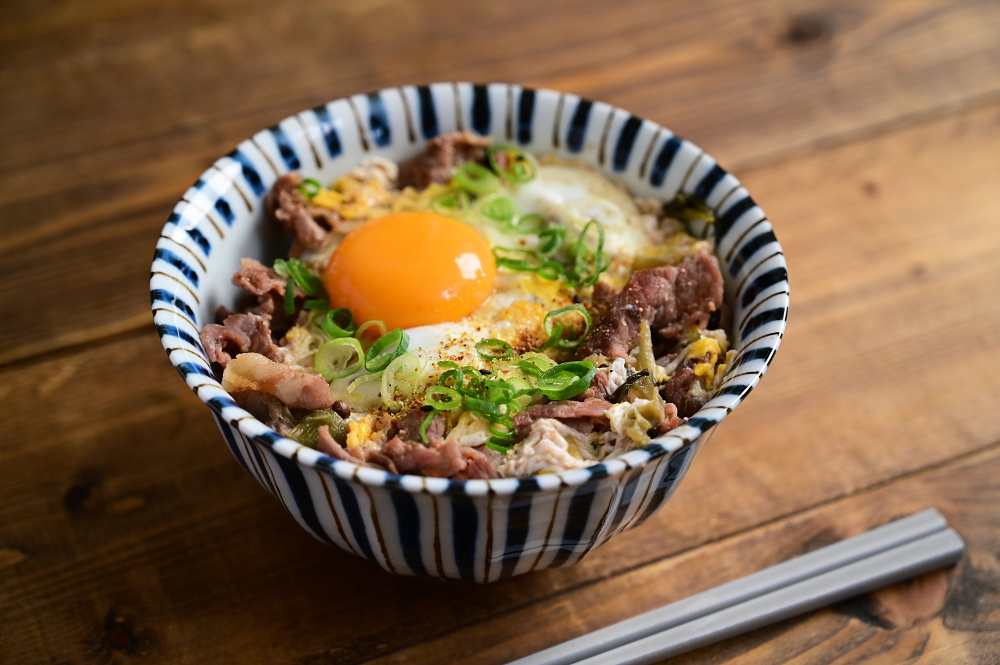
Typical bowl of Tanindon – Photo Credit: kamadon
Kyoto’s Stranger Bowl
In the Kyoto and Kansai area, there is a very similar dish called Tanindon. When I first came across it, I honestly couldn’t help but laugh. I had never even heard of Tanindon, but it looked exactly like Oyakodon! And of course, the name takes advantage of this as well. “Tanindon” which translates to Stranger Bowl, comes from the fact that, unlike Oyakodon, the ingredients consist of beef and egg, which are not family; they are strangers!
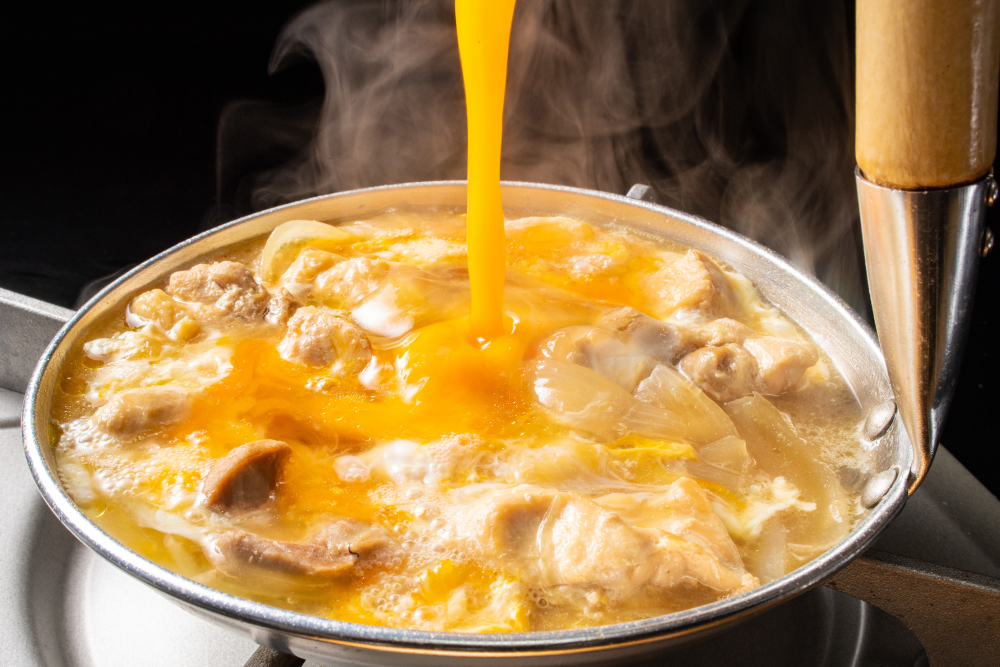
Pouring the eggs whilst cooking Oyakodon – Photo Credit: Basico
Conclusion
Looking at the history of Oyakodon and Donburi, it’s not hard to see how a dish’s name can reflect its history and the secret background it might hide. Even in the Kansai area, there are plenty of unique and creative names for these dishes. While traveling across the country, I recommend that every time you come across a new Japanese food, ask for them to explain the meaning behind the name. Whether it’s a literal meaning, interesting translations behind the Kanji, or even the Katakana (the writing system for foreign words), it can lead to a new and exciting discovery that brings the food to a whole new level. And it doesn’t just stop there; many regions throughout Japan typically have their own unique names for meals, snacks, and ingredients, so no matter where you are, there’s always something new. Like Tempura, for example. Its name is said to originate from the Portuguese word “temporas”, which means days of fasting observed in the four seasons. Thus, even though we use Kanji instead of Katakana to write it, Tempura in itself is a foreign word and an excellent reminder of the effects overseas influences have had on Japanese cuisine.
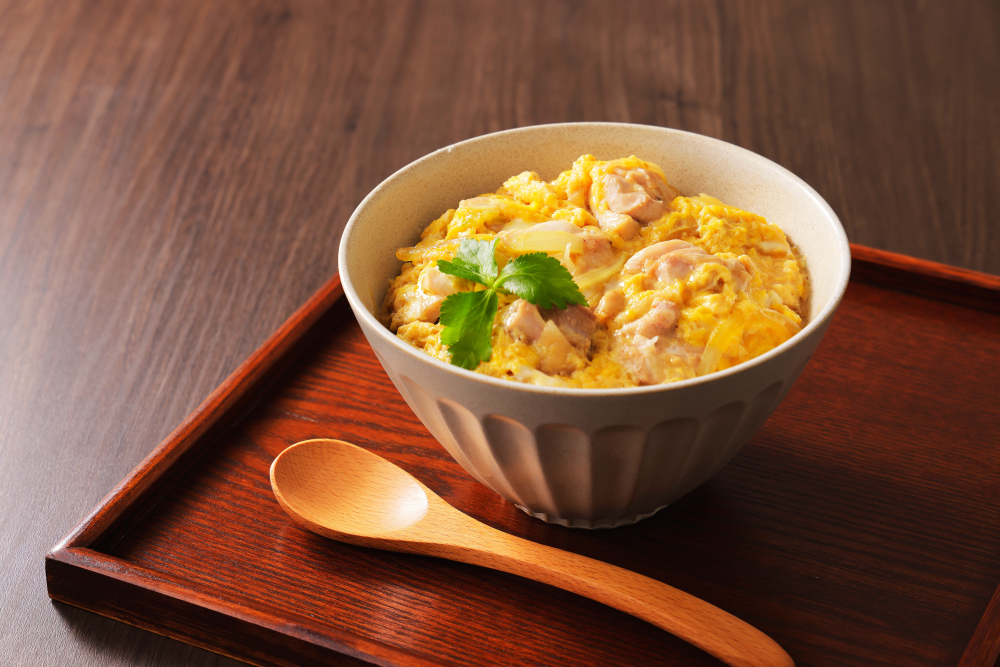
Oyakodon ready to be eaten – Photo Credit: Nishihama
No matter where you are in the world, our culinary world is forever evolving, and with so much change, the history behind it tends to be forgotten. I love Oyakodon and Sukiyaki, but because of this and how commonplace they are, I have never even considered the names to be odd, and thus was missing out on some incredible stories. Just as the arrival of the Portuguese helped create Tempura along with many other beloved Japanese dishes, and how the opening of Japan to the world over 150 years ago reintroduced meat-eating to the people, I believe the current wave of travelers is sure to continue to change the Japanese food scene. Ultimately, even if customs or religion prevented them from eating what they wanted, the Japanese people have had a history of finding creative ways to adapt and change. Tracing the names of foods is a good way to learn about humanity’s relationship with food, and this is particularly seen through Oyakodon. I hope that through this blog today, you have grown to see just why this dish is so beloved and such a significant part of Japan’s culinary culture. And so, as we finish today, I implore you to try this amazing dish for yourself; your taste buds will never be the same.
Featured Photo Credit: Umpaporn
Ready to discover more of Japan’s delicious flavors and beloved meals? Why not start in Nihombashi by joining our Flavors of Japan Tour on your next trip!
Book your pocket wifi now to stay connected through your entire Japan Journey!

Be sure to get the JR Pass to make navigating Japan during your trip that much easier!
YOU MIGHT ALSO LIKE