Winter Solstice Traditions to Keep Warm in Japan
Dec 20, 2025
BY Natalie Hung
The winter solstice in Japan is called Toji, which usually falls around December 21st or 22nd. Toji is not only the year’s shortest day but also the time when the sun’s power begins to return, symbolizing a shift from yin to yang or cold to warmth. This cosmological change marks Toji as an important turning point, as observed through centuries-old customs designed to purify the body and invite good fortune as the days lengthen once more. Here are some traditions typically celebrated during this time of year:

Yuzu Bath – Photo by: Katie
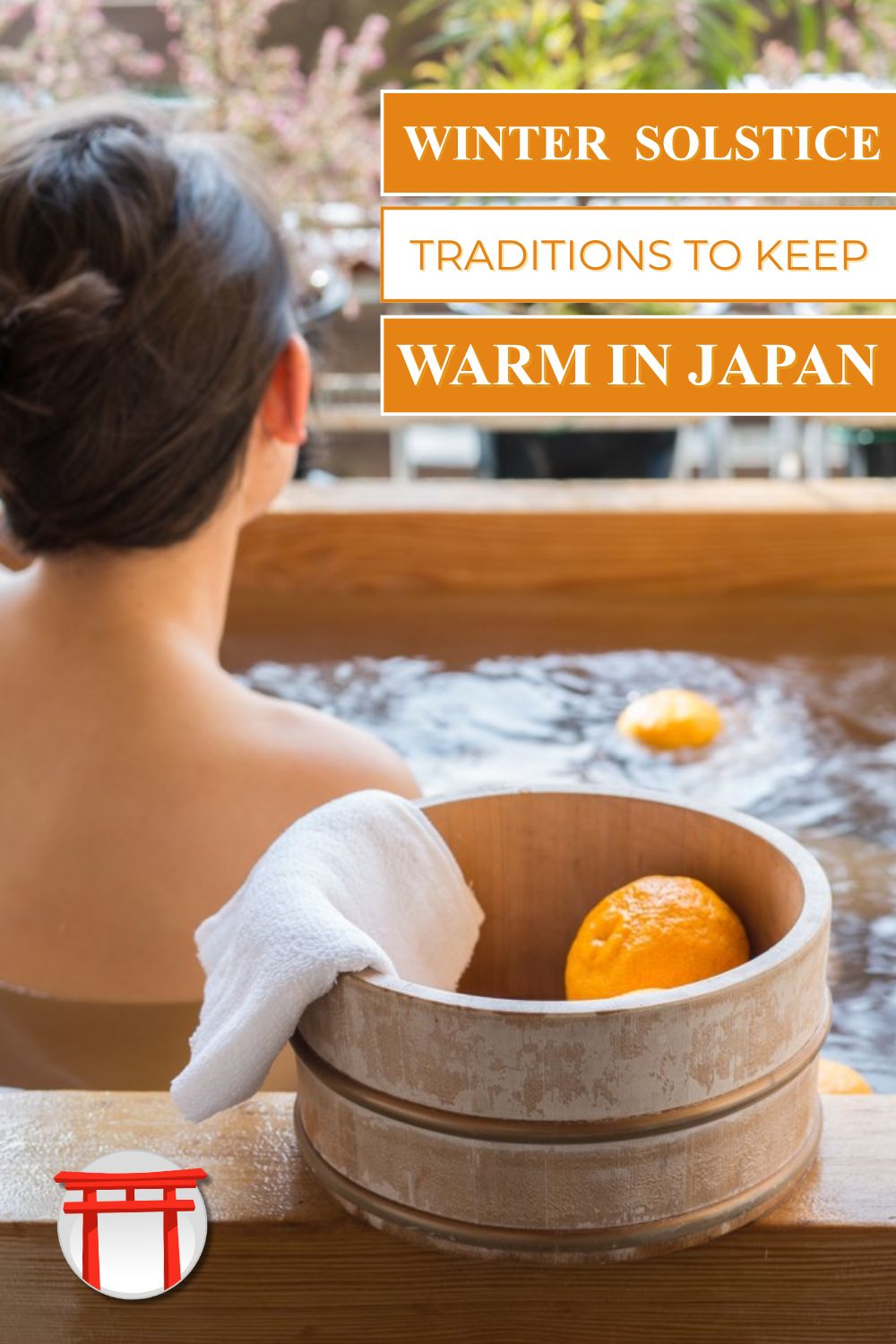
Yuzu Bath
Yuzu-yu, or yuzu bath, is a practice in which whole yuzu citrus fruits are floated in a hot bath. This tradition dates back to the Edo period (1603-1868), a time when therapeutic baths were customary for the people of Japan. The wordplay between “solstice” or toji and “hot-spring cure”, which happens to be the same word in Japanese, made people believe that the aromatic citrus could bring a variety of benefits if used on this day. One belief was that the fruit’s fragrance would ward off evil spirits, whilst also strengthening the body’s resilience against winter colds. Taking a yuzu bath on the winter solstice is a beloved ritual to ensure good health, fortune, and purification for the coming year.
To enjoy a yuzu bath at home, simply float three to six whole yuzu fruits in your hot bath water. You can slightly score the skin or cut it in half to enhance the aroma. This tradition is so popular that during the Winter Solstice, many sento (public bathhouses) and onsen (hot springs) across Japan offer the special yuzu bath for their customers.
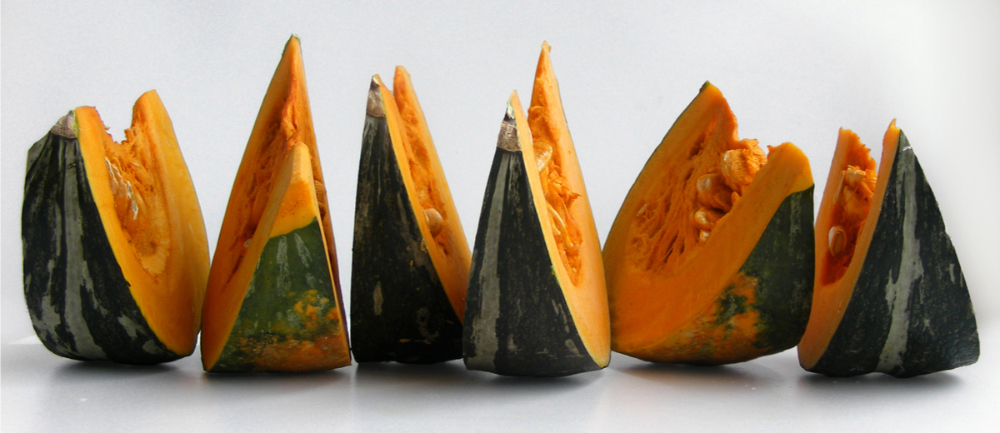
Kabocha – Photo by: Robin
Eating Kabocha
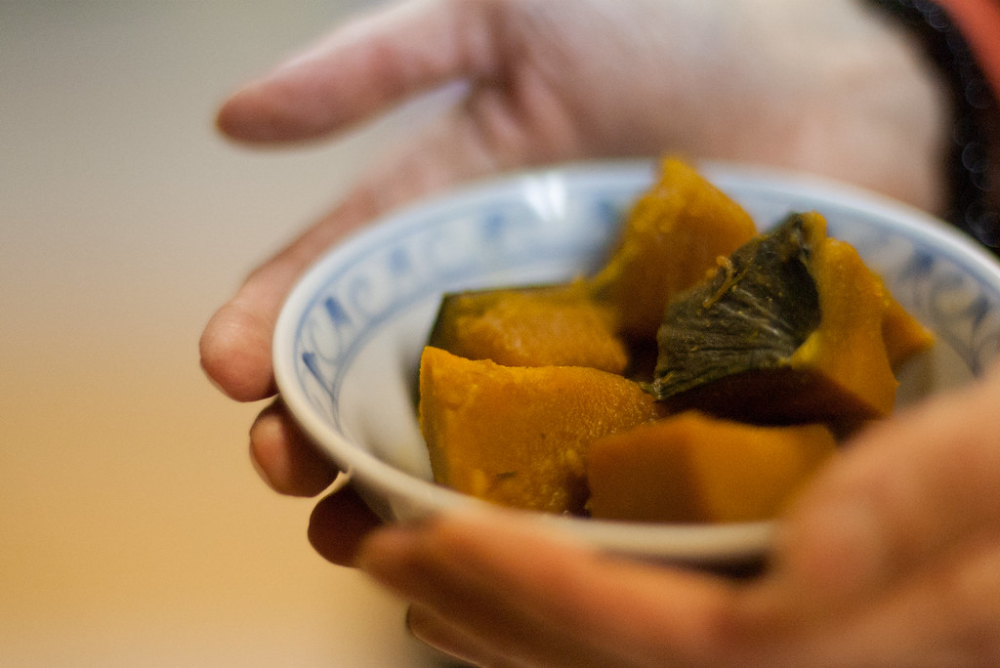
The consumption of kabocha or Japanese pumpkin is another central part of Toji celebrations. This tradition is practiced as a way to gain strength to survive the chilly winter and prevent colds. Given its high nutritional value, this vitamin-rich vegetable provided crucial sustenance during the deep winter months when other produce was scarce. Beyond its health benefits, kabocha, or nankin in Japanese, is esteemed because its name contains the “n” or ん, which is believed to attract good luck and prosperity for the year. Additionally, people also seek out other foods with “n” sounds, such as ninjin (carrot), daikon (Japanese radish), and udon noodles.

Photo Credit: Ground Picture
Family Bonding
Family bonding is essential during Toji. The core rituals, such as preparing the kabocha meal and sharing the yuzu bath, are distinctly home-based activities. By participating together in these intimate customs and time-honored traditions, families create a cozy atmosphere of warmth, share nourishment, and collectively purify themselves to invite health and good luck. The winter solstice serves as a simple yet powerful reminder to gather with loved ones as the new cycle of light begins.
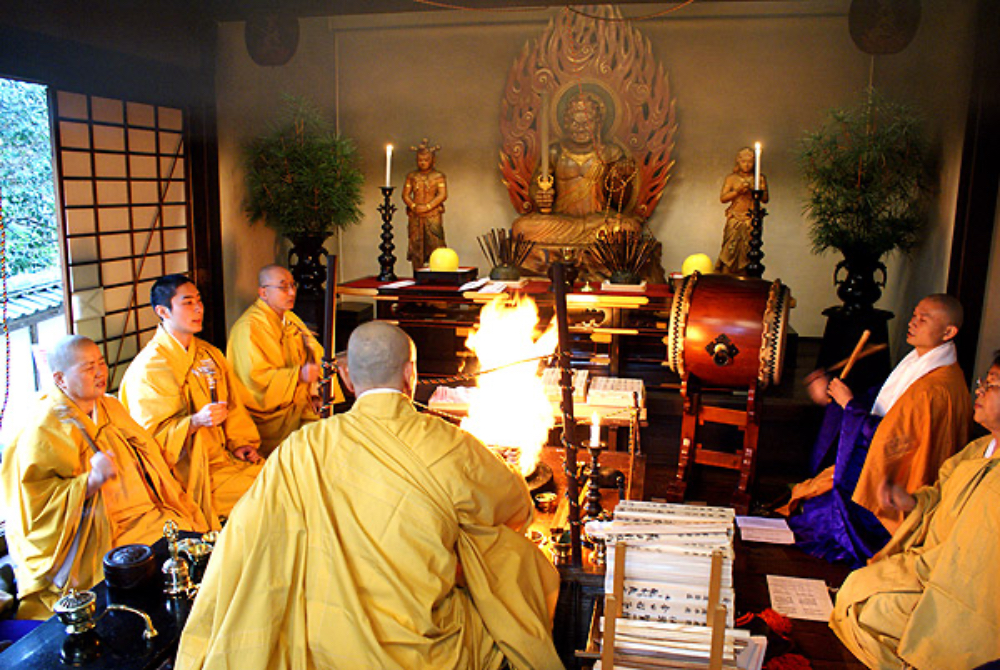
Toji Festival at Sukunahikona Shrine – Photo by: Sukunahikona Shrine
Winter Solstice Festival
Winter Solstice Festival, or Toji Matsuri, is held annually at shrines and temples. The festival will feature winter markets full of seasonal goods and delicious street food. A popular location is the Ana Hachimangu Shrine in Tokyo, where you can purchase a lucky charm, only available during Toji, called the Ichiyo Raifuku. The phrase translates to “the return of the sun’s light,” which symbolizes the return of positive energy. It’s a significant charm believed to transform bad luck into good luck. However, there are many other shrines beyond this one across the country, so no matter where you’re traveling, you can get involved in this traditional fun.
Here are some of the top shrines and locations celebrating Toji that we recommend:
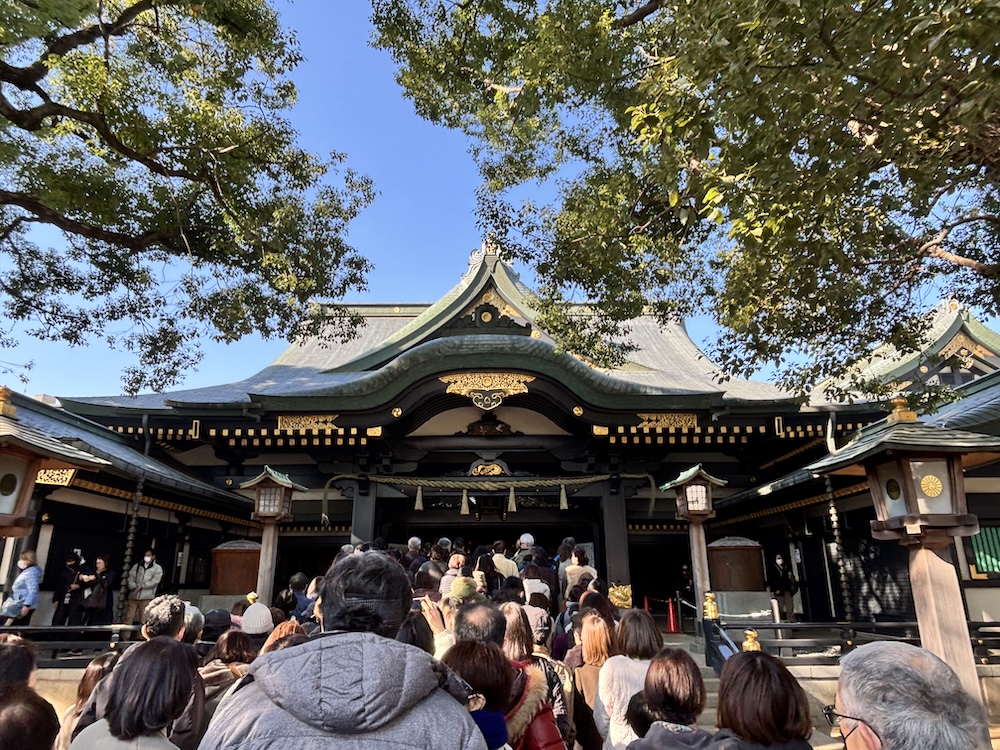
People lining up for Winter Solstice Prayer at Anahachimangu Shrine – Photo Credit: Fossil of Time
Ana-hachimangu Shrine
Festival Date: December 22, 2025
Admission Fee: Free
Address: 2 Chome-1-11 Nishiwaseda, Shinjuku City, Tokyo 162-0051
Operating Hours: 24 hours
Telephone: 0332037212
Website: https://www.anahachimanguu.jp/ichiyouraifuku/
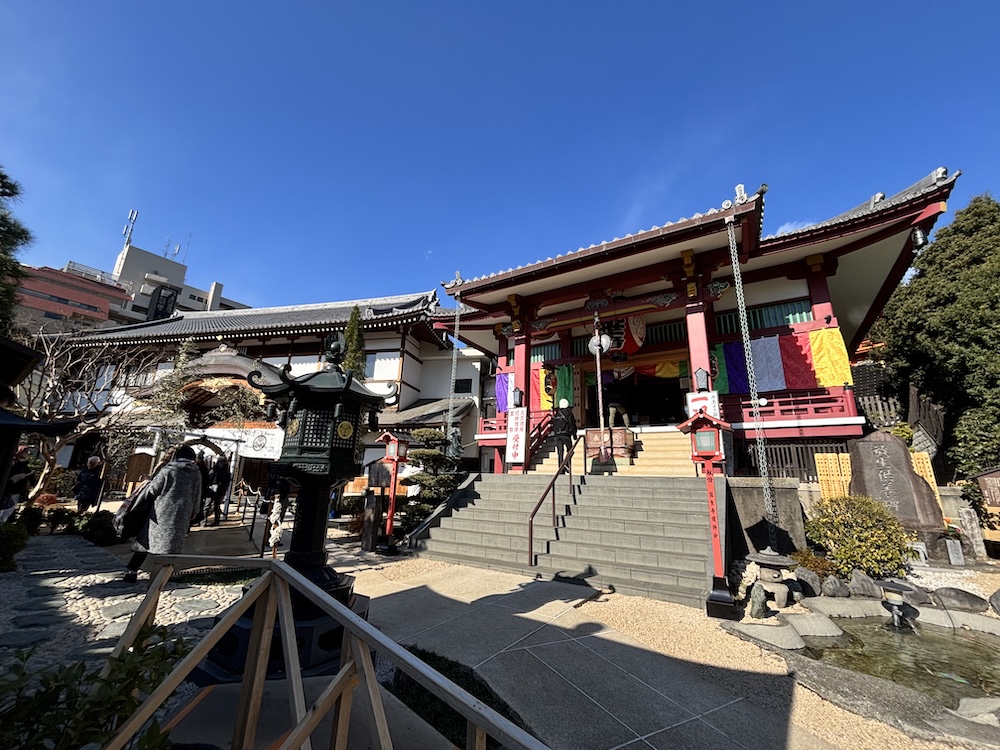
Hojoji Temple – Photo Credit: Fossil of Time
Hōjōji Temple
Festival Date: December 22, 2025
Admission Fee: Free
Address: 2 Chome-1-14 Nishiwaseda, Shinjuku City, Tokyo 162-0051
Operating Hours: 9:00-16:00
Telephone: 0332025667
Website: https://www.houjou.or.jp/event01.html
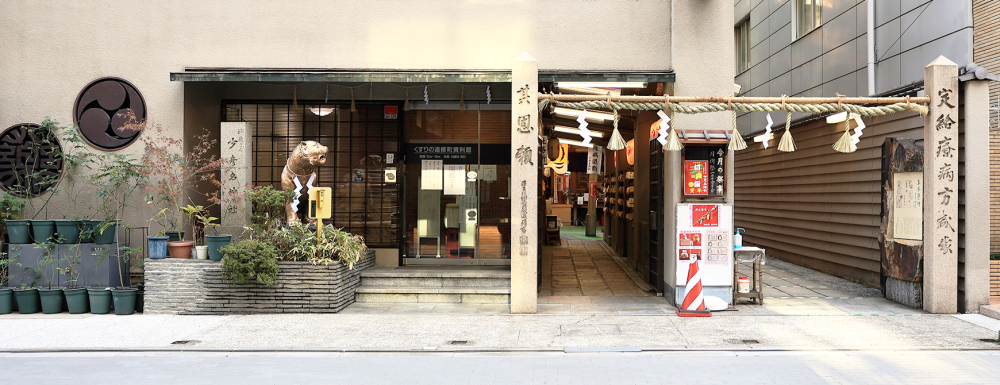
Access to Sukinahikona Shrine – Photo by: Sukinahikona Official Website
Sukunahikona Shrine
Festival Date: December 22, 2025
Admission Fee: Free
Address: 2 Chome-1-8 Doshomachi, Chuo Ward, Osaka, 541-0045
Operating Hours: 9:00 – 16:30
Telephone: 0662316958
Website: http://www.sinnosan.jp/
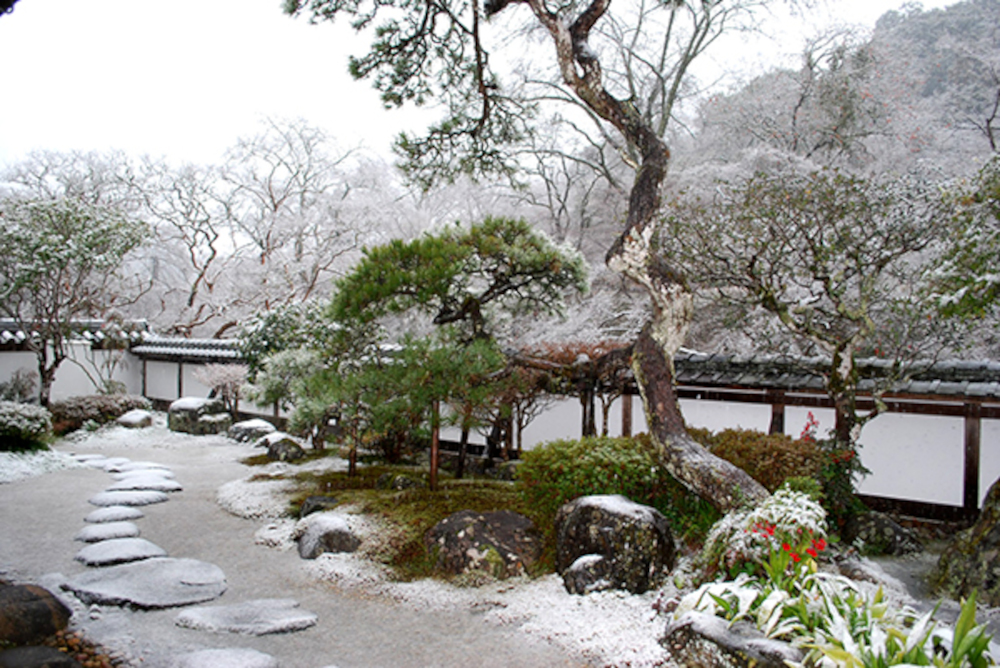
Photo by: Shoryakuji Official Website
Shoryaku-ji
Festival Date: December 22, 2025
Admission Fee: Ұ800
Address: 157 Bodaisencho, Nara, 630-8413
Operating Hours: 10:00 – 14:00
Telephone: 0742629569
Website: http://shoryakuji.jp/event/event6.html
Toji is a heartwarming tradition focusing on health, fortune, and renewal. By sharing kabocha meals and taking aromatic yuzu-yu baths, families collectively purify their homes and bodies. These shared customs emphasize intimate, meaningful connections, ensuring every member is fortified against the cold and prepared to welcome the returning sunlight for the new year. So, prepare yourself the right way this season and envelop yourself in timeless traditions thanks to Japan’s unique Winter Solstice celebration this year!
Featured Photo Credit: Mathurin
Looking for more unique experiences and traditions this winter? Check out our list of Winter Tours to find your next chilly adventure perfect just for you!
PIN THIS FOR LATER
Book your pocket wifi now to stay connected through your entire Japan Journey!

Be sure to get the JR Pass to make navigating Japan during your trip that much easier!
YOU MIGHT ALSO LIKE