Yoshoku: Where East Meets Feast – Japan’s Delectable Fusion Dishes!
Apr 30, 2026
BY Madhuri Nagaraja
There are amazing dishes all around the world, but sometimes a little bit of creativity, a love of foreign food, and an open mind can lead to some marvelous new recipes. This is where Yoshoku comes into play. Although the literal translation of the word means “western food”, its definition rather refers to the fusion between Western and Japanese cuisine. It translates to a dish that has been influenced by the style of Western cooking while still embodying the traditional Japanese essence. In short, it represents the best of both worlds. Beyond the cultural fusion, Yoshoku is a means for Japan to show the world its innovative ideas, and how a known dish can be rediscovered through another perspective while offering, at the same time, a new taste to savor. Moreover, Yoshoku intertwines cooking with history, underlining the past while moving forward with its constant innovation. And if, after reading this introduction, you are craving some Yoshoku, then by all means, keep reading. This article will go beyond the known Yoshoku and will focus on some new recommendations.
Yoshoku’s Origins
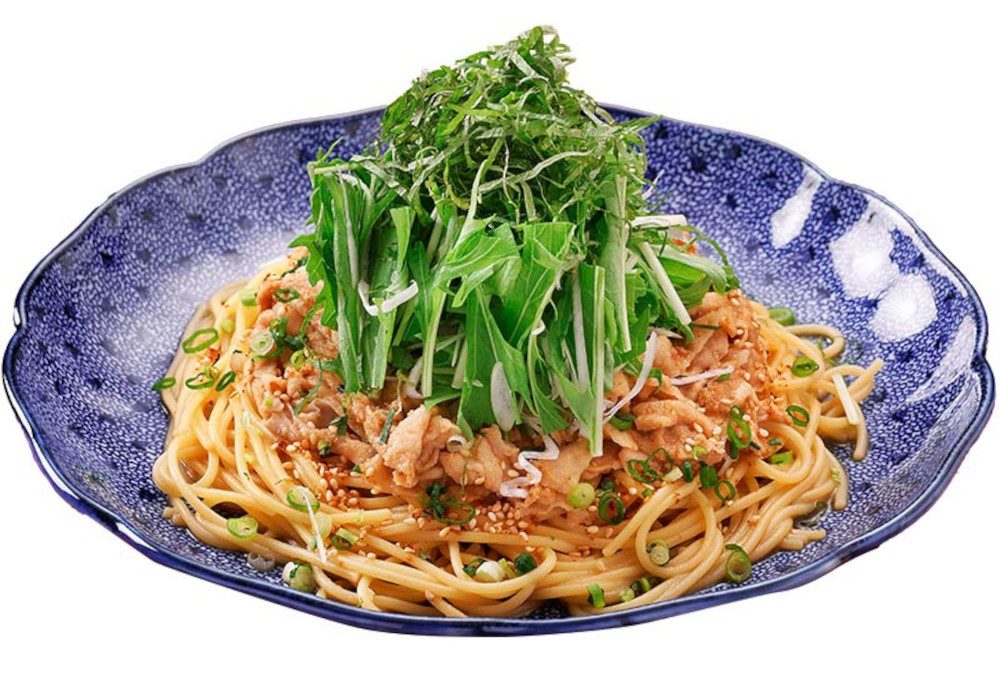
Wafu pasta: Sesame Sauce with Japanese Veggies & Boiled Pork Shabu-Shabu Style – Credit: Yomenya Goemon
If you take a closer look at Japan’s history, you may notice that foreign cuisine has always somehow influenced Japanese culinary culture. For instance, in the Heian era ( 794-1185), a court cuisine called Daikyo Ryori was introduced and rapidly became the most formal banquet style for entertaining influential guests in the Heian Court. Daikyo Ryori originally came from the Chinese and Korean peninsula. In the Kamakura era, thanks to the spread of Buddhism and its monks travelling back and forth to China, green tea and tea drinking culture spread throughout Japan. In the same way, Shojin Ryori, a traditional vegetarian and vegan dining style derived from the dietary restrictions of Buddhist monks, proliferated in Japan’s Buddhist temples. In 1543, when the Portuguese first came to Japan, they introduced their native foods such as the Castella, a sponge cake, alongside culinary techniques such as frying food in batter which later resulted in the creation of tempura (Yes, indeed, you can thank your Portuguese friends for this delightful invention!). At the beginning of the Edo era (1603-1868), Japan went into a period of national isolation, leaving accessibility for trade only in Nagasaki. This allowed the locals to further discover foreign food and cooking techniques, which they later incorporated into their own cuisine. After Japan opened its doors back up to the rest of the world, the trading increased, and numerous foreign restaurants began to surface. This also allowed accessibility to Western ingredients and seasonings, which in return resulted in the birth of Yoshoku, a Western food adapted to suit the Japanese palate.
Must-try Classics
First and foremost, let me introduce you to the classics. The quintessentials of the Yoshoku world, those which have, over the years, become staple foods of Japan, comforting locals and travelers alike. In other words, the cream of the crop. Those that depict to perfection the true meaning of Yoshoku.
Doria
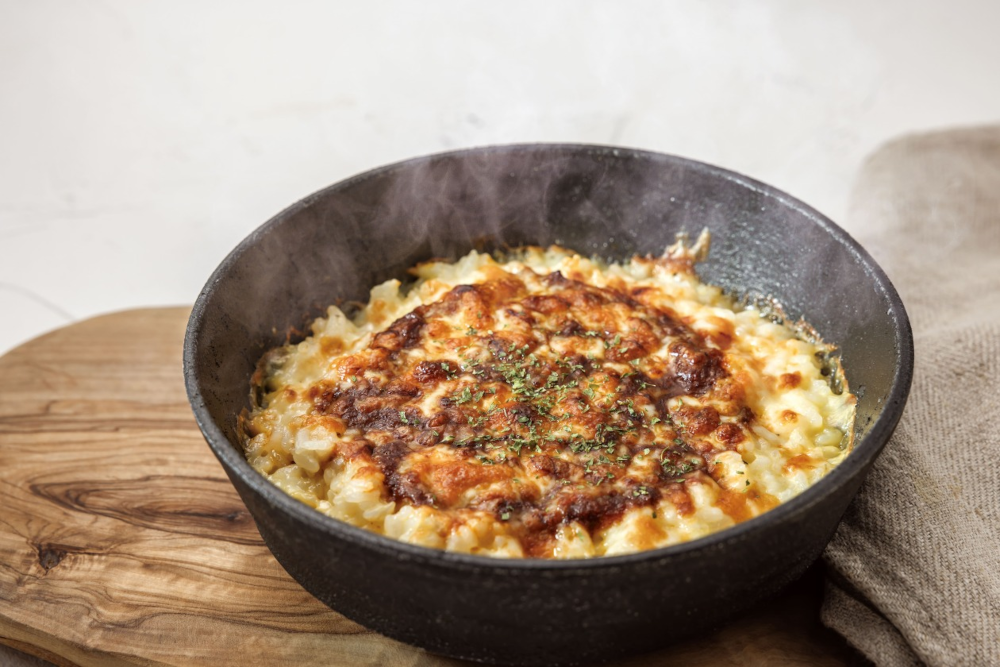
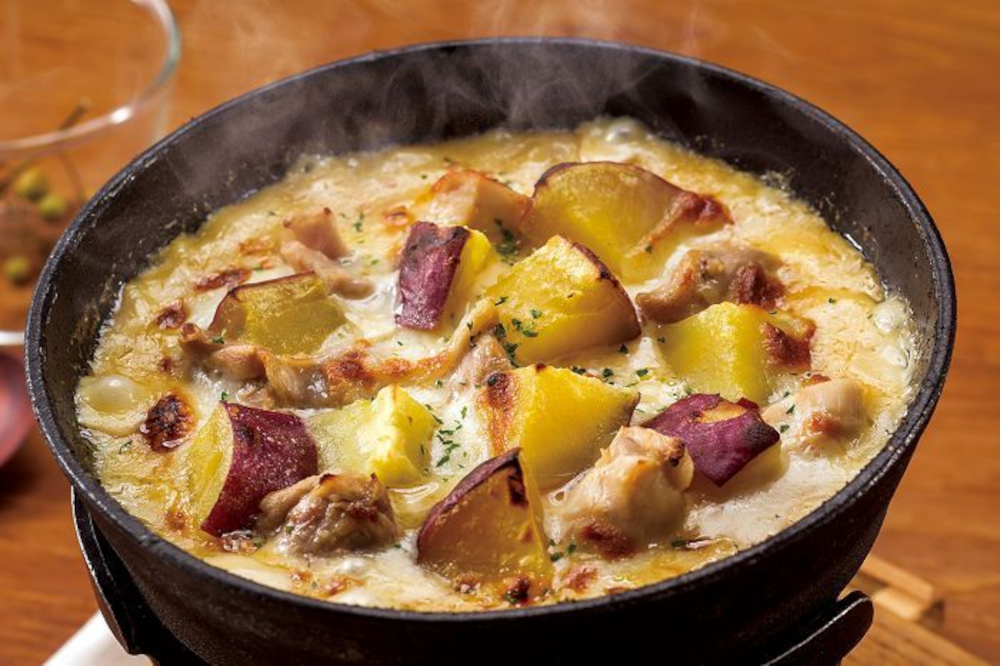
Doria – Credit: Kobe Motomachi Doria
Doria is a Yoshoku which takes its inspiration from European gratin dishes. In particular, from Italian and French cuisine, where pasta casseroles and baked rice are mixed with béchamel sauce and cheese. Doria is made by combining rice with meat sauce, chicken or seafood, béchamel sauce, and cheese, then baking until golden. Doria is not only palatable, but there is a fun story behind its creation as well. Contrary to other Yoshoku, Doria was not imported, but invented on Japanese soil. It is believed that in the 1930s, Swiss-born chef Sally Weil, who was at the time the head chef at the Hotel New Grand in Yokohama, created a dish for a sick guest, a European banker who needed something mild but nourishing. Chef Weil, known to improvise dishes upon his client’s request, accepted the task and created a unique dish by layering buttered rice, béchamel sauce, and shrimp, which he then baked.
If you want to try an authentic Doria, please visit Kobe Motomachi Doria in Nishiikebukuro.
Opening hours: Everyday (11:00- 22:30)
Location: Nishiikebukuro, Toshima City, Tokyo
Website: Kobe Motomachi Doria Lumine Ikebukuro |Kobe Motomachi Doria
Omurice & Curry Rice

Omurice – Credit: Omusako Rice
If you are a fan of anime or Japanese dramas, you must have heard of Japan’s two most mouth-watering foods: Omurice and Curry Rice!
First, let’s talk about Omurice, a beloved dish that locals and travelers alike crave. The name derives from two English words: “Omu” from “omelet” and “raisu” from “Rice”, literally translating to omelet rice. It is made by combining fried rice, chicken, stir-fried vegetables, and ketchup, on top of which you add a creamy, fluffy omelet drizzled with demi-glace sauce or ketchup. There are two origin stories around the creation of omurice. The first one says that the dish was created in the year 1900, in Tokyo’s Renga-tei restaurant. It is believed that the staff wanted to create a dish that would be comforting, yet easy to eat. They then started wrapping ketchup-flavored rice in a thin omelet, aiming to appeal to the Japanese palate while using Western techniques. The second story claims that omurice originated in the 1920s, in a restaurant in Osaka called Hokkyokusei. It is believed that the restaurant invented the dish for a client who had stomach issues and needed to eat something soft and easy to digest.
If you want to try it, please do not hesitate to visit Omusako Rice, where you will get to have a bite of the most flavorful omurice!
Opening hours: Every day (11:00- 21:30)
Location: Udagawacho, Shibuya, Tokyo
Website: オムサコライス公式ホームページ
Curry Rice
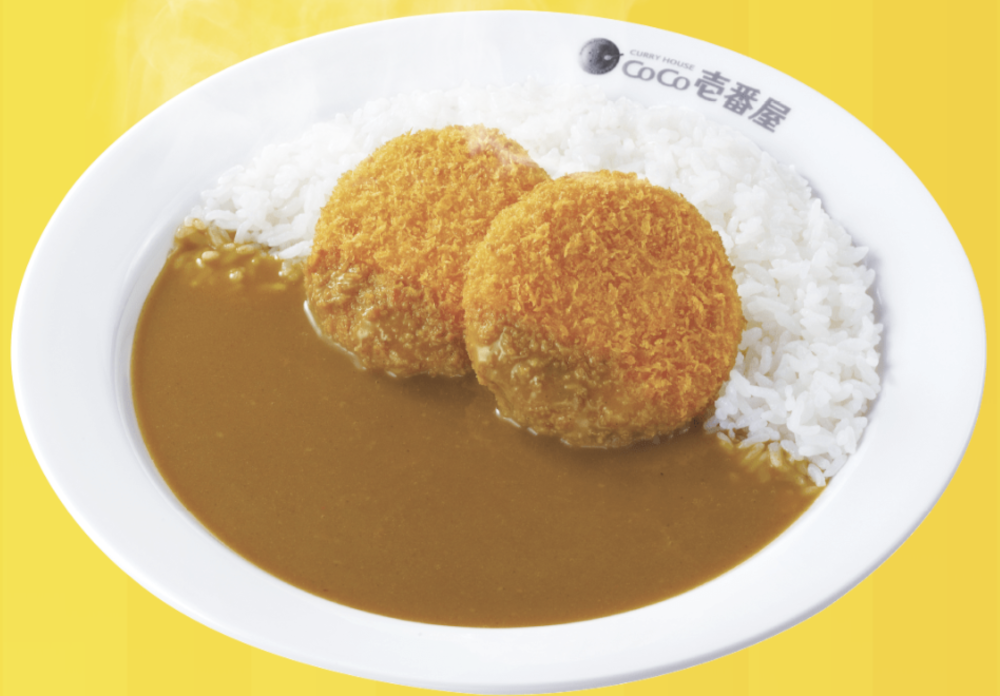
Curry Rice with Korokke – Credit: Curry House CoCo Ichibanya
Curry Rice, on the other hand, is a dish that takes its inspiration from Indian curry and is composed of curry sauce cooked with meat (pork, beef, or chicken) and vegetables (usually potatoes, carrots, and onions), and paired with white rice. The origin of curry rice is a bit heavy, as it was introduced by the British Empire at a time when they colonized India, appropriating and adjusting cultural and culinary practices. The British Empire appropriated curry and westernized it to match their palate, rendering it thicker and sweeter. It was then brought to Japan during the Meiji Era by the British Navy, coming from India. It is believed that a British vessel shipwrecked near the Japanese coast, and the sailors were then rescued, alongside some of their rations, which included curry powder.
If you want to try various sorts of curry rice, please visit Curry House CoCo Ichibanya.
Opening hours: Every day (11:00- 22:00)
Location: Kyobashi, Chuo City, Tokyo
Website: Kyobashi Edgrand store information | Store locator | Curry House CoCo Ichibanya
Korokke
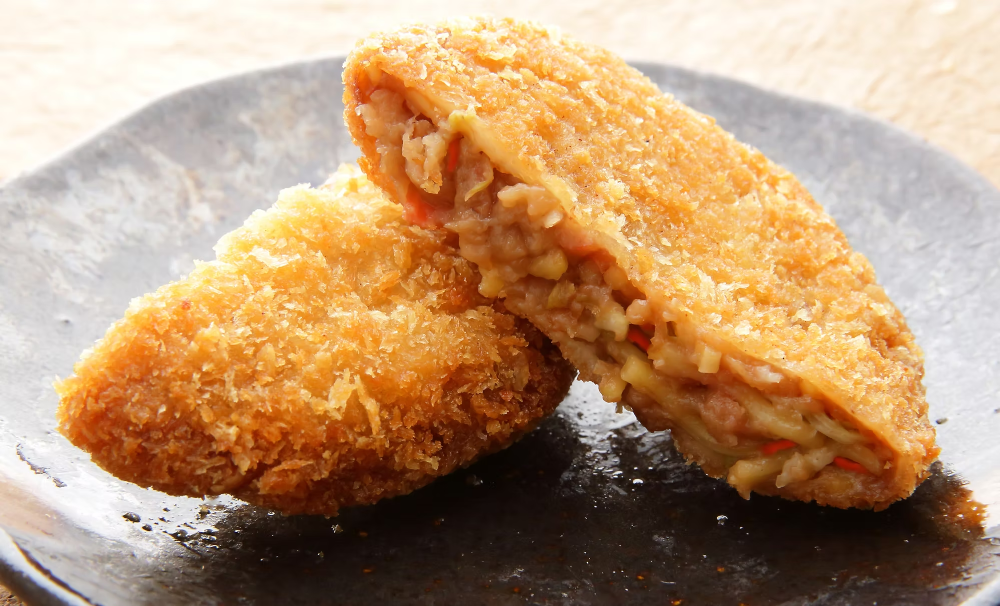
Korokke – Credit: Asakusa Monja Korokke
Now, if you are craving comfort food, Korokke and Hambagu are THE choices par excellence.
Korokke is the Japanese version of the French croquette, a breaded and deep-fried patty usually made from mashed potatoes or ground meat mixed with vegetables, then coated in flour, egg, and panko breadcrumbs. It was introduced in the late 19th century during the Meiji era, when Yoshoku was rapidly gaining notoriety. Japanese cooks would adapt and replace certain ingredients from the original French croquettes to suit local palates. Due to being very affordable, Korokke has become a very popular snack in Japan, so much so that it is sold everywhere, from supermarkets to convenience stores to specialty shops. There are multiple variations of Korokke, such as Potato Korokke, Kani (Crab) Cream Korokke, Kabocha (Japanese pumpkin) Korokke, or even Curry Korokke (yes, yes, you heard me right! The best of both worlds packed in a succulent, crispy snack).
To taste hot and crispy Korokke, don’t forget to visit Asakusa Monja Korokke.
Opening hours: Every day except Wednesdays (11:00- 17:00)
Location: Asakusa, Taito City, Tokyo
Website: HOME | monkoro
Hambagu
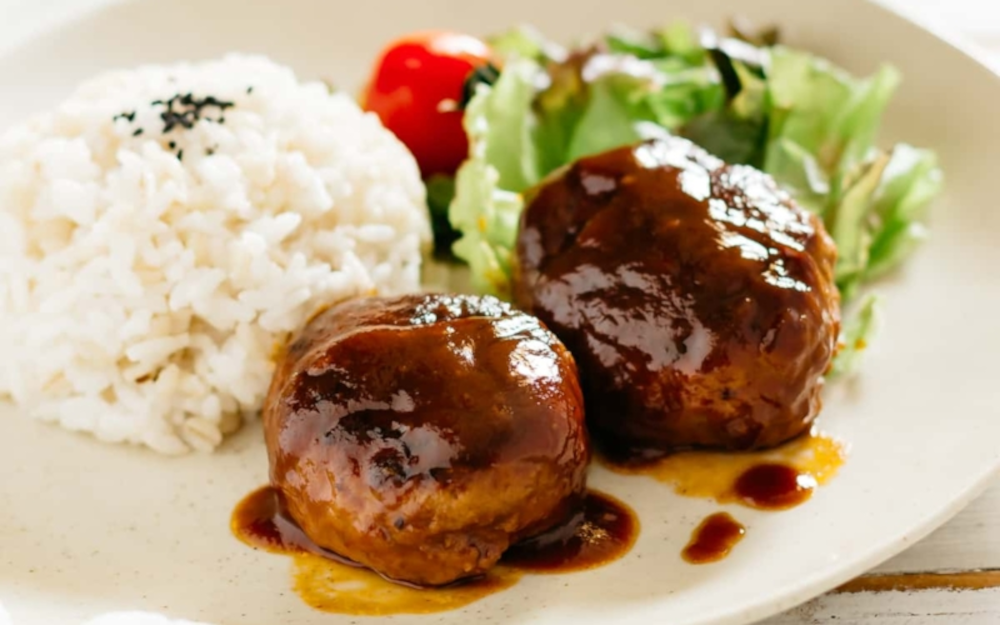
Hambagu – Credit: Chopstick Chronicles
Hambagu or Hambagu steak is a dish created from ground meat (typically a mix of beef and pork), which is made into a patty to be pan-fried and then served with a savory sauce. It is similar to the Salisbury steak or to a bunless hamburger; the difference, however, resides in its presentation and the seasonings used to make it, oriented towards the Japanese palate. It is believed that it was inspired by the German Hamburg steak and was created during the Meiji era.
To eat authentic Hambagu, please visit Tsubame Grill in Shibuya.
Opening hours: Every day (11:00- 22:00)
Location: Dogenzaka, Shibuya, Tokyo
Website: Tsubame Grill
Other Types of Yoshoku
Japanese Paella
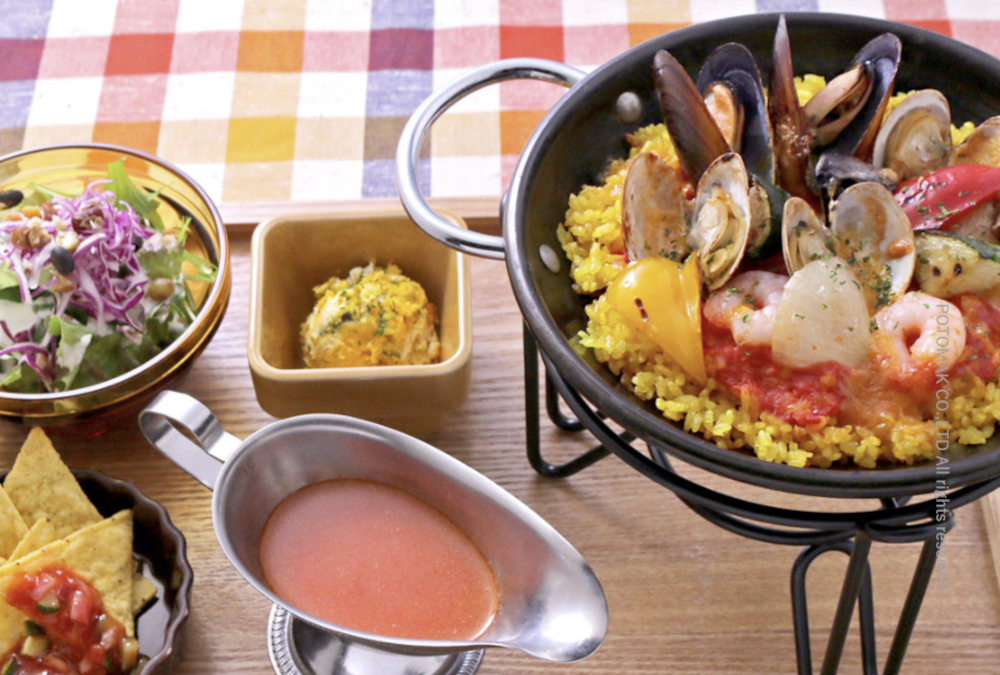
Paella with gravy, nachos, and salad – Credit: Paellan Peaces
Let’s start with a very famous dish: Paella. Paella is a rice dish that originated in the Valencian community in Spain. The original paella consisted of Valencian rice, chicken, rabbit, saffron, flat green beans or lima beans, water, salt, and sometimes a seasoning of rosemary branches. Nowadays, the recipe has seen quite a few variations, such as the popular seafood paella and the mixed paella, which combines both meat and seafood. The Japanese paella, on the other hand, is yet another variation of the original recipe, but much more adapted for the Japanese palate. While the cooking method stays true to the authentic one, it differs by incorporating Japanese flavors and focusing on extricating an umami flavor. It often includes local prawns, Japanese mushrooms such as shiitake, domestic vegetables like the renkon, and lotus root. And as for the seasonings, it can contain soy sauce or mentsuyu (noodle soup base).
If this ravishing dish is making your mouth water, make sure to check out Paellan Peaces in Shinjuku. This restaurant offers you different options of paella, each more delicious than the last.
Opening hours: Weekdays (10:00- 23:00) and Weekends (10:00 – 23:30)
Location: Shinjuku City, Shinjuku, Tokyo
Website: PAELLAN PEACES | SHOP | POTOMAK CO.,LTD
Wafu Pasta
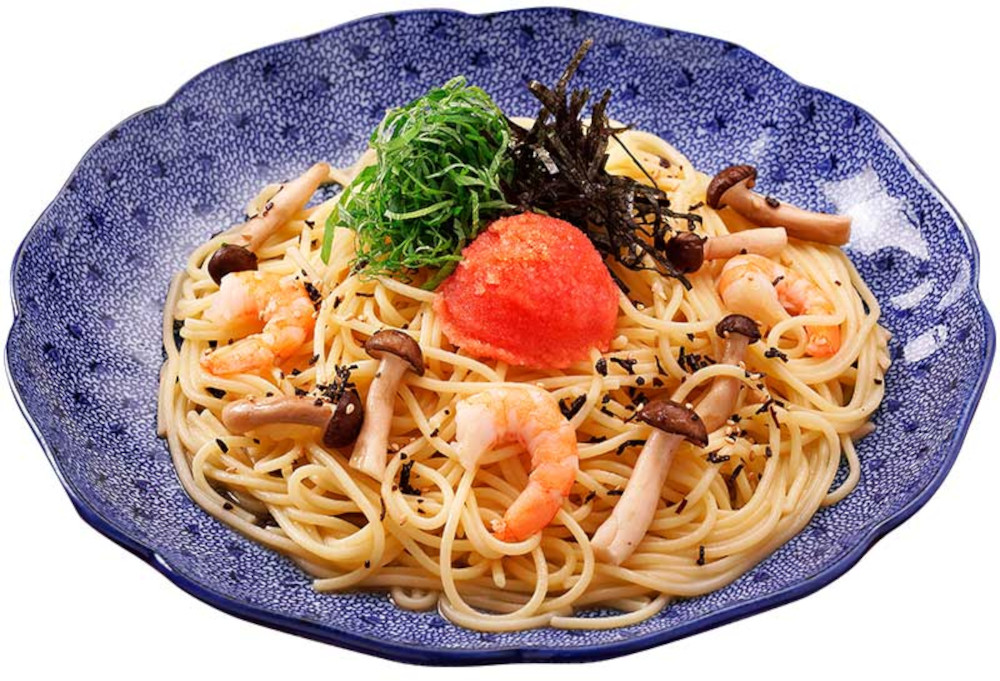
Wafu pasta: Mentaiko, Shrimp, Shimeji Mushroom & Perilla pasta – Credit: Yomenya Goemon
Wafu pasta is another famous Yoshoku dish which combines traditional Italian pasta with Japanese ingredients and seasoning, the best of both worlds in short! There is a plethora of wafu pasta to choose from, depending on your mood and your taste. One of the most popular ones, which you may have heard of before, is the Spaghetti Napolitan. It was invented by Shigetada Irie, the chef of the Hotel New Grand in Yokohama. It’s believed that the chef was trying to create a Western-like food with the few ingredients he had on hand (ingredients were limited after World War II) for General Douglas MacArthur and the rest of the American soldiers stationed at the hotel. He subsequently got the idea to mix spaghetti with ketchup, and thus was born the Napolitan. Nowadays, Napolitan Pasta is made by adding supplementary ingredients such as bell peppers, onions, and sometimes ham, sausage, or even bacon. In the 1950s and 1960s, the concept of wafu pasta gained popularity, and nowadays, there are a myriad of varieties:
Mentaiko spaghetti: Mentaiko spaghetti is a dish made with Mentaiko (spiced and salt-cured pollock roe); spaghetti, butter, cream, milk or mayonnaise; soy sauce; perilla leaves, and nori.
Soy sauce butter pasta: A simple recipe that calls for 3 commonly used ingredients – pasta, butter, and soy sauce – a delicious and unique combination
Shrimp pasta with Nori cream sauce: This dish combines plump, garlicky shrimp with a creamy sauce made with nori, the two mixed with freshly cooked pasta.
Uni Pasta: The pasta is coated in a creamy uni (urchin) sauce and garnished with perilla leaves and fresh sea urchin.
Natto Spaghetti: A unique and flavorful dish combining Japanese fermented soybeans (Natto) with traditional Italian spaghetti.
These are just a few examples of the plethora of creative combinations that you can get when you combine Italian pasta with Japanese ingredients. If the aforementioned dishes appeal to your stomach, do not hesitate to visit Yomenya Goemon. The restaurant offers multiple fusion dishes between Italy and Japan.
Opening hours: Weekdays (10:00- 23:00) and Weekends (10:00 – 23:30)
Location: Yaesu, Chuo-ku, Tokyo (but there are plenty more locations within Tokyo, so please see the following list)
Website: Yomenya Goemon
Namadonuts
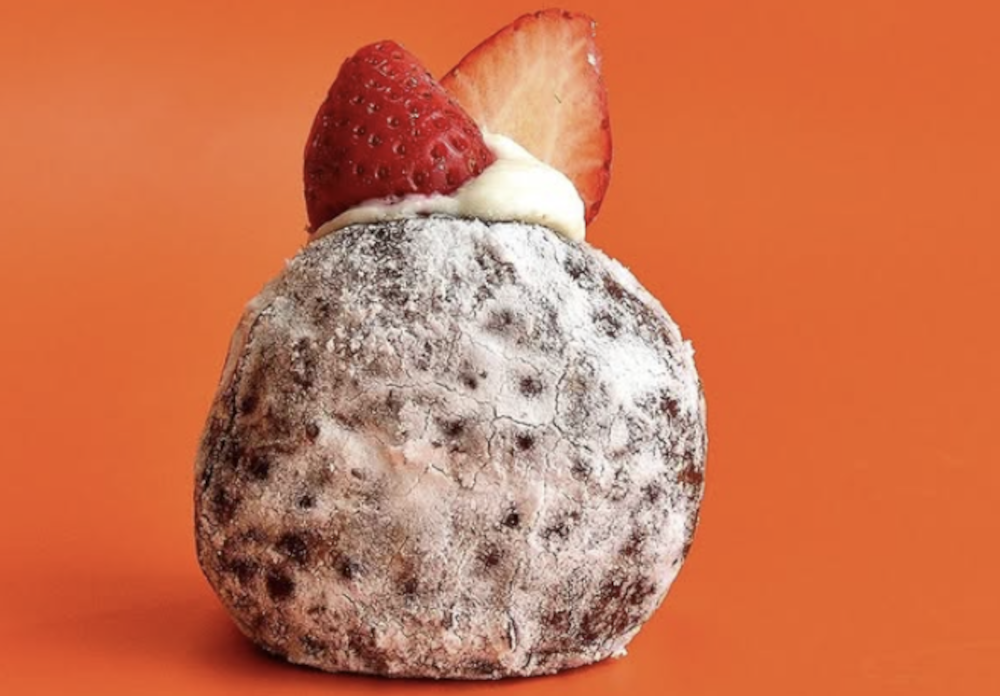
Strawberry Cream Cheese Namadonut – Credit: I’m donut ?
Donuts are a popular treat beloved by many for their shape, their various colors, for enabling endless imaginative creations, and most importantly, for their subtle sweetness. Therefore, it isn’t surprising that their popularity has reached around the world. In particular, in Japan, this sweet dessert has gained a lot of traction in recent years. Especially because there is a new version of the beloved ring-shaped fritter called the Namadonut, the creative Japanese version of the traditional donut. Namadonuts (生ドーナツ) are softer, puffier, with a pillowy texture and chewier than the original version. The cooked dough is tender, almost melting in your mouth, reminding you of something just freshly made, thus its name, as nama means fresh.
You can try a lot of different varieties of Nama Donuts in the very popular shop: I’m donut? However, they are highly sought after, and you will usually have to face a long queue before placing your order. But, trust me, it is worth the wait, and once you have tasted these slices of paradise, nothing else will matter. I’m donut? offers a wide range of different Namadonuts such as: Custard Cream, Matcha White Chocolate, Grilled Strawberry Keema Salad Donut, and even temporary seasonal creations. Did I mention that Japan’s specialty was creativity and originality? If not, just for these reasons, it’s a must-try!
Opening hours: Every day 11:00 – 20:00
Location: Shibuya, Tokyo
Website: I’m donut?
Pon de Ring

Pon de Ring – Credit: Mister Donut
Now that we have talked about Namadonuts, it is only natural that I tell you about the Pon de Ring, another sensational Japanese dessert which takes its inspiration from traditional Donuts. Apart from being a funny pun, Pon de Ring is, in reality, a mochi donut shaped like a flower. Now, I must underline that a mochi donut isn’t technically a mochi, but due to the similarity in texture, that is to say, soft and chewy, the term was associated with it. Moreover, compared to mochi, which uses glutinous rice flour, and traditional donuts, which use all-purpose flour, Pon de Ring use tapioca flour, hence the chewy texture. The dough is usually made into 8 small balls that you stick together to form a sort of ring, and then fry until golden. The donuts are then glazed. It is believed that this sweet also takes its origin from a Brazilian cheese bread called pão de queijo and possibly from the Hawaiian dessert poi mochi.
If you want to try this soft and heavenly chewy donut, do not hesitate to visit Mister Donut while you are in Japan! Mister Donut is a popular international donut chain, mainly operating in Asia. Mister Donut offers a variety of donuts and numerous Pon de Ring options.
Opening hours: Every day 8:00 – 22:00
Location: Kabukicho, Shinjuku City, Tokyo
Website: ミスタードーナツ
If you are pondering whether to choose a Pon de Ring or a Nama donut, I cannot recommend enough that you try both of these heavenly donuts.
Yoshoku – A taste for everyone!
Yoshoku represents more than just a fusion between Japanese and Western cuisine. It is an art piece, a painting in which each stroke has a meaning, where each ingredient is selected carefully to create something original with a unique flavor. It shows Japan’s talent for innovation, creativity, and cultural adaptability. Dishes such as Omurice, Hambagu, Korokke, and Curry Rice have transcended their status as simple fusion foods to become beloved, comforting staples. Trying yoshoku will allow you to experience Japanese cuisine through a different pair of lenses. To explore the country’s culinary excellence beyond ramen and sushi, while showing you, through its flavors, the nation’s history and ever-evolving food culture.
Featured Photo Credit: Kobe Motomachi Doria
While trying out some of these unique foods, make sure to secure your spot on one of our Food Tours to explore Japan with a local expert!
PIN THIS FOR LATER
Book your pocket wifi now to stay connected through your entire Japan Journey!

Be sure to get the JR Pass to make navigating Japan during your trip that much easier!
YOU MIGHT ALSO LIKE