Preserving the Craft: Meeting Aran and Samantha of Bottlecap
Aug 7, 2026
BY Kristian Robinson
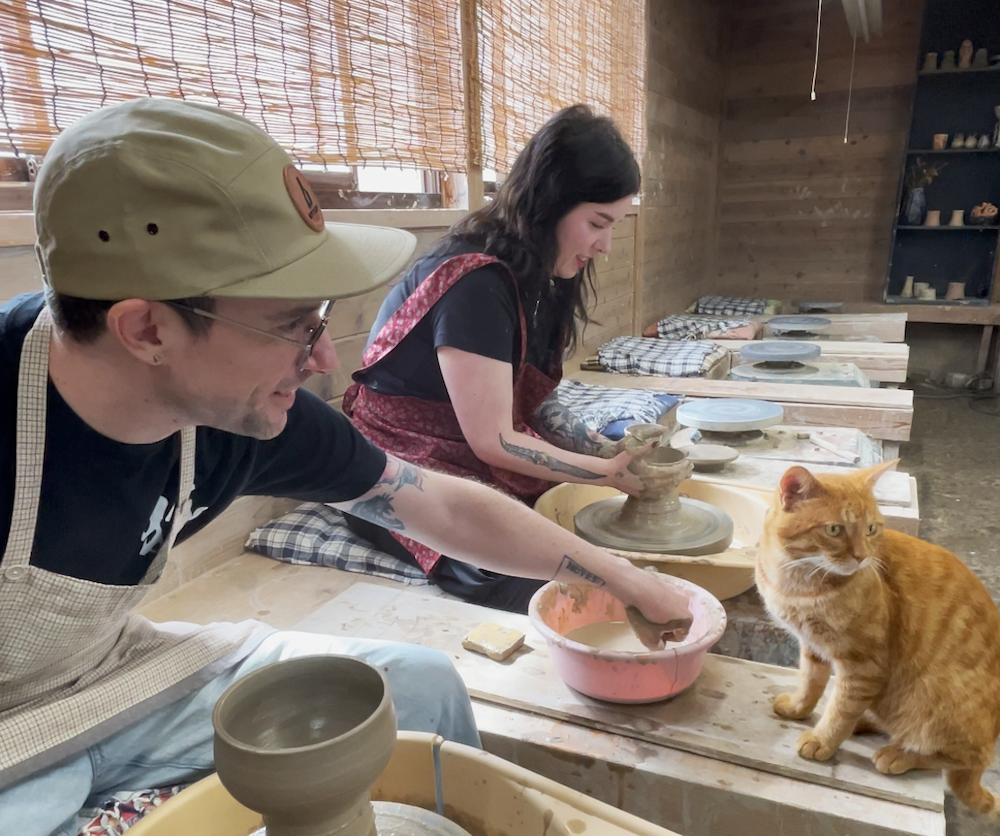
Preserving Japan’s cultural heritage takes more than just admiration; it takes a community. That is where Aran and Samantha of Bottlecap come in. After moving to Japan full-time, this duo set out on a mission to connect world-class artisans with international audiences and eager learners. By creating direct links between global enthusiasts and local workshops, they are opening doors to traditions that often stay hidden or inaccessible. Living here as locals, they bring a fresh, personal perspective to protecting the regional charm and craftsmanship we all love.
We’re thrilled to introduce you to the team at Bottlecap and explore how their passion for artisan culture is making the country’s rich heritage more accessible and meaningful for every guest.
Hi Aran and Samantha, could you two introduce yourselves and explain a little about each of your backgrounds, as well as introduce your company, Bottlecap?
We moved to Japan in July of 2024, after having vacationed here three times prior. Aran came from a live performance and marketing background and Samantha had been a professional tattoo artist for just over five years. After our third trip to Japan, we gathered the courage to move. We sold our house, our car, packed up our cats, and moved here on Student visas to attend Japanese language school.
After posting short videos about our activities outside of classes, we noticed we had received a massive social media response to our videos about Japan’s traditional craft artisans. A few of those videos had crossed over 1 million views (across platforms). We’d certainly understood the quality and history behind Japan’s traditional crafts and trade skills, but the sudden jump in interest whenever we presented on those topics proved to us that the demand for those stories was strong and global.
But, we also noticed that locating and gaining access to traditional craft experiences and workspaces, even those intended to be openly available to travelers from overseas, often led to confusing reservation procedures, language and culture barriers, and, in some cases, contradictions between what was marketed versus the true quality of the offerings.
This ultimately inspired us to create Bottlecap as a way to centralize information on available traditional craft experiences and education in Japan, as well as to curate those offerings to help ensure that travelers and enthusiasts never end up feeling like they got less than they expected.
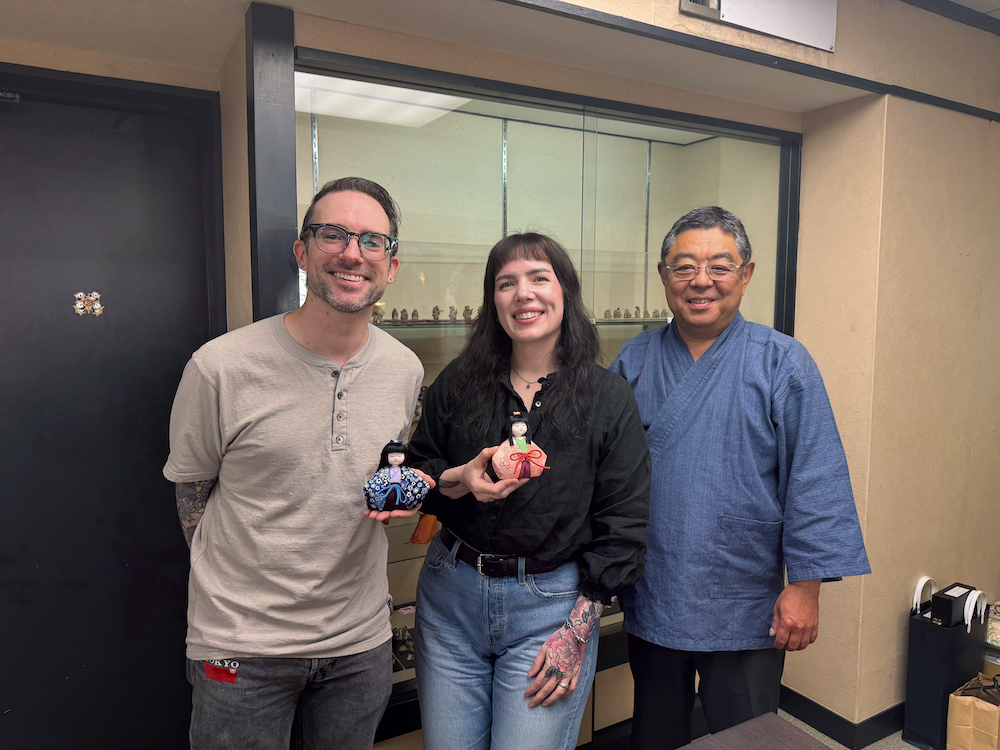
Aran and Samantha at Mataro Doll ningyo company in Okachimachi – Photo Credit: Bottlecap
What is the story behind the name “Bottlecap,” and how does it represent your mission for Japanese artisans?
Bottlecap was the name of our business before we knew what the business would eventually become. It had a nice ring to it, and we felt like there were more than enough examples of brand names that don’t really say what their offering is in the name itself; Apple doesn’t sell apples, so choosing a name because it feels different and maybe memorable felt fun and flexible.
And I think that flexibility ended up working out. Our strategy was to dedicate the nights and weekends in Tokyo to network as much as possible (we were attending Japanese language school 23 hours a week), to figure out what kind of business we could start in Japan that would allow us to transition from Student visas before time ran out on us.
We considered so many things. We had meetings with Startup founders, Globalization consultancies, SNS marketing agencies… but there wasn’t enough alignment between all the things you’d hope would align when deciding on a venture. The big question in our minds was, “How do we contribute to Japan ethically, using our existing skills and experiences, instead of having to build a whole new skillset while also adjusting to a completely different culture?”
The answer was staring us in the face, through Instagram. People wanted to know more about Japan’s traditional crafts, trade skills, history, and culture… Between Aran’s knowledge of digital marketing, and Samantha’s past experience as an artisan and apprentice, we’d found alignment, and Bottlecap was launched as Bottlecap.jp!
You and Samantha moved to Japan full-time about 18 months ago after several visits. What was the specific moment or experience that convinced you to make Japan your permanent home?
Aran might say that flying back to the States after each trip felt like flying in the wrong direction, and point out that each time we thought about where we could vacation next, the conversation kept coming back to seeing more of Japan instead.
As for Samantha, I think the moment I first felt that I wanted to move to Japan was when I visited Tōdai-ji and Kennin-ji on earlier trips. Standing in those temples, I felt the weight of history in a way I had never really experienced before. The architecture, the materials, the quiet atmosphere, and the dedication to craft all made me feel that there was so much more to learn and appreciate.
I also felt inspired by the way Japan lives so closely in tune with the seasons. It’s not only in temples or traditional culture, but even in everyday life. Food, festivals, flowers, and seasonal flavors all reflect the time of year. That really moved me.
In America, I often felt that connection to nature and seasonality was mostly limited to major holidays. But in Japan, it felt like the seasons were part of daily life. That made me want to live here, learn more, and be surrounded by a culture where history, craft, nature, and everyday life still feel connected.
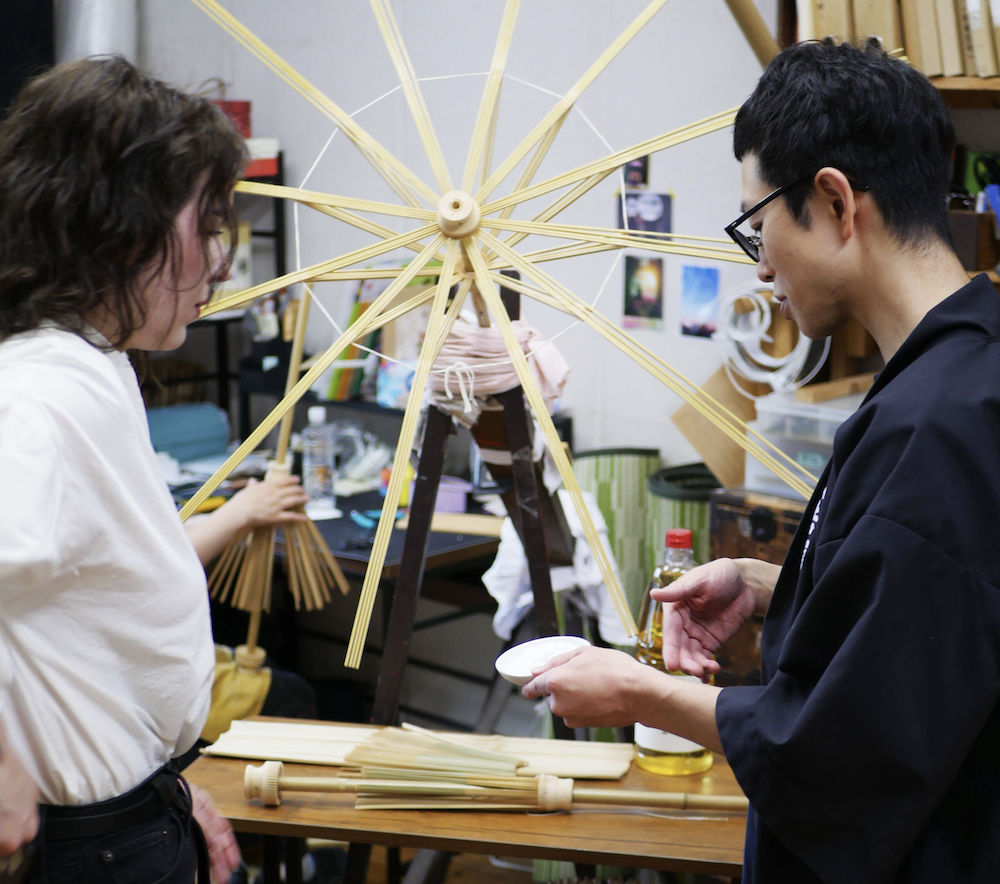
Hiyoshiya Wagasa Workshop in Kyoto – Photo Credit: Bottlecap
For those unfamiliar with the platform, what are the primary types of services or connections you offer?
Bottlecap.jp is an information resource for travelers and craft enthusiasts in four parts. We have first a curated directory of what we believe are the best Traditional Craft experiences in Japan (a growing database) for travelers looking for something they can add to their upcoming vacation plan. Imagine a traveler who wants to do more than just what’s trending on social media something that’s only possible to find in Japan, and helps us know its true soul.
We also wanted to reach further into the future, to consider the stewardship and preservation of traditional crafts and trade skills, so we also have an area on the website where people who want to study specific traditional skills more formally can find out what educational opportunities and institutions exist in Japan (and online) to train with true masters, long term. A resource for people who are considering truly dedicating themselves to a craft for life.
And while building these directories, we couldn’t help but notice so much more beyond that… Museums and unique lodgings that focus on traditional craft and carpentry, guided experiences where local experts can add value through interpretation and contextualization, and beyond. So, we added an area where those could accumulate on our site as well.
Then we also wanted a place to share even more context and information about the people and places we have met and seen in our travels, so we have a section of our site, Bottlecap Stories, where we post articles and interviews about artisans and workshop locations throughout Japan.
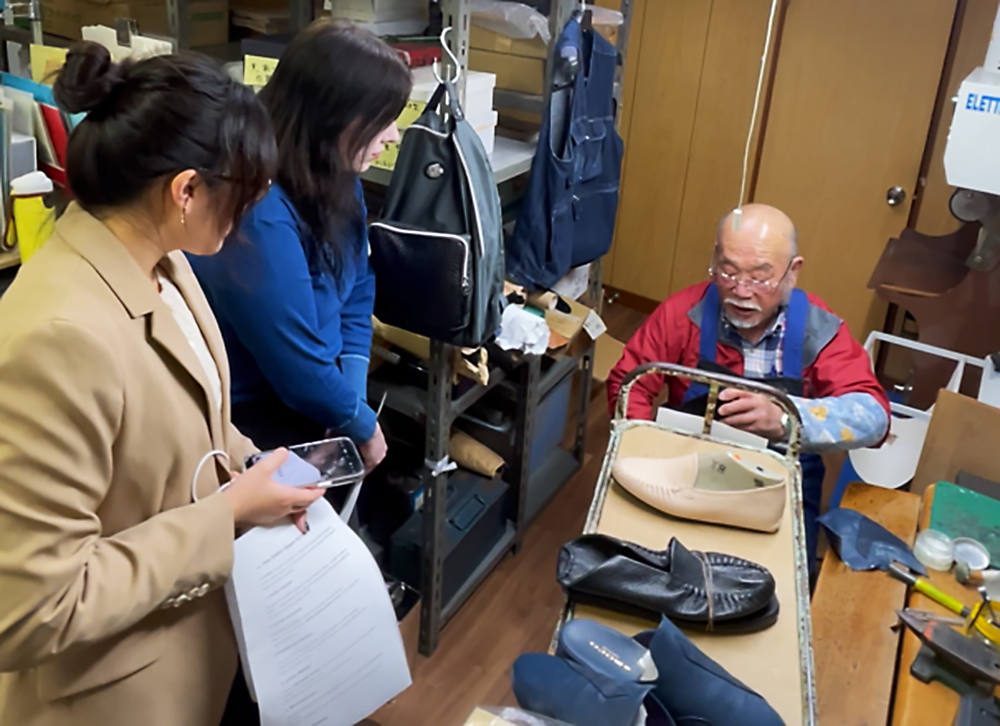
Bottlecap and OTO visit the Sanax company in Tokyo – Photo Credit: Bottlecap
How do you find and build relationships with the traditional craftsmen you feature on your site?
We’d say it’s half inbox, half outbox. We want to not only list experiences, but also regularly verify the quality of the experiences we have on our site, elevating them to “Bottlecap Authenticated” experiences to indicate those that we have personally attended and verified for accuracy, accessibility, and genuine stewardship of craft.
So, we will contact experience providers directly over email to see if we can attend a tour or workshop. We always ask for permission to film and post in advance of a visit, and we always pay full price, like any other visitor. A core component of our mission is to never charge artisans for things we do in support of them, and that also means never asking for anything from them for free.
Opportunities also come our way through direct messages. Sometimes, a provider will see one of our other videos and tell us they appreciated our approach to those visits. They invite us in, and we are so grateful for those chances, as sometimes we get to visit places that aren’t even open to the public. Any chance we are given to help more artisans share their stories feels like a huge gift, as well as a huge responsibility.
How do you see the balance between keeping traditional methods authentic while growing global demand for these products and experiences?
In the short time we have spent in Japan focused on the traditional craft industry, we have spoken with artisans, apprentices, exporters, e-commerce and retail operators, NPOs, travel companies, and more… probably hundreds of hours of research and conversations.
From that, we have formed the opinion that demand for traditional products is not the most immediate concern that artisans here face (at least not overseas demand… Domestic demand in Japan is another story).
We think the demand overseas is strong enough as it is to ensure the continuation of these trades. The thing that we feel needs to be addressed, and quickly, is how to connect the existing demand with makers more cleanly, and in recognition of the fact that these are analog businesses trying to survive in a digital age.
So, Bottlecap’s goal is to reduce friction points between consumers and makers in any and every way we possibly can. Today, it might be our information directory of experiences and education programs. In the future, it might be providing a booking system that charges providers zero commissions as an alternative to OTAs that take a percentage from artisans.
No matter how our business evolves over time, we don’t think traditional artisans or their methods need to change, nor that consumers are failing to appreciate their quality or legacy. The gap that needs to be bridged, and within this generation’s timespan, is how to untangle all the silly barriers that unfortunately keep these groups isolated from one another.
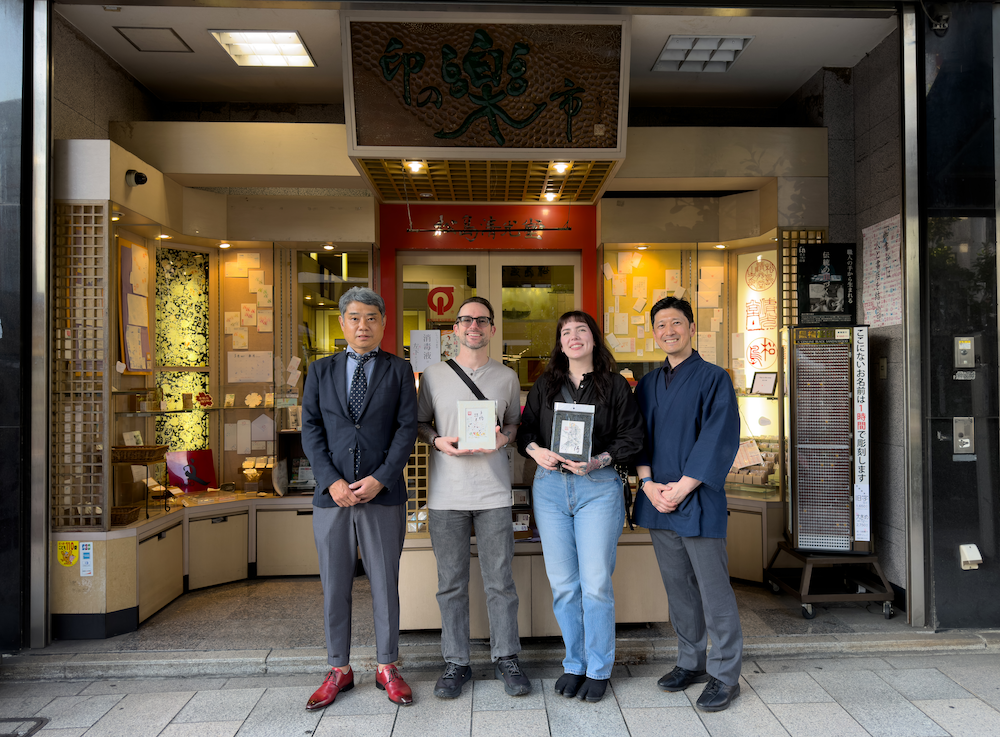
Sam and Aran visit Matsushima Seikoudo hanko in Jimbocho – Photo Credit: Bottlecap
What’s the next big goal for Bottlecap as you continue to grow your community and platform?
We have only just recently launched bottlecap.jp, so the next big goal for us is to learn something of value from site visitors that we can share with experience providers. Ideally, we can use our website as not only an information database for travelers, but also a consumer knowledge resource for artisans to help better understand the existing demand.
Ideally, this could be presented as a publicly visible dashboard where artisans could see real-time information about what travelers are seeking, so they can think about how to communicate and capture visitors more effectively.
It’s probably daunting to be an 80-year-old artisan who maybe doesn’t own a smartphone to be told that they need to start posting to social media in order to connect with and learn about what customers are looking for. If they did, that would be great! But many can’t take the time even if they wanted to… They’re busy making their wares, and also hopefully finding apprentices to carry the torch. Now, they’re also expected to become expert digital marketers?
Perhaps Bottlecap could help artisans by allowing them to gain those same insights through our efforts, free and with transparency, without having to dive headfirst themselves in unfamiliar waters.
In closing, is there anything else you would like to share with our readers?
Something we recently started just before launching the website is the “Japan Handmade Forum” community Discord server, as another resource beyond our directories… somewhere that anyone and everyone around the world can use to share their stories, crafts, advice, events, and more.
Thanks to Aran and Samantha for sharing the Bottlecap story and your unique perspective on preserving these vital traditions. Your dedication to building real connections between international learners and local workshops provides guests with a genuine understanding of Japanese craftsmanship, resulting in a deeper appreciation for the people behind the art and a lasting impact on the future of these local trades.
Read more about Bottlecap on:
Website: https://www.bottlecap.jp/
Discord: https://discord.com/invite/eArWG74PVb
Social Media: https://linktr.ee/bottlecapjp
Featured Photo Credit: Bottlecap
Connect with Japan’s finest artisans by visiting the Bottlecap Website to book an authentic traditional craft experience. To seamlessly weave these hidden cultural workshops into the trip of a lifetime, let our Experts Custom Plan your Japan itinerary today!
Book your pocket wifi now to stay connected through your entire Japan Journey!

Be sure to get the JR Pass to make navigating Japan during your trip that much easier!

YOU MIGHT ALSO LIKE