FROM TSUKIJI TO TOYOSU: THE JOURNEY OF TURRET TRUCKS
May 23, 2026
BY Chisato Takahashi
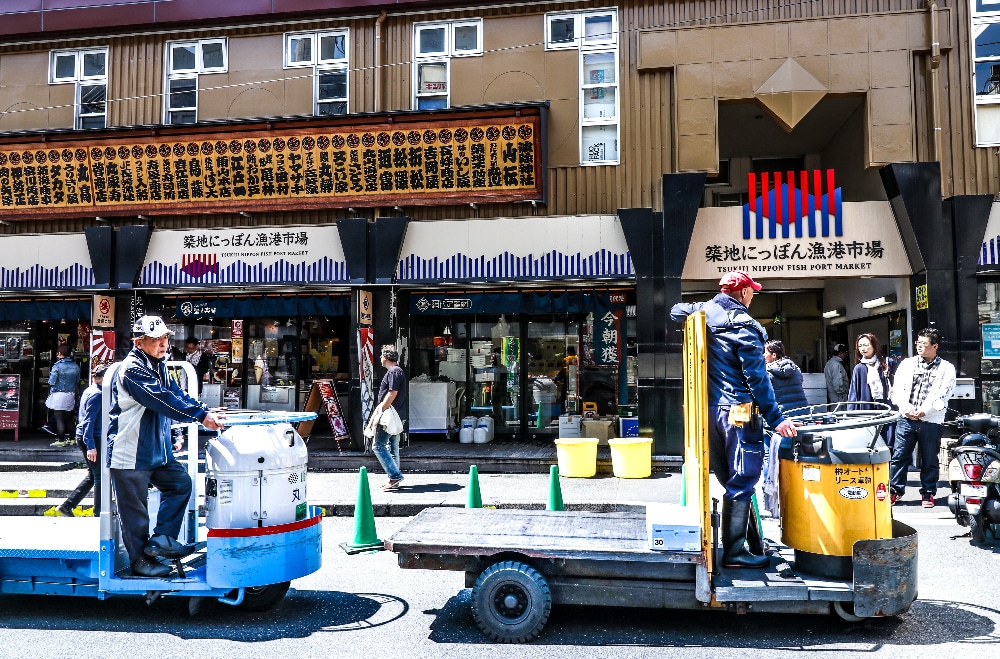
What food do you want to eat the most when you go to Japan? For me, there are countless dishes like oden, sushi, udon, takoyaki, okonomiyaki, etc. Now, do you know what they all have in common?
It’s dashi (fish stock).
While broths around the world are often made by simmering meat or bones of pork, chicken, or beef for a long time, resulting in a high-calorie, cloudy liquid, such as Tonkotsu Ramen, traditional Japanese dashi is different. It contains only the necessary elements by simmering for a short time, which makes it low in calories and clear.
The main ingredients for dashi are bonito flakes and dried sardines, which include inosinic acid, and kombu seaweed, which has glutamic acid. These umami components enhance the natural flavors of vegetables and meat themselves. Therefore, despite its simple taste, dashi has been a crucial key in Japanese cuisine for centuries. As an island nation, Japan is also famous for a variety of fish. To help you better understand Japan’s seafood-loving culture. I’ll introduce the iconic turret trucks at Japan’s largest fish market and explain their importance.
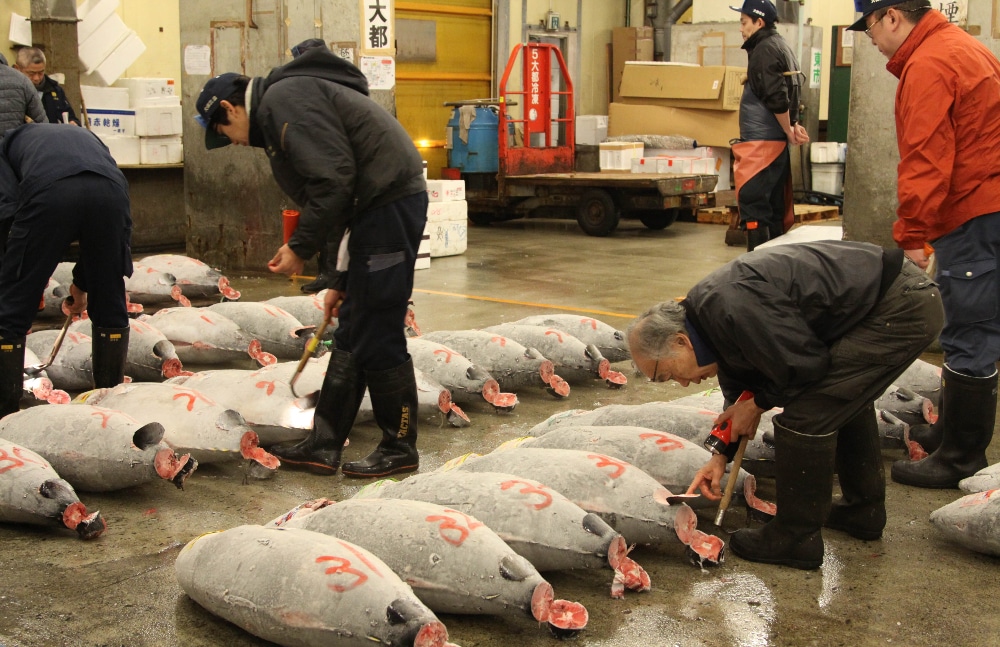
Tuna Auction – Photo Credit: carynn
As I mentioned before, Japanese people love seafood. This is why the Toyosu Market, known as the “kitchen of the Kanto region,” is super bustling even in the early morning as people seek the freshest seafood. Indeed, the turret truck plays a crucial role in the crowded market.
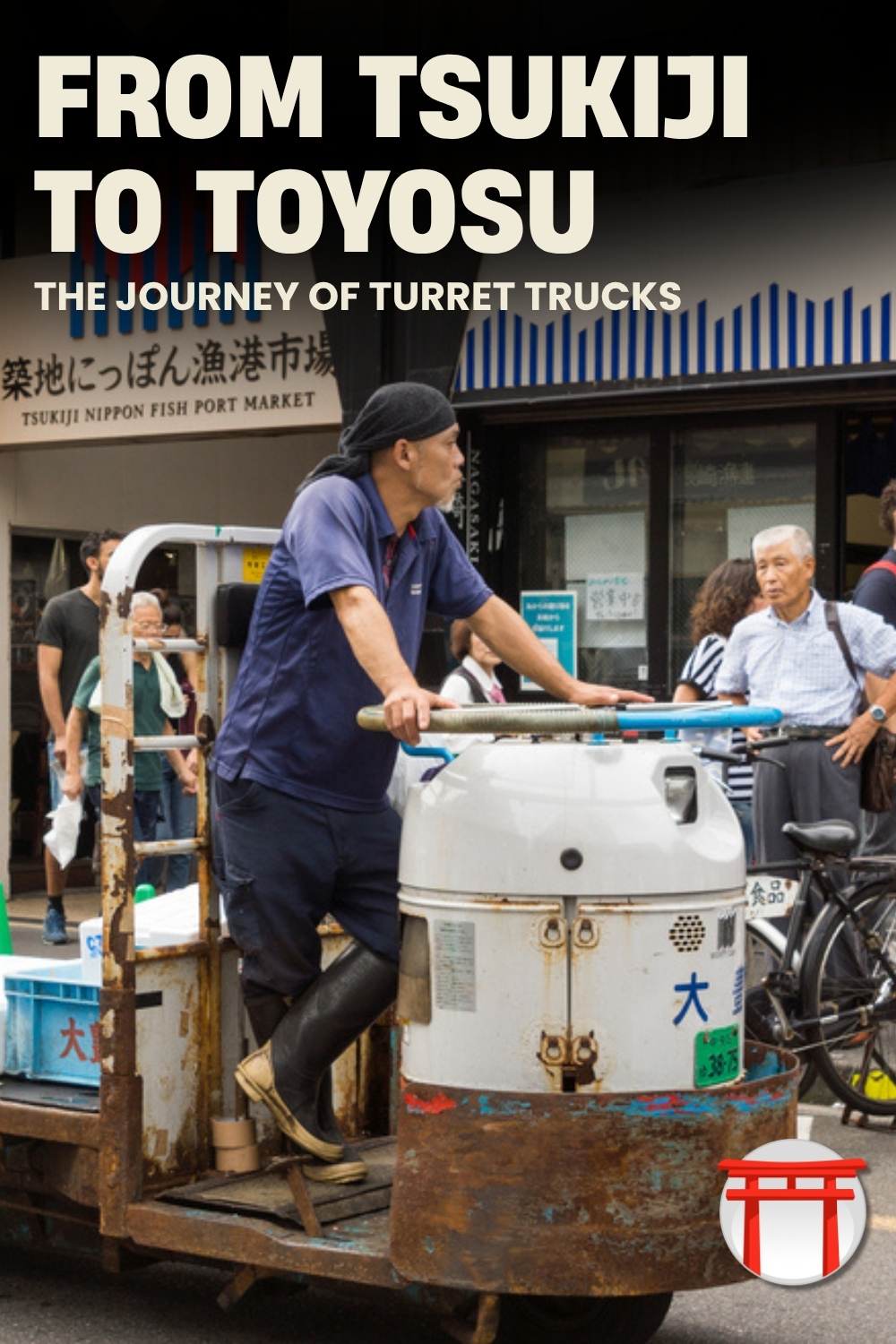
A turret truck is a small vehicle utilized for transporting goods within the market. As the name suggests, the front cylindrical drive unit can rotate 360 degrees, allowing it to move narrow passages easily. In Japan, it is commonly called “Ta-re.” However, among market workers, it’s also known by onomatopoeia like “patapata” or “batabata” due to the sound of the engine. The truck is classified as a small special vehicle, so it can be driven with an ordinary driver’s license, and also, since it has a license plate, you can actually drive it on the street legally. But the top speed is around 15 km/h.
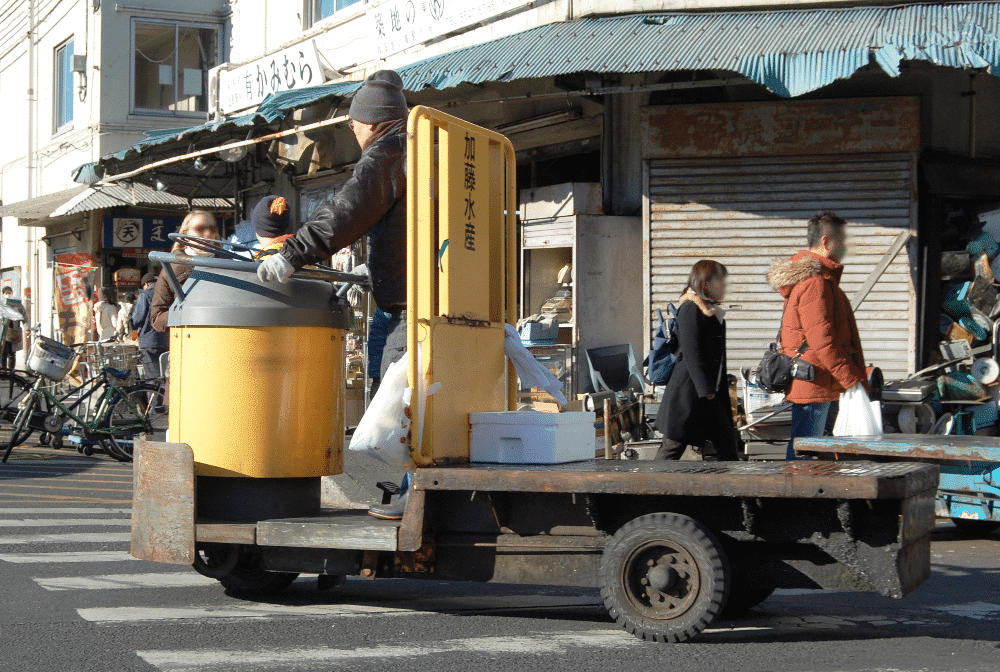
Turret Truck – Photo Credit: フリー素材.com
There are double rings on top of the cylindrical part, and they are important for operation. The thicker ring is the steering wheel, and the thinner ring is the accelerator. Interestingly, squeezing the accelerator ring increases speed while releasing it slows down the vehicle. Then, the brake is located at the foot. As mentioned in this blog, Toyosu Market moved from Tsukiji Market in 2018. Here, you can find a video of turret trucks driving on the road before they opened!
Although a turret truck is about 3 meters long, 1 meter wide, and weighs less than a ton, it can carry 1-2 tons. It became indispensable in the market due to its compact size, maneuverability, and large carrying capacity. Perhaps many of you might worry about the environmental impact of vehicles emitting exhaust fumes near fresh products. But no worries, turret trucks are eco-friendly!!!
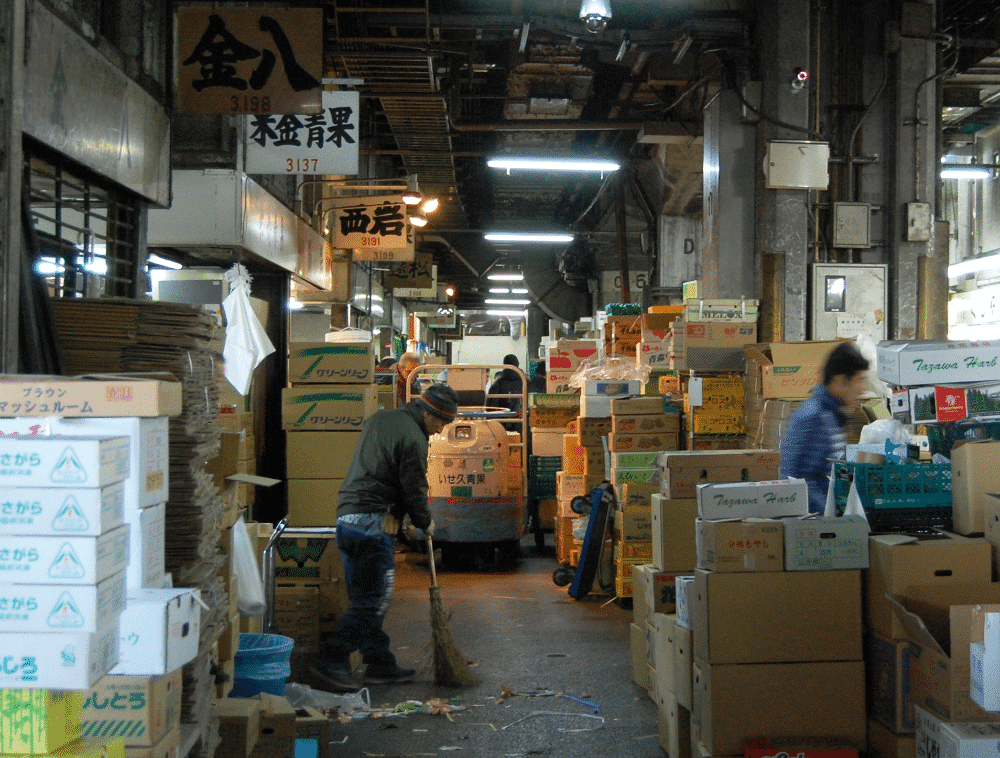
Turret Truck and Narrow Passage – Photo Credit: フリー素材.com
The first turret truck was introduced to the Tsukiji Market in 1956. Initially, it wasn’t popular due to engine noise and safety in packed spaces. However, because they were convenient over handcarts, the turret truck gradually gained a good impression and became the main transport method in Tsukiji by 1990.
As awareness of environmental issues grew, electric turret trucks were adopted in 2000 instead of those running on gasoline. Unfortunately, there were some issues like long charging times, difficulty in securing space for charging stations, and weak performance on inclines. However various manufacturers’ efforts paid off, and these problems have been solved.
For instance, when the Tsukiji market moved to Toyosu, they prepared enough charging spaces, allowing about 2,000 electric turret trucks to be available in the market. As a result, they achieved full electrification of the Toyosu Market.
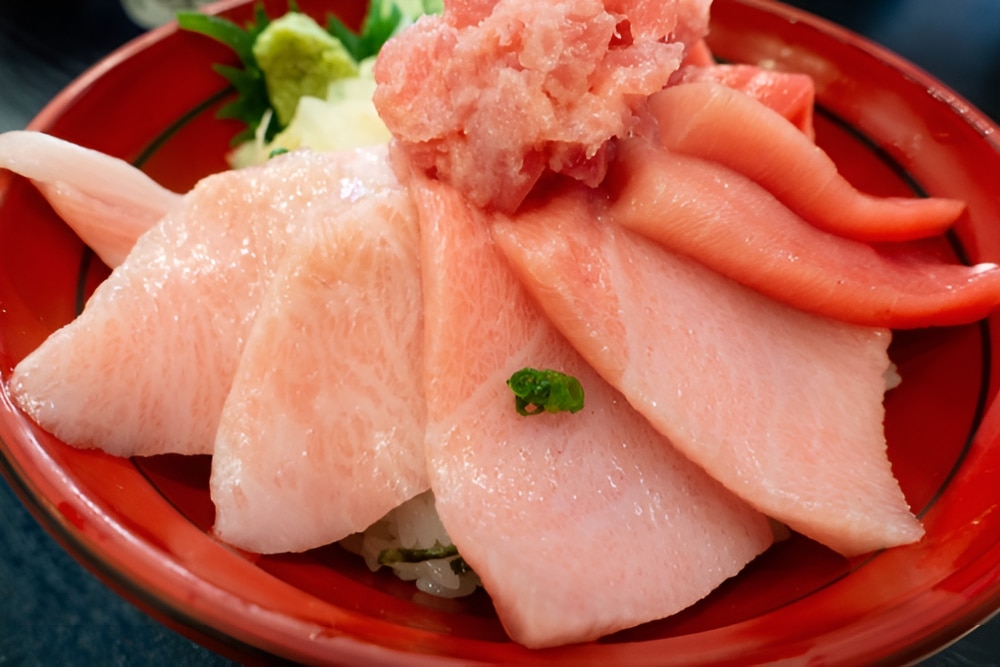
Tuna bowl – Photo Credit: still
Overall, it is essential to appreciate turret trucks, as fresh ingredients can be quickly transported, sold out, and delivered to restaurants and izakayas. Don’t miss visiting Toyosu Market or Tsukiji Outer Market to experience a day in Japan’s seafood industry. In addition, Arigato Travel also offers guided tours of Tsukiji, so be sure to check it out!
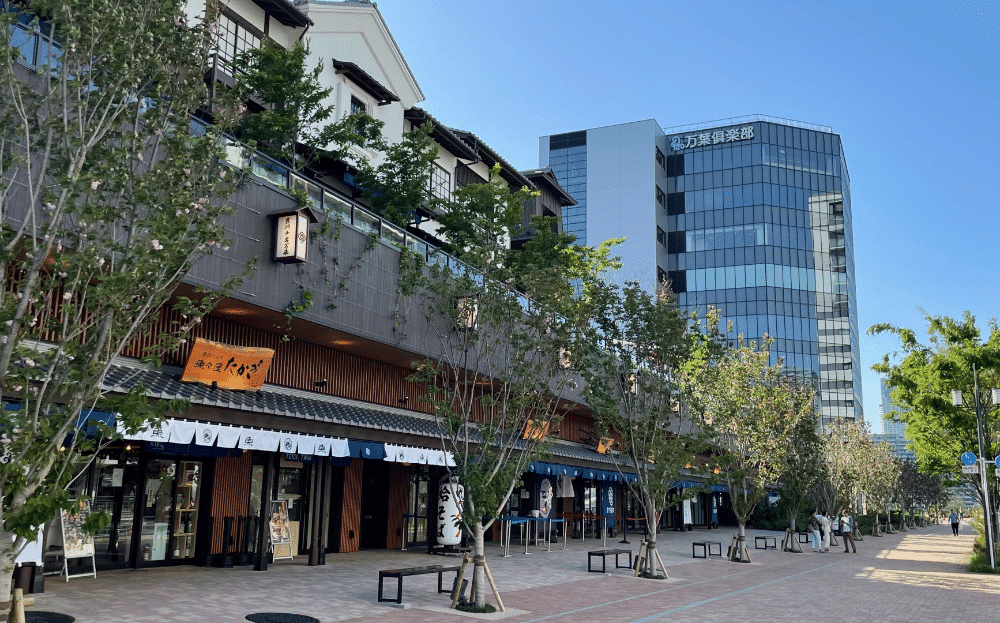
New Senkyaku Banrai Facility – Photo Credit: 効きキウイ
Furthermore, you will find more information on where to try fresh fish, details about Tsukiji and Toyosu markets, and the Senkyaku Banrai Facility in this blog! I hope you will enjoy delicious seafood in Japan!
Featured Photo Credit: The Villa Studio
Plan to visit Japan in the future? Make sure to reach out to our team of expert travel specialists to craft a personalized itinerary just for you!
PIN THIS FOR LATER
Book your pocket wifi now to stay connected through your entire Japan Journey!

Be sure to get the JR Pass to make navigating Japan during your trip that much easier!
YOU MIGHT ALSO LIKE


