A Guide to Festivals and Celebrations Across Japan
Nov 24, 2026
BY Sela Cooper
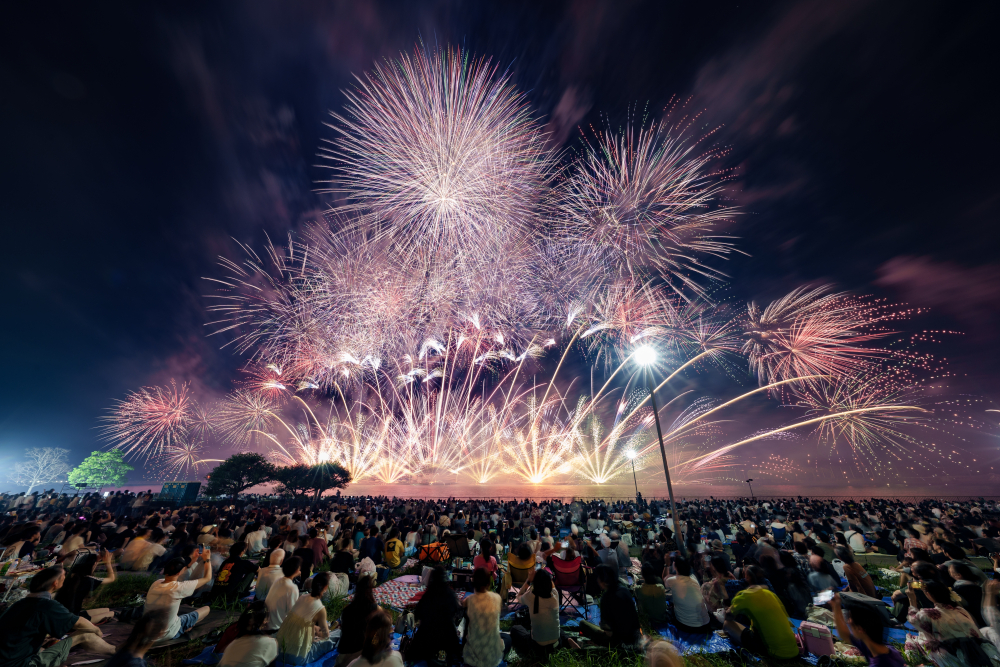
Festivals in Japan are a must-see event for any visit! These traditional celebrations happen all across the nation for a variety of reasons, such as local or seasonal festivities. There is a large range of festivals, so you will certainly find one that sparks your curiosity. Some types of these events vary from coming-of-age ceremonies, summer fireworks, winter snow celebrations, spring flower watching, or fall shrine festivities. No matter what time of year you visit Japan, there will always be a chance that there is a fabulous celebration just around the corner!
Although there are some massive events you should keep an eye out for, such as Tanabata, Fuji Rock, Awa Odori, Summer Sonic, cherry blossom watching (Hanami), Sapporo Snow, and so many more! Many cities will host festivals to celebrate massive holidays such as Tanabata in Tokyo, Kyoto, and many other cities across Japan.
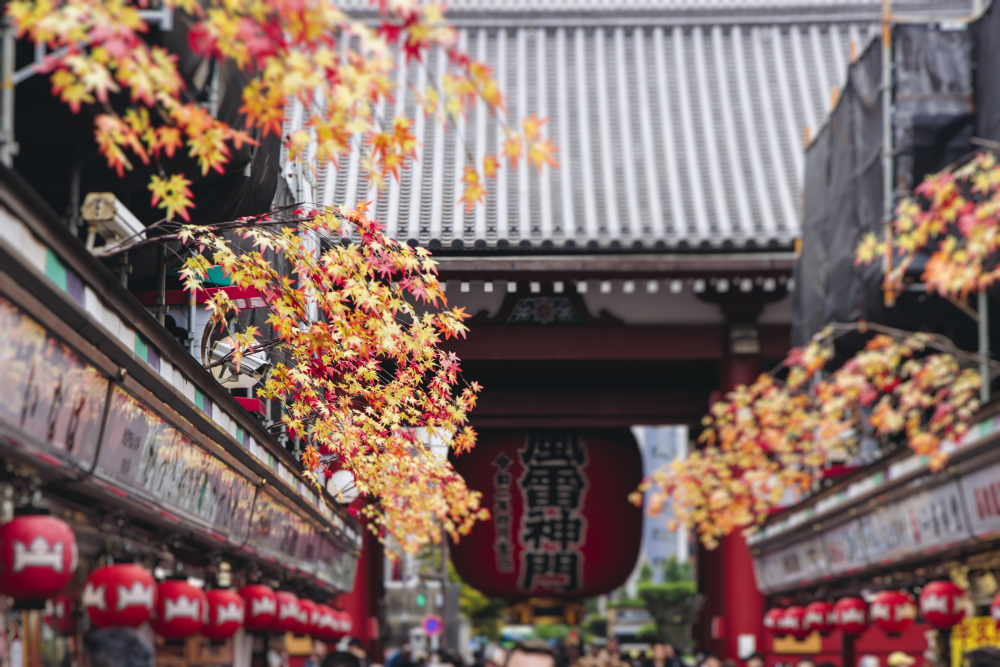
Senso-ji Temple in the Asakusa District decorated with autumn leaves – Photo Credit: Tsuguliev
Just Some of the Great Festivals You Can Find Throughout the Year!
There are plenty of festivals to find throughout the year and across the country. So to help you discover which one is best for you, here is a quick list put together of some of the best and most popular options you can find!
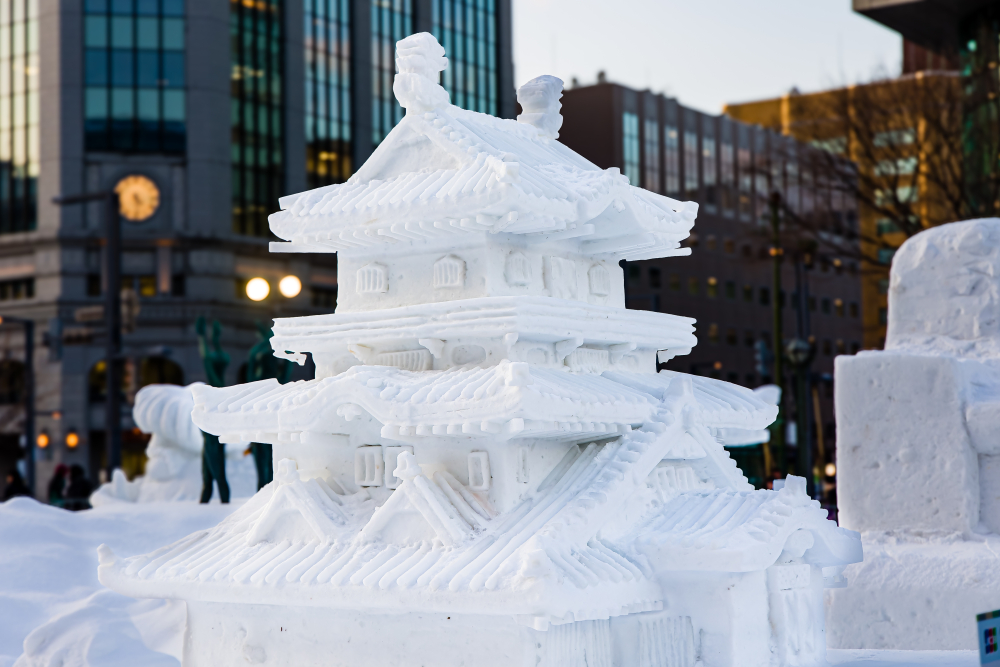
Intricately designed snow sculpture at Sapporo Snow Festival – Photo Credit: Richard Whitcombe
Sapporo Snow Festival
Held for one week during early February in Sapporo, the capital of Hokkaido, the Sapporo Snow Festival is the most popular winter event throughout the country. Originally started by high school students building a couple of snow statues in Odori Park in the 1950s, it has since grown into a phenomenal event for not only Japan but visitors from across the world. The festival features jaw-dropping snow and ice sculptures that manage to attract more than two million visitors each year! If you love the cold, then the Sapporo Snow Festival should be one of the first must-see events on your list for winter this year.
Website: https://www.snowfes.com/en/
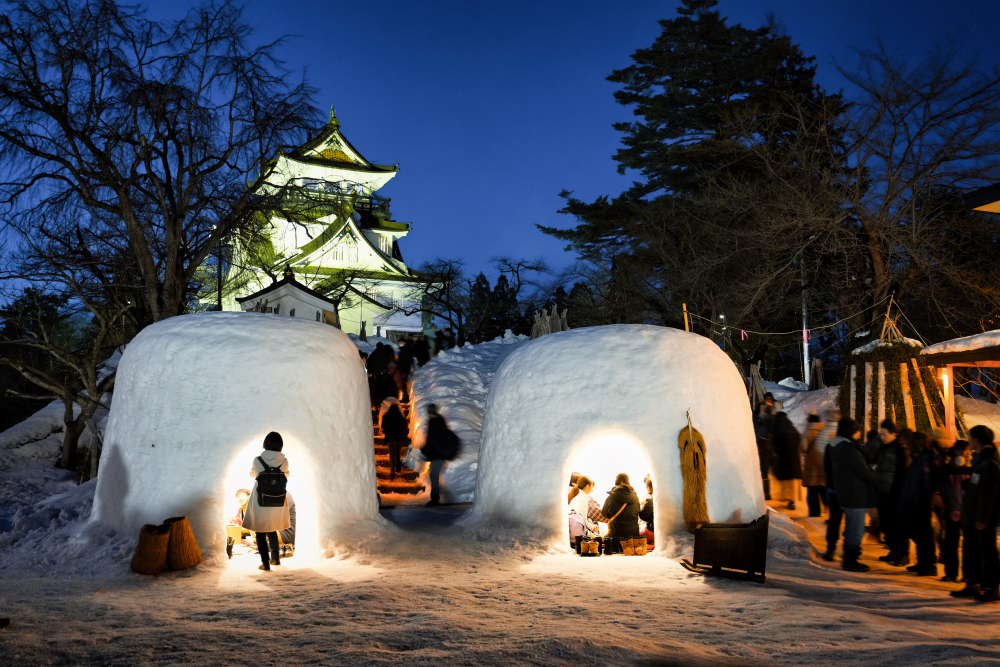
Famous snow huts at Yokote Kamakura Festival – Photo Credit: JC Erskine
Yokote Kamakura Festival
Another great festival for winter, the Yokote Kamakura Festival boasts an astounding history of 450 years, and with good reason. Held annually in Yokote, southeastern Akita, on the 15th and 16th of February, it features these amazing igloo-like snow houses, Kamakura, that are built throughout the city. It contains a snow altar for the water deity and a charcoal brazier for warmth and grilling, and it is common for children to invite the festival’s visitors into the Kamakura on the evening of the festival. Once invited, you will be offered rice cakes and even some amazake, a low- or no-alcohol sake! In return for their kindness, visitors are often expected to make an offering to the altar for the water deity, beckoning for ample water for the coming year. Showcasing such a unique experience, the Yokote Kamakura Festival is a must-visit as you’ll never experience anything like this again!
Website: https://www.yokotekamakura.com/
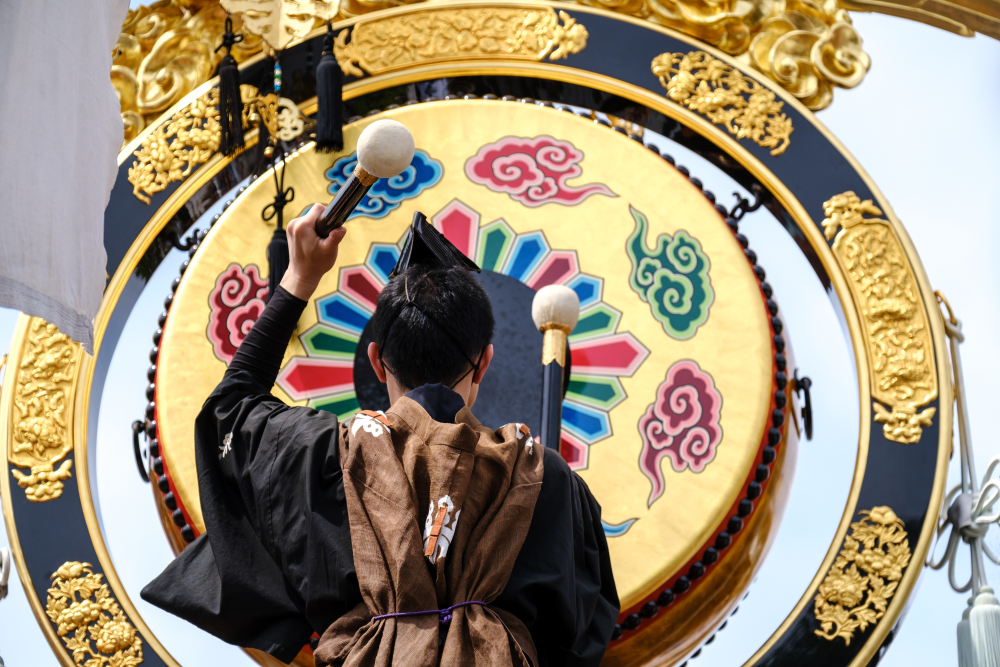
Traditional drummer performing in the Takayama Matsuri – Photo Credit: Federico Vignoli ph
Takayama Matsuri
This incredible festival is known as one of Japan’s most beautiful festivals, alongside Kyoto’s Gion Matsuri and the Chichibu Yomatsuri. Unlike the other festivals mentioned above, this matsuri is split into two separate events, one held in Spring on April 14th and 15th, and the other in Autumn on October 9th and 10th. These separate matsuri are also known as the Sanno Festival and the Hachiman Festival, respectively, as the parades held at both times start from the Hie Shrine, also known as Sanno-sama, and the Hachiman Shrine. The lineup for Spring and Fall is pretty similar, often featuring the same attractions, with probably the biggest one being the parade of festival floats (yatai) from each of the starting shrines through the old town of Takayama. Each festival has its own set of about a dozen floats, which are stored in various storehouses across Takayama’s old town.
For those who think they will be unable to make either of these dates, fear not, as you can still experience these amazing floats any time you make it to Takayama! Some of the floats used in the parade, as well as a set of replicas, are displayed at the Matsuri no Mori Festival Museum all year round.
If you’d like to learn more, as well as see even more Autumn festivals we haven’t been able to cover within this blog, check out our full Autumn Festival article here!
Spring Website: https://www.hidatakayama.or.jp/hidatakayama/matsuri_spring/
Autumn Website: https://www.hidatakayama.or.jp/hidatakayama/matsuri_autumn/
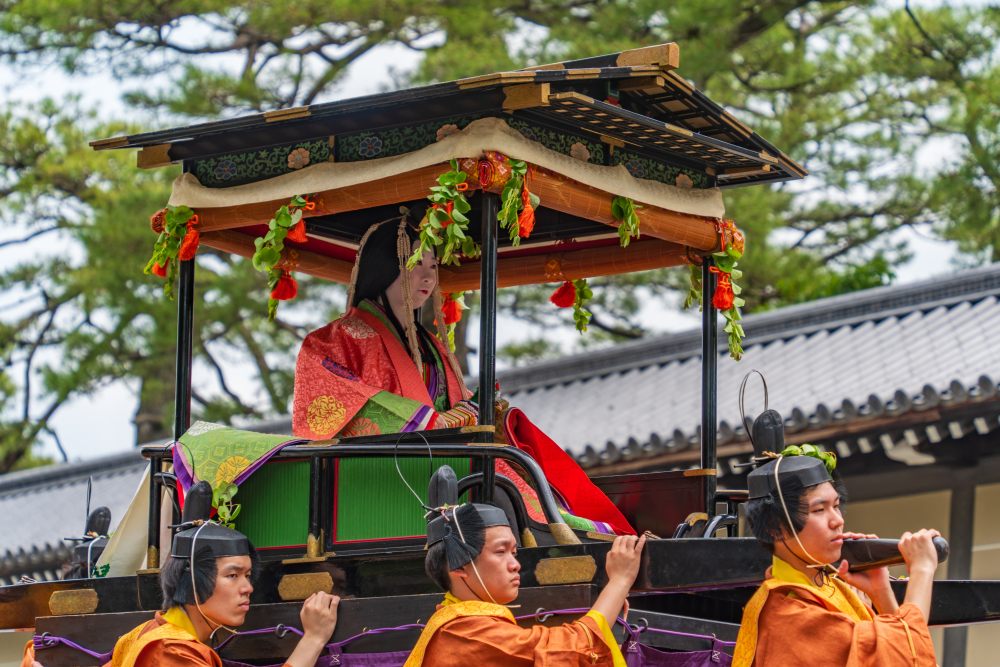
Procession at Aoi Matsuri featuring people in traditional noble clothing – Photo Credit: Mo Wu
Aoi Matsuri
One of Kyoto’s most famous festivals, the Aoi Matsuri is held annually on May 15th and boasts a history that even predates the establishment of Kyoto as Japan’s capital in 794. As with many of the Matsuri found throughout the country, one of the main features is a large parade. Here, though, you will find about 500 people dressed up in Heian Period (794-1185) aristocratic clothes; these participants will walk from the Imperial Palace and end at the Kamo Shrines. The festival gets its name from Hollyhock leaves that are worn by these procession members, as Aoi translates to “Hollyhock” in Japanese.
For a more in-depth look at this unique festival, make sure to check out our blog here!
Website: https://ja.kyoto.travel/event/major/aoi/
Shimogamo Shrine: http://www.shimogamo-jinja.or.jp/english/
Kamigamo Shrine: https://www.kamigamojinja.jp/en/
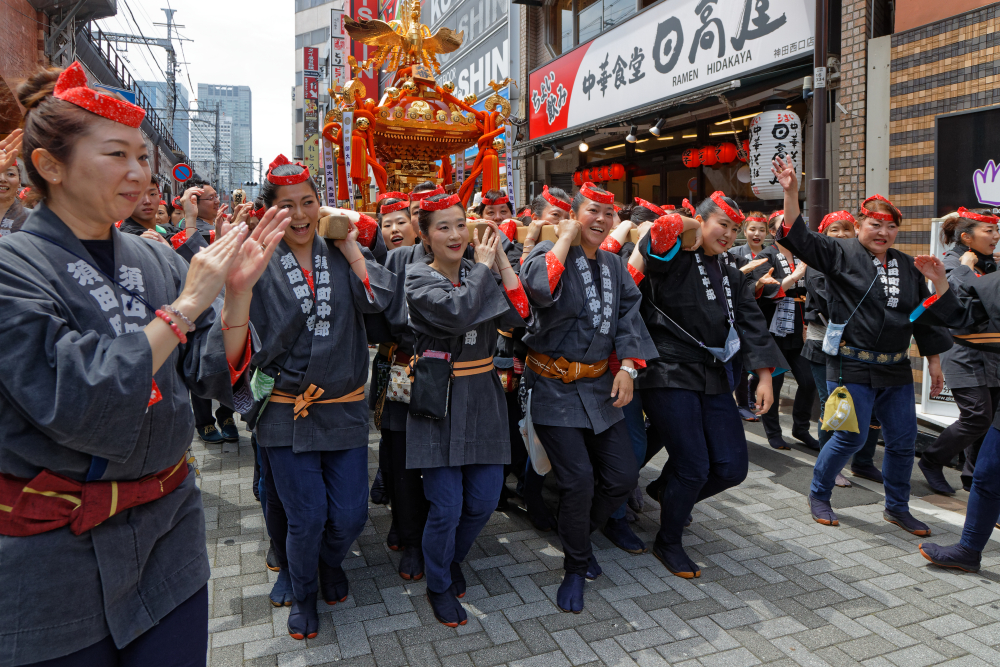
Festival goes parading one of the mikoshi during the Kanda Matsuri – Photo Credit: Pierre Jean Durieu
Kanda Matsuri
Certainly a unique festival, Kanda Matsuri is held in mid-May and is known as one of Tokyo’s three famous festivals, a list that also includes the Sanno Matsuri and the Fukagawa Matsuri. What makes this particular event so special is that the full version of the festival is only ever held in years that end with an odd number. During even-numbered years, a highly simplified version, known as a “shadow festival,” is held that usually does not attract tourists. Although the festivities are meant to last an entire week, the most popular attraction at this matsuri usually happens over the weekend closest to May 15th. The weekend commonly features a day-long procession that proceeds through central Tokyo on the Saturday, and portable shrines (mikoshi) parades within various neighbourhoods held on the Sunday.
As I mentioned above, the full festival is only ever held in odd-numbered years, so please note that the next full Kanda Matsuri is set to be held in 2027.
Website: https://www.kandamyoujin.or.jp/kandamatsuri/
Kanda Myojin Shrine: https://www.kandamyoujin.or.jp/
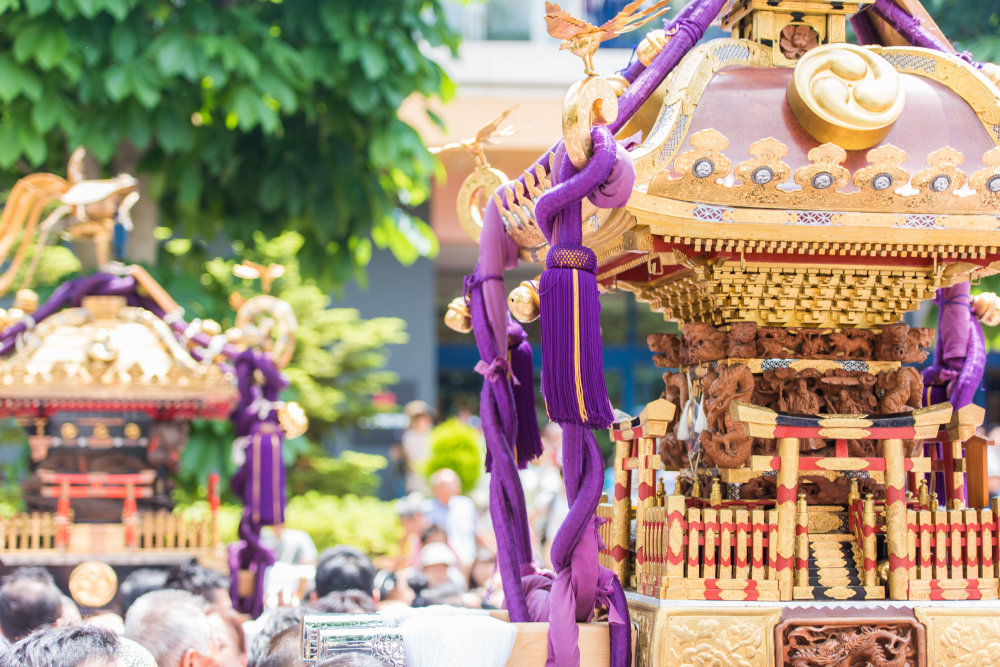
Some of the beautifully decorated mikoshi on parade in the Sanja Matsuri – Photo Credit: T.Yagi
Sanja Matsuri
Set to be held over the third weekend of May in 2027, the Sanja Matsuri is held annually in the Asakusa district in celebration of the three founders of the Sensoji Temple, who are enshrined next door at the Asakusa Shrine. An extremely popular celebration, the festival draws in around two million people over the three days to Asakusa, so people planning to attend should be prepared for a large crowd. The festival begins on Friday with a large procession of priests, city officials, geisha, musicians, and dancers adorned in Edo period costumes known as the Daigyoretsu Parade. A Shinto ceremony and a traditional dance for an abundant harvest and prosperity can also be found on the same day. The next day, Saturday, is set to feature the parades of mikoshi (portable shrines), with around 100 of them being on display from each of the 44 neighbourhoods found in the district. This parade is set to begin at noon, when the shrines are carried to both Sensoji Temple and Asakusa Shrine for blessings before being paraded throughout the district to bring luck and prosperity. Many of the neighbourhoods will also display smaller children’s mikoshi and women’s mikoshi, so make sure to check these out.
Finally, on Sunday at 6 am, hundreds of festival goers who are grouped by their neighbourhoods will wear matching matsuri outfits and gather at Asakusa Shrine in order to watch and possibly carry one of the three main, much larger, portable shrines. With everyone hoping for a chance to help carry one of these mikoshi, it can become quite competitive, and thus spectators are not allowed beyond the entrance for space and safety reasons. Then, after about two hours have passed, they depart from the shrine in different directions to be paraded throughout the district. By the time of nightfall, all three main portable shrines will have passed through all the streets, shopping arcades, and neighbourhoods before finally returning to Asakusa Shrine. Due to its size and importance, this is often considered the main event of the Sanja Matsuri.
Website: https://www.asakusajinja.jp/sanjamatsuri/
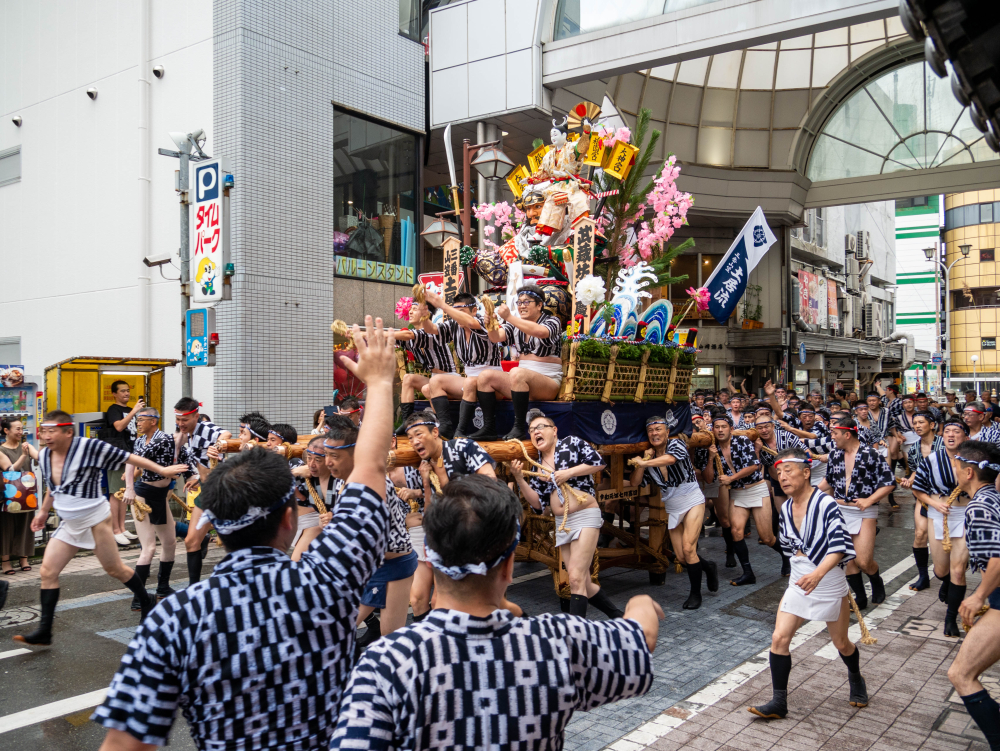
Men racing whilst carrying the heavy floats in Hakata Gion Yamakasa – Photo Credit: traction
Hakata Gion Yamakasa
A truly unique festival, the Hakata Gion Yamakasa takes place every year in the first half of July, ending with an amazing, once-in-a-lifetime experience: a race during the early mornings of July 15th. The race consists of seven of Fukuoka, Hakata’s neighbourhoods competing in pushing smaller-sized, elaborately decorated kakiyama floats on a five-kilometre course throughout the city. These smaller floats usually are about five meters tall and weigh one ton; they don’t have wheels and thus water is continuously spread in front of them to reduce friction and help those competing in the race. Larger kakiyama floats, which are about ten meters tall and weigh over two tons, are displayed at separate points throughout the city from July 1 to 14, preceding the race. From July 10th to the 14th, those who plan to participate will hold several practice runs in order to prepare themselves for the main event. With such a long course, there is ample room to find a place to spectate; however, along the more popular sections, such as the start, many people show up hours in advance and thus can be quite crowded.
Website: https://www.hakatayamakasa.com/
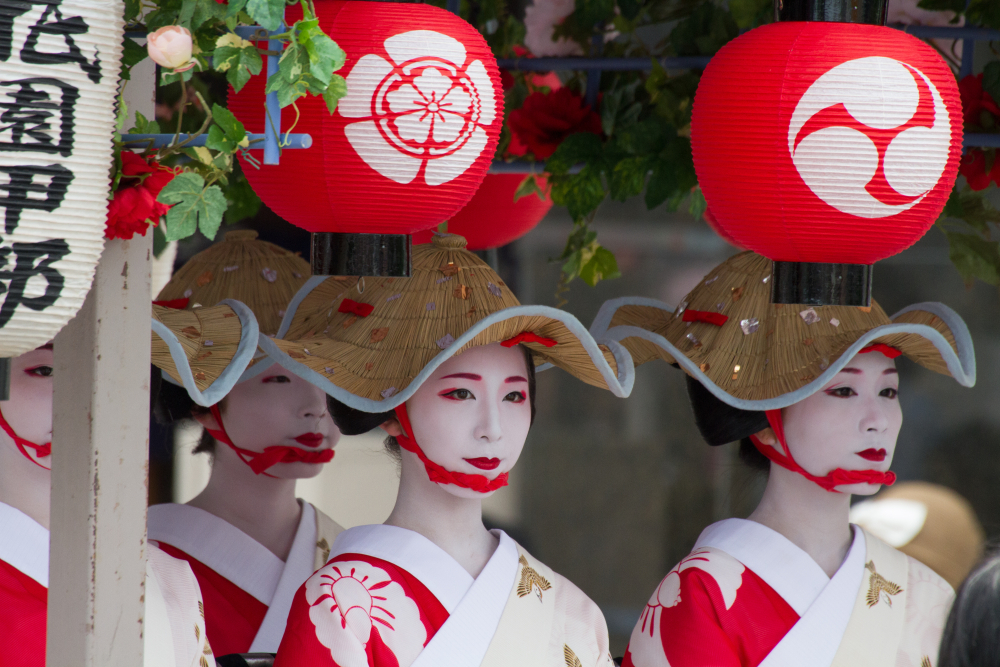
Geisha dressed up and participating in the Gion Matsuri – Photo Credit: kqlsm
Gion Matsuri
Out of all the festivals I have featured today, this is certainly the one that you have probably heard of before, as it is quite far the most famous Matsuri in not just Kyoto, but all of Japan. Taking place over the whole month of July, the Gion Matsuri features a range of incredible events for locals and tourists alike to enjoy. However, the most popular and phenomenal event by far would have to be the Yamaboko Junko, a procession of floats that is truly grand in size and spectacle that normally takes place on July 17th. The name itself refers to the two separate types of floats that can be found in the procession, with 23 “yama” and 10 “hoko”. This latter type is the primary reason behind the true spectacle and impressive state of the event, measuring an incredible 25 meters tall and weighing up to 12 tons! These floats are so big that even the wheels used to pull them are oversized to the point where they are as big as a person. Following a 48-year hiatus, a second procession was reintroduced in 2014, taking place on July 24, so don’t fret if you don’t think you’ll be able to catch the first parade on the 17th.
The evenings that precede the procession, called Yoiyama, also hold plenty of enjoyable festivities for visitors. So if you’re hoping to catch a Gion Matsuri, make sure you keep the Yoiyama in mind just as much as the processions when it comes to this month-long festival!
If you want to learn more about Kyoto’s biggest festival, check out our article on the Gion Matsuri here!
Website: http://www.gionmatsuri.jp/
Yasaka Shrine: https://www.yasaka-jinja.or.jp/en/
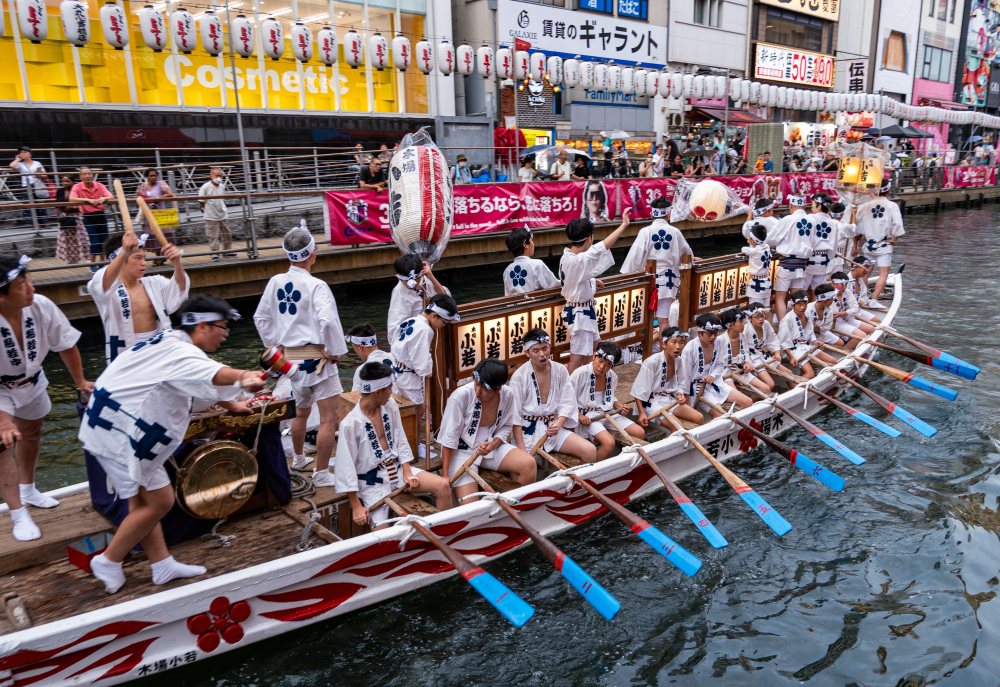
Tenjin Matsuri boat rowing through the Dotonbori Canal – Photo Credit: Marnix Vos
Tenjin Matsuri
Considered one of Japan’s top three festivals, the Tenjin Matsuri is certainly a must-see if you plan on experiencing the greatest festivals the country has to offer. Originally beginning in the 10th century, the matsuri takes place annually across two days in July, the 24th and 25th, with the primary celebrations taking place on the second day. Certainly the most popular events set to take place are both a land procession which migrates into a river procession that, finally, culminates with one of Japan’s infamous fireworks displays. This amazing procession begins at around 15:30 with red-hatted drummers leading the charge from Tenmangu Shrine through to the streets of Osaka. Following its arrival at Okawa River, the many participants and portable shrines are loaded onto elaborately decorated boats that continue the parade up and down the river. It is during this time that the fireworks display begins, and, although not considered one of the most incredible fireworks displays held by the country, the combination of the pyrotechnics and illuminated boats truly makes the end of this fabulous festival a site to behold.
Website: https://osakatemmangu.or.jp/saijireki/tjm
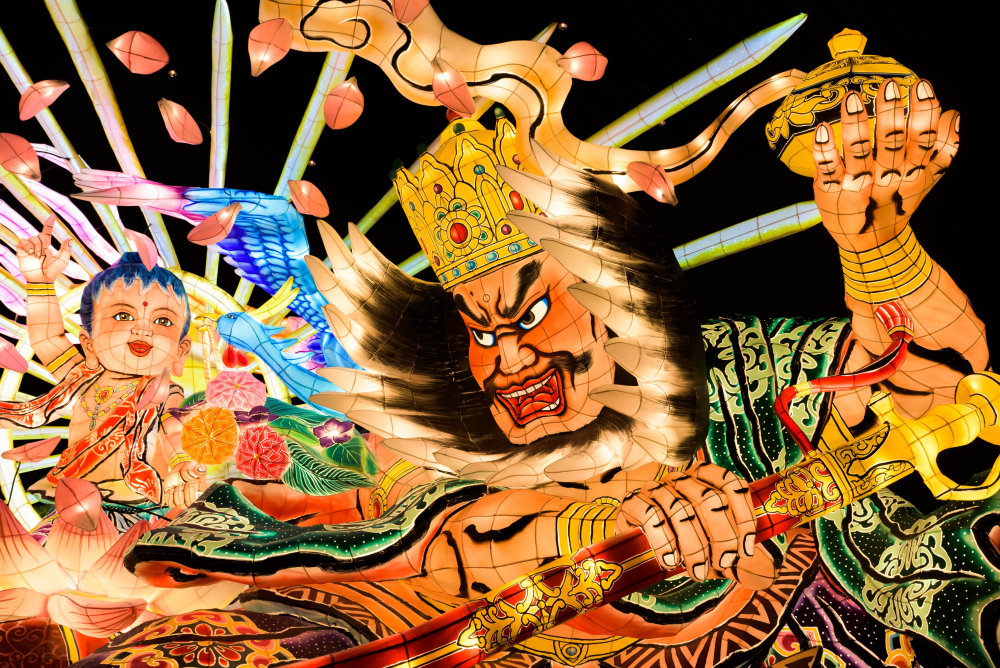
Elaborate lantern float as part of the Nebuta Matsuri – Photo Credit: Takashi Images
Nebuta Matsuri
Nebuta and Neputa, a kind of Tanabata summer festival, are a series of matsuri that are held throughout the towns of Aomori Prefecture, the largest of which is the Nebuta Matsuri of Aomori City. Held annually in August from the 2nd through to the 7th, it is considered one of the three greatest festivals of the Tohoku Region, a list that also includes Akita’s Kanto Matsuri and Sendai’s Tanabata. The highlight of this amazing matsuri is, by far, the daily procession that consists of enormous lantern floats, large taiko drums, musicians, and dancers, which are proudly paraded throughout the downtown area of Aomori. Participation in the events is highly encouraged, with locals and tourists alike being invited to join in on the dancing. You must wear a traditional haneto dancing costume, but don’t worry, these outfits can be easily found at grocery stores and shops for about 7000 yen and at rental stores for about 4000 yen.
For those simply wishing to spectate these incredible processions, don’t worry, there are also plenty of free seats that line the almost three-kilometer-long route that is set to be taken by the parade. Reserved seats can also be purchased from Ticket Pia and local convenience stores, for those who want to guarantee a great spot.
If this quick overview has you wanting to learn more about the Nebuta Matsuri, we have covered this unique and incredible festival in more detail on our blog here!
Website: http://www.nebuta.jp/foreign/english.html
Aomori Fireworks: http://aomorihanabitaikai.jp/
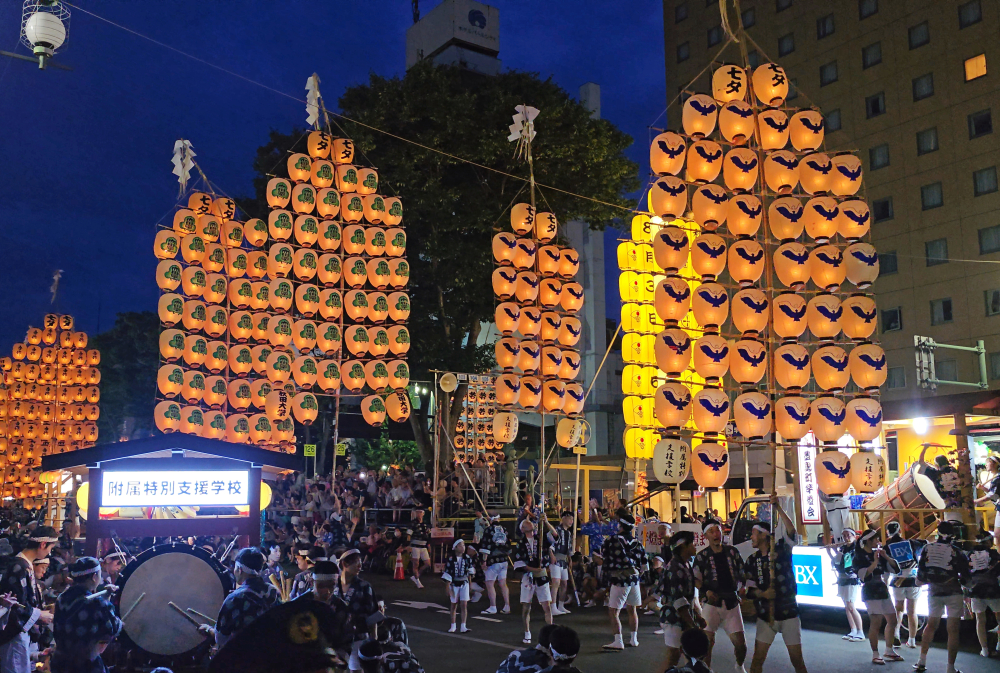
Performers parading the massive kanto paired with traditional music – Photo Credit: naruto4836
Kanto Matsuri
Translated to the Pole Lantern Festival, the Kanto Matsuri is a kind of Tanabata celebration held annually in Akita City from August 3rd through to the 6th, which, as mentioned above, makes up one of the three greatest festivals in the Tohoku Region. Keeping true to its name, what makes this matsuri so unique are the “kanto” (long bamboo poles), where the ends of the poles are elaborately decorated with paper lanterns. These bamboo poles range in size, the largest of which measures 12 meters long, 50 kilograms in weight, and can hold about 46 paper lanterns that are lit with real candles. During the incredibly popular night parades, held each day of the festival, the kanto are skillfully balanced by well-trained performers who parade them throughout the Kanto Odori street. At several points, the performers will stop and, at a given signal, will raise the poles into the air and display their well-honed skills and tricks for spectators to enjoy.
Website: https://www.kantou.gr.jp/english/
Kanto Museum: https://www.city.akita.lg.jp/kanko/kanrenshisetsu/1003644/
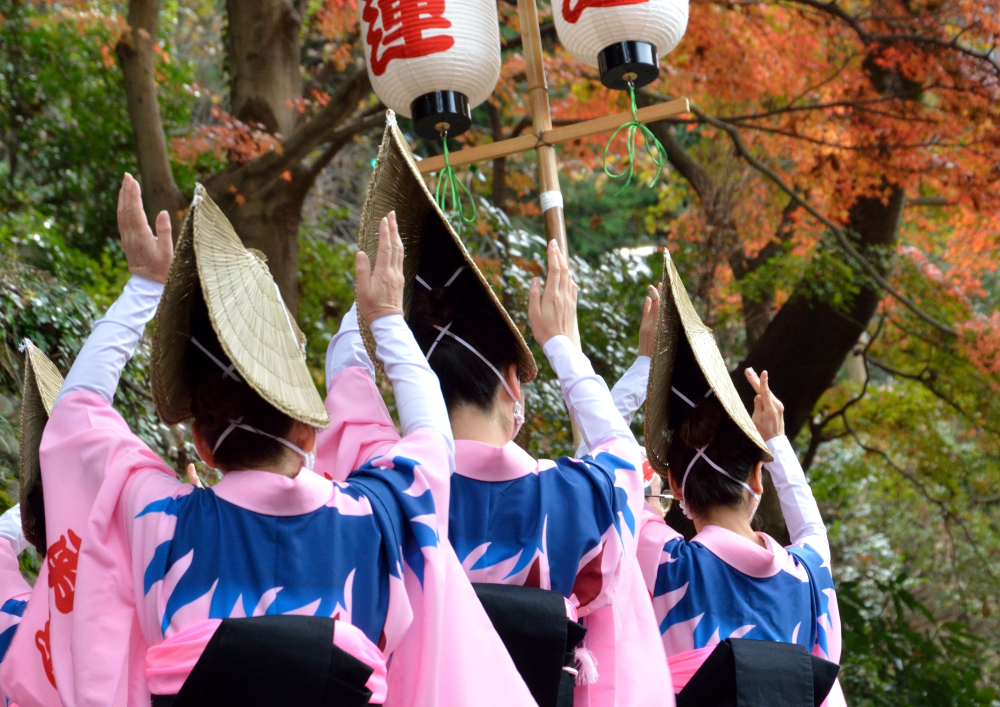
Female Awa Odori performers dancing among early autumn leaves – Photo Credit: High Mountain
Awa Odori
Considered to be the most famous of the many dance festivals found across Japan during Obon season, Tokushima’s Awa Odori takes place on the 12th to 15th of August. With origins dating back 400 years, it is also known as the “Fool’s Dance” and draws in thousands of spectators and participants not only from across the country, but also from across the world. The nickname given to Awa Odori is said to come from the lyrics to a common folk dance song: “Fools dance and fools watch, if both are fools, you might as well dance.” So take a hint from these lyrics and join in on the dancing if you can; if not, then just make sure you enjoy the show.
There are paid stage areas, and tickets can be purchased around July, with pre-sale sometimes beginning in June. These can be found in Ticket Pia or at 7-Eleven convenience stores throughout the country. Ticket prices generally range between 1000 and 15 000 yen, depending on the seat type, for a 90-minute block of performances. If you’re lucky, vacant seats may be left, which can be purchased with same-day tickets that are available for an additional 300 yen.
Website: https://www.awaodorimirai.com/
Awa Odori Kaikan: https://www.awaodori-kaikan.jp/
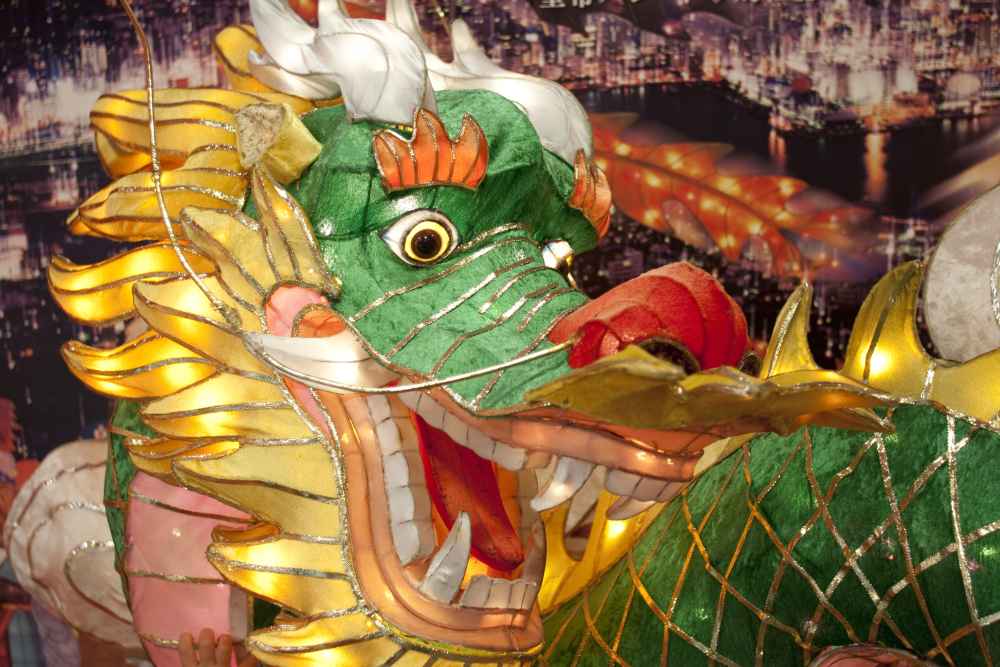
A dragon lantern used as part of the dance during the Nagasaki Kunchi – Photo Credit: KPG-Payless
Nagasaki Kunchi
Held in Nagasaki annually on October 7th to 9th, the Nagasaki Kunchi is a festival dedicated to the Suwa Shrine with a 400-year-long history, and the name of which is said to come from “ku-nichi” (9th day), which is the ninth day of the ninth month of the lunar calendar. This matsuri is unique in the fact that it incorporates the different aspects of other cultures that have been involved in the establishment of the city, specifically both Chinese and Dutch. The most popular events of the festival are, by far, the dance and show performances performed by groups that represent the various districts of Nagasaki. Another fun fact is that each odori-cho (district) will only participate once every seven years, keeping the festival fresh and new to even those who attend every year.
Website: https://nagasaki-kunchi.com/
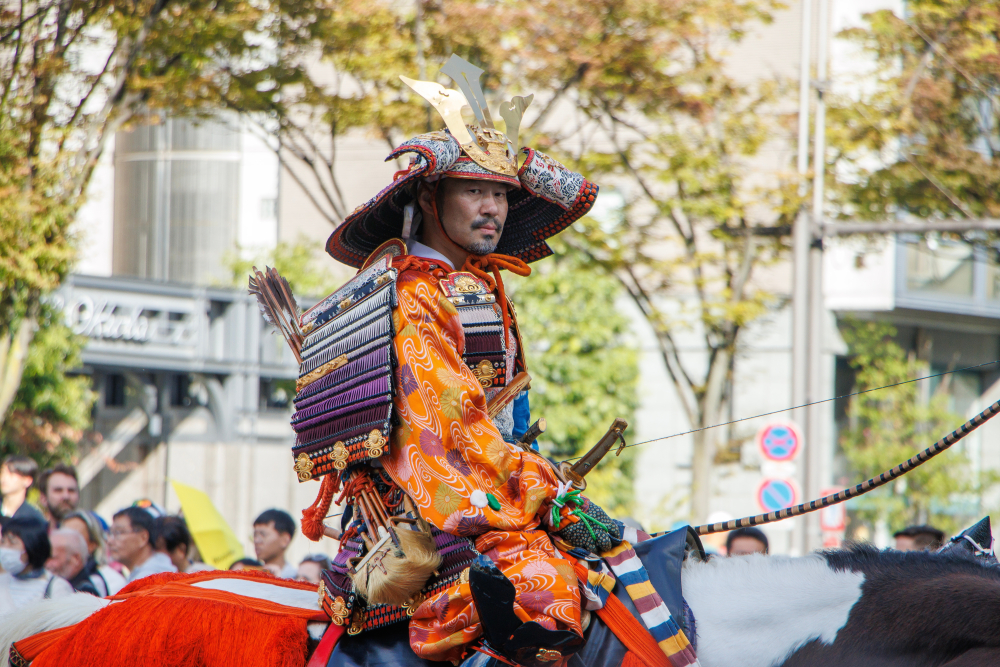
Horseman attending Jidai Matsuri in traditional Samurai attire – Photo Credit: Denis Kabanov
Jidai Matsuri
Held annually on October 22nd, the anniversary of Kyoto’s foundation, the Jidai Matsuri is an amazing celebration which translates to “Festival of Ages.” Although not as old as many of the other festivals on this list, the Jidai Matsuri was established in 1895 alongside the Heian Shrine in order to celebrate Kyoto’s 1100 years as the nation’s capital. As such, the large parade features its 2000 participants donning historically accurate costumes and characters that can be found across these years, with each part of the procession being separated into historical eras, and then sub-separated into themes. The parade begins at the Imperial Palace, making its way along a route that measures about 5 kilometres, ultimately finishing up at Heian Shrine.
Website: https://www.heianjingu.or.jp/
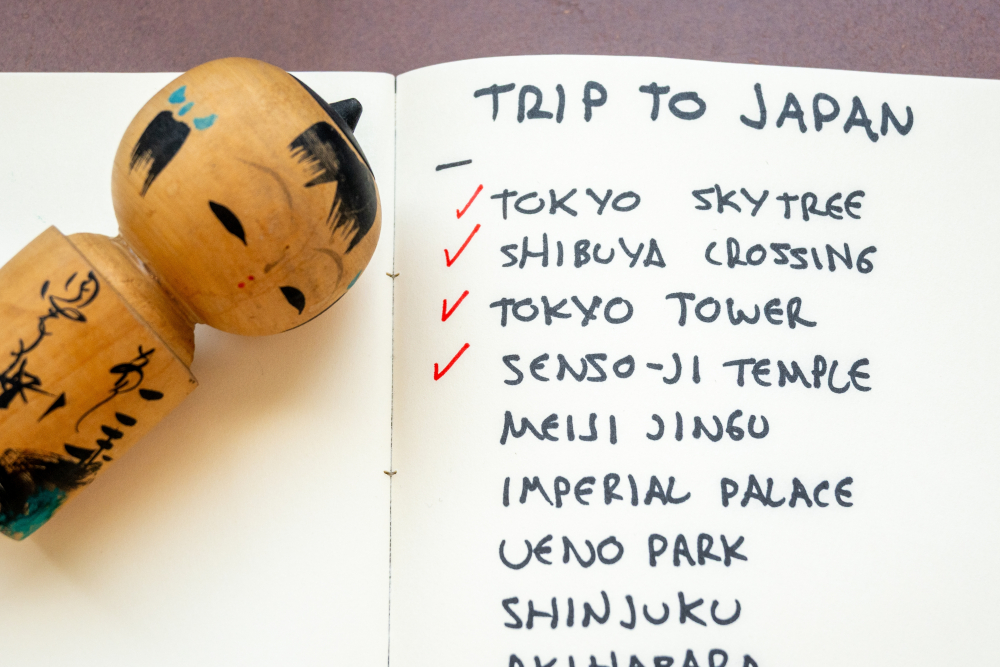
Planning a Japan itinerary – Photo Credit: agustin.photo
Research, Research, Research!
Depending on what city you will be staying in during your visit, there might be a festival close by. When booking your vacation destination, try looking up what time you will be visiting Japan for and plan your location and dates just right to make it to an event you do not want to miss. If you want to see the big, eye-catching events, then summer is your go-to season for festivals! However, if you want a more calm, serene experience, then spring’s beautiful flower celebrations may be a fit for you!
There are also many different types of festivals which you will also need to take into consideration when looking into visiting Japan. These range from Shrine Festivals through to Art Festivals and can cover almost every aspect of Japanese culture.
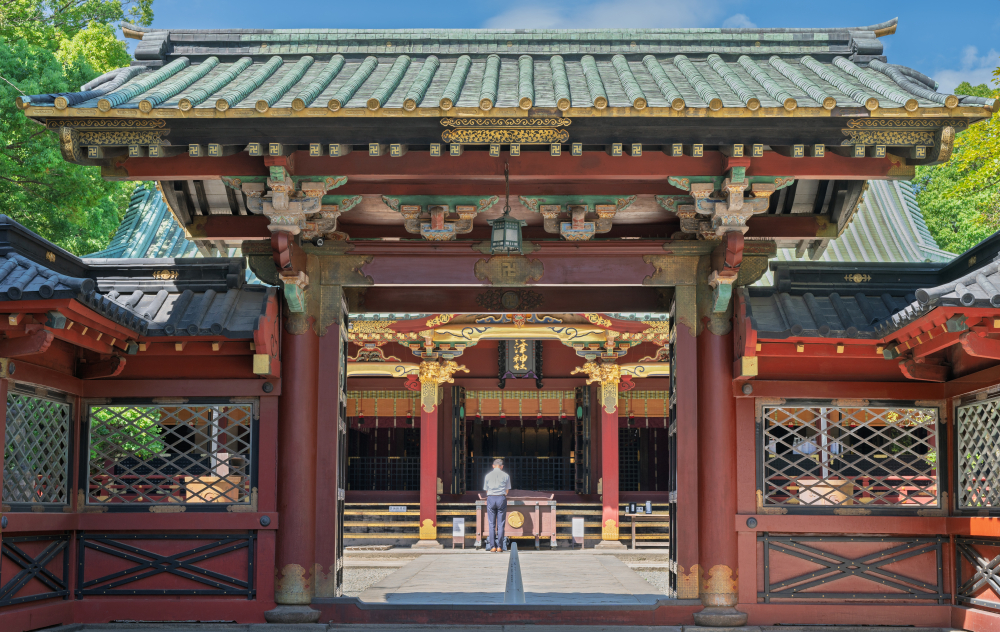
Nezu Shrine is a Shinto Shrine in Tokyo built in 1705 – Photo Credit: Alex Fonda
Shrine Festivals
Also known in Japanese as Matsuri, this particular type of festival is probably the most well-known when people think of “festivals in Japan.” They are typically a modern-day representation of the historic Shinto rituals and harvest celebrations of the past, giving thanks to the shrine’s deity for prosperity and other factors. The most common events that can be found at a Matsuri are the mikoshi parades, which consist of traditionally dressed participants who are more often than not locals. These participants carry an elaborately decorated portable shrine, the mikoshi, throughout a set route, singing and sometimes dancing in unison. Finally, upon reaching the end, the mikoshi is set in its temporary location until it is taken back to the real shrine upon the closure of the festival.
The idea of parading the kami (deity) throughout the town is thought to bring prosperity not only to the local people but their businesses as well. Those who are chosen to carry the mikoshi are typically carefully selected locals of the Shinto faith, so unless you are invited, you should not try to hold the mikoshi. If you are invited, but feel that you are not up to the task, don’t sweat; you are not obliged to accept, and others will definitely understand.
Besides the parade, there are plenty of other amazing things to do when attending a local matsuri. There are plenty of yatai stalls offering street food that is an absolute must-try for those getting into the festival spirit. You should also explore around the shrine grounds, as well as these great food stalls; there are plenty of fun, cute festival games and traditional Japanese dances. Once you’ve had your fill of food and celebrations, head to the pop-up souvenir shop so you can purchase mementos for your friends and family back home, or even for yourself so you never forget the memories you’ve created.
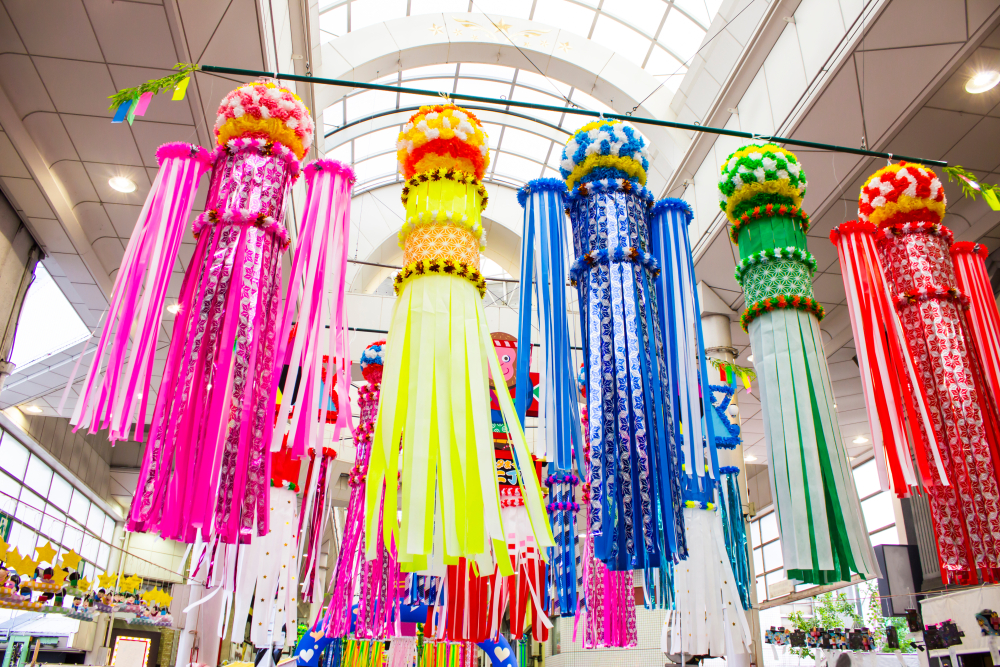
Typical Tanabata decorations, a famous summer celebration – Photo Credit: popokoko-nyanya
Secular Festivals
Alongside the many Shinto religion celebrations of their numerous deities, there are also plenty of non-religious festivals held throughout Japan. These particular events are held in both celebration and commemoration of historical events, cultural and/or seasonal events, and Japanese Public Holidays. In particular, Japanese New Year celebrations are renowned for their extravagant size and grandness in scale. Please note that many of these festivals are unique to specific regions and areas of Japan. So you may want to research the ones you wish to attend in advance so you know exactly where to travel to.
This particular type of festival can be further separated into many sub-categories, with the most notable being Odori-Matsuri (Dance Festivals) and Seasonal Festivals. Odori-Matsuri are extremely popular, featuring phenomenal street parades with Japanese music, costumes, and, of course, amazing dances. They are commonly found during spring and summertime, with the largest and most popular being the Awa Dance Festival we covered earlier, recorded as attracting crowds of more than 1.5 million people.
Seasonal Festivals, on the other hand, were created with the intention of celebrating nature as well as the changes and the beauty that each new season brings. Those found in both spring and summer are simply called matsuri, whilst autumn and winter festivals are known as Aki-Matsuri and Fuyu-Matsuri respectively. Each of these has its own unique features that separate them from each other, best representing every aspect of each season. They are also known for being far more relaxed than their shrine counterparts, lacking much of a schedule and allowing visitors to freely enjoy the beauty. The most popular, and by far the most well-known, seasonal festival is Sakura Matsuri (Cherry Blossom Festival), with the biggest event being Hanami Viewing.

Crowd enjoying a summer music festival – Photo Credit: Melinda Nagy
Japanese Art and Music Festivals
Art plays a major part in Japanese culture, with its own unique styles, such as Ukiyo-e and Manga, developing and fascinating many throughout the country’s history. Galleries can be found throughout the nation, celebrating this history and indulging fans of the many genres. But galleries are not the only places where you can enjoy the amazing world of Japanese art, with festivals, pop-up installations and more appearing across the country for locals and tourists alike.
Similarly, the music scene thrives beyond the concert halls, with massive outdoor festivals that draw both Japanese and international acts, particularly during the vibrant summer months. While Tokyo is a major hub for these events, the energy is felt nationwide. For example, the annual two-day Summer Sonic Festival is a highly anticipated event for rock fans, perfectly showcasing the modern, high-energy side of Japan’s festival culture. If you’re eager to discover more musical celebrations and their upcoming dates, be sure to check out our full blog here.
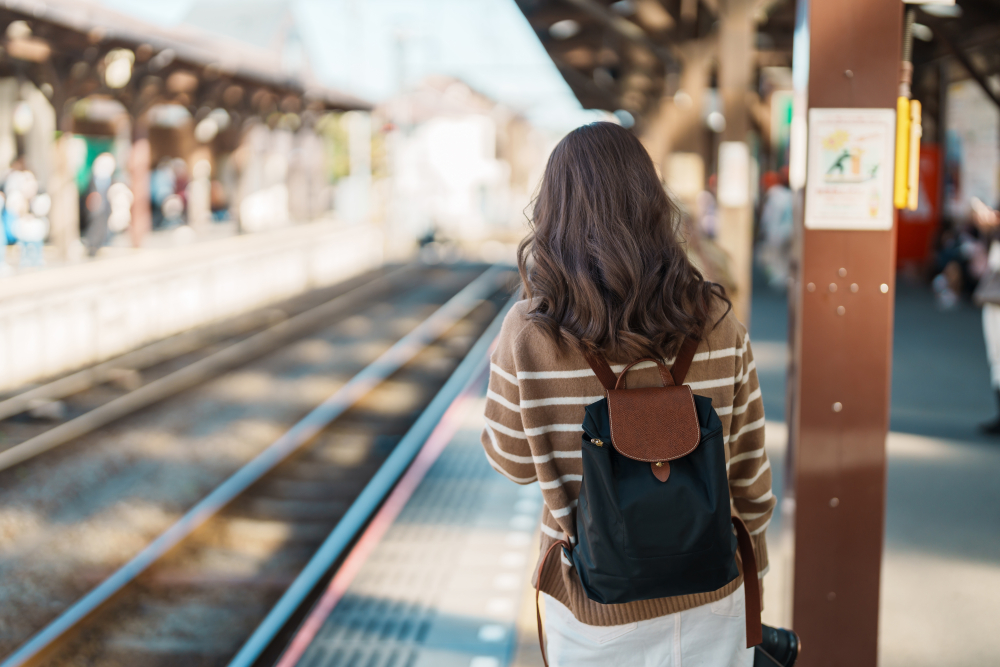
Tourist waiting for train to arrive – Photo Credit: Jo Panuwat D
How to Get to the Festival
Japan is a wide country with a vast public transit system of trains and buses that can help you get to any corner of the country with a little walking. However, to use the trains, you need to purchase a ticket or get a reloadable card where you can drop in some train money.
So next, after picking your festival destination, plan your route to their main location, more than likely a street, with your favourite online map system. For example, Google Maps is a good resource on which station to get on and off of. A bonus tip is to plan for extra time if you have an event you don’t want to miss. Also, be sure to explore the area around the main street for more festivities. It is common for the primary location that is advertised to be full of vendors for food and other things, but in some celebrations there might be a shrine nearby that is hosting fish catching or other festive games for people to enjoy! Cities, both rural and urban, have a charm to their design; take the time to get to know the city you are in and support some local businesses at your desired event.
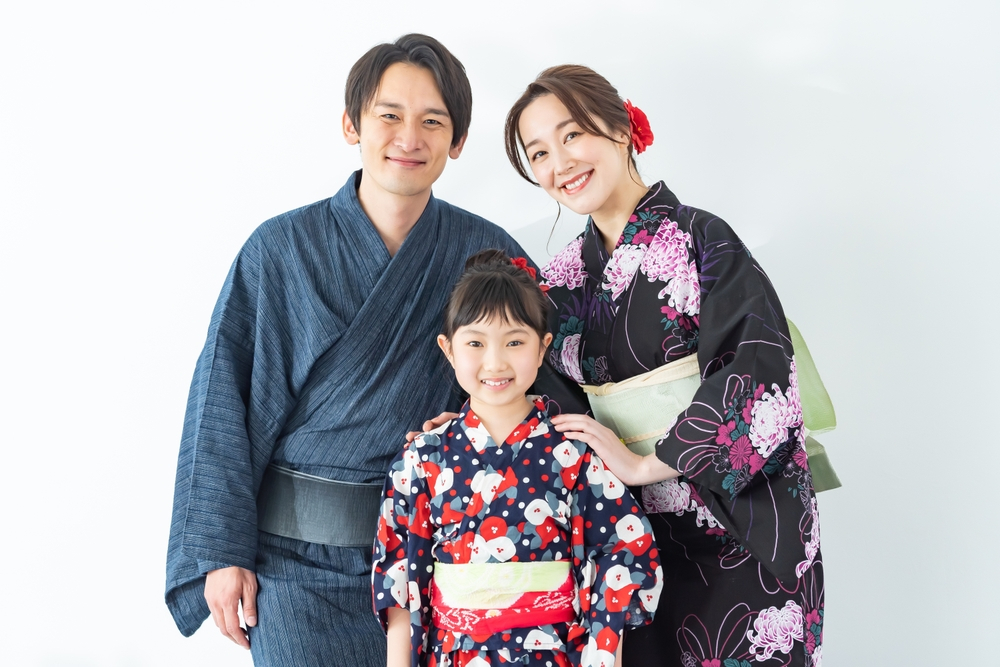
Family wearing yukata, the summer version of kimono – Photo Credit: chaponta
What to Wear
We suggest that you wear whatever clothing you feel most comfortable traveling in. Each festival is a unique experience, so there is no wrong outfit to wear, though keep in mind the season of your visit and your intended festival. Japan’s heat is nothing to overlook, so dress lightly in the summer and, to help with the colder months, cozy up with thick layers for the winter. In large cities like Tokyo, you’re definitely going to want good walking shoes so you don’t wear yourself out moving between stations and destinations!
Many locals embrace the festive spirit by wearing traditional outfits like kimonos or yukatas. If you’re wondering which to choose, traditional kimonos feature multiple layers that can help shelter you from harsh winters and even colder evenings during the autumn, while yukatas are lightweight, single-layer “summer kimonos” perfect for a hot festival. But are you able to wear them as a tourist? In short, yes, but only if you wear them respectfully! While there is no strict dress code, being mindful of how you tie your garment is appreciated. To complete the look, you might want to try walking around in classic wooden geta shoes, designed to keep feet away from the elements, or choose flatter zori sandals if you find the platform heels a bit of a balancing act.
If you’re interested in trying one for yourself, you can book a rental or even purchase your own set! Between June and September, department stores like Don Quixote and UNIQLO sell yukata sets for around 4,000 yen, while second-hand stores offer budget-friendly options year-round. For an easy shopping experience in Tokyo, Oriental Bazaar offers a huge range with multilingual signs. Whether you rent or buy, matching your colors to the season adds that extra touch of authenticity. Pick the style that makes you and your loved ones happiest, and create even more wonderful memories as you enrich yourself in Japan’s vibrant festival culture!
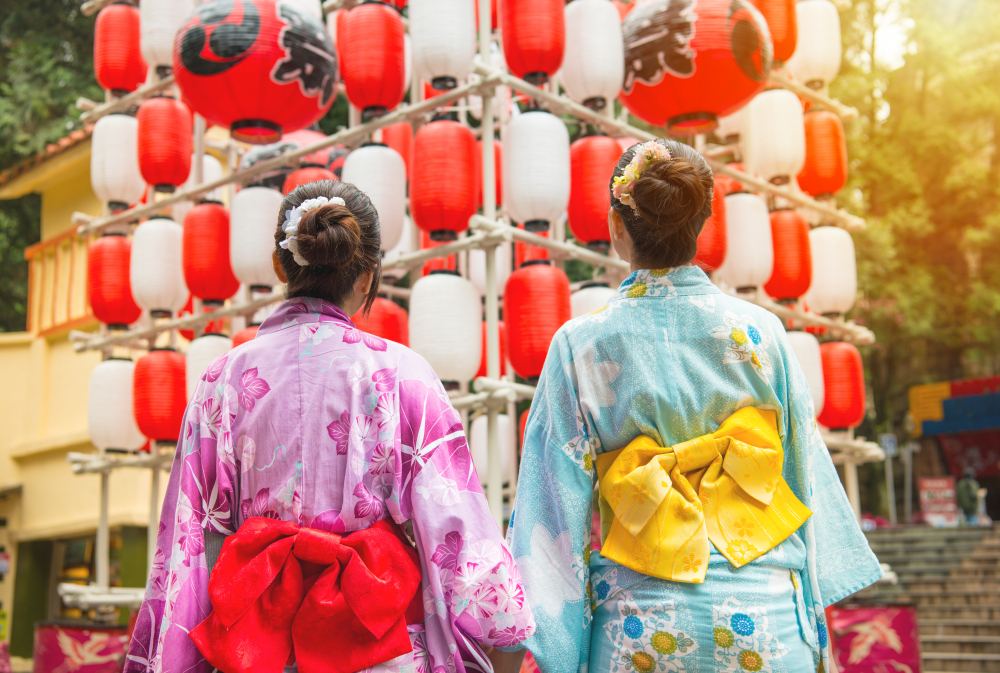
Friends in traditional dress enjoying lantern decoration at a festival – Photo Credit: PR Image Factory
Finally, Have Fun, Be Safe, Watch Out for the Crowds, and Prepare for a Cultural Adventure!
At the end of it all, whilst amongst the crowds, we highly suggest you take a second to look around and move with the flow of how people are moving, dressing, and acting. There are plenty of places to stop, shop, and eat at, so take your time to enjoy the atmosphere and the festivities. Everyone is there to have fun too, so be sure to enjoy yourself while being mindful of those around you.
Whether you are drawn to the grand spectacle of Japan’s world-famous festivals or the quiet charm of a local neighborhood gathering, there is no better way to connect with the heart of this beautiful country. We encourage you to embrace the spontaneity of Japanese festival culture, let curiosity lead you down festive streets, savor every moment of the celebration, and create memories that will last a lifetime. Happy exploring!
Featured Photo Credit: Precious_Place
If you want to explore Japan AS a local WITH a local, make sure to book a tour with us at the beginning of your trip to get the best advice and tips!
Book your pocket wifi now to stay connected through your entire Japan Journey!

Be sure to get the JR Pass to make navigating Japan during your trip that much easier!
YOU MIGHT ALSO LIKE