Decoding Regional Japan: An Interview with YamaTrips
Aug 8, 2026
BY Kristian Robinson

When many people plan a trip to Japan, their minds usually focus on the vast skyline and hidden alleys of Tokyo or the temples and shrines of Kyoto. But a growing community of travelers is looking to experience the country’s extensive wilderness and small, mountain-and-coastal communities. Enter YamaTrips. Founded in 2023 and now an official partner of Japan’s National Parks, this innovative team helps independent travelers navigate the complex, beautiful world of regional Japan.
Through deep-dive digital guides, curated itineraries, and insightful media, they decode local customs, regional navigation, and the vital balance between human communities and nature. From hiking pristine national parks to staying in authentic, affordable countryside ryokan, YamaTrips equips you with the local insights needed to explore regional Japan respectfully and confidently.
We sat down with the CEO, Tony Xia Chuan, to learn how he helps travelers bypass overtourism and experience the authentic, everyday culture of Japan’s stunning rural regions.
Hi Tony, could you share a bit about your personal background and what your day-to-day role looks like at YamaTrips?
Hi, I am Tony, the CEO and Founder of YamaTrips. Actually, my relationship with Japan started before I could even speak the language. I was six years old when my family first brought me here from China, and I remember genuinely despising Japan. Growing up on the mainland, the propaganda had painted Japanese people as something close to demons. What I found instead was the opposite of everything I had been told. The school principal personally asked whether it would be okay to play the national anthem on Constitution Day — out of respect for me. These gestures made me fall in love with the country.
My childhood eventually took me from Japan to Canada, where I became a Canadian citizen. But Japan kept calling. After university, I returned and spent five years working under the JET Programme in rural Mie Prefecture, helping local governments build international relationships from the ground up. That was followed by five years in Tokyo at major corporations like LINE Corporation and MUJI, learning how business actually operates in Japan at scale.
In 2023, I received permanent residency, which felt like the green light I had been waiting for. I left my corporate job and launched YamaTrips with a clear mission: to bridge Japan and the world in meaningful ways.
Today, in 2026, our team is still small, but our reach is not. We are an official partner of Japan’s National Parks — one of the youngest among the 155 corporations holding that designation. We are headquartered in Mie and also based in Tokyo, which allows us to stay genuinely connected to the rural communities we represent.
As for my daily life, it is chaotic in the best possible way. I am the face of the company — I appear in our videos, I meet with central government officials and company representatives, I give lectures at tourism conferences, and I train local guides.
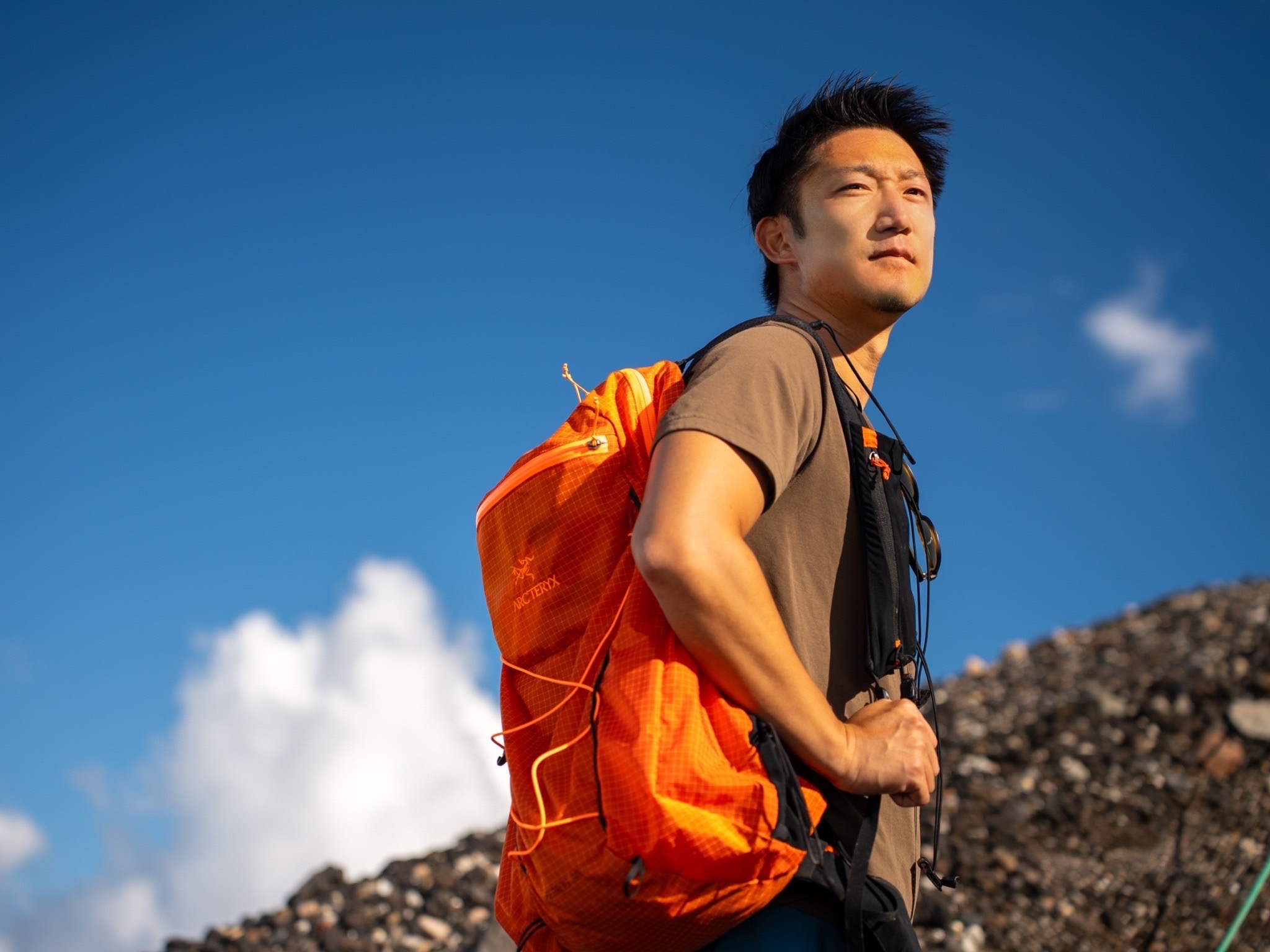
Tony looking out over the mountain landscape while hiking – YamaTrips
You started out leading small group hikes before building YamaTrips into what it is today. What were the early days like, and when did you realize this could become a full-scale travel company?
The early days were tough. When I arrived in Mie Prefecture through the JET Programme back in 2014, I was placed in a shrinking town of roughly 15,000 people. These communities had extraordinary culture, food, landscapes, and people, and almost no one was telling their story in a language the world could hear.
I spent the next nine years honing every skill I could — language, networking, research, planning — and visited over 500 destinations across Japan firsthand before I ever started posting on social media. For at least the first two years, I shared everything for free. I emptied my savings, sold my stocks, and liquidated my crypto. It was all-in. Do or die.
With all of that experience behind me, I started sharing the real Japan — not the polished, packaged version, but the real one. The result? Travelers who had only ever thought about Tokyo or Kyoto were arriving in Mie, in Yamanashi, in places that had never appeared on any tourist map.
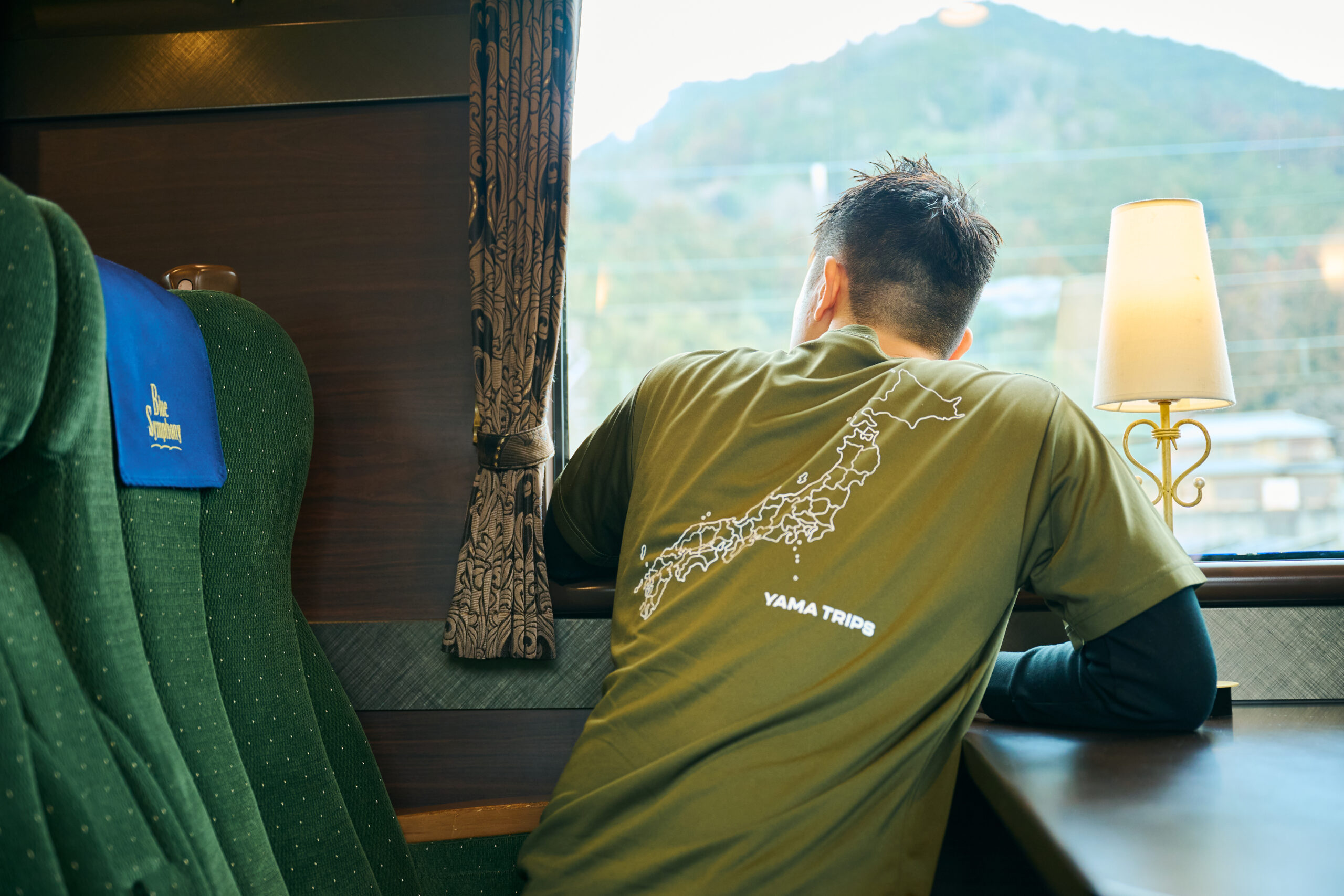
Tony wearing a YamaTrips t-shirt on a train – Photo Credit: YamaTrips
There is a major conversation right now around “overtourism” in Japan’s major cities. How does YamaTrips define its mission in countering this, and what is your philosophy when choosing which regional communities to highlight?
When I started YamaTrips, I made one hard rule: we do not promote places that don’t want us there. Period. It sounds simple, but in this industry, it’s radical. Money is made where people already go. You start a business in Tokyo where there’s already traffic and making money is easy.
But is it meaningful?
By 2040, more than 800 destinations across Japan are at risk of fading out entirely. The central government is doing its part, sending out subsidies and dispatching experts like myself to help regions revitalize. But ultimately, it is up to the people there to decide their own future.
To be or not to be.
That is not my decision to make. I only extend my hand to those who reach out, who are fully committed, and who are willing to go all-in — just like I did. I have no remorse for the places that choose to quietly disappear. That is a bold choice, and it is a valid one. Every community has its own culture, its own pride, and its own right to choose.
However, what I have learned is that the gap between wanting help and being ready for it is enormous. People message me on Instagram all the time saying they want to put their town on the global radar. But when things get serious — when it’s time to convince the local government, stand in front of stakeholders, file the paperwork, and make real commitments — ninety percent of them fold.
The ten percent who don’t? Those are the places where we build something extraordinary together.
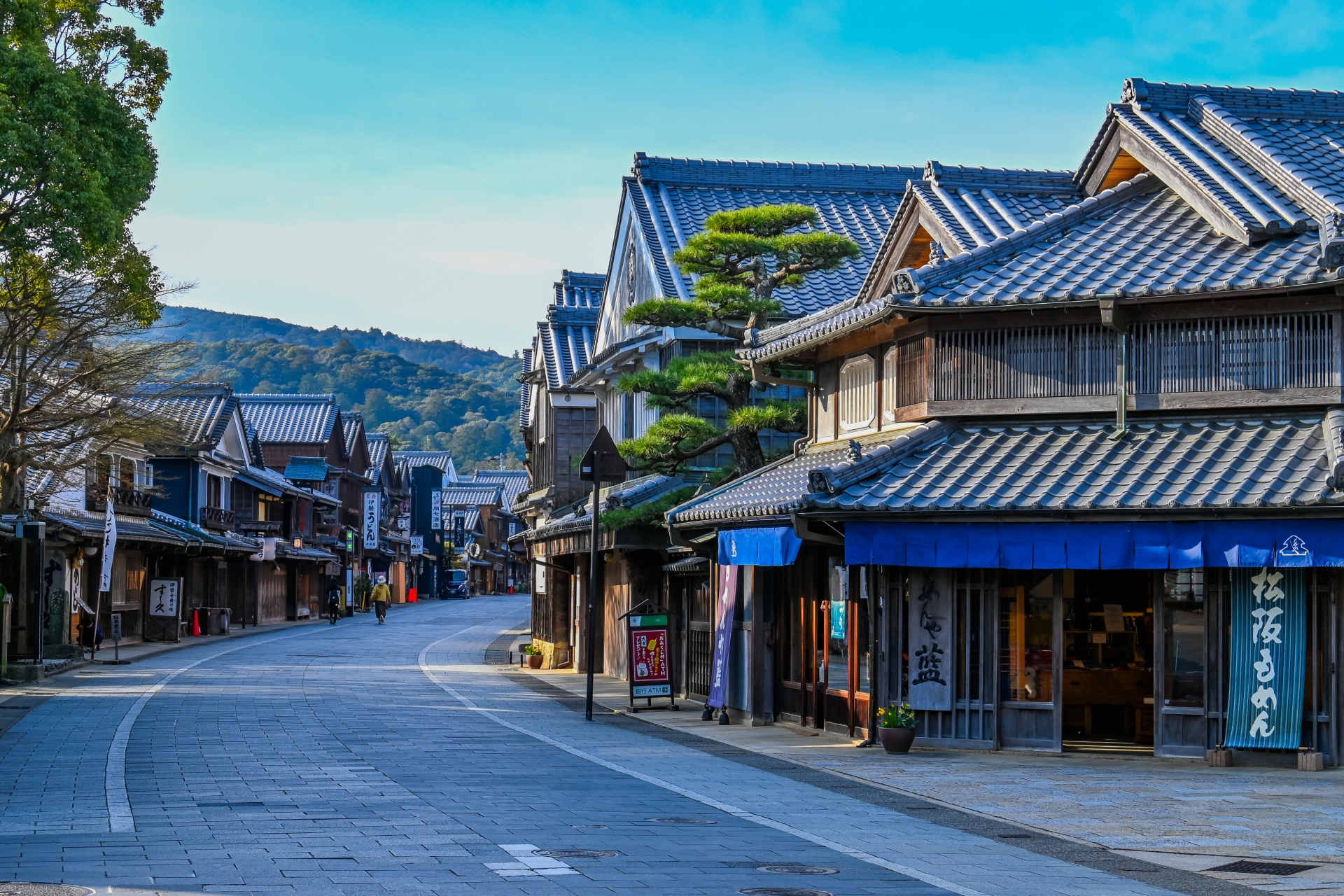
One of the small towns explored during a Yamatrips itinerary – Photo Credit: YamaTrips
Your signature digital toolkits, like the Japan Explorer guide, operate on a lifetime-access model. How does this system work for travelers planning a trip, and what elements are included?
The Japan Explorer guide was born out of pure frustration. My followers watch my videos, get excited, and want to visit these places. But when it comes to actually executing the trip, it is incredibly difficult unless you have a large budget and can afford a fully packaged solution with everything booked for you.
That’s exactly why I built the Japan Explorer by YamaTrips.
It’s a living, breathing map of Japan’s hidden side. Tattoo-friendly onsens, secret hiking trails, family-run diners. And because getting lost in rural Japan is a very real fear, every location comes with transit details and direct Google Maps links so you can navigate with confidence.
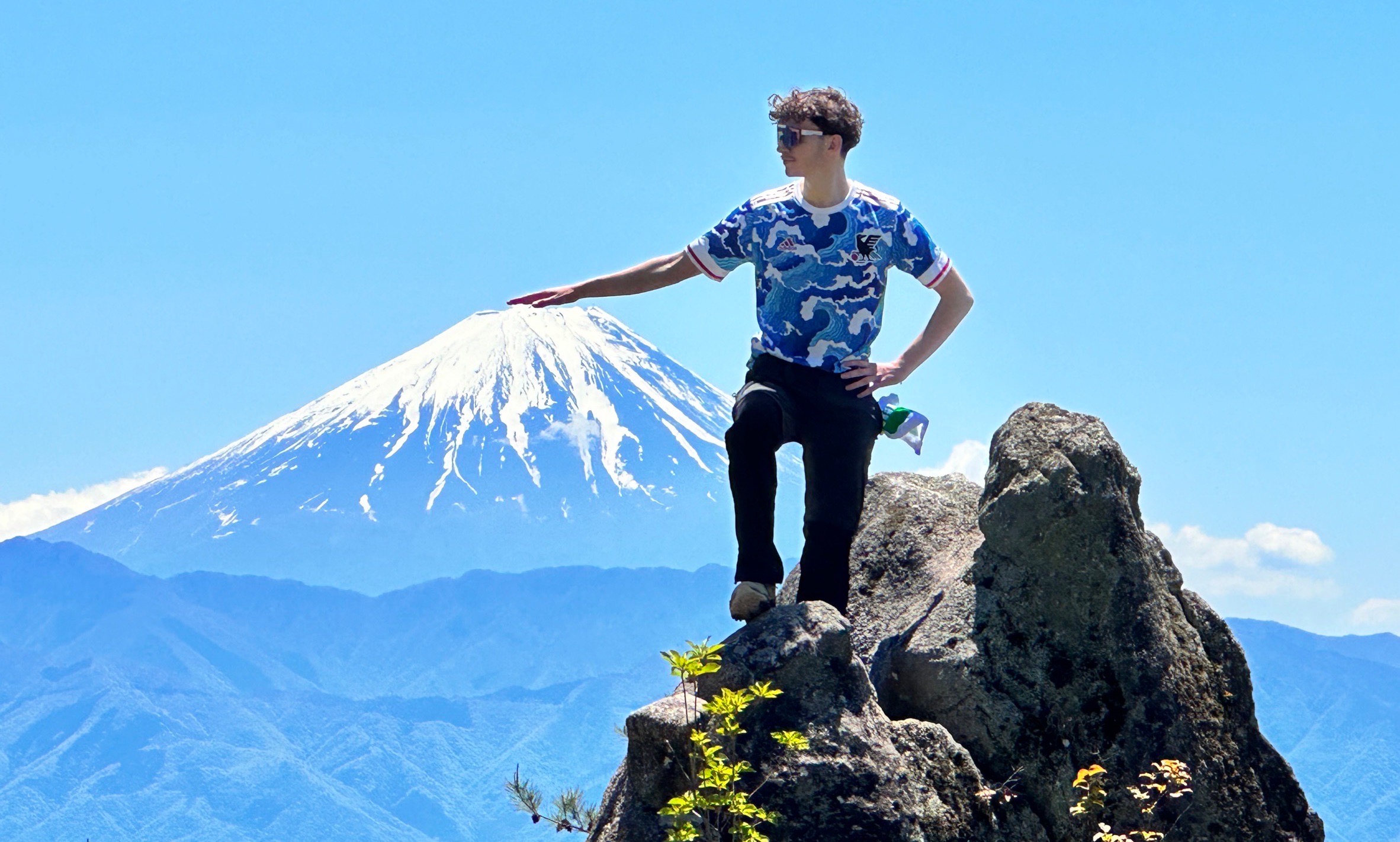
A guest on a hiking trip with Mount Fuji in the background – Photo Credit: Yamatrips
Traveling through Japan’s remote countryside for weeks at a time can be logistically intimidating due to transit schedules and language barriers. How do your pre-arranged multi-day itineraries solve those practical headaches for travelers?
Alongside self-exploration tools like Japan Explorer, I also offer fully packaged tours designed to remove every wall of anxiety between you and the experience.
When you book a route with us — the Hidden Golden Route through Mie and Yamanashi, or a deep dive into Ise-Shima — we have already fought every logistical battle for you. We have already spoken to the ryokan owner, so they know who you are before you even arrive. We also provide private transfers on key days, curated local access, and seamless English-speaking support throughout the entire journey.
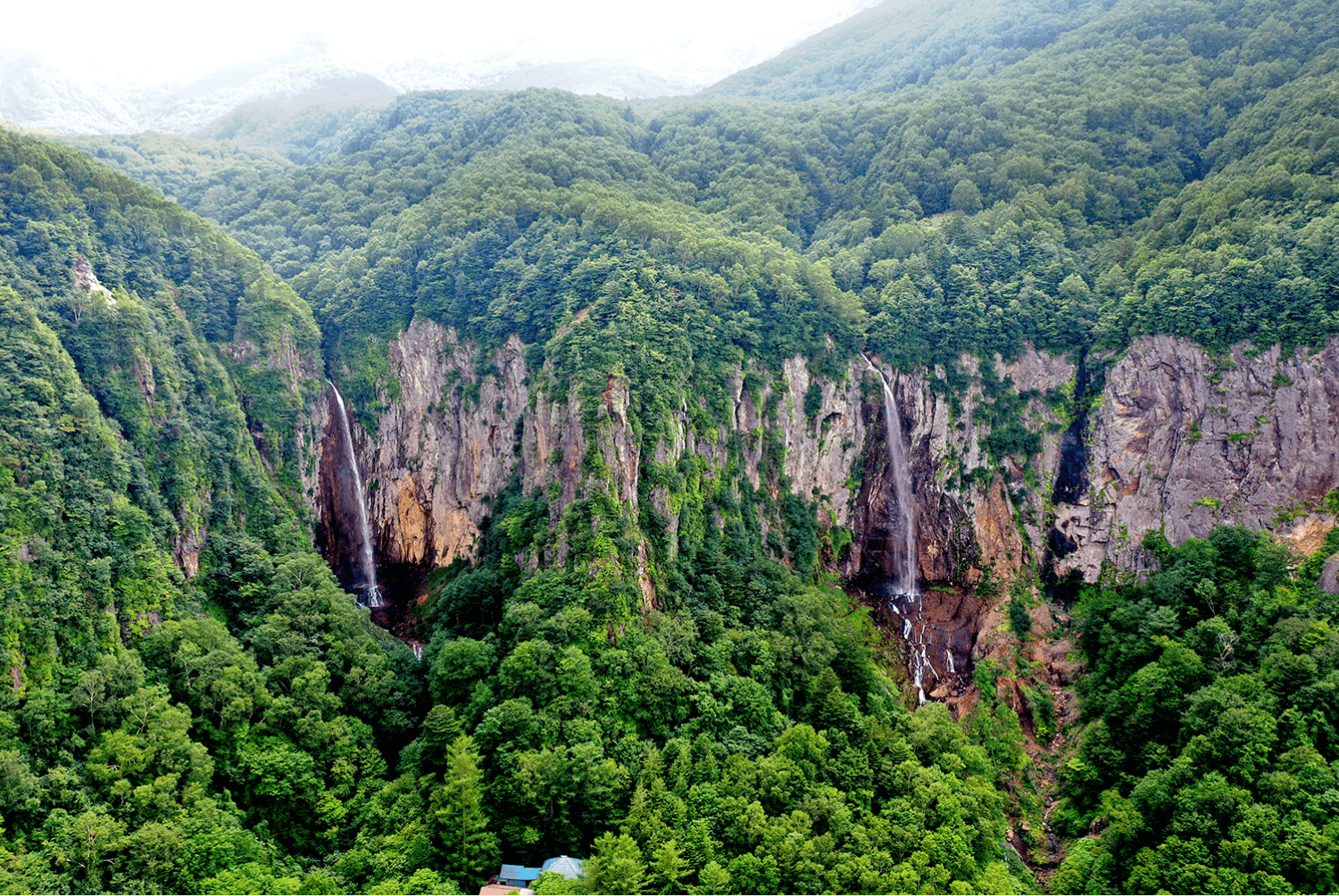
Towering waterfalls falling far below into the valley in a lesser-explored area of Japan – Photo Credit: YamaTrips
From sacred waterfall meditations to e-biking through quiet Satoyama farmlands, your platform features activities most tourists wouldn’t even know exist. What is your process for discovering these hidden cultural experiences, and what does a typical day look like for a traveler who books one?
This goes back to what I said earlier about only working with the ten percent who are fully committed. “Discovering” is probably the wrong word for what we do. Our role is to create these experiences — to bring them to life.
Take the waterfall experience we created in Nagano. Hidden deep in the mountains is an 89-meter waterfall — unfathomable in scale compared to the 10-meter training falls most places offer. This was the ancient training ground of Japan’s most elite mountain ascetics. The real deal. It had been closed and off-limits for years before YamaTrips got involved. We worked with the local government and the mountain hermit who lives there to turn it into an immersive experience that accepts only a handful of carefully selected guests each year.
We designed it to be hard to find. That’s intentional. We only want the real ones.
The hermit who leads the experience is very clear on this: no amateurs allowed.
Here’s how it unfolds. We pick you up from Nagano Station and drive you through a hidden mountain road to a secret trailhead. From there, it’s a 45-minute ascent through the forest. Along the way we get to know you. We ask how you found out about us, what brought you here, what your motivation is.
When you arrive, you change into a traditional white robe and prepare mentally for what’s coming. We keep the group intimate, usually under ten people, so everyone genuinely connects. Then we ask each person to shout — from the bottom of their lungs — their biggest fear and what they want to overcome in life. The hermit shows you how it’s done. Then it’s your turn.
You can stay under the fall for ten seconds, a hundred seconds, or as long as you can hold. The only rule is that you keep shouting the entire time to make sure your heart keeps beating. When everyone has finished, we gather together, share a meal, and open up about what just happened.
The relationships formed in that moment stay with you long after you go home.
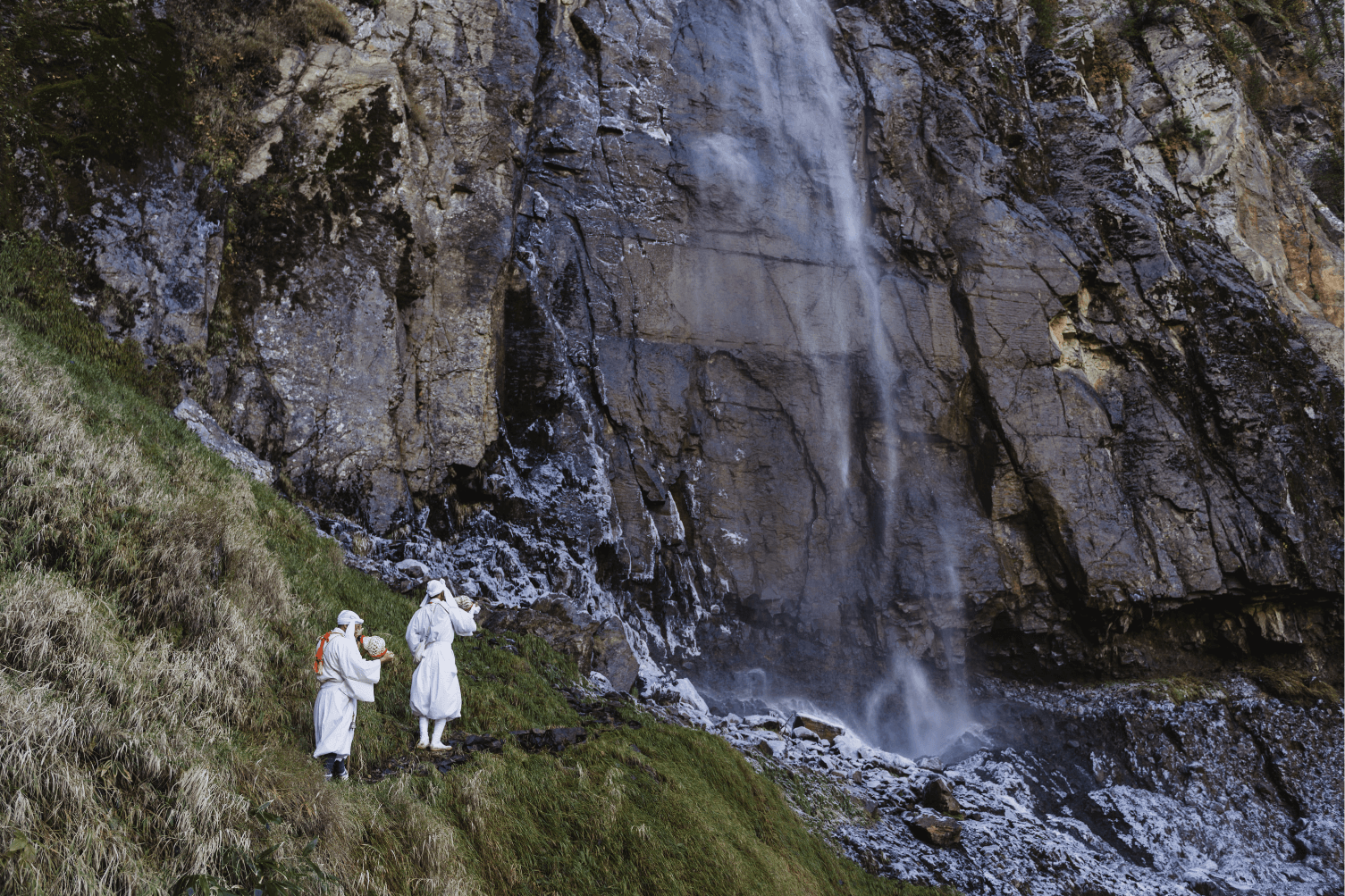
Two pilgrims clad in white standing below one of the waterfalls – Photo Credit: YamaTrips
YamaTrips is an official partner of Japan’s National Parks. When most people think of Japan, they usually picture neon cities or manicured gardens rather than wild mountains, lakes, and coastal trails. What makes Japan’s national parks so unique, and which ones should be at the top of every traveler’s bucket list?
Japan has 35 national parks, and here is the thing that makes them unlike any national park you have ever visited: people live inside them, and hunting is permitted.
That’s a confronting reality for some, especially in an era of growing veganism movements. We don’t take a side on that. We’ve taken guests who wanted to experience bear, boar, and deer cuisine, and we’ve guided guests who wouldn’t touch it. Japan’s national parks hold space for all of it.
As an official partner of Japan’s National Parks under the Ministry of the Environment, our mandate is essentially a two-sided coin and we’re asked to flip both sides at once. We are tasked with growing annual visitors from 10 million to 14 million, while simultaneously reducing environmental damage, social impact, and safety incidents.
As for which park to visit, that depends on how deep your pockets are.
If money is no object, there is nowhere better than Ise-Shima National Park. The ria coastline, the Ama pearl divers, the Grand Shrines of Ise, the five-star hotels, and the hidden resorts where Japan’s celebrities secretly visit. Think of it as the Cancun of Japan.
For backpackers, nothing compares to the Kumano Kodo pilgrimage trails. Ancient, historic, rich in culture, and genuinely transformative.
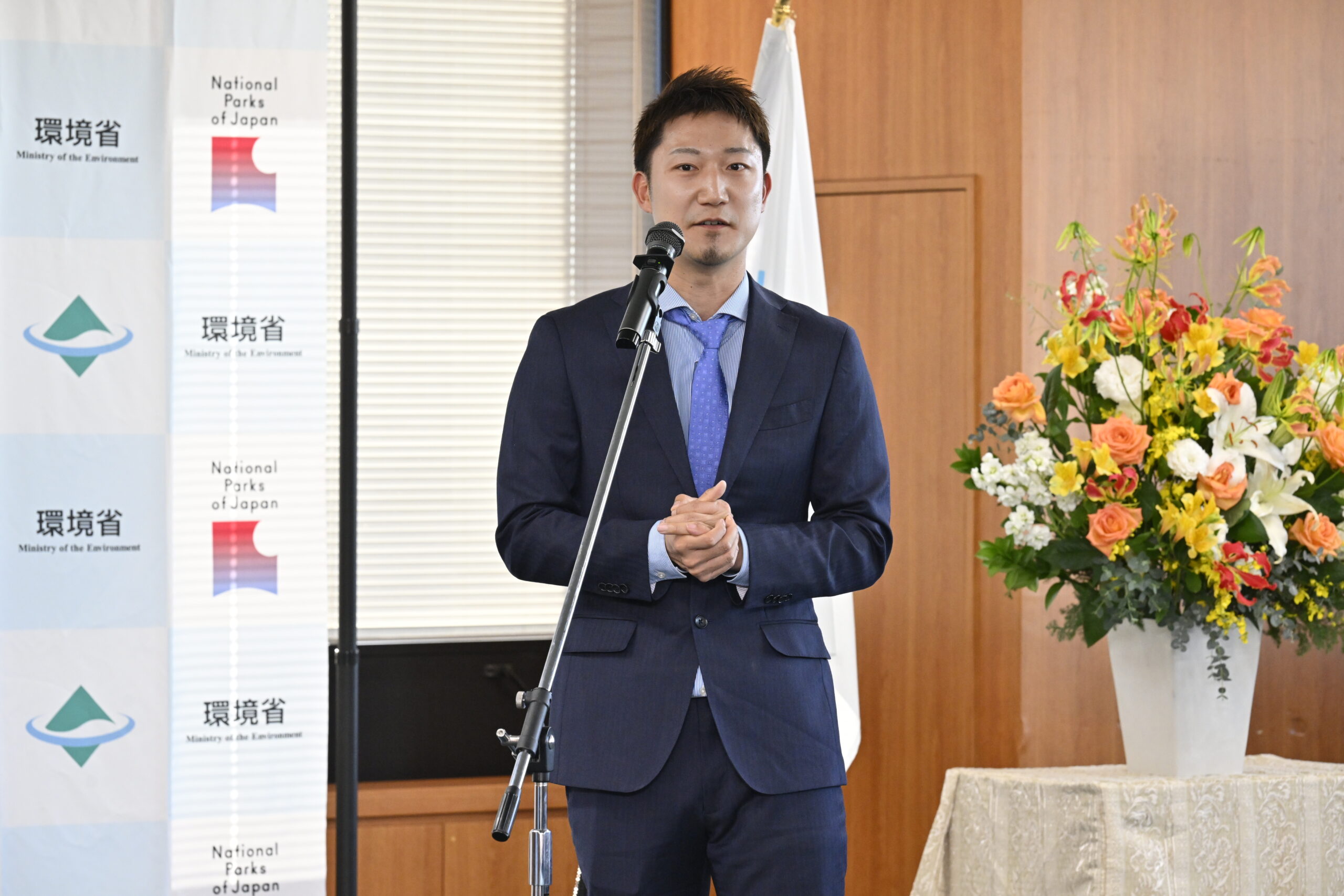
Tony speaking at an event featuring Yamatrip’s partnership with the National Parks of Japan organization – Photo Credit: Yamatrips
Beyond helping travelers, your team consults directly with local governments and prefectures. How does that side of your work help improve the overall infrastructure for foreign visitors?
Our core service is a two-part model: first, we design the experience around what actually resonates with English-speaking foreign visitors; second, we build visibility for what’s been created through content and storytelling.
The Ministry of Agriculture, Forestry and Fisheries has also dispatched us as rural inbound tourism experts, running workshops with over 40 communities across Japan.
The mission is always the same: help people build tourism on their own terms, with their own identity. So that when travelers arrive, they are not visiting a performance.
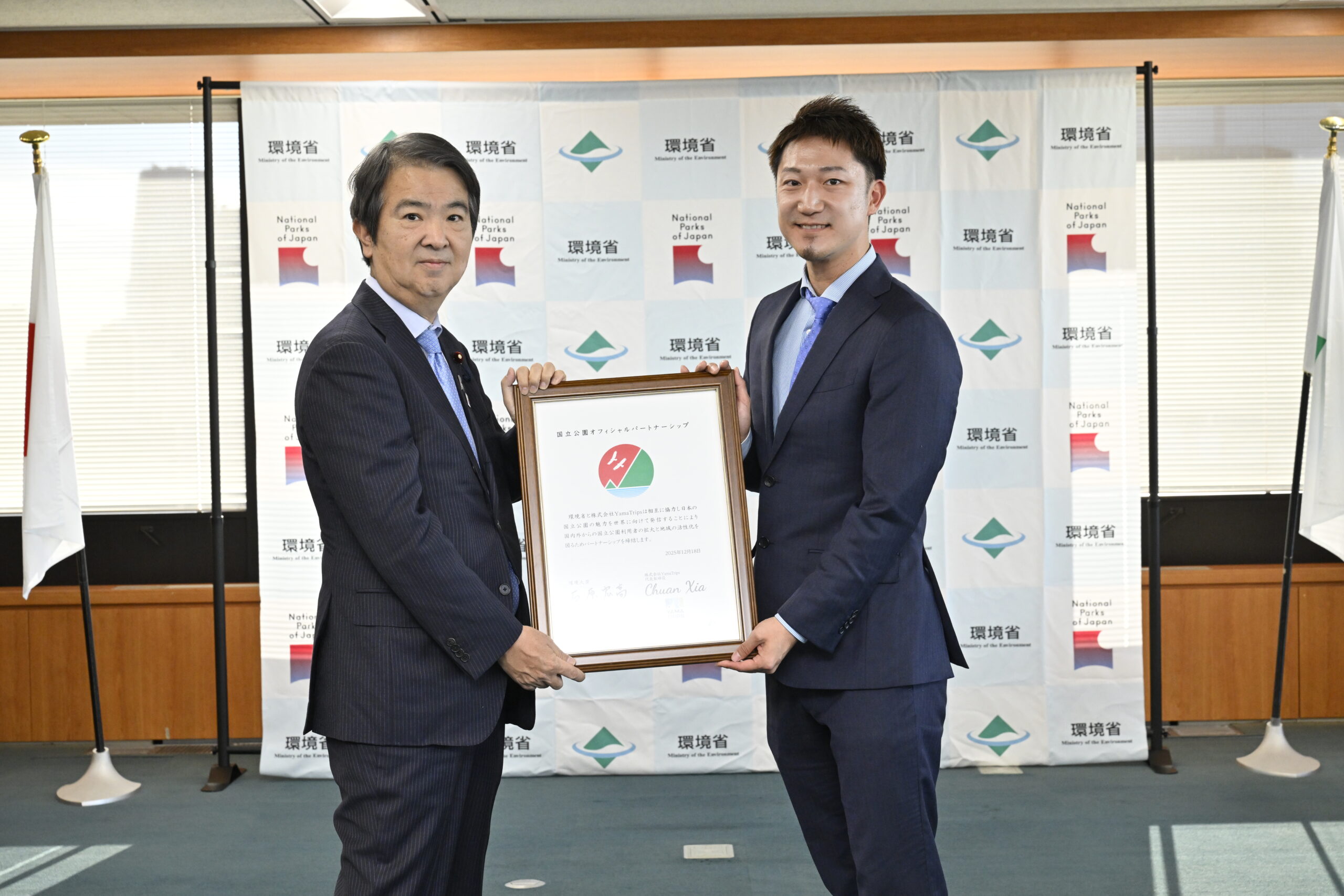
Tony presenting the partnership certificate with the National Parks of Japan organization – Photo Credit: YamaTrips
Lastly, is there anything else you would like to share with our readers?
Ise-Jingu in Mie Prefecture is the only shrine in Japan where you cannot pay to have your fortune told. Do you know why?
Because it is believed that if you are able to make the journey to Ise-Jingu, you are granted Daikichi, the highest fortune.
Japan sits at the intersection of four tectonic plates, encircled by the Ring of Fire. For centuries, its people lived under the constant threat of earthquakes, eruptions, floods, typhoons, droughts, and plague. In those times, a village would choose one pilgrim to represent everyone — giving that person everything they had — and send them on the long walk through the Kumano Kodo to Ise-Jingu, where the primal deity at the heart of Shinto resides. When the pilgrim arrived and knelt before the shrine, the prayer was not a wish. It was a thank you — for the safety of the village, for the chance to still be here.
In a world full of chaos, war, uncertainty, and instability, that story feels more relevant than ever. Sharing it and helping more travelers find their way to Ise-Jingu is at the heart of everything we do.
If you want to visit Ise-Jingu and meet our team in Mie Prefecture, follow us at @yamatrips_mie on Instagram.
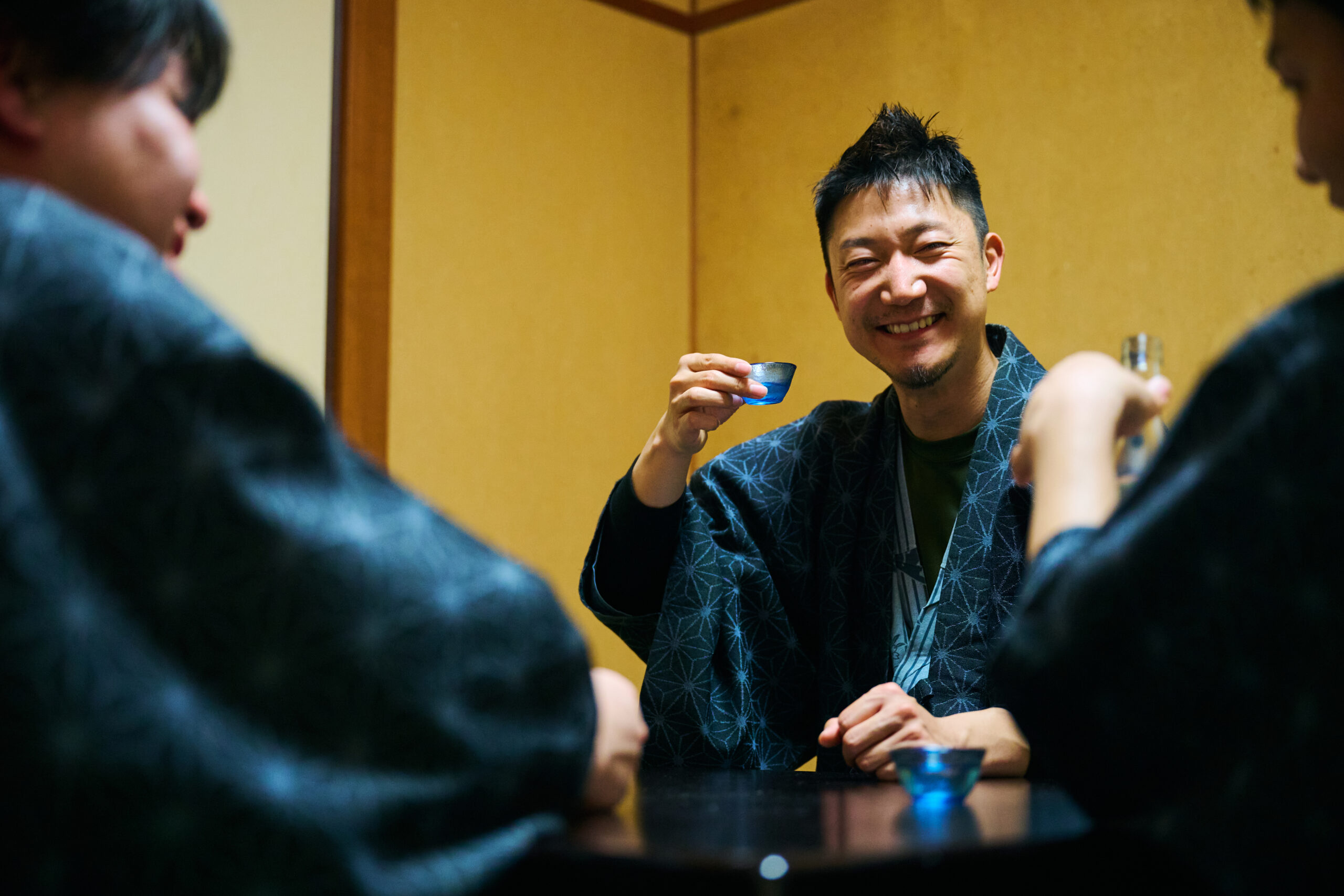
Tony toasting with a sake glass – Photo Credit: Yamatrips
Thank you, Tony, for sharing your perspective on preserving and experiencing the beauty of rural Japan. Tony’s approach offers a practical blueprint for anyone looking to step off the beaten path and connect with the country’s authentic local culture. To plan your own regional adventure, visit their website to explore their deep-dive digital guides and curated excursions.
Read more about YamaTrips on:
Website: http://www.yamatrips.com/
Instagram: https://www.instagram.com/yamatrips/
Japan Explorer: https://www.rexby.com/YamaTrips.Japan/japan
YouTube: https://www.youtube.com/@yamatrips
Featured Photo Credit: YamaTrips
Check out YamaTrips to dive into Japan’s wild countryside, national parks, and remote regional communities. Once you’re ready to balance that rugged wilderness with the country’s iconic major cultural hubs and cities, visit our Tailored Travel Page to bring your entire custom journey to life!
Book your pocket wifi now to stay connected through your entire Japan Journey!

Be sure to get the JR Pass to make navigating Japan during your trip that much easier!