Japan’s Famous Shotengai: Insider Advice From Our Expert Guides
Oct 3, 2026
BY Kristian Robinson
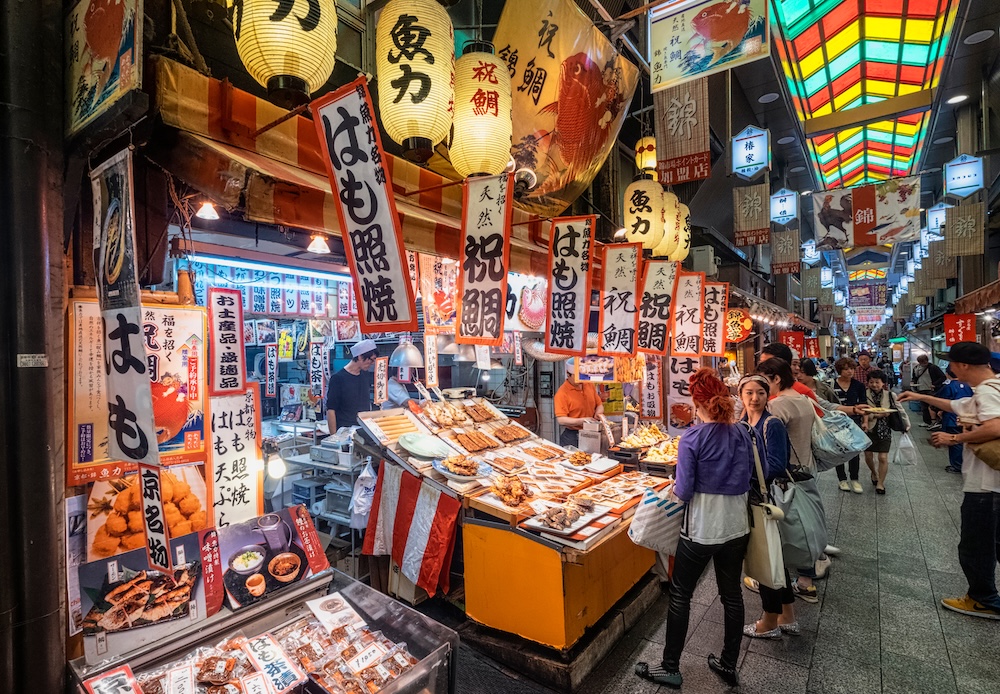
If you are planning a trip to Japan, shotengai is a term worth knowing. Often translated as “shopping streets,” these covered arcades and pedestrian strips are primarily where local residents do their daily grocery shopping and run errands. They are not street food hubs or festival markets, but rather neighborhood essential strips packed with butchers, produce stands, bakeries, and small specialty shops.
While some central arcades have adapted to handle tourist crowds, the true appeal of a shotengai is experiencing a slice of everyday local life. To help you explore them authentically, without treating them like a tourist food court, we asked six of our local guides to share their favorite neighborhood shopping streets, what to look for, and how to visit respectfully.
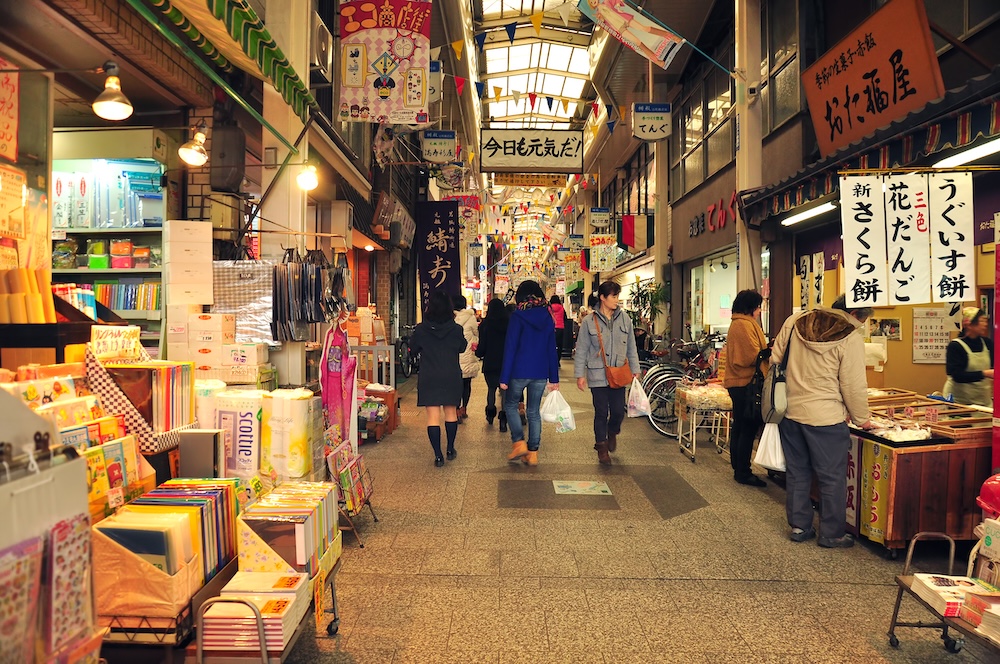
Shoppers walk along Demachi Masugata Arcade – Photo Credit: BeautifulBlossoms
Kyoto
Which neighborhood shotengai is your personal favorite, and what makes its atmosphere unique?
Tak: Nishiki Market used to be known as the “kitchen of Kyoto,” and even as a kid, I loved the excitement of visiting it. But to be honest, there are now so many shops catering solely to tourists that I no longer feel like going unless I have something specific to buy.
Of course, since Kyoto is a city that thrives on tourism, I suppose that’s fine in its own way.
I think Kyoto’s Sanjo Shopping Street has a certain charm among the shopping streets still remaining in Kyoto, but I also feel it still lacks the vitality needed to survive in the modern era.
I have fond memories of a shopping street in Sendai I visited about 20 years ago; it was full of life.
So, how can we bring that vitality back?
I think the Osu Shopping Street in Nagoya might hold the key.
I lived in Nagoya for 35 years. When I first moved there, it was known as a “shutter street” because so many stores had closed, but after a while it had transformed into a lively shopping district that attracts people of all ages.
Shopping malls are clean, have escalators, and make it convenient to get to any store, but I feel like the Sanjo Shopping District needs something that blends the old-town charm, which is different from shopping malls, with something new.
Should they make better use of historical landmarks like Nijo Castle and Shinsen-en Garden?
Should they play music that makes walking through the area more exciting?
Should they put more effort into promoting the area’s appeal?
I’m very sorry that my answer strayed a bit from the intended focus of this channel, but to be honest, I can’t think of any remaining Shotengai near where I live now that I find particularly appealing.
Noboru: Until about 50 years ago, Shin-Omiya Shopping Street was a major, renowned shopping district in Kyoto known to everyone. At the end of the year, it would overflow with shoppers, bustling with the same level of energy as the famous Nishiki Market; the wide streets were packed with people, including many who drove in from afar. As time passed, however, the number of shops dwindled, much like in other shopping districts, and today, hardly a trace of its former self remains. Yet, for me, that sense of nostalgia makes it a unique place, cherished alongside fond memories.
H Mori: My favorite shotengai is Demachi Shotengai (including Masugata shopping street). I have been familiar with this shotengai since childhood, as I used to live very close to the shopping street.
Although it’s not an official requirement of what makes a shotengai, 5 kinds of stores are definitely needed, ie., a butcher, a poulterer & eggs, fresh vegetable/fruits & pickles, a store (Kanbutsuya) that sells dried foods such as dehydrated kelp & wakame, bonito flakes, mushrooms, etc., and a tofu shop.
In addition to the above 5 kinds of stores, you are lucky if a shotengai has shops that sell traditional sweets and a place to eat nice foods.
The Demachi Shotengai has all of the above stores to offer.
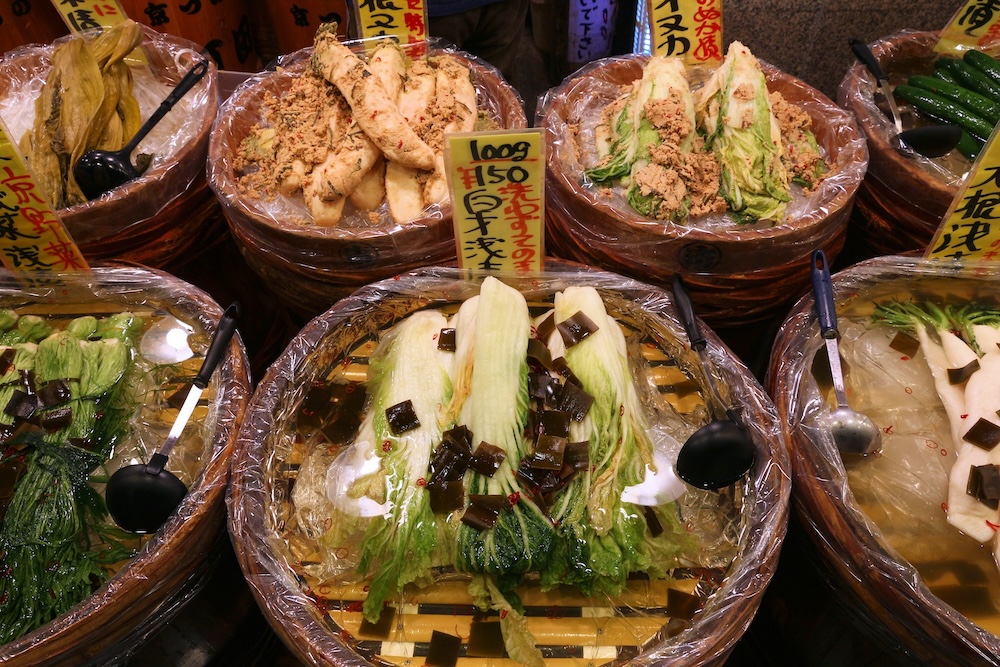
Japanese tsukemono pickled vegetables in a Kyoto market – Photo Credit: Tupungato
What is one local item, small bite, or tip you recommend for visitors walking through this area?
Tak: I recommend matcha with a tea ceremony “RANHOTEI” in Sanjo Shotengai.
Also, there are more tsukemono shops at Sanjo Shotengai, as tsukemono culture is very important for Kyoto-style dining tables.
Noboru: Sakai, a traditional “machi-chuka” (neighborhood Chinese eatery) in the Shin-Omiya Shopping Street, is still in business today. It is famous for its cold noodles “reimen.”
H Mori: At Demachi shotengai, I suggest you buy mamedaifuku at Demachi Futaba (The bean rice cake is salty and not too sweet, and the rice cake is chewy). The expiration date is within the day, so I recommend that you buy it and eat it as soon as possible. There is the Kamo River nearby, so it is good to eat it with tea on the riverbank.
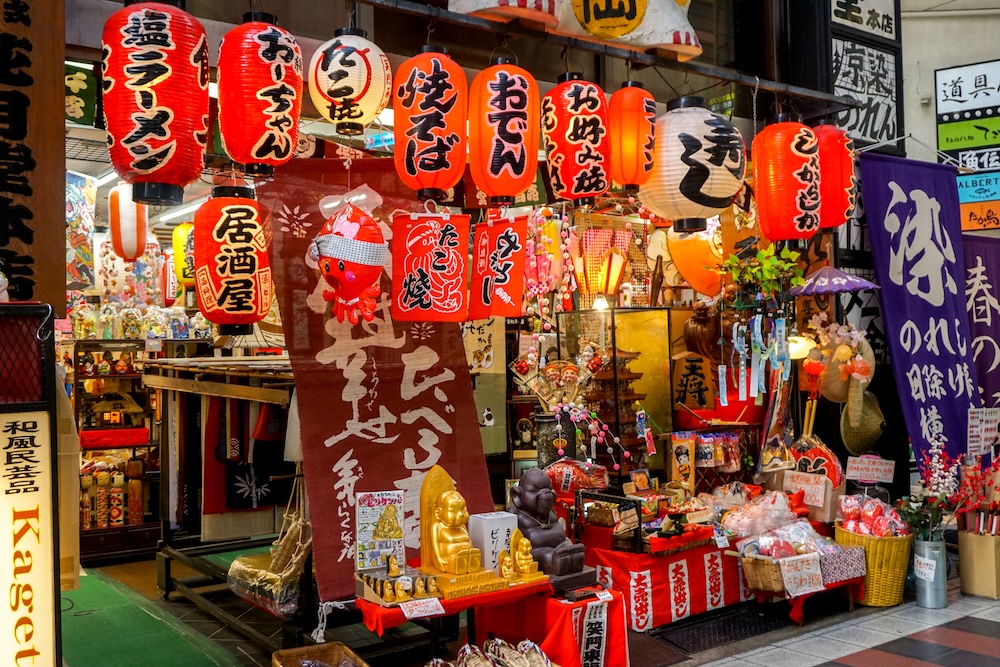
Japanese souvenirs and home decorative show and sell in Tenjinbashisuji shopping street and gift shop – Photo Credit: Atiwat Witthayanurut
Osaka
Which local shotengai stands out as your personal favorite to walk through, and why?
Melissa: I really like Tenjinbashisuji Shotengai. It is the longest shotengai in Japan, spanning around 2.6 kilometers. It starts in Minamimorimachi. Right next to the entrance is a lovely retro art gallery called Fujihara, which often has interesting exhibitions. Then, as you walk toward Ogimachi, you can swing past Tenmangu Shrine, which often has interesting festivals and events.
Then there is everything you need along the shopping street. I love ending at Pulala Tenma where I can shop for my pheasant, rabbit, venison, and heirloom Japanese vegetables, then swing past one of the many craft beer bars and end at one of the amazing local restaurants in the area.
Ronan: It is going to be Karahori, definitely. Such an underrated shotengai with rich history (used to be a moat that protected Osaka Castle even though it is about 2.5 kilometers away) and interesting geographical location (it sits atop a plateau by a fault line, which explains the distinct hills and slopes around the area). Since the shotengai escaped air raids during the war, a lot of Meiji and Taisho era structures survived and are currently being preserved to avoid demolition.
Some of them were restored into little shopping and dining complexes like Len Machiya, which used to be an imperial villa. Currently, while there are two big supermarkets enveloping the shotengai, because of the effort made by the local merchants’ association, a lot of local businesses, such as a yaoya, a tofu shop, a kelp shop, and a wagashiya, are still active and receive continued patronage.
Miyuki: My personal favorite shotengai in Osaka is Karahori, without a doubt.
Walking through Karahori feels like stepping quietly into another time, into the nostalgic Showa era, when life seemed a little slower, neighbors knew one another, and happiness could be found in the simplest things. Somehow, this charming neighborhood has held on to that feeling, preserving a little piece of old Japan that has disappeared from so many other places.
There are still family-run tofu shops where I can imagine my grandmother in a kappogi, carrying a wooden basket and stopping at the counter to say, “I’ll have some freshly made tofu, please.”
Perhaps she would exchange a few words with the shopkeeper, nothing particularly important, just everyday conversation. But somehow, those small conversations were filled with warmth. There was no rush. No need to talk about anything important. Just two people sharing a few words in the middle of an ordinary day.
And perhaps that was happiness.
The local fish shops display fresh fish brought from the Osaka wholesale market. There are neighborhood bakeries, traditional butchers, and little takeout takoyaki shops, popular with high school students on their way home and local housewives picking up something for a snack.
You can still find a kanbutsuya, a traditional dried goods shop, run by an elderly grandmother. She has a little trouble hearing, but she is always smiling.
One of the neighboring shopkeepers once told me, “She can’t hear very well, but just point to what you want. She can calculate the price in her head faster than anyone, and she never gets it wrong!”
There are also freshly made wagashi shops and family-run kombu stores whose histories seem to stretch back through generations.
And then there is the wonderful smell of katsuobushi. As you walk past the katsuobushi shop, you may catch the delicate, smoky aroma of freshly shaved dried bonito. It is one of those scents that can transport you somewhere before you even realize it.
The owner of the shop is 95 years old and still working. Whenever I visit, he often gives me a little sample of katsuobushi. I always find myself smiling as I eat it.
It is such a simple thing, but somehow, it tastes like local Showa Osaka
What I love most about Karahori is that these shops are not simply standing side by side. They are connected to one another.
The shopkeepers depend on and support each other, just as they have for generations. The udon shop next door uses kombu from the family-run kombu shop and katsuobushi from the neighboring store to make a deeply flavorful Kansai-style dashi.
One shop becomes part of another.
The kombu, the katsuobushi, the udon, the tofu, the fish, the wagashi, and Japanese tea all of these little pieces come together to create the taste, smell, and atmosphere of the neighborhood.
That is what makes Karahori so special to me.
It is not a museum of the past. It is a living neighborhood where the spirit of old Showa-era Japan can still be felt in everyday life.
In a grandmother behind a counter, in a freshly made piece of tofu, in the smoky smell of shaved bonito, in a warm bowl of udon, or in a group of high school students sharing takoyaki after school.
For a moment, walking through Karahori can make you feel as though nothing has really changed.
And perhaps that is the magic of this shotengai.
I hope Karahori keeps this feeling for many more generations. Remaining a little corner of Osaka where the warmth of community, the kindness of strangers, and the simple happiness of everyday life can still be found.
A place where you can slow down, say a few words to your neighbor, buy something freshly made, and go home feeling just a little happier than when you arrived.
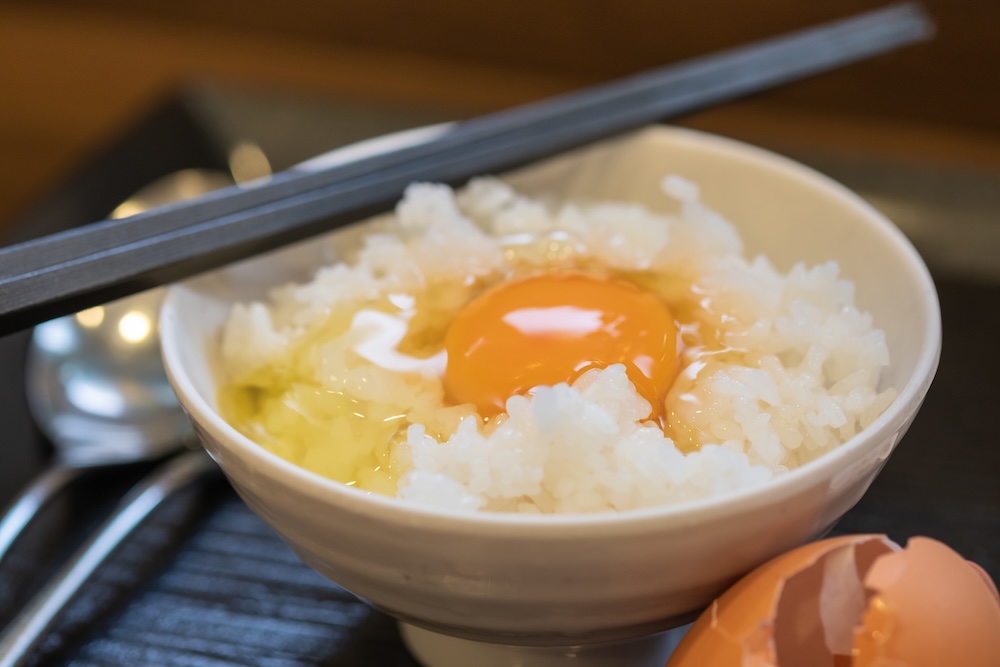
Close-up of Tamago Kake Gohan, raw egg on rice – Photo Credit: Montri Thipsorn
What is one classic bite to grab here, or your best practical advice for navigating the street like a local?
Melissa: There are some amazing yakitori and yakiniku restaurants in the area I love to stop into.
Ronan: I would say the egg specialty restaurant called Tamago no Tamako. They have different kinds of eggs to choose from. It ranges from one that is packed with a lot of nutrition to one that has a zest of yuzu, and to one that can help you reach the fountain of youth because it is good for the skin.
You use them to make your own classic Japanese dish called Tamago Kake Gohan (TKG), which literally means rice topped with egg… raw egg. You mix the raw egg with freshly steamed rice, and add a dash of seasoning of your liking.
Miyuki: Soy milk from the tofu shop, croquette from local delicatessen, etc. There are so many to choose from!
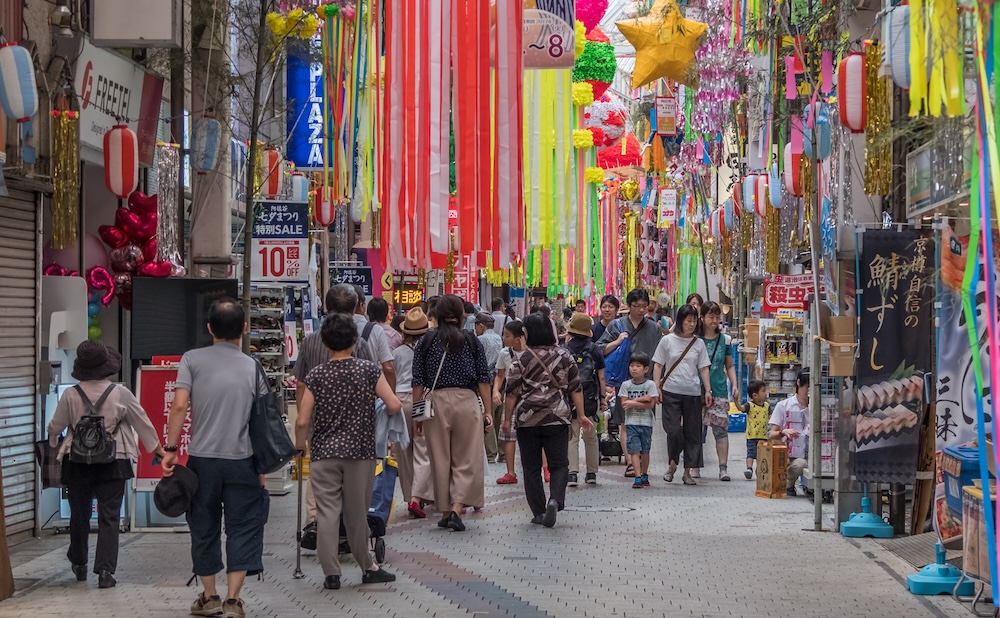
View of Asagaya Pearl Centre shopping street during Asagaya Tanabata Matsuri festival – Photo Credit: MAHATHIR MOHD YASIN
Tokyo
Which shotengai in Tokyo do you enjoy visiting, and what gives it its unique atmosphere?
Emanuel: I really love the “Asagaya Pearl Center.” It’s a very local shotengai, with several old-style clothing stores, small supermarkets, and teashops. Also, every year in August, the colorful Tanabata (Star Festival) takes over the street completely. I live nearby, so when I am hungry but very undecided on what to eat, I walk around until I find what I might be looking for, as it has a huge number of restaurants and izakayas. From traditional Japanese-style izakaya, udon or yakiniku places, to Chinese, Korean, Thai, and Nepali food. Such a cute hidden gem!
Satoko: My personal favorite is “Sunamachi Ginza” shopping streets. I visited there with my family a while ago to walk around and eat. I was overwhelmed by the traditional atmosphere and the very lively streets. There was a long-established “tsukudani” store that sells rice steamed with clams and soy sauce, one of the signature foods there, and I just loved it.
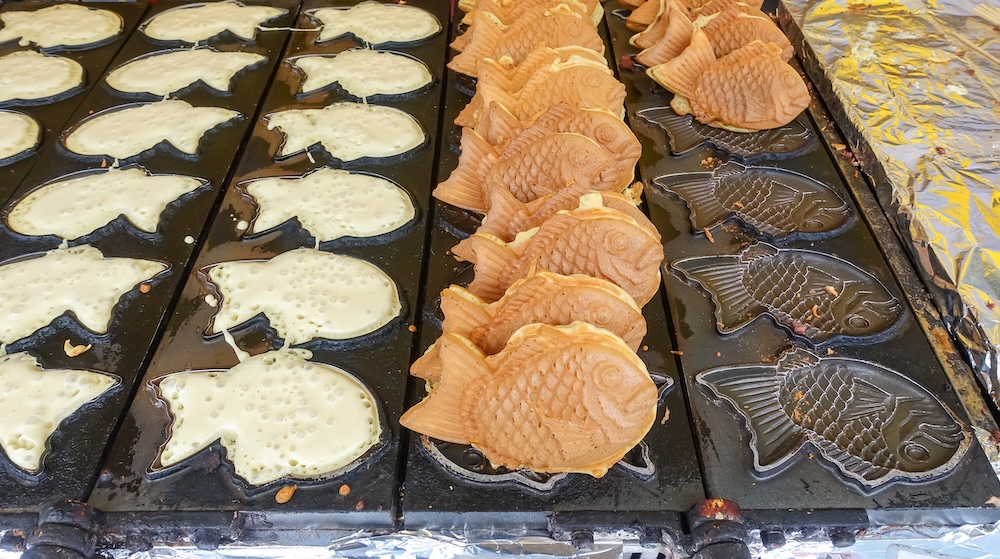
Taiyaki on a griddle – Photo Credit: Carlos Huang
What is one local specialty or practical tip you recommend for making the most of a visit here?
Emanuel: Close to the middle of the shotengai, there is a very popular taiyaki place (a traditional Japanese sweet). There are always people waiting in line to eat a freshly made fish-shaped cake. Be careful when eating to not get burnt! They are that fresh.
Satoko: I recommend some stores with “tsukudani” or “pickled vegetables,” which have the tastes of traditional craftsmanship. It’s lovely to greet elderly “kanban-musume” ladies.
Thank you to our local guides for sharing their genuine perspectives and expert recommendations. Exploring a neighborhood shotengai offers a great glimpse into daily life in Japan when approached with the right local mindset.
Featured Photo Credit: MB_Media
If you want to explore beyond the usual tourist sites and discover these vibrant local arcades with a friendly guide, check out our newly launched Kyoto Like a Local Food Tour.
Book your pocket wifi now to stay connected through your entire Japan Journey!

Be sure to get the JR Pass to make navigating Japan during your trip that much easier!
YOU MIGHT ALSO LIKE