Discover the Sweet World of Monaka: A Japanese Delight
Feb 9, 2026
BY Shalini Sookoo
Hello, fellow travelers! I have an excitingly sweet topic for us to sink our teeth into today. When you think of Japan, beyond the breathtaking scenery, the first thing that pops into your mind is the food, right? But what about the sweeter side of Japan’s culinary tradition?
Have you heard of wagashi (和菓子)? If not, here is the rundown: wagashi are traditional Japanese sweets typically paired with green tea. They come in an endless variety of shapes and sizes and are available year-round, seasonally, or as regional specialties. Today, we’re shining a spotlight on one very specific type: Monaka (最中)!
What is Monaka?
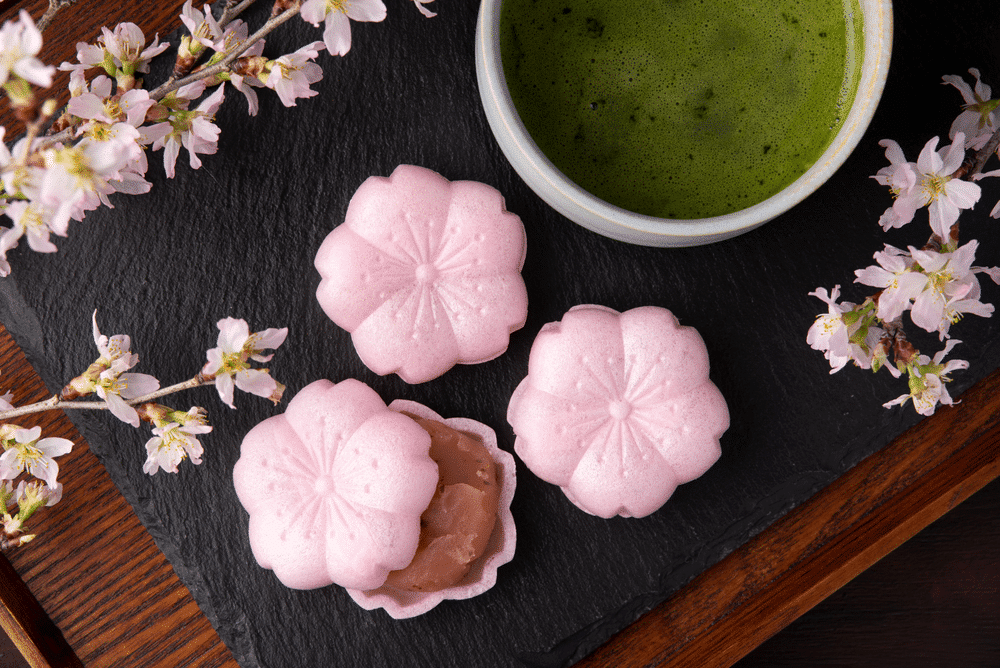
Monaka consists of a delicious adzuki (sweet red bean) paste center sandwiched between two crispy, thin mochi wafers. This combination creates an elegant sweetness that is truly mouthwatering. These wafers aren’t just functional; they are often artistic! You can find them shaped into squares, triangles, local landmarks, cherry blossoms, or various symbols of good luck.
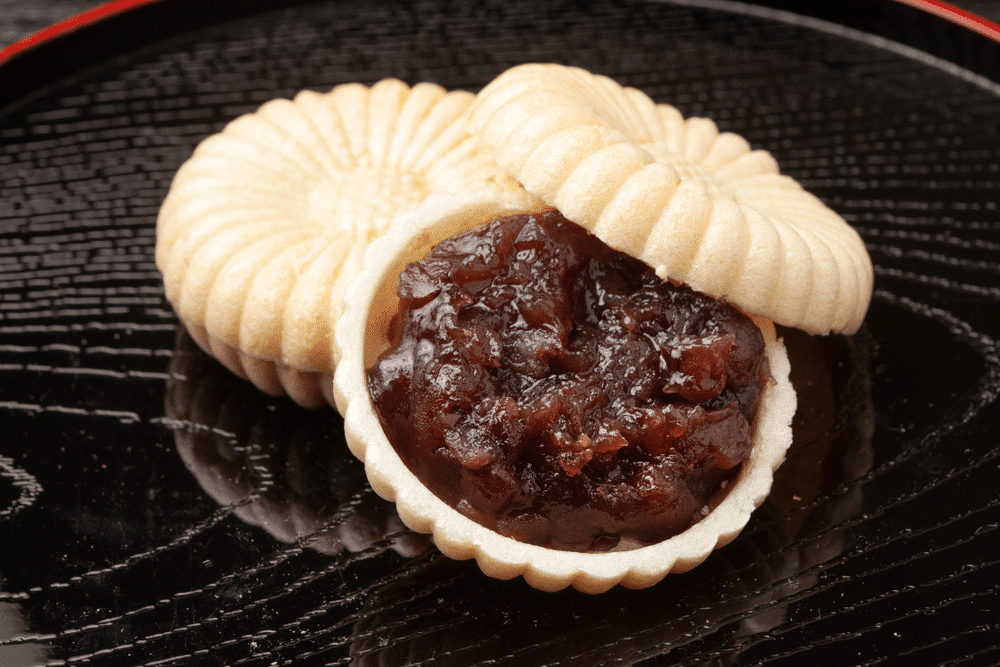
Traditional Monaka – Photo Credit: sasazawa
Monaka’s History
We know what it is, but where did it come from? Records suggest that monaka originated during the Edo period. It was originally called monaka no tsuki, which translates to “moon in the middle.”
Legend has it that this treat was served at a moon-viewing banquet at the Imperial Court. The nobles noticed the white, crispy mochi sweets, so strikingly similar to the mid-autumn harvest moon, and were reminded of a famous poem by Minamoto no Shitago. From that day on, the name stuck. After the Meiji era, creative molds became more popular than the traditional round shapes, and the name was shortened to simply “monaka.”
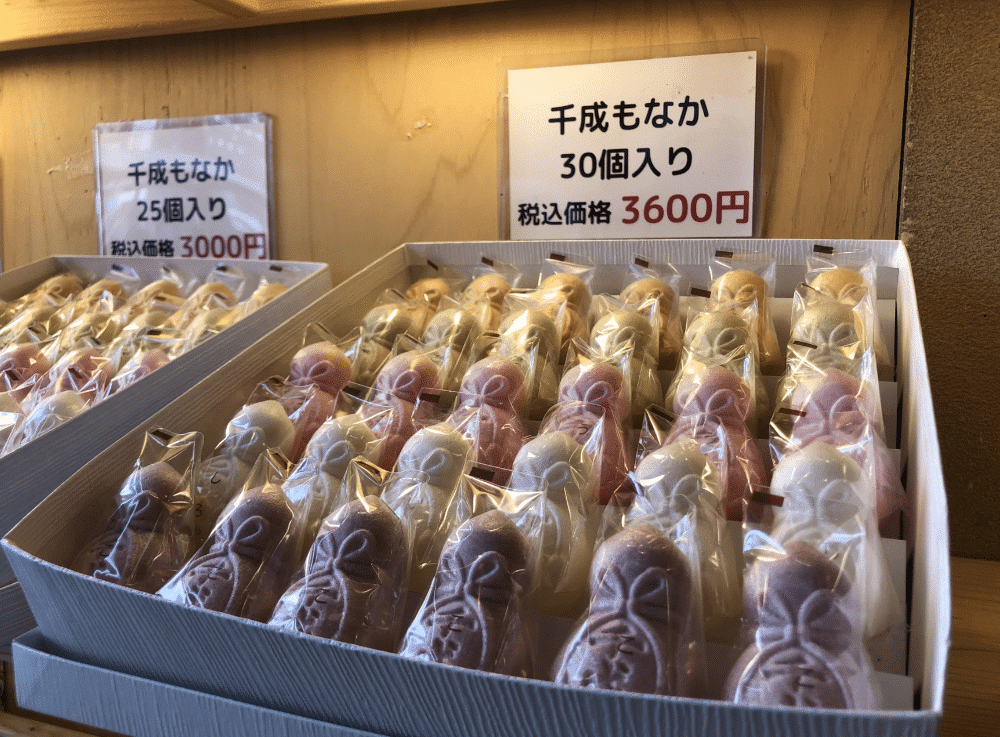
Monaka from Sugamo – Photo Credit: Jessica Iragne
How It’s Made
Traditionally, monaka is crafted using glutinous rice flour and water. After kneading, the dough is steamed and stretched thin. It is then cut into shapes and baked to a crisp. With a light sprinkle of sugar, the shell is finished! The texture of the original shell is often compared to a light rice cracker.
Fun fact: Adzuki bean paste wasn’t part of the original recipe. The “modern” monaka we recognize today can be traced back to a senbei (rice cracker) shop in Yoshiwara during the mid-Edo period. They were the first to sandwich the bean paste between the wafers, a version that quickly surpassed the original in popularity.
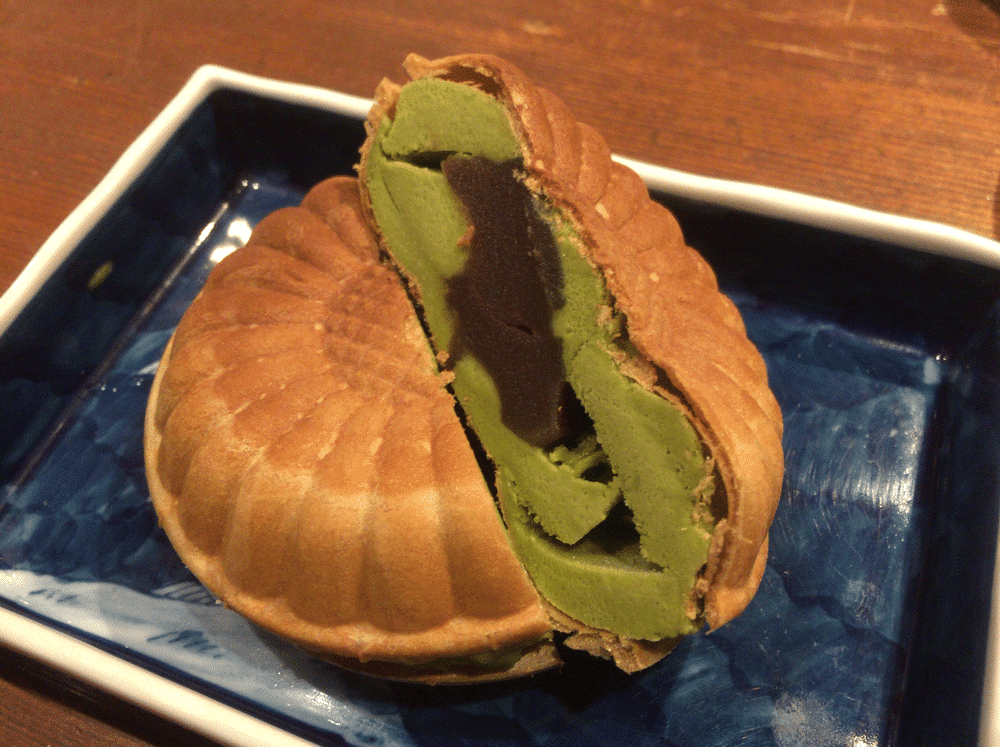
Japanese green tea monaka ice cream – Photo Credit: RubyMayu
Types of Monaka
While tradition is the foundation of any great cuisine, new variations are always emerging, just like the transition from the “harvest moon” to the modern monaka! If you aren’t a fan of red bean paste, there are plenty of other exciting flavors to enjoy.
For instance, lemon-flavored monaka often incorporates ramune for a refreshing kick, while melon versions use white bean paste infused with fresh juice. If you’re a chocolate lover, you’ll definitely enjoy puffed chocolate monaka, a perfect marriage of crunchy mochi and creamy chocolate. These often pop up in shops around February as Valentine’s Day approaches.
But why stop at bean paste? There is another filling that is perfect for a hot day: creamy, cold, and guaranteed to give you a brain freeze if you eat it too fast! Ice cream monaka is a beloved modern variation. Since the shells are neutral in flavor, they complement everything from classic vanilla to matcha, yuzu, cherry blossom, and even chestnut.
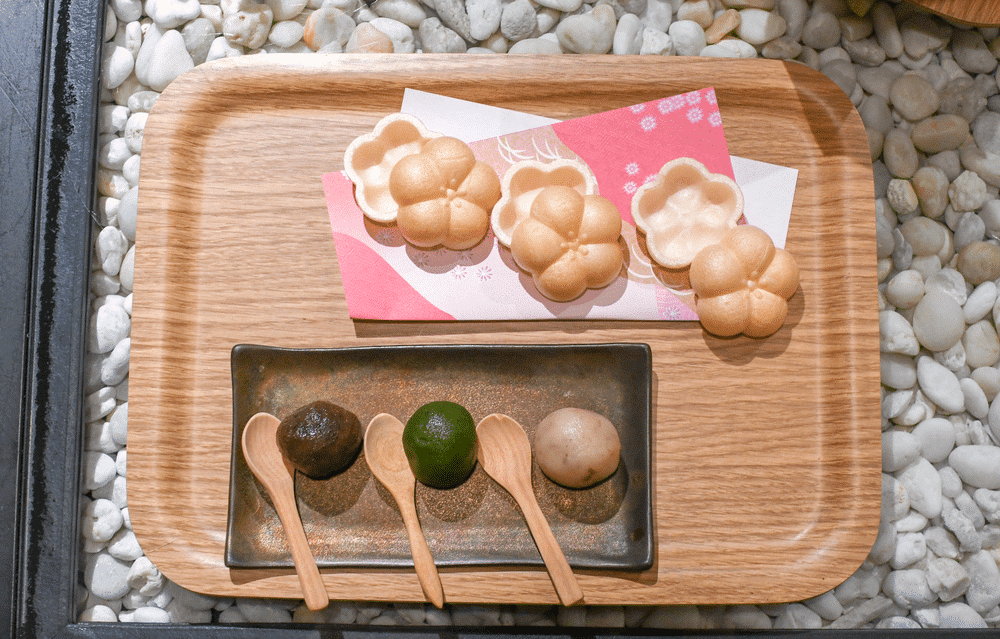
Monaka shells with the fillings – Photo Credit: THANAN KONGDOUNG
How to Enjoy It
While monaka is a perfect companion for green tea, it can also be used for a clever “wagashi hack.” You can use it to create a quick version of Oshiruko (sweet red bean soup), a winter staple that warms the soul.
To try this at home, simply place an adzuki bean monaka into a bowl, pour hot water over it, and gently crush the shell. Mix the paste with the water, and—tada!—you have a shortcut version of Oshiruko. You can also enjoy monaka as a topping for other desserts like anmitsu.
But if you’re looking to try monaka for the first time, you can check out Sanokiya in Tsukiji Outer Market, where you can find fish-shaped monaka both with azuki bean and apricot filling! Another popular spot is Asakusa Chochin Monaka in Asakusa, Tokyo. Here, you can find the ice cream version with a wide variety of fillings to choose from.
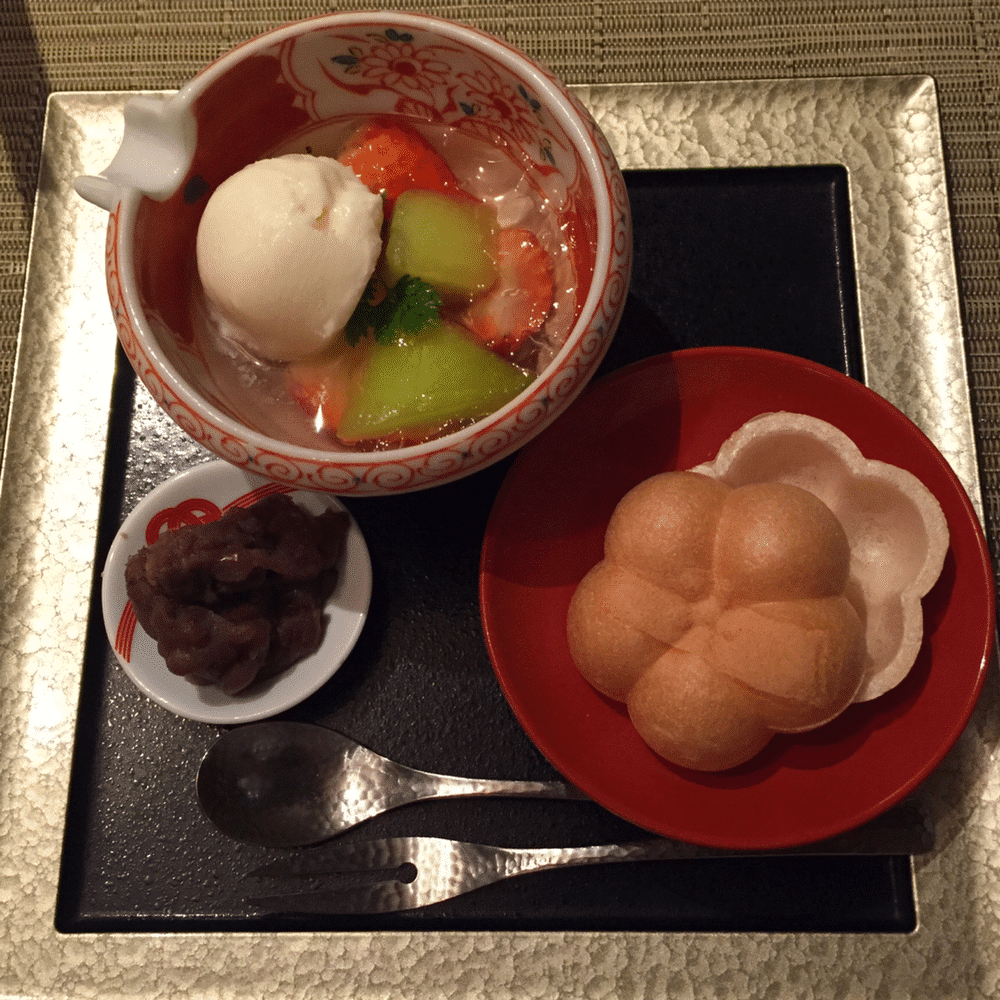
Anmitsu with monaka – Photo Credit: Willymaggie
Well, dear travelers, we have reached the end of our monaka journey! We’ve learned that this unassuming treat is packed with history and brings a little bit of joy in every bite. If you ever have the chance to try one, don’t miss out! All this talk of sweets has certainly made me hungry. Until next time!
Featured Photo Credit: karins
Planning a trip to Tokyo? Check out our full list of Tokyo Tours to discover incredible food and hidden gems across the city!
PIN THIS FOR LATER
Book your pocket wifi now to stay connected through your entire Japan Journey!

Be sure to get the JR Pass to make navigating Japan during your trip that much easier!
YOU MIGHT ALSO LIKE