Otoshi: All About Japan’s Unusual Appetisers
Jan 22, 2026
BY Isabelle Hyde
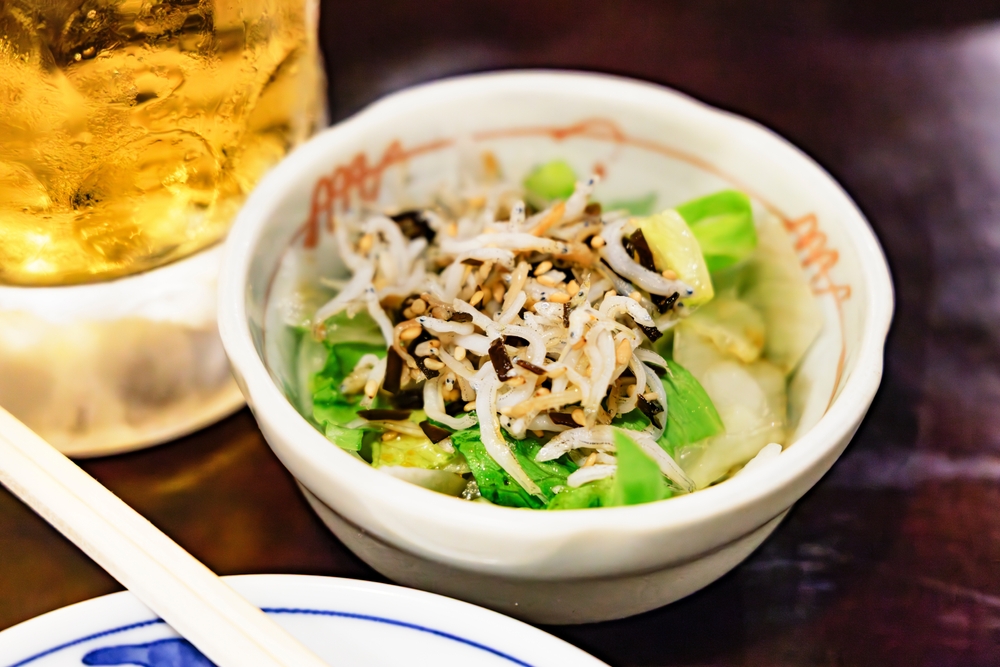
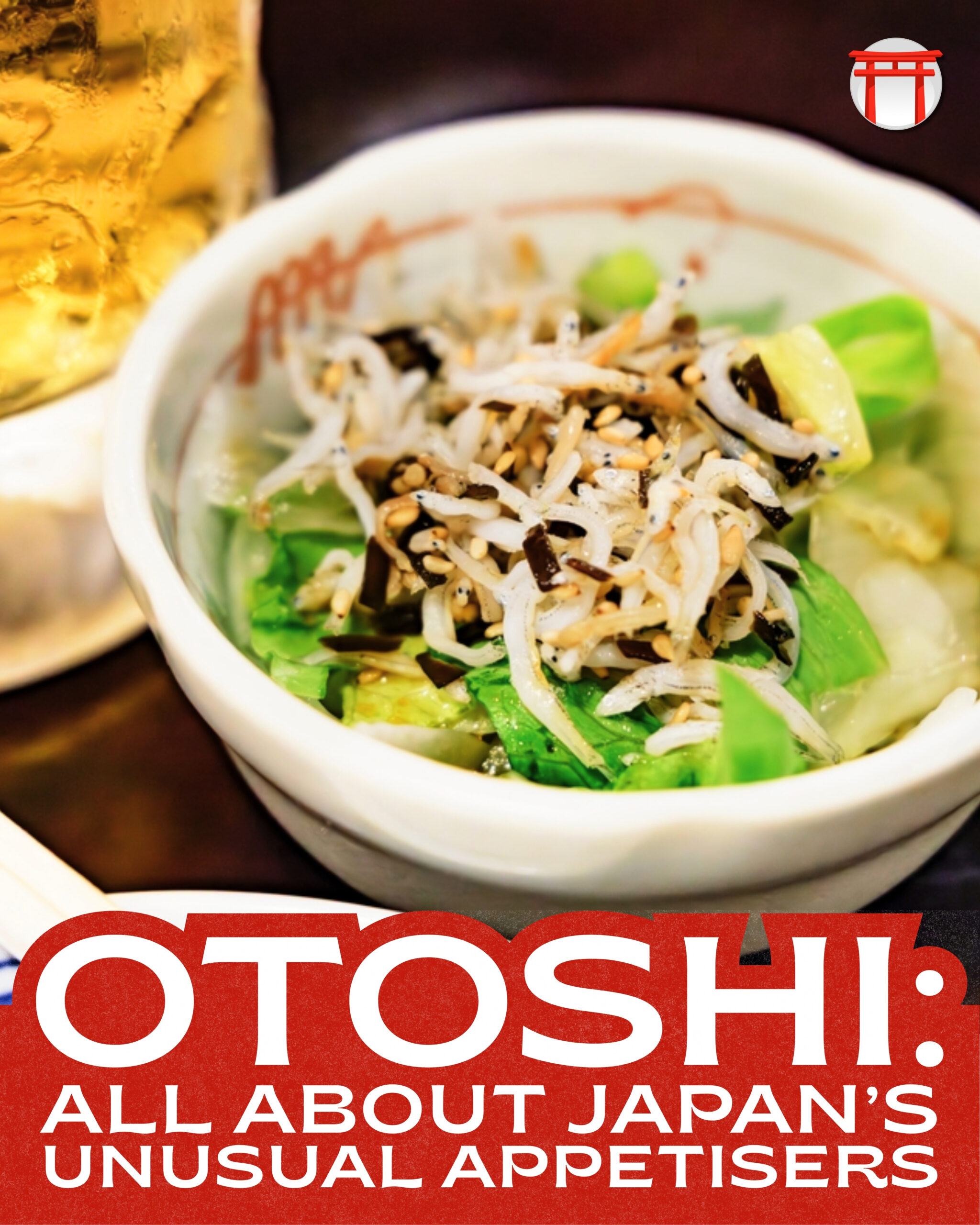
If you’ve ever been to a restaurant in Japan, you may have found yourself in the following scenario. Whether it’s alongside your drinks or at the moment you take your seat at the table, a member of staff will bring out a small dish for everyone before you’ve even had the chance to look at the menu. Then, by the time you go to pay the bill at the end of the meal, that small dish will make up a small portion of the final charge, despite the fact that you never ordered it. These small dishes are known as otoshi.
Like how most restaurants will bring customers a complimentary hot towel or cup of tea as you sit down, others will bring out otoshi as unexpected appetiser plates. They are never directly ordered by the customer, nor can they choose for themselves what kind of dish they receive. What makes them different from the other pre-meal favours is that otoshi aren’t complimentary. Whether you eat them or not, they get added to the final bill regardless.
For people visiting a Japanese restaurant for the first time, this can be a confusing custom, which we will shed some light on in this article, from why they’re served to some of the types of food you can expect to find on an otoshi plate.
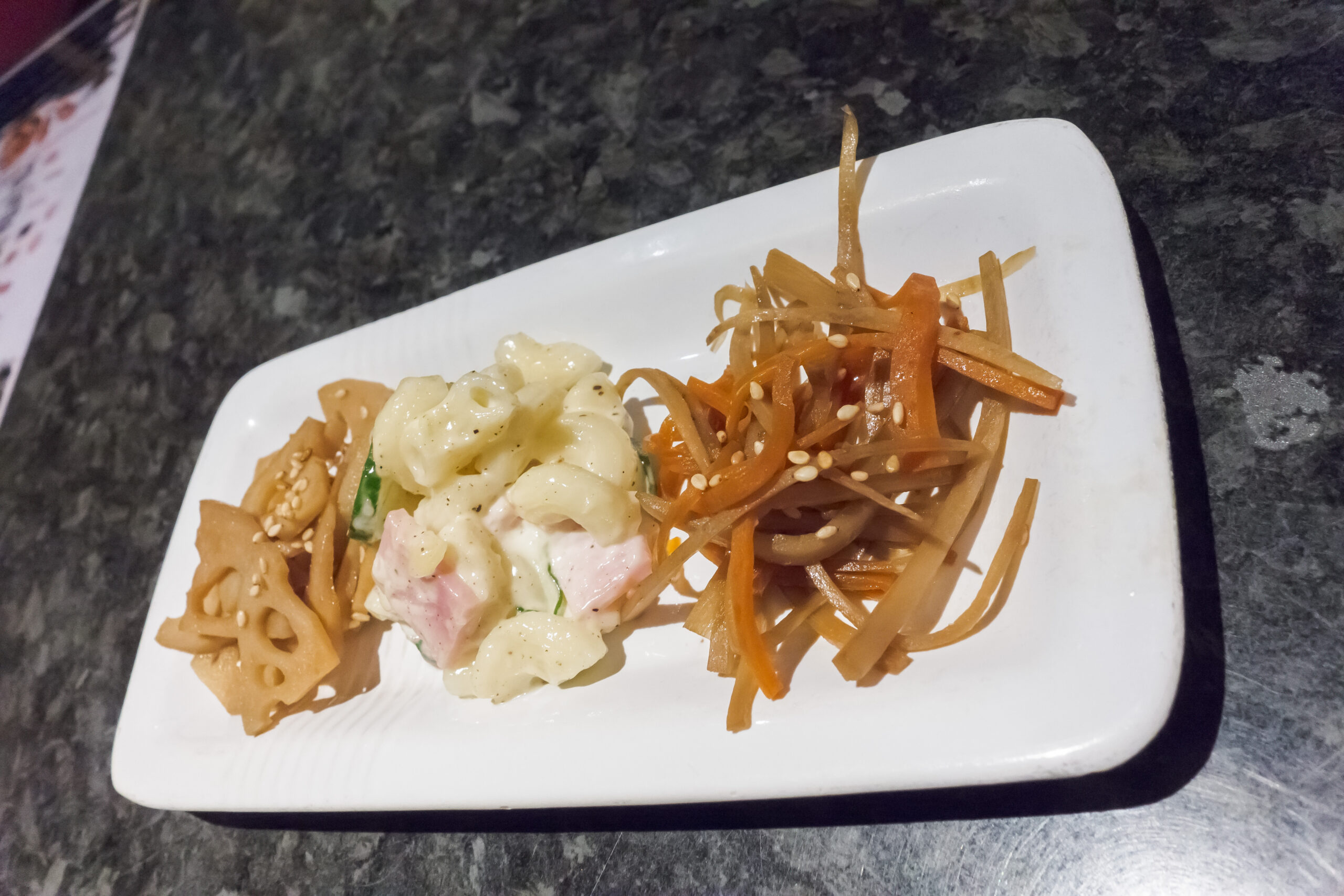
Lotus root, potato salad, and kinpira burdock as an otoshi – Photo Credit: Sunset Sky Studio
What Is Otoshi?
The word otoshi (お通し) is derived from the Japanese word tōsu, meaning ‘to go past,’ which perfectly sums up the role they play in your meal, a small dish prepared using basic ingredients, that gets dropped off at your table in order to fill the gap between ordering and receiving your main meal.
The point of otoshi isn’t to be so delicious that customers line up outside the door to try them, but simply to give the customers a light snack while waiting for the true stand-out menu items, in addition to a handful of other reasons…
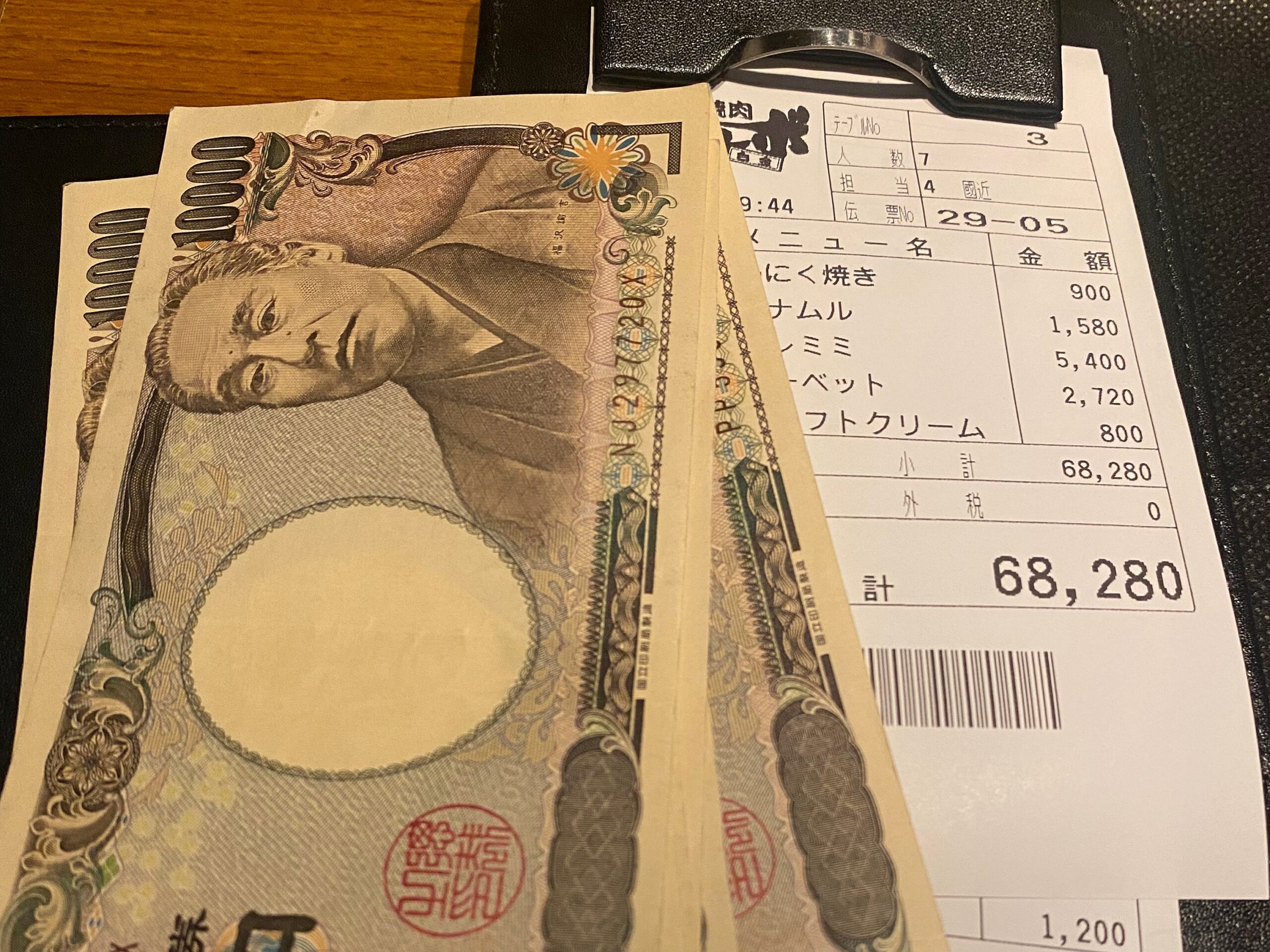
Yen and a restaurant bill – Photo Credit: chettarin
The Purpose of Otoshi
People have regarded otoshi as having all manner of different purposes. Some consider them as nothing more than a quick appetiser to fill time while the chefs prepare main courses, while others view them as pairings for the first round of drinks, like a bowl of peanuts or olives in Western restaurants. The most accurate explanation for otoshi would be to serve as a table charge, but another comparison that could easily be made is to gratuities in the West.
In many other countries, leaving tips after finishing a meal or visiting a bar is a common practice, sometimes even a legal requirement. The basis of tipping stems from giving employees a token of gratitude for going the extra mile for the customer during their visit, ranging anywhere from a small banknote to a good portion of the bill. In Japan, there is no tipping culture in any industry.
The very basis of tipping is the rewarding of servers, bartenders, and other service workers for going above and beyond in their roles to give the customer an enjoyable experience, so in Japan, receiving a tip could give the implication that such a work ethic is an exception and not the norm, a pleasant surprise instead of something to be expected. With how much taking pride in your work and displaying a top-tier work ethic is ingrained in Japanese society, being handed a tip would certainly raise a few eyebrows. As such, providing otoshi is a reasonable compromise that still allows the restaurant to receive some profit, whether to cover operating costs or to go directly to the staff.
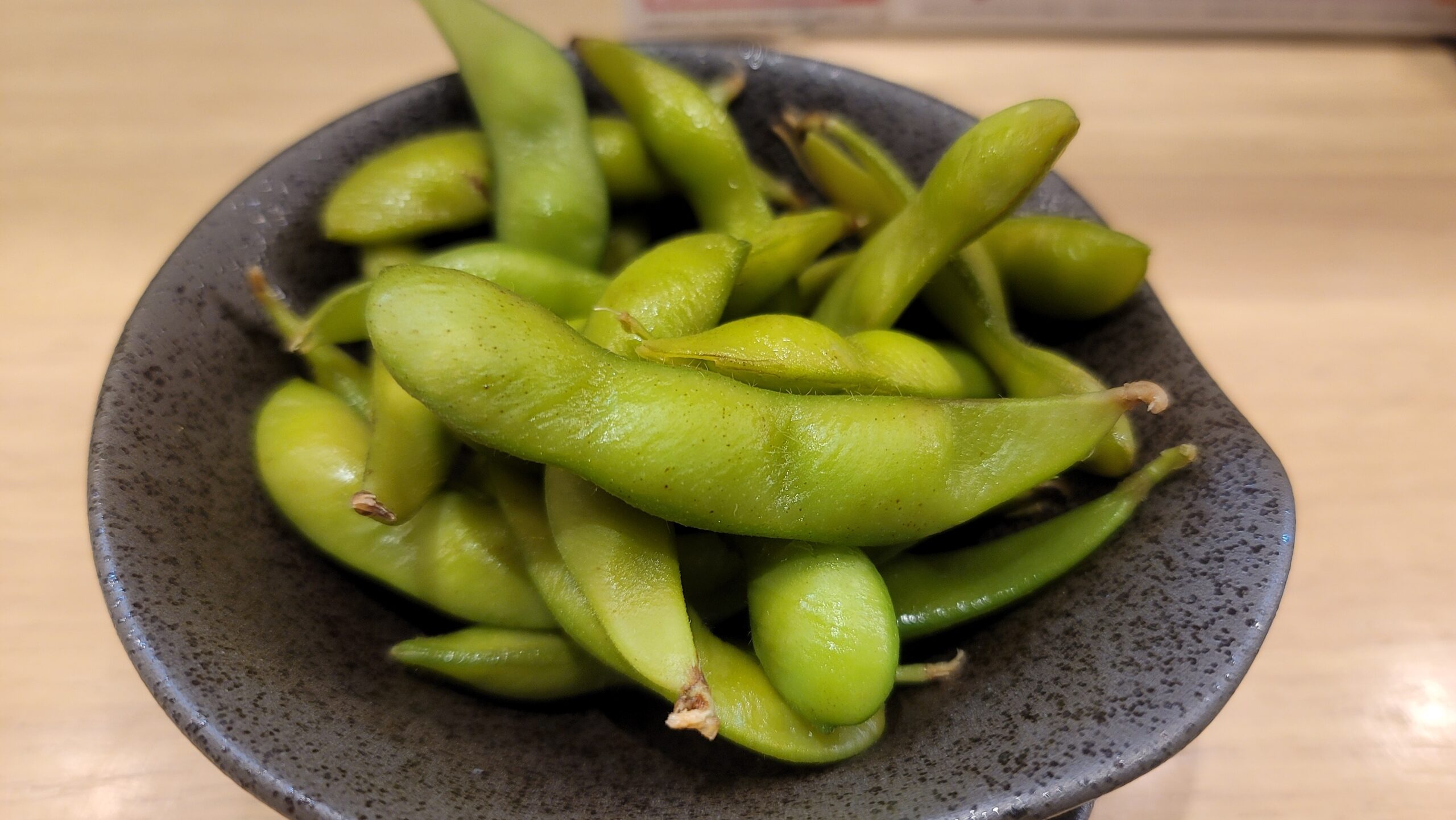
Small plate of edamame – Photo Credit: COMODARU
How Much Do Otoshi Cost?
On their own, the price of them is inconsequential, typically no less than 300 yen, or around 1.90 USD with the current exchange rate, and no more expensive than 600 yen ($3.80) in even the more high-end restaurants, so they’re unlikely to break the bank.
People dining out in larger groups at a restaurant that serves otoshi might find their otoshi charge a bit more daunting, as receiving so many could add up to 20% extra to the final bill. Diners at the kinds of restaurants that serve them tend to visit with a larger group as opposed to in couples or individually, and since splitting the bill is the norm in Japan, the final total per person remains manageable.
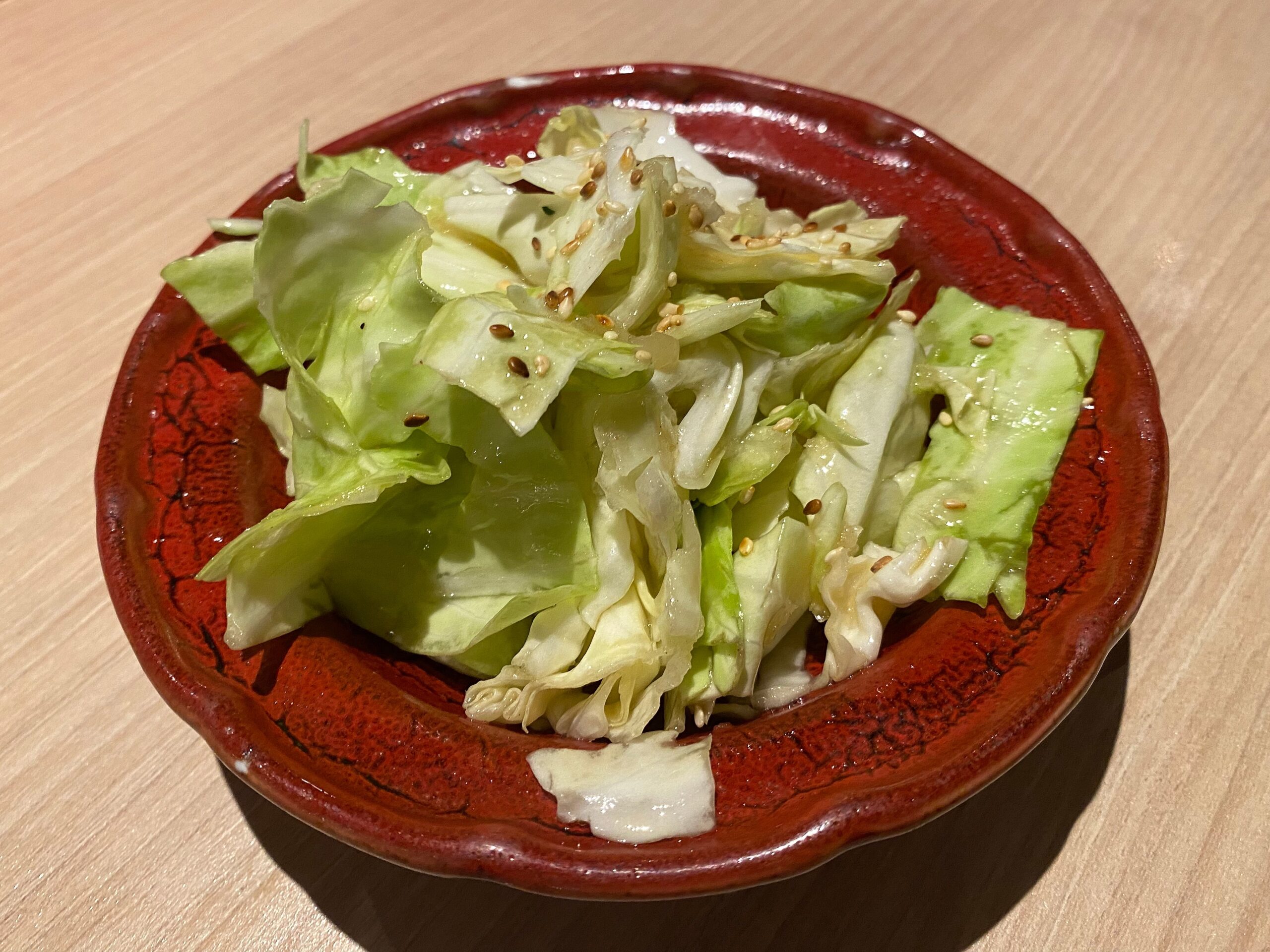
Bowl of shredded cabbage – Photo Credit: chettarin
Common Types of Otoshi
Narrowing down what exactly you can expect to receive as an otoshi plate is practically impossible. Dishes will often depend on the type of restaurant you’re dining at, the price of the restaurant, and most crucially, the time of year, with different months allowing for different seasonal ingredients. That being said, there are some varieties of otoshi that you are likely to see regularly.
Salad
One of the easiest plates to prepare, sometimes otoshi can be as simple as a miniature salad. From the more conventional salads made from whichever ingredients are in season during your visit, to the popular izakaya side dish of a Japanese-style potato salad, you can’t go wrong with a small dish of vegetables before your meal!
Cabbage
Found primarily at izakaya (Japanese-style bars) or kushikatsu (skewer) restaurants. The cabbage is shredded, seasoned with a dressing, and presented with some kind of sauce. Thanks to its stable price and versatility, cabbage is an especially easy dish to prepare that will tide you over before your main meal.
Tofu
Another Japanese staple food, an otoshi plate can be as simple as a few lumps of fried tofu on a plate. The typical dressings this would come with would be dashi or soy sauce, or sometimes a topping of sesame seeds.
Other vegetables
The easiest thing that could be done is simply to cook some vegetables and send them out on a plate. Pickled or simmered vegetables are the most popular cooking methods, served alongside a dipping sauce. Alternatively, some restaurants could fry some vegetables and serve them tempura-style.
Regarding the vegetables themselves, edamame is likely the one that appears the most often, synonymous with olives or peanuts in the West. Others that you could expect to receive as is include okra, bamboo, or spinach.
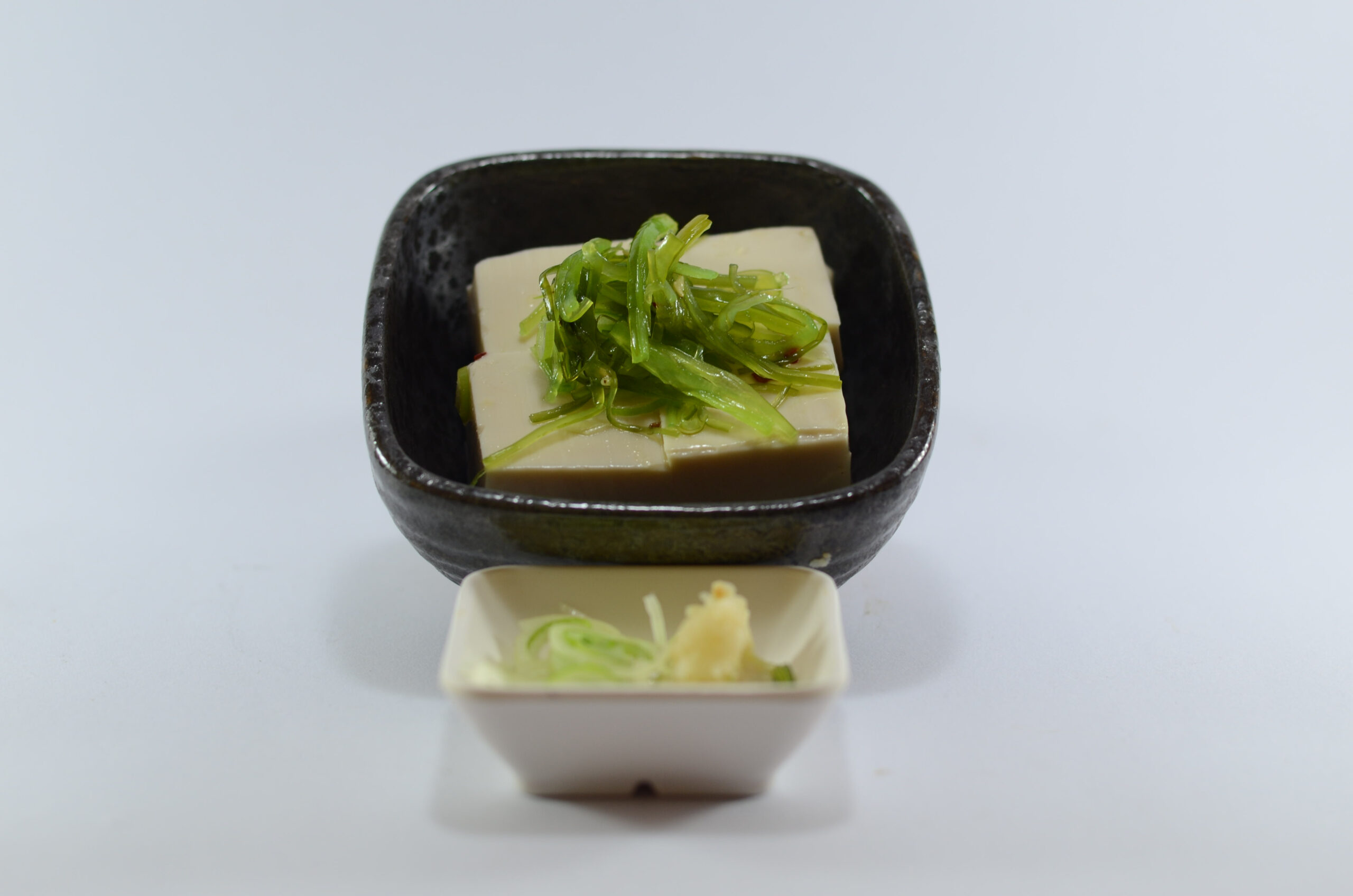
Bowl of tofu topped with green vegetables – Photo Credit: ceo boomman
How to Spot Otoshi
Not every restaurant will serve otoshi. The most common places you can find them are in izakaya or in more high-end restaurants, the types of places where people are likely to dine in pairs or larger groups. Conversely, it’s uncommon for ramen shops, sushi restaurants, or teishokuya (set meal restaurants) to provide otoshi.
If you’re travelling on a tight budget and want to keep a closer eye on your spending, or are generally uncertain about otoshi, it is possible to check with a restaurant whether you can expect to be given one. Before being led to your seat, here are a couple of phrases that could be useful in this case:
Otoshi wa arimasu ka? (お通しはありますか? )
Is there an otoshi?
Otoshi wa ikura desu ka? (お通し代はいくらですか?)
How much does the otoshi cost?
To summarise, despite potentially taking first-time visitors by surprise upon seeing an extra charge on their bill, otoshi are just Japan’s own way of restaurants receiving cover charges, while also providing the customer with a quick snack to fill time while working on the main meals.
Visiting a place that serves otoshi is definitely a worthwhile experience during your visit to Japan. With how unusual the concept may seem to foreigners, it makes for another kind of authentic Japanese dining experience, not to mention it could expose you to new ingredients and cooking methods that you might not have considered trying on your own.
Featured Photo Credit: taka1022
If you are planning a trip to Japan this winter and want to try some delicious Japanese cuisine, check out our Winter Tour Recommendations and connect with our experts!
PIN THIS FOR LATER
Book your pocket wifi now to stay connected through your entire Japan Journey!

Be sure to get the JR Pass to make navigating Japan during your trip that much easier!

YOU MIGHT ALSO LIKE