All About Soba: Japan’s Legendary Staple Food
Jul 17, 2026
BY Madhuri Nagaraja
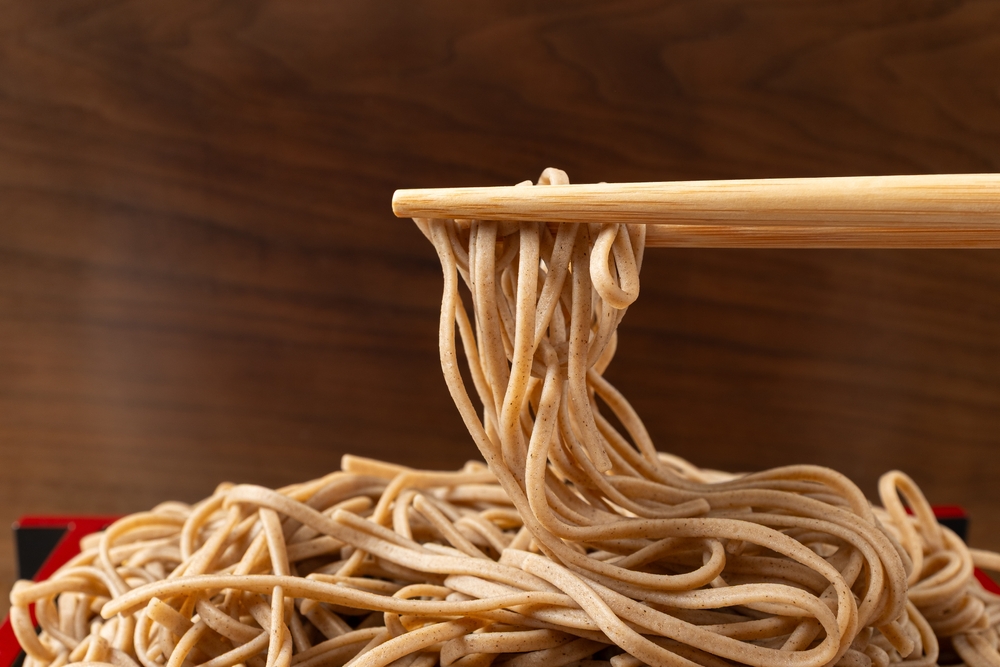
Soba is a traditional and popular Japanese staple food, loved across the land of the rising sun for its soft and chewy texture, as well as for the positive connotations and favorable symbolism it holds, being associated with longevity due to the length of its noodles. Soba, principally made from buckwheat, represents a healthier alternative to ramen that doesn’t skimp on the taste. On the contrary, soba is as versatile as it gets and pairs well with almost everything, rendering each soba dish unique. Even the preparation of the dough can influence the texture and taste of the final dish. However, the real uniqueness of Japanese buckwheat noodles lies in the fact that you can eat them all year long. You can eat soba chilled (Zuri style) in the summer, or in a hot broth (Kake style) during the colder seasons. As you can see, soba has a lot of appeal, but let us see in detail what that appeal is and, most importantly, the secret behind the proper way to eat them.
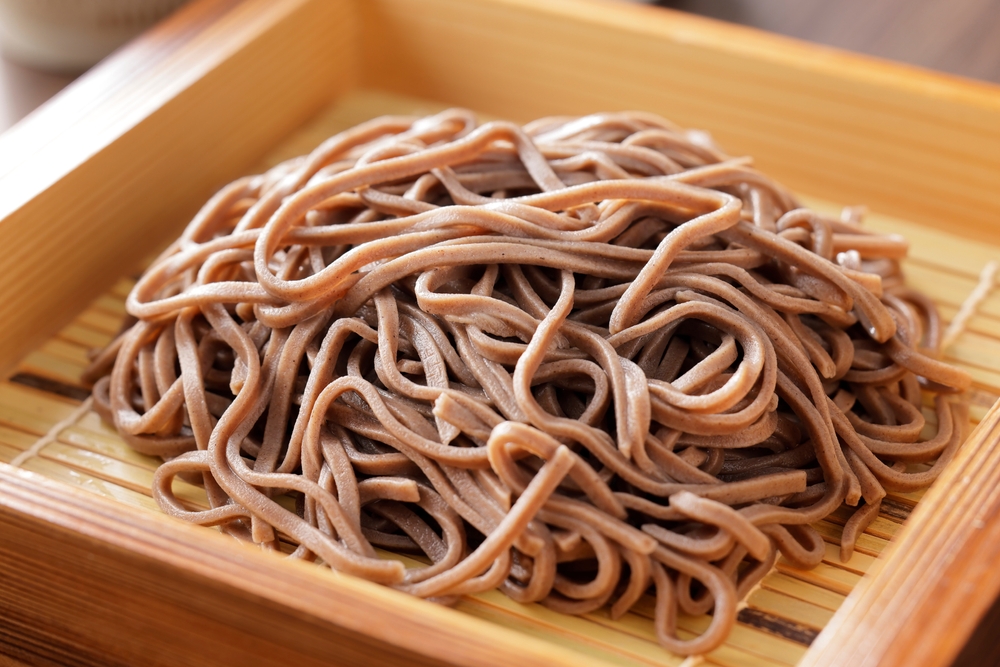
Soba served cold – Photo Credit: Nishihama
Types of Soba Noodles
Soba is made out of buckwheat flour, but depending on the quantity and how much regular flour it is combined with, you will get different levels of quality and dough texture.
If solely buckwheat flour is used, the result is Juuwari soba. Juuwari in Japanese means one hundred percent. During the early days of the Edo period, Juuwari was the only type of Soba available. However, using only buckwheat makes the dough less malleable and more difficult to work with. Therefore, chefs progressively started adding regular flour to it. In other words, if a chef can make soba from purely buckwheat, they must be extremely skilled. As for the texture, it is firmer than other types of dough.
If you use eighty percent buckwheat and twenty percent regular flour, you get Nihachi soba, which means two-eight. It is the most popular type nowadays. Compared to Juuwari soba, the dough is much easier to prepare and can be cut thinly. As a result, the noodles are smoother and easier to swallow, but don’t compromise their flavor.
If the noodles are made from ninety percent buckwheat and ten percent regular flour, you get Kyuuwari, which means ninety percent. Its quality is slightly better than Nihachi; however, for most people, the difference isn’t that noticeable.
Types of Soba Dishes
The magic of Soba lies in the fact that it is as versatile in its forms as it is in its flavors. Similar to how the leaves change colors depending on the season, so does soba with its various methods of preparation. Indeed, soba can be consumed either cold or hot, in winter or summer.
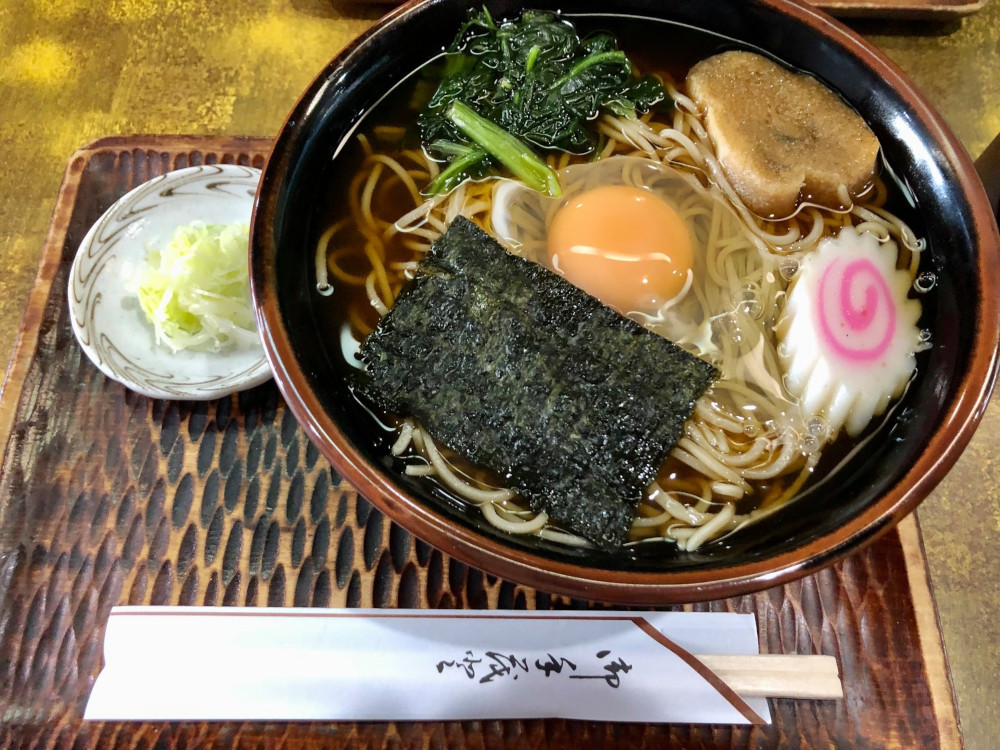
Tsukimi soba – Photo Credit: New Perspectives: Japan
Hot Soba:
- Kake Soba
Kake Soba is the most basic form of hot soba. It is simply comprised of a hot broth made from soy sauce, dashi, and mirin, which is poured on top of the pre-boiled and drained buckwheat noodles. It is usually seasoned with spring onions. Its name, Kake Soba, comes from its method of preparation: “Kake” in Japanese means “to pour over.”
- Tsukimi Soba
Tsukimi Soba is a type of Kake Soba with a raw egg cracked on top of it. When the hot broth is poured on the egg and the noodles, the egg instantly becomes poached. The name stems from the yolk resembling the full moon (“Tsuki” meaning “moon” in Japanese) floating on top of the dark broth, reminiscent of the night sky.
Cold Soba:
- Mori and Zaru Soba
Mori Soba is the basic form of cold soba. It consists of noodles and a cold dipping sauce (tsuyu). Tsuyu is usually made from a mixture of dashi and soy sauce, while the soba is dried and then boiled and drained. Zaru Soba is similar to Mori Soba, with the only difference being the fact that the noodles are topped with dried seaweed, while Mori Soba is served plain. The name Zaru comes from the name of the traditional bamboo basket in which the soba is usually served.
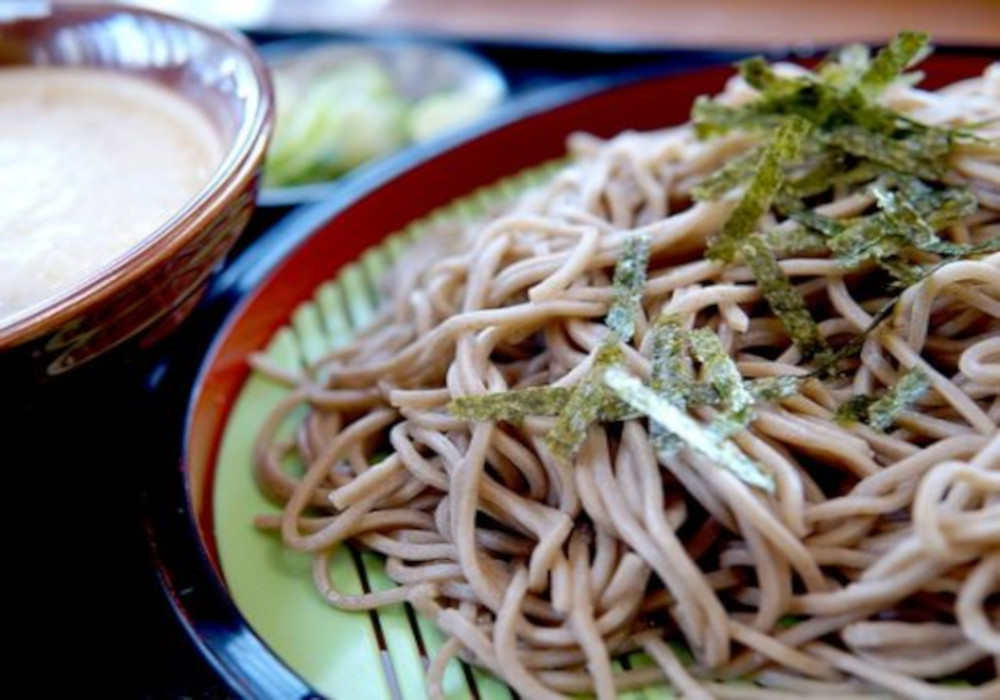
Tororo Soba – Photo Credit: tokyobhive
- Tororo (grated yam) Soba
If you want to try something unique, I recommend soba with grated yams. Although the sticky texture of the yams may be unusual at first, their flavors are delicate and subtle, making them a perfect addition to the buckwheat noodles. Moreover, the health benefits of the tuber are numerous. For instance, it has a very high content of soluble fiber, which lowers cholesterol and blood sugar levels and activates the bacteria in the intestines. Normally, the tororo and the dipping sauce are served separately and then mixed before the noodles are dipped in.
- Oroshi Soba and Sansai Soba
If you like vegetables, let me present to you two more dishes: Oroshi Soba and Sansai Soba.
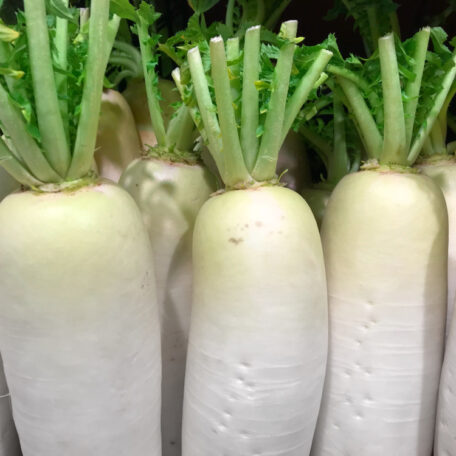
Oroshi (grated daikon radish) Soba is a Zaru Soba served with grated daikon radish (Japanese radish). It contains a lot of nutrients, such as high levels of vitamins P and C, alongside potassium and enzymes that help with digestion. Just like with Tororo Soba, mix the oroshi and the sauce beforehand and then dip the soba in it.
Sansai (boiled wild vegetables) Soba is also a Zaru Soba, but instead of being served with a grated vegetable on the side, the noodles are presented with a dipping sauce in which the vegetables have already been added.
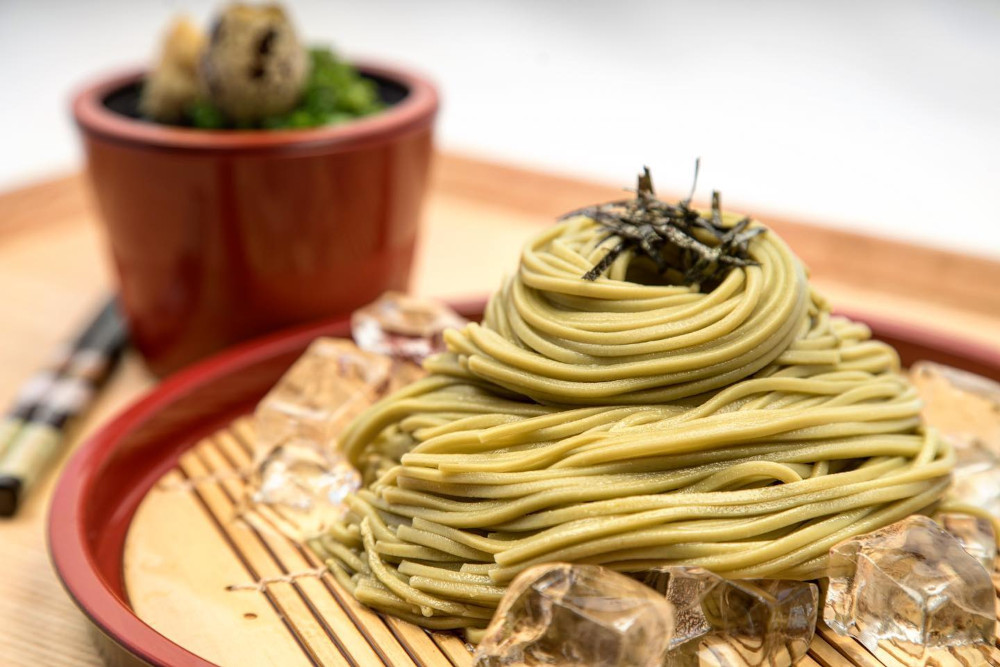
Cha Soba – Photo Credit: Excapade Japanese cuisine
Hot and cold:
- Tempura Soba
Tempura Soba, also known as Tensoba, is a meal composed of soba and tempura. You can have Tensoba in both cold and hot versions. The latter is in a kake form, with a warm broth made of soy sauce and dashi poured on top of the noodles. The finishing touch consists of adding pieces of seafood or vegetable tempura (deep-fried) to the dish. Its origins are in the Edo period, when two versions existed. One was called Ebi-ten, a premium version with shrimp tempura. And a second version, Kakiage, that was much more affordable, made with bits of seafood and a vegetable tempura, shaped in the form of a bird’s nest. The cold version is a Zaru Soba; in other words, it is comprised of chilled soba served with a dipping sauce, with the tempura on the side.
- Cha Soba
For those of you who adore green tea, or ocha, this one will take the lead. Cha Soba uses a special type of noodles that are made from a mixture of buckwheat flour and green tea powder. The ocha powder not only adds a subtle and refreshing taste to the noodles, but it also gives the dish a vibrant color. Cha Soba can be enjoyed either warm or cold. If you prefer cold noodles, you can dip them in soy sauce or a dashi-based sauce. If you prefer it hot, try the noodles in a green tea broth.
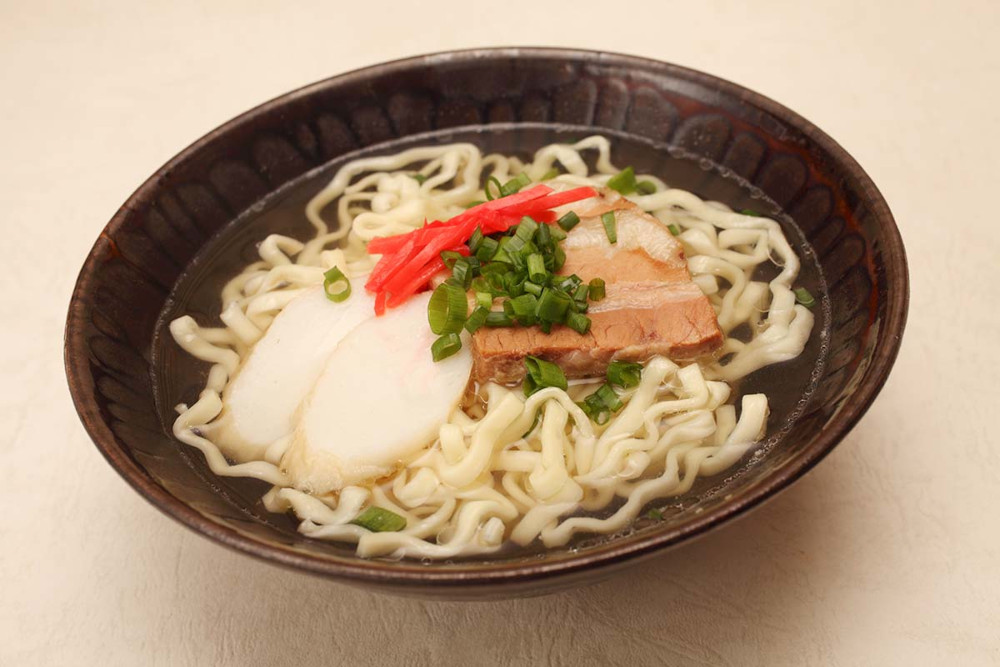
Okinawa soba – Photo Credit: Visit Okinawa Japan
Special mentions:
- Okinawa Soba
Contrary to what its name may suggest, this dish isn’t prepared with traditional buckwheat noodles. Instead, it follows the same rule as yakisoba, in the sense that “soba” here simply means “noodles.” The specialty of the Okinawa Soba dish is the elegant combination of its simple ingredients. It is a meal that comprises deliciously chewy noodles made from a mixture of flour, eggs, and water, encapsulated in a hot, steamy broth. The soup is made of katsuo dashi and pork broth and garnished with slices of stewed pork belly, fish cakes, red pickled ginger, and green onions. If you are unable to travel to Okinawa in person, let this marvelous and unique dish transport you vicariously to the beautiful southern prefecture through its taste.
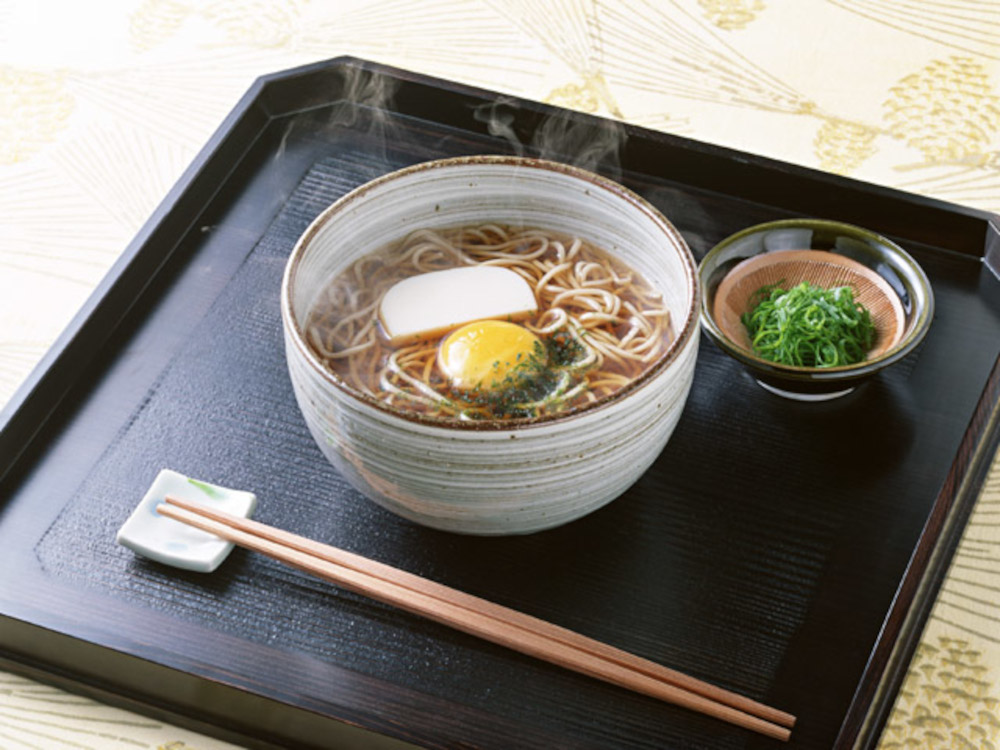
Toshikoshi soba – Photo Credit: Ministry of Agriculture, Forestry and Fisheries of JAPAN
- Toshikoshi Soba
Did you know that there is a tradition linking buckwheat noodles and the New Year in Japan? Indeed, on the 31st of December, also known as Omisoka, it is customary to eat toshikoshi soba (year-crossing soba) noodles as a way to welcome good fortune for the coming year. Toshikoshi, which represents the time between New Year’s Eve and New Year’s Day, underlines the importance of the transition from the past to a fresh start. As for the soba, it holds a meaning that’s full of symbolism. Firstly, because the cooked noodles are easily breakable, it symbolizes the person chewing them severing ties and letting go of the year’s hardship. Secondly, because the noodles are long, they are synonymous with longevity. The buckwheat plant is a resilient plant that can survive harsh weather and conditions, thus being associated with strength, resilience, and good health.
But the noodles aren’t the only part of soba that is linked with good fortune. The toppings play a role in your luck as well.
Ebi: (Shrimp) symbolizes longevity
Nishin: (Herring) represents prosperity and fertility
Kamaboko: (Boiled Fish Paste) is a good omen as it looks very similar to a rising sun on the horizon
Abura-age: (Fried Tofu) is linked with financial fortune and good business
It is believed that this tradition has its origins in Kamakura, more than 800 years ago, when a Buddhist Temple started offering soba on New Year’s Day for those who were impoverished. However, it was during the Edo period that it became a fixed custom.
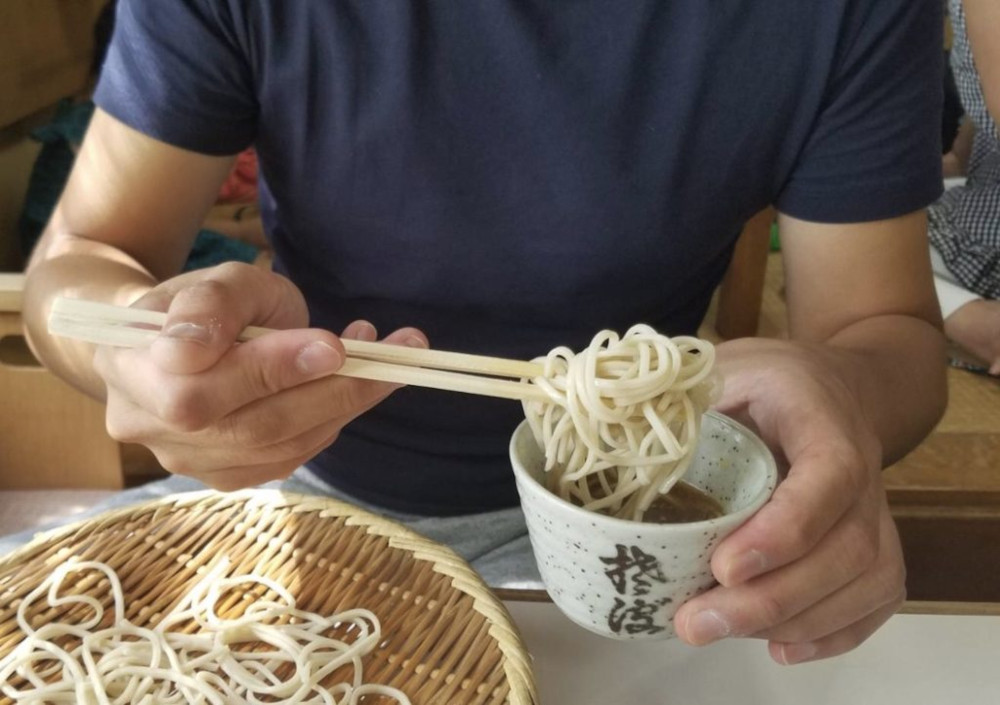
A person dipping soba in the sauce – Photo Credit: tokyobhive
How to Eat Soba
Similar to sushi, soba also has a set of rules to follow to savor it properly per Japanese etiquette.
For instance, let us have a look at how to eat a basic Mori soba set. As we have seen before, this set comes with a plate of soba noodles, sauce, and toppings, usually wasabi and spring onions.
Here are the steps to eat Mori soba like a local:
- The sauce can be served in different ways, either in a bowl or in a small jug alongside an empty bowl. If this is the case, simply pour some of the sauce from the jug into the bowl.
- Now add some of the toppings into the bowl, according to your preference.
- You can now dip your noodles into the soup mixture.
- If you have ordered cold soba, you will be served a teapot containing the water in which the noodles were cooked (sobayu). In this case, pour some of the water into your sauce bowl and drink it up after eating. It is believed that the sobayu retains a lot of the nutrients that the soba loses when it gets boiled, and thus, to avoid any waste, people began to drink it as well. It is said that this tradition originated during the Edo period.
- Here is an additional tip: do not be afraid to pick up your bowl and bring it to your mouth. Contrary to some other cultures, it isn’t considered rude in Japan.
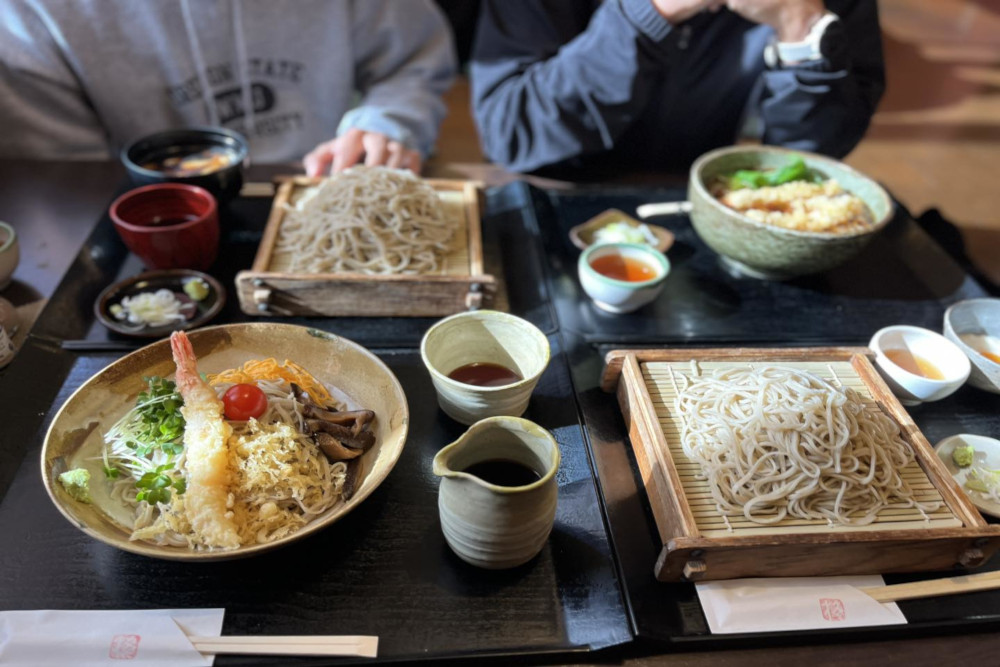
Sets of tempura soba – Photo Credit: Ibaraki Sightseeing
Try it for Yourself!
Soba is a beloved staple food of Japan, loved for its versatility, subtle taste, and for being healthier than other types of noodles. It contains high amounts of nutrients such as vitamins and minerals; is low in carbs, yet rich in proteins; has anti-inflammatory properties, and is gluten-free. To top it off, even though it is quite healthy, I must underline that it doesn’t lose in any way the richness of its flavors compared to other noodle dishes. In other words, soba has the power to combine nutrition, flavor, and creativity, resulting in a variety of buckwheat noodle options. Dating as far back as 800 years ago, soba has held an important place in Japanese society for centuries. So much so that it has become a custom to eat soba on auspicious occasions such as New Year’s Eve. Easily accessible with its many variants, ingredients, and choices, it attracts all demographics and generations. Everybody loves eating soba, so make sure to try it for yourself!
Featured Photo Credit: SUNG MIN
Interested in trying more staple Japanese foods? Make sure to check out our Flavors of Japan Food Tour and learn more about the building blocks of Japanese cuisine!
PIN THIS FOR LATER
Book your pocket wifi now to stay connected through your entire Japan Journey!

Be sure to get the JR Pass to make navigating Japan during your trip that much easier!
YOU MIGHT ALSO LIKE