Seven Herb Rice Porridge: A Gentle Start to the New Year
Jan 7, 2026
BY Brad Stephens
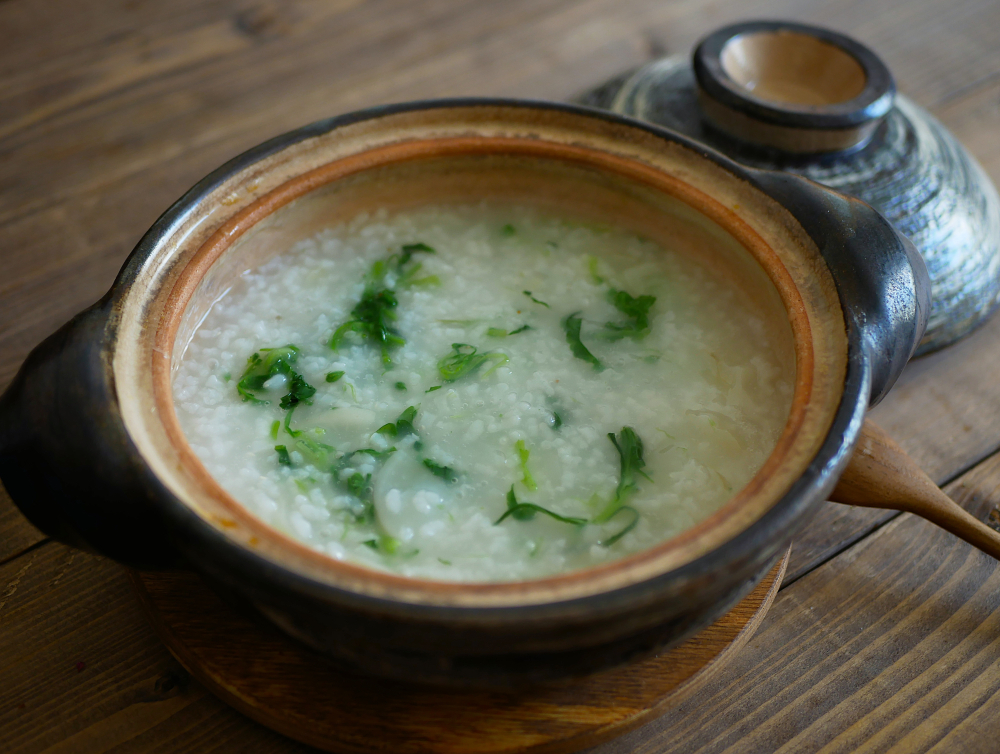
Every year on January 7, households across Japan enjoy a warm bowl of Nanakusa-gayu (七草がゆ, seven herb rice porridge). This simple, soothing dish is part of a long-standing tradition meant to bring good health for the year ahead. Although the ingredients are humble, the meaning behind them is rich with history, symbolism, and seasonal awareness. If you are curious about Japanese New Year customs or want to add a bit of cultural depth to your winter meals, this is one tradition that is easy to appreciate.
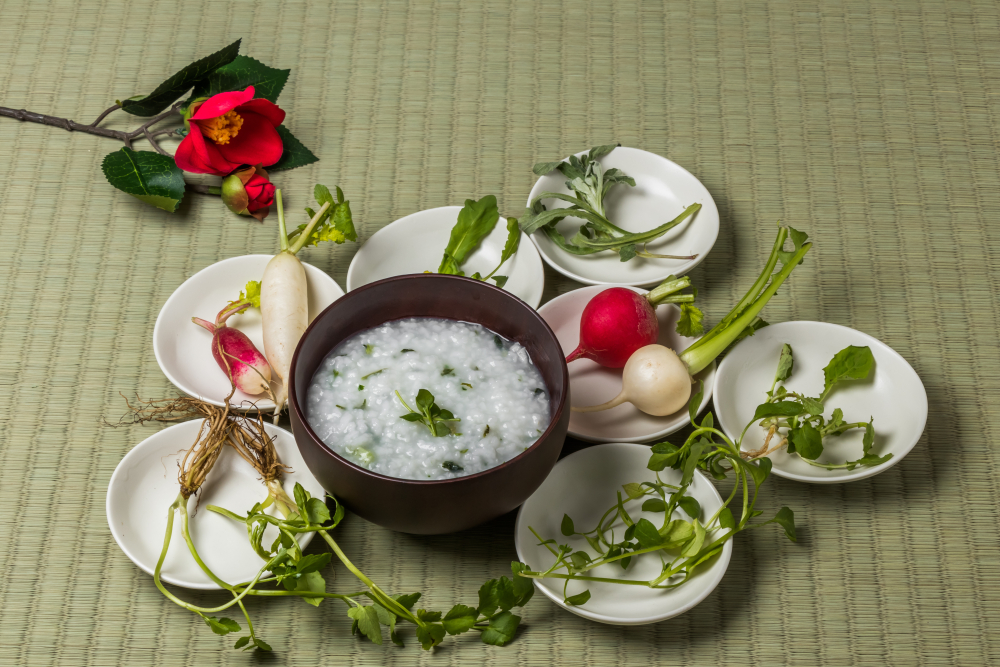
Nanakusa-gayu and its ingredients – Photo Credit: norikko
What Is Nanakusa-gayu?
Nanakusa-gayu is a light rice porridge made with seven specific early-spring herbs. These herbs are considered the first fresh greens of the year. Eating them is believed to rest the stomach after several days of festive New Year feasts and to wish for good health in the coming months.
The seven herbs traditionally used are:
- Seri (芹, Japanese parsley)
- Nazuna (薺, shepherd’s purse)
- Gogyo (御形, cudweed)
- Hakobera (繁縷, chickweed)
- Hotokenoza (仏の座, henbit)
- Suzuna (菘, turnip greens and bulb)
- Suzushiro (蘿蔔, daikon greens and root)
These greens are finely chopped and added to a simple pot of rice porridge. The result is mild, aromatic, and comforting.
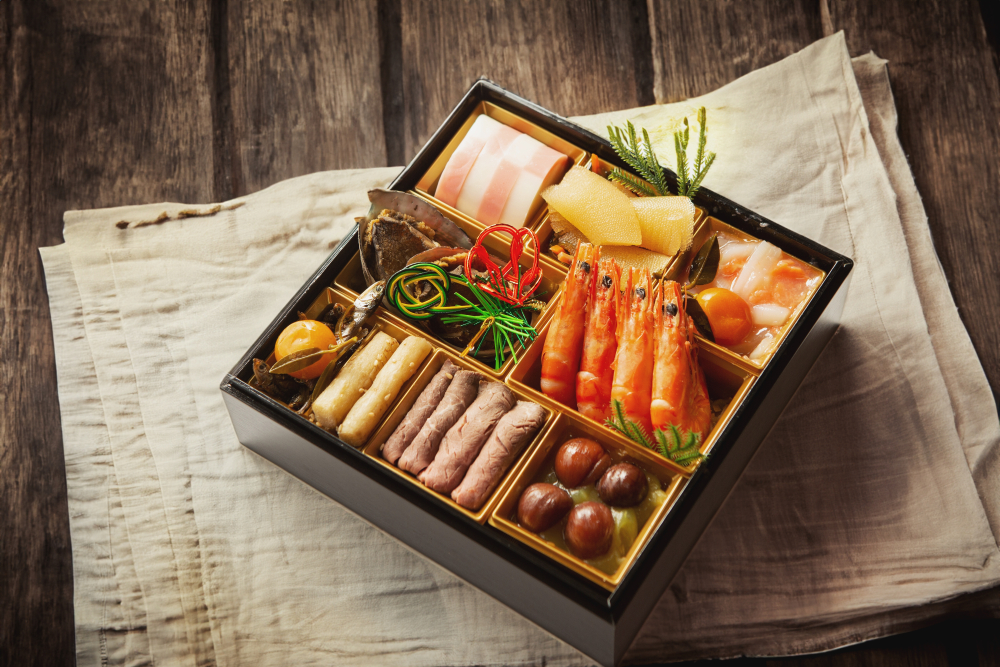
Traditional osechi ryori – Photo Credit: mnimage
A Tradition with Deep Seasonal Roots
January 7 marks Jinjitsu (人日, the Day of People), one of the five seasonal festivals known as gosekku (五節句, five seasonal celebrations), and the day on which the Festival of the Seven Herbs (七草の節句, Nanakusa no sekku) is observed. These festivals were originally introduced from China and gradually adapted into distinctly Japanese customs. In ancient times, eating the year’s first greens symbolized renewal and protection from illness.
The timing is incredibly important. Early January is when people shift from the excitement of New Year’s celebrations to the slower rhythm of winter. The quiet act of preparing herb porridge reflects this gentle transition. It serves as a way to reset both body and spirit after days filled with osechi ryori (おせち料理, traditional New Year foods), mochi, and celebratory drinks.
The Ritual of the Seven Herbs
In some regions, the herbs are prepared with a short chant or rhythmic tapping using a special wooden bowl and pestle. Families would lightly pound the herbs while reciting traditional phrases that invited good fortune and health. This practice adds a playful and communal element to the otherwise simple dish. Many families continue the custom, whether for cultural connection, wellness, or simply for the comforting flavor of the porridge itself. And, even today, supermarkets in Japan sell neatly packaged sets of these seven herbs just in time for the holiday.
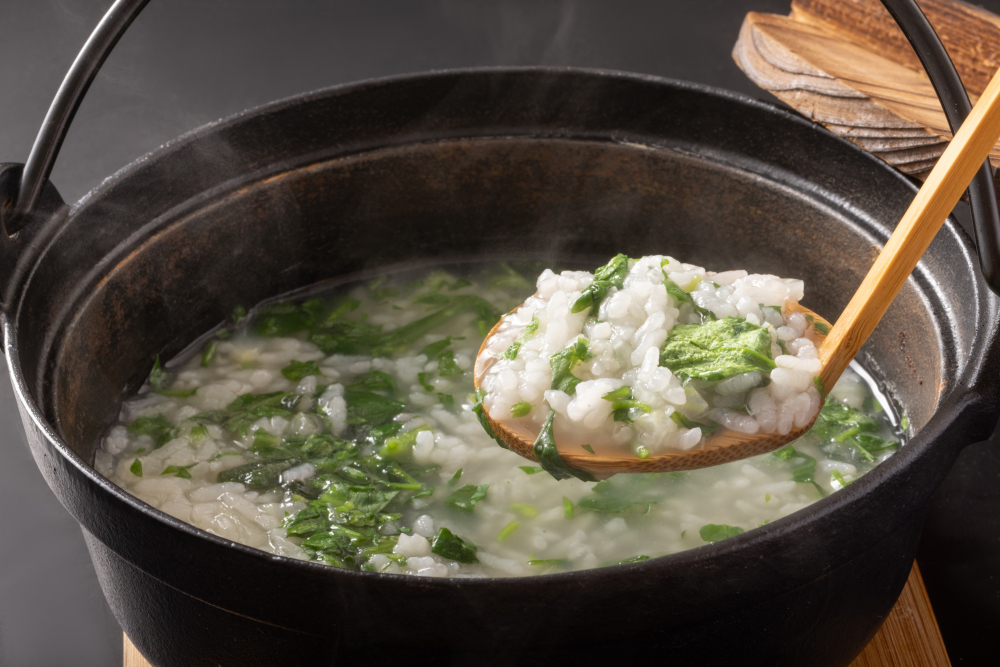
Nanakusa-gayu simmering in a pot – Photo Credit: KOHUKU
How Nanakusa-gayu Fits into Modern Life
While the historical meaning remains, people today enjoy Nanakusa-gayu for a variety of different reasons. Some appreciate the nutritional boost after heavier winter foods. Others treat it as a way to reconnect with the seasons, especially in urban areas where natural cues can feel distant.
Food lovers often enjoy exploring the subtle flavor differences among the herbs, while travelers in Japan may find the dish served in ryokan breakfasts or featured in seasonal menus. Even if you are outside Japan, the porridge is easy to recreate with locally available greens such as parsley, watercress, mizuna, or spinach.
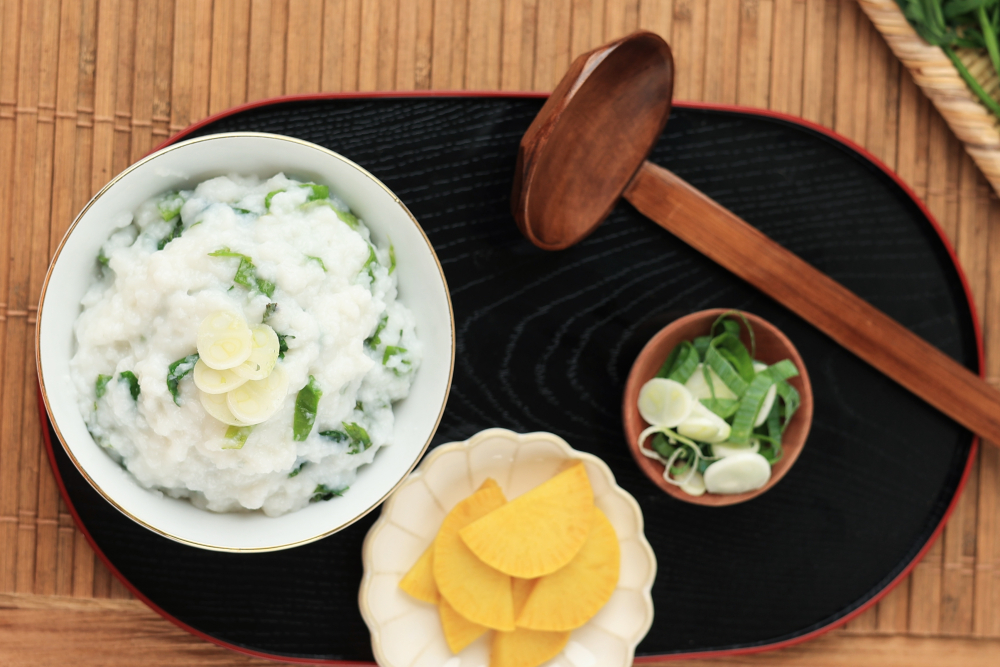
Nanakusa-gayu – Photo Credit: Ika Rahma H
A Symbol of Renewal and Well-Being
Nanakusa-gayu is more than just a bowl of porridge. It reflects the Japanese value of seasonal mindfulness, or kisetsukan (季節感, awareness of the seasons). Eating vibrant green herbs in the heart of winter becomes a small but meaningful celebration of life’s natural cycles. Whether you are embracing a Japanese New Year tradition or simply craving a gentle reset after the holidays, Nanakusa-gayu is a comforting dish that invites you to slow down and start fresh.
If you plan to try Nanakusa-gayu this January 7, enjoy the warmth, the subtle flavors, and the beautifully symbolic moment it offers. It is a delicious way to welcome health, calm, and renewal into the new year.
Feature photo credit: kamadon
The amazingly diverse world of Japanese food is wide and waiting to be explored. Book one of our many Food Tours to start your foodie adventure today!
PIN THIS FOR LATER
0
shares
Book your pocket wifi now to stay connected through your entire Japan Journey!

Be sure to get the JR Pass to make navigating Japan during your trip that much easier!
YOU MIGHT ALSO LIKE